Utah’s Turkey Season 2026-2027: Limited Entry Hunting Explained
You’ve come to the correct spot if you’ve been waiting all year to hear the first gobble resonate over a Utah canyon. Everything you need to know to organize a successful wild bird hunt in the Beehive State in 2026–2027 is broken down in this guide. Knowing the regulations, deadlines, and permit requirements will make your trip easier and more fulfilling, whether you’re exploring high-elevation woods or pursuing gobblers through oak thicket.
We’ll go over the official dates for every kind of hunt, information on the management unit, license fees, legal procedures, and responses to the most often asked questions by hunters. In my experience, organizing this information in advance makes a big difference when you’re attempting to beat the masses to your preferred place during spring hunts in Utah’s diverse landscape.
Quick Overview
| Bird Type | Season Dates (2026-2027) | Legal Methods |
|---|---|---|
| Rio Grande Wild Turkey (Spring) | April 11 – May 17, 2026 | Shotgun, archery, muzzleloader |
| Rio Grande Wild Turkey (Fall) | October 3 – November 8, 2026 | Shotgun, archery, muzzleloader |
| Bearded Hen Opportunity (Fall) | October 3 – November 8, 2026 | Shotgun, archery, muzzleloader |
All Bird Seasons – Detailed Breakdown 🦃
| Season Name | Exact Dates | Zones/Units | Bag Limit | Permit Details |
|---|---|---|---|---|
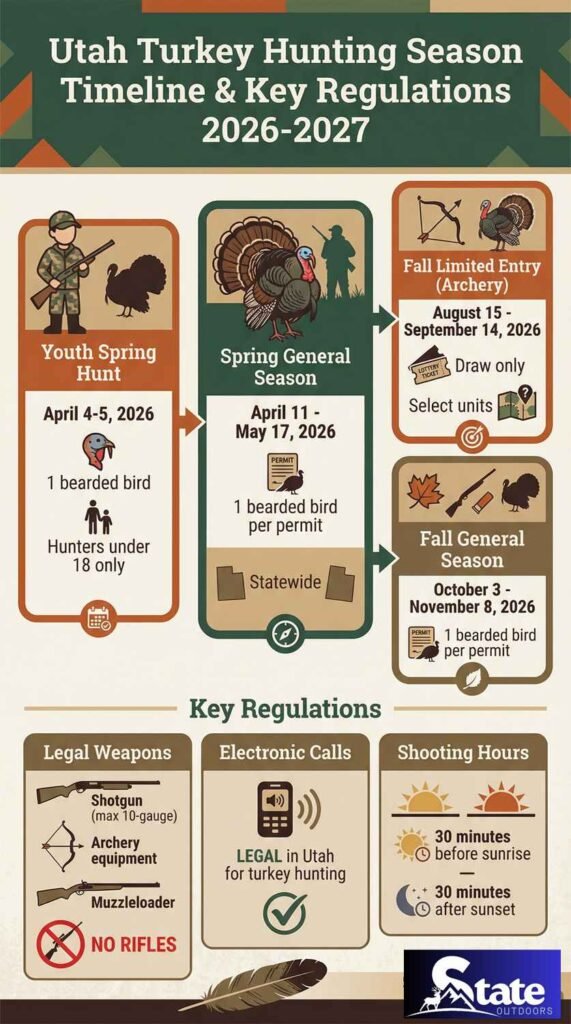
| Spring General – Any Legal Weapon | April 11 – May 17, 2026 | Statewide (varies by unit) | 1 bearded bird per permit | General-season permit required; available over-the-counter |
| Spring Youth Hunt | April 4–5, 2026 | Statewide | 1 bearded bird | Youth-only permit; hunter must be under 18 |
| Fall General – Any Legal Weapon | October 3 – November 8, 2026 | Statewide | 1 bearded bird per permit | Fall permit required |
| Fall Limited Entry (Archery) | August 15 – September 14, 2026 | Select units (by draw) | 1 bird of either sex | Draw-only; apply through Utah Division of Wildlife Resources (DWR) |
| Fall Bearded Hen Opportunity | October 3 – November 8, 2026 | Statewide | 1 bearded hen (additional to fall permit) | Requires valid fall permit |
Note: Specific management units may have adjusted dates or quotas. Always confirm the most current information with the Utah Division of Wildlife Resources before heading afield.
More Bird Species You Can Hunt in Utah 🕊️
Utah isn’t just about gobblers. The state offers excellent opportunities for upland game bird enthusiasts throughout the year. Here’s a quick look at other legally hunted species and their 2026-2027 dates:
- Ruffed Grouse & Dusky Grouse: September 19, 2026 – February 28, 2027 (statewide, with some unit-specific closures)
- Sage-Grouse: Limited draw hunts; typically late September. Check DWR for draw results and specific units.
- Chukar & Hungarian Partridge: September 19, 2026 – February 28, 2027 (generous daily bag limits in designated regions)
- Ring-Necked Pheasant: November 7, 2026 – January 31, 2027 (varies by Wildlife Management Area)
- Mourning Dove & Eurasian Collared-Dove: September 1 – November 9, 2026 (with specific shooting hours)
Each species has unique habitat preferences and hunting techniques, so if you’re exploring new ground, consider a guided hunt or scouting trip to maximize your chances.
Utah Wild Bird Regulations 🌾
Understanding and following regulations isn’t just about avoiding fines—it’s about respecting the resource and ensuring sustainable populations for future generations. Here’s what you need to know:
- Legal Weapons: Shotguns (no larger than 10-gauge), archery equipment (including crossbows with proper permits), and muzzleloaders. Rifles are not legal for wild bird hunting in Utah.
- Shooting Hours: One-half hour before official sunrise to one-half hour after official sunset. This varies by date and location, so check a local sunrise/sunset chart.
- Electronic Calls: Legal for Rio Grande wild bird hunting. You can use electronic calling devices, decoys, and other aids—this is one reason Utah has become a popular destination for out-of-state hunters.
- Hunter Orange: Not required for upland bird hunting, but highly recommended for safety, especially during rifle big game overlap periods.
- Tagging & Transport: Immediately validate your permit upon harvest. Keep the bird intact (head and beard attached) during transport until you reach your final destination or a check station.
- Public Land Access: Utah offers abundant public land managed by the U.S. Forest Service, Bureau of Land Management, and state wildlife management areas. Always verify boundaries using maps or GPS apps, and respect posted private property.
- Ethical Hunting Practices: Take only clear, lethal shots within your effective range. Practice with your hunting gear beforehand to ensure humane harvests.
These rules exist to promote safety, prevent overharvest, and ensure quality hunting experiences. If you’re unclear on any regulation, reach out to the DWR directly—they’re there to help.
License & Tag Fees 🎟️
Pricing for the 2026-2027 period is set by the Utah Division of Wildlife Resources and is subject to legislative changes, so double-check before purchasing.
Resident Fees:
- General hunting license: $34
- Spring general bird permit: $25
- Fall general bird permit: $25
- Youth (under 18): Reduced or free general license; permits around $10–$15
Non-Resident Fees:
- General hunting license: $120
- Spring general bird permit: $75
- Fall general bird permit: $75
- Youth non-resident: Permits around $35
Where to Purchase:
- Online through the Utah DWR website (most convenient)
- Authorized license agents (sporting goods stores, local retailers)
- DWR offices in person
Pro Tip: If you’re planning multiple outdoor activities in Utah, consider a combination license or an annual public land access pass to simplify paperwork and potentially save money. If you’re investing in quality firearms safety training or professional instruction, these courses often provide discounts or bundle deals on licenses.
License Requirements
Before you head into the field, make sure you meet these criteria:
- Who Needs a License?: Anyone 18 years or older pursuing wild game birds in Utah must hold a valid hunting license and the appropriate bird permit. Even if you’re just helping a friend call or carry decoys, if you’re in possession of a weapon in the field, you need a license.
- Hunter Education: All hunters born after December 31, 1965, must complete a state-approved hunter education course. Utah recognizes courses from other states, but keep your certification card with you.
- Age Limits: Youth under 18 can hunt with reduced-cost permits and during special youth-only hunts. However, they must be accompanied by a licensed adult (18+) who remains within sight and normal voice contact.
- Landowner Exemptions: Private landowners may qualify for Cooperative Wildlife Management Unit (CWMU) permits or landowner permits under specific conditions. These are not automatic—consult the DWR for eligibility.
- Non-Resident Considerations: Out-of-state hunters are welcome but should budget extra for non-resident fees. If you’re comparing regulations and costs, you might find it useful to check neighboring states like Colorado turkey season for alternative or additional hunting opportunities.
Frequently Asked Questions
Q: What’s the best time of day to hunt wild birds in Utah?
A: Early morning, right around sunrise, is prime time. Birds typically roost overnight and fly down at first light, making this the most active period. Late afternoon can also be productive as birds return to roosting areas, but mornings generally see more vocal activity.
Q: Can beginners hunt without prior experience?
A: Absolutely. As long as you’ve completed your hunter education course and secured the necessary permits, you’re legally allowed to hunt. That said, consider shadowing an experienced hunter or booking a guided hunt for your first outing—it’ll shorten your learning curve and increase your success rate.
Q: Are electronic calls legal in Utah?
A: Yes, electronic calling devices are legal for Rio Grande wild bird hunting in Utah. This sets Utah apart from some states with stricter regulations, making it an attractive option for hunters who rely on modern calling technology.
Q: How do I know if land is public or private?
A: Use the Utah DWR’s online mapping tools, smartphone apps like onX Hunt, or contact local DWR offices for printed maps. Never assume land is open—always verify before you hunt. Trespassing not only risks fines but also damages relationships between hunters and landowners.
Q: Can I hunt on both spring and fall permits in the same year?
A: Yes, you can purchase and use both a spring and a fall permit within the same license year, allowing you to harvest multiple birds across different periods. Just make sure each bird is tagged correctly with the appropriate permit.
Q: Do I need special permits for Wildlife Management Areas (WMAs)?
A: Most WMAs are open to licensed hunters during legal hunting periods, but some require check-in, parking passes, or have specific access rules. Always review the WMA-specific regulations on the Utah Division of Wildlife Resources website before your trip.
Q: What if I accidentally harvest a hen without a beard?
A: Unbearded hens are illegal to harvest except during specific limited-entry or bearded hen opportunity periods. If this happens, immediately contact the DWR to self-report. Honesty is always the best policy and demonstrates ethical hunting behavior.
Conservation & Safety Reminders 🌿
Utah’s hunting regulations are designed not just for fair chase, but to maintain healthy, sustainable bird populations across diverse ecosystems. Revenue from hunting licenses and permits directly funds habitat restoration, population monitoring, and wildlife research conducted by the DWR.
By following bag limits, respecting closed units, and reporting your harvest data, you’re actively contributing to long-term conservation efforts. This is especially important in areas where bird numbers fluctuate due to drought, habitat loss, or predation pressure.
Safety Checklist:
- Always treat every firearm as if it’s loaded
- Identify your target completely before shooting—never shoot at sound or movement alone
- Wear blaze orange or another high-visibility color, even though it’s not required
- Let someone know your hunting location and expected return time
- Carry a first-aid kit, plenty of water, and a charged cell phone or GPS device
- Be aware of weather conditions and terrain hazards, especially in Utah’s rugged backcountry
Respecting the Land:
- Pack out all trash, including spent shells and food wrappers
- Stay on designated roads and trails where required
- Avoid damaging vegetation or disturbing non-game wildlife
- If you’re using a decoy setup near roads or trails, ensure it’s visible and safe for others
These small actions add up to a culture of responsible, ethical hunting that benefits everyone.
Conclusion
The key to organizing a successful hunt in Utah for the 2026–2027 season is knowing the dates, obtaining the necessary licenses, and keeping up with unit-specific rules. This guide provides you with the foundation you need, whether you’re hunting spring gobblers in the oak-covered foothills or putting your abilities to the test during the difficult fall hunt.
Check the Utah hunting season information again before you leave, and confirm any last-minute changes with the Division of Wildlife Resources. Being up to date is part of being a responsible hunter since regulations might change as a result of population surveys, weather, or legislation revisions.
The information contained herein is solely meant to be used for educational and informative purposes. The Utah Division of Wildlife Resources has the right to modify rules, dates, fees, and unit borders. Before organizing your hunt, always confirm the most recent information from official governmental sources. Errors, omissions, and modifications to state laws are not the responsibility of the author or publisher.