
Complete State by State Limit for Speckled Trout 2026
Speckled trout regulations for 2026 vary significantly across U.S. coastal states, with daily bag limits ranging from 2 to 15 fish and minimum size requirements between 12 and 15 inches. Each state manages spotted seatrout (Cynoscion nebulosus) populations independently based on local stock assessments and conservation needs. Understanding these state-specific restrictions is essential for recreational anglers to remain compliant and support sustainable fisheries management. This comprehensive guide provides current regulations for all coastal states where speckled trout are found, including size limits, bag limits, slot restrictions, seasonal closures, and special provisions that anglers must follow in 2026.
Whether you’re planning a fishing trip along the Gulf Coast or targeting specs in Atlantic waters, knowing the exact regulations for your destination prevents costly violations and helps preserve this prized gamefish for future generations. The following state-by-state breakdown includes the most up-to-date information from official wildlife agencies, covering everything from Texas’s reduced limits to Florida’s regional management zones.
Understanding Speckled Trout Regulations in 2026
Speckled trout, scientifically known as spotted seatrout, represent one of the most sought-after inshore gamefish along the Atlantic and Gulf coasts. These regulations exist to maintain healthy breeding populations while allowing sustainable recreational harvest. Recent years have seen numerous states tighten restrictions due to environmental stressors, cold stun events, and overfishing concerns.
Key regulatory components include daily bag limits (how many fish you can keep per day), minimum and maximum size requirements (slot limits), possession limits (total fish you can have), and seasonal closures during spawning periods. Many states now incorporate special provisions such as trophy fish allowances, captain and crew restrictions on charter vessels, and gear limitations.
For 2026, several states have implemented new conservation measures following population assessments. Texas maintained its emergency three-fish limit, Louisiana continues its slot limit approach, and North Carolina extended cold stun closure protocols. Understanding these nuances ensures legal compliance while supporting long-term fishery health.
Complete State by State Speckled Trout Regulations
Gulf Coast States Regulations
Texas Speckled Trout Limits
| Regulation Type | Requirement |
|---|---|
| Daily Bag Limit | 3 fish per person |
| Minimum Size | 15 inches total length |
| Maximum Size | 20 inches total length |
| Slot Limit | Yes (15-20 inches) |
| Possession Limit | Double the daily bag limit |
| Trophy Fish Allowance | One spotted seatrout over 28 inches with properly completed Spotted Seatrout Tag OR one over 28 inches with Bonus Spotted Seatrout Tag (in addition to daily limit) |
| Season | Open year-round |
| Special Notes | Trophy fish with tags not counted against daily bag limit |
Texas Parks and Wildlife maintained the reduced three-fish limit that was implemented as an emergency measure to protect speckled trout populations following significant environmental stressors. This represents a decrease from the historical five-fish limit and reflects serious conservation concerns. The slot limit between 15 and 20 inches protects both juvenile fish and breeding-size adults.
The trophy tag system allows dedicated anglers to harvest one exceptional fish beyond their daily limit if they purchase the appropriate tag through their fishing license. This balanced approach protects the bulk of the population while accommodating trophy hunters.
Louisiana Speckled Trout Limits
| Regulation Type | Requirement |
|---|---|
| Daily Bag Limit | 15 fish per person |
| Minimum Size | 13 inches total length |
| Maximum Size | 20 inches total length |
| Special Provision | Maximum 2 fish over 20 inches included in daily limit |
| Possession Limit | Two days’ bag limit |
| Season | Open year-round |
| Fillet Possession | Up to twice the daily bag limit of filleted speckled trout allowed under certain provisions |
Louisiana’s regulations reflect a conservation-focused slot limit approach designed to protect trophy-class breeding fish while allowing harvest of mid-range specimens. The state recognizes that larger fish contribute disproportionately to spawning success, hence the two-fish-over-20-inches restriction.
The 13-inch minimum represents one of the lowest size requirements along the Gulf Coast, acknowledging Louisiana’s productive estuarine environments. Recent regulatory updates include provisions for fillet possession, allowing properly processed fish to be transported more easily while maintaining traceability through skin patches.
Mississippi Speckled Trout Limits
| Regulation Type | Requirement |
|---|---|
| Daily Bag Limit | 15 fish per person |
| Minimum Size | 15 inches total length |
| Maximum Size | None |
| Season | Open year-round |
| Commercial Quota | 50,000 pounds (January-December 2026) |
Mississippi maintains a liberal bag limit of 15 speckled trout daily, reflecting strong population numbers in Mississippi Sound and coastal waters. The straightforward 15-inch minimum size with no maximum allows harvest of trophy specimens, though anglers are encouraged to practice selective harvest.
Recent tagging studies using Visible Implant Elastomer technology have provided valuable data on speckled trout movements and population dynamics in Mississippi waters. These research efforts inform ongoing management decisions and may influence future regulation changes.
Alabama Speckled Trout Limits
| Regulation Type | Requirement |
|---|---|
| Daily Bag Limit | 6 fish per person |
| Minimum Size | 15 inches total length |
| Maximum Size | 22 inches total length |
| Trophy Allowance | One fish over 22 inches allowed per person per day |
| Slot Limit | Yes (15-22 inches with one over allowance) |
| Season | Open year-round |
Alabama’s six-fish bag limit with slot limit represents a moderate approach balancing recreational opportunity with conservation. The 15 to 22-inch slot protects younger fish while allowing one trophy specimen over 22 inches, acknowledging the value anglers place on catching larger fish.
Alabama’s speckled trout fishery benefits from productive grass flats, bayous, and inshore waters around Mobile Bay and the Gulf Coast. State management emphasizes maintaining sustainable harvest levels while monitoring population trends through creel surveys and scientific sampling.
Florida Speckled Trout Limits (Regional Management)
Florida employs regional management zones with varying regulations based on local population assessments. This sophisticated approach recognizes that speckled trout populations differ significantly across Florida’s extensive coastline.
Florida Western Panhandle Region
| Regulation Type | Requirement |
|---|---|
| Daily Bag Limit | 3 fish per harvester |
| Minimum Size | 15 inches total length |
| Maximum Size | 19 inches total length |
| Oversize Allowance | One fish over 19 inches per vessel (or per person if shore fishing) |
| Season | Closed February; open rest of year |
| Captain/Crew Limit | Zero bag limit when on for-hire trip |
| Gear Restrictions | Hook and line; cast net allowed; no multiple hooks with natural bait |
Florida Big Bend Region
| Regulation Type | Requirement |
|---|---|
| Daily Bag Limit | 5 fish per harvester |
| Minimum Size | 15 inches total length |
| Maximum Size | 19 inches total length |
| Oversize Allowance | One fish over 19 inches per vessel (or per person if shore fishing) |
| Season | Open year-round in most state waters |
| Captain/Crew Limit | Zero bag limit when on for-hire trip |
Florida South Region
| Regulation Type | Requirement |
|---|---|
| Daily Bag Limit | 3 fish per harvester |
| Minimum Size | 15 inches total length |
| Maximum Size | 19 inches total length |
| Oversize Allowance | One fish over 19 inches per vessel (or per person if shore fishing) |
| Season | Open year-round |
| Special Notes | Separate regulations apply in Biscayne National Park |
Florida Central East Region
| Regulation Type | Requirement |
|---|---|
| Daily Bag Limit | 2 fish per harvester |
| Minimum Size | 15 inches total length |
| Maximum Size | 19 inches total length |
| Oversize Allowance | One fish over 19 inches per vessel (or per person if shore fishing) |
| Season | Closed November 1 – December 31 |
| Special Notes | Most restrictive zone due to population concerns |
Florida Northeast Region
| Regulation Type | Requirement |
|---|---|
| Daily Bag Limit | 5 fish per harvester |
| Minimum Size | 15 inches total length |
| Maximum Size | 19 inches total length |
| Oversize Allowance | One fish over 19 inches per vessel (or per person if shore fishing) |
| Season | Open year-round |
Florida’s slot limit approach with the 15 to 19-inch restriction protects larger spawning fish while allowing harvest of abundant mid-size specimens. The February closure in the Western Panhandle protects spawning aggregations during peak reproductive periods. The oversize fish allowance per vessel (rather than per person) represents a significant conservation measure that reduces overall harvest pressure on trophy-class fish.
Atlantic Coast States Regulations
North Carolina Speckled Trout Limits
| Regulation Type | Requirement |
|---|---|
| Daily Bag Limit | 3 fish per person |
| Minimum Size | 14 inches total length |
| Maximum Size | 20 inches total length |
| Trophy Allowance | One fish greater than 26 inches allowed (included in 3-fish total) |
| Season | Subject to cold stun closures; expected to reopen July 1 following events |
| Reporting Requirement | Mandatory reporting for speckled trout harvest (as of December 1, 2025) |
| Coastal Recreation Fishing License | Required for all recreational fishing in coastal waters |
North Carolina’s regulations reflect proactive management in response to recurring cold stun events that have significantly impacted speckled trout populations. When water temperatures drop rapidly during winter months, speckled trout can suffer thermal shock leading to mass mortality events.
The 2026 management strategy includes extended closure periods following cold stun events, with harvest closures extending through June 30 to allow populations to recover during the critical spring and early summer months. The mandatory harvest reporting system, implemented in December 2025, provides real-time data on catch rates and population trends.
North Carolina’s 14 to 20-inch slot limit with one trophy fish over 26 inches allows selective harvest while protecting prime spawning stock in the 20 to 26-inch range. This scientific approach recognizes that mid-sized adults contribute substantially to reproductive success.
South Carolina Speckled Trout Limits
| Regulation Type | Requirement |
|---|---|
| Daily Bag Limit | 10 fish per person |
| Minimum Size | 14 inches total length |
| Maximum Size | 23 inches total length (approximately) |
| Trophy Allowance | One fish over 23 inches per person per day |
| Season | Open year-round (subject to proclamations) |
| Reporting | Mandatory reporting for harvest |
South Carolina maintains a relatively generous bag limit compared to neighboring states, reflecting healthier population metrics. The 14-inch minimum size with an approximate 23-inch maximum slot, plus one trophy fish allowance, provides recreational opportunity while protecting breeding stock.
Recent regulatory updates have placed speckled trout among regulated finfish species requiring harvest reporting. This data collection supports adaptive management approaches and allows biologists to track population trends and fishing pressure.
Georgia Speckled Trout Limits
| Regulation Type | Requirement |
|---|---|
| Daily Bag Limit | 15 fish per person |
| Minimum Size | 14 inches total length |
| Maximum Size | None |
| Season | Open year-round |
| Special Program | “Operation ROE: Release Over Eighteen” (voluntary) |
Georgia’s regulations include a generous 15-fish daily bag limit and straightforward 14-inch minimum size requirement with no maximum restriction. However, the Georgia Department of Natural Resources actively promotes Operation ROE (Release Over Eighteen), a voluntary conservation initiative urging anglers to release speckled trout over 18 inches.
This voluntary program recognizes that larger fish contribute disproportionately to spawning success. By encouraging selective harvest of mid-sized fish and catch-and-release of larger specimens, Georgia aims to maintain robust spawning stock without imposing mandatory maximum size limits.
Georgia’s coastal waters, including extensive salt marsh systems and tidal rivers, support productive speckled trout populations. The state’s approach balances liberal harvest regulations with voluntary conservation ethics, empowering anglers to make responsible choices.
Virginia Speckled Trout Limits
| Regulation Type | Requirement |
|---|---|
| Daily Bag Limit | Varies by water body; check VMRC regulations |
| Minimum Size | 14 inches total length (general) |
| Potomac River (PRFC Waters) | 10 fish per person, 14-inch minimum |
| Season | Generally open year-round |
| Special Notes | Population recovery efforts ongoing following cold events |
Virginia’s speckled trout fishery has faced significant challenges from cold stun events and environmental stressors. The state’s regulations vary between Chesapeake Bay waters, coastal areas, and the Potomac River Fisheries Commission (PRFC) managed waters.
For the Potomac River tidal waters, the limit is 10 speckled trout per person with a 14-inch minimum size. Virginia anglers fishing these shared waters should consult current PRFC regulations as they supersede individual state rules.
Virginia’s speckled trout populations in the Chesapeake Bay represent the northern extent of the species’ range, making them particularly vulnerable to winter cold snaps. When significant mortality events occur in Virginia and North Carolina, Maryland waters may see reduced speckled trout presence during subsequent seasons.
Maryland Speckled Trout Limits
| Regulation Type | Requirement |
|---|---|
| Daily Bag Limit | 4 fish per person (Atlantic waters) |
| Minimum Size | 14 inches total length |
| Season | Open year-round |
| Chesapeake Bay | Rare; most abundance in Atlantic coastal waters |
| Special Notes | Population influenced by southern cold stun events |
Maryland represents the northern range limit for speckled trout along the Atlantic coast, with most catches occurring in Atlantic Ocean coastal waters rather than upper Chesapeake Bay. The four-fish daily limit reflects more modest population levels compared to core range states.
Maryland’s speckled trout fishery is highly variable year-to-year, influenced significantly by winter conditions in Virginia and North Carolina. Major cold stun events in southern states often result in reduced speckled trout availability in Maryland waters during subsequent seasons as fewer fish migrate northward.
Anglers fishing Maryland’s coastal bays around Ocean City and Assateague Island have the best opportunities for speckled trout, particularly during warmer months when fish move into these productive estuarine environments.
Delaware Speckled Trout Limits
| Regulation Type | Requirement |
|---|---|
| Daily Bag Limit | No limit |
| Minimum Size | 12 inches total length |
| Season | Open year-round |
| Primary Waters | Atlantic Ocean, Lower Delaware Bay, Inland Bays |
Delaware maintains a liberal approach with no daily bag limit and a 12-inch minimum size requirement, reflecting the species’ status as an occasional catch rather than a primary target species. Speckled trout are found in Delaware’s Atlantic coastal waters, particularly around Indian River Inlet, Rehoboth Bay, and lower Delaware Bay.
As with Maryland, Delaware represents the extreme northern edge of speckled trout range. Catches are opportunistic and populations fluctuate based on environmental conditions and recruitment from southern populations.
New Jersey Speckled Trout Limits
| Regulation Type | Requirement |
|---|---|
| Status | Rare vagrant species |
| Daily Bag Limit | Follows general saltwater regulations |
| Minimum Size | No specific regulation (extremely rare) |
| Season | Open year-round |
Speckled trout are considered extremely rare in New Jersey waters, occurring only as vagrant individuals during warm water years. The state does not maintain specific spotted seatrout regulations as the species is not established in New Jersey’s marine environment.
Anglers who encounter speckled trout in New Jersey should follow general saltwater fishing regulations and consider reporting catches to state fisheries biologists, as such occurrences represent noteworthy range extensions.
Comparing Speckled Trout Regulations Across States
Daily Bag Limit Comparison
| State/Region | Daily Bag Limit | Conservation Status |
|---|---|---|
| Texas | 3 fish | Most restrictive (emergency measure) |
| Florida Western Panhandle | 3 fish | Restrictive |
| Florida South | 3 fish | Restrictive |
| North Carolina | 3 fish | Restrictive (with closures) |
| Florida Central East | 2 fish | Most restrictive FL region |
| Alabama | 6 fish | Moderate |
| Florida Big Bend | 5 fish | Moderate |
| Florida Northeast | 5 fish | Moderate |
| South Carolina | 10 fish | Liberal |
| Maryland | 4 fish | Moderate |
| Louisiana | 15 fish | Liberal |
| Mississippi | 15 fish | Liberal |
| Georgia | 15 fish | Liberal |
| Delaware | No limit | Rare species |
Size Limit Comparison
| State | Minimum Size | Maximum Size | Slot Type |
|---|---|---|---|
| Louisiana | 13 inches | 20 inches | Protective slot with 2-fish over allowance |
| Texas | 15 inches | 20 inches | Strict slot |
| Florida (most regions) | 15 inches | 19 inches | Strict slot |
| Mississippi | 15 inches | None | Minimum only |
| Alabama | 15 inches | 22 inches | Slot with 1-fish over |
| North Carolina | 14 inches | 20 inches | Slot with 1 trophy over 26″ |
| South Carolina | 14 inches | ~23 inches | Slot with 1-fish over |
| Georgia | 14 inches | None | Minimum only |
| Virginia | 14 inches | Varies | Varies by water |
| Maryland | 14 inches | None | Minimum only |
| Delaware | 12 inches | None | Minimum only |
Seasonal Closures and Special Restrictions
States with Seasonal Closures
Florida Western Panhandle
- Closed: February
- Reason: Spawning season protection
- Impact: Protects aggregated spawning fish
Florida Central East
- Closed: November 1 – December 31
- Reason: Population conservation
- Impact: Most restrictive Florida region
North Carolina
- Closed: Following cold stun events through June 30
- Reason: Population recovery from thermal stress
- Impact: Extended closures protect stressed populations
Captain and Crew Restrictions
Several states have implemented zero bag limits for captains and crew members when operating for-hire fishing vessels. This critical conservation measure prevents commercial exploitation under the guise of recreational fishing.
States with Captain/Crew Restrictions:
- Florida (all regions)
- Other states may have similar provisions
Special Provisions and Trophy Tags
Texas Trophy Tag System
Texas offers a unique trophy tag program allowing harvest of one spotted seatrout over 28 inches when affixed with a properly completed tag. Anglers can obtain:
- Spotted Seatrout Tag: One fish over 28 inches per license year
- Bonus Spotted Seatrout Tag: One additional fish over 28 inches per license year
These trophy fish are not counted against the daily three-fish bag limit, allowing dedicated trophy hunters to harvest exceptional specimens while protecting the general population through reduced standard limits.
Louisiana Fillet Possession Rules
Louisiana’s 2026 regulations allow anglers to possess up to twice the daily bag limit of filleted red drum and spotted seatrout under certain provisions. This rule facilitates easier transport of processed fish while maintaining conservation accountability through skin patch retention requirements.
Gear Restrictions and Prohibited Methods
Florida Gear Regulations
Florida prohibits using multiple hooks in conjunction with live or dead natural bait when targeting speckled trout. This restriction prevents excessive bycatch and incidental mortality.
Allowable Gear:
- Hook and line
- Cast nets
Illegal Methods:
- Snatching
- Multiple hook rigs with natural bait
Catch and Release Best Practices
When releasing speckled trout, especially in states encouraging voluntary conservation:
- Use circle hooks to reduce deep hooking and injury
- Wet your hands before handling fish to protect slime coat
- Support the body properly when lifting fish
- Minimize air exposure to less than 30 seconds
- Use dehooking tools for deeply embedded hooks
- Revive exhausted fish by moving them gently in the water
- Release immediately if you’ve reached your limit
Many states provide educational resources on proper catch and release techniques. Following these practices ensures that released fish survive to spawn and contribute to future populations.
Understanding Measurement Methods
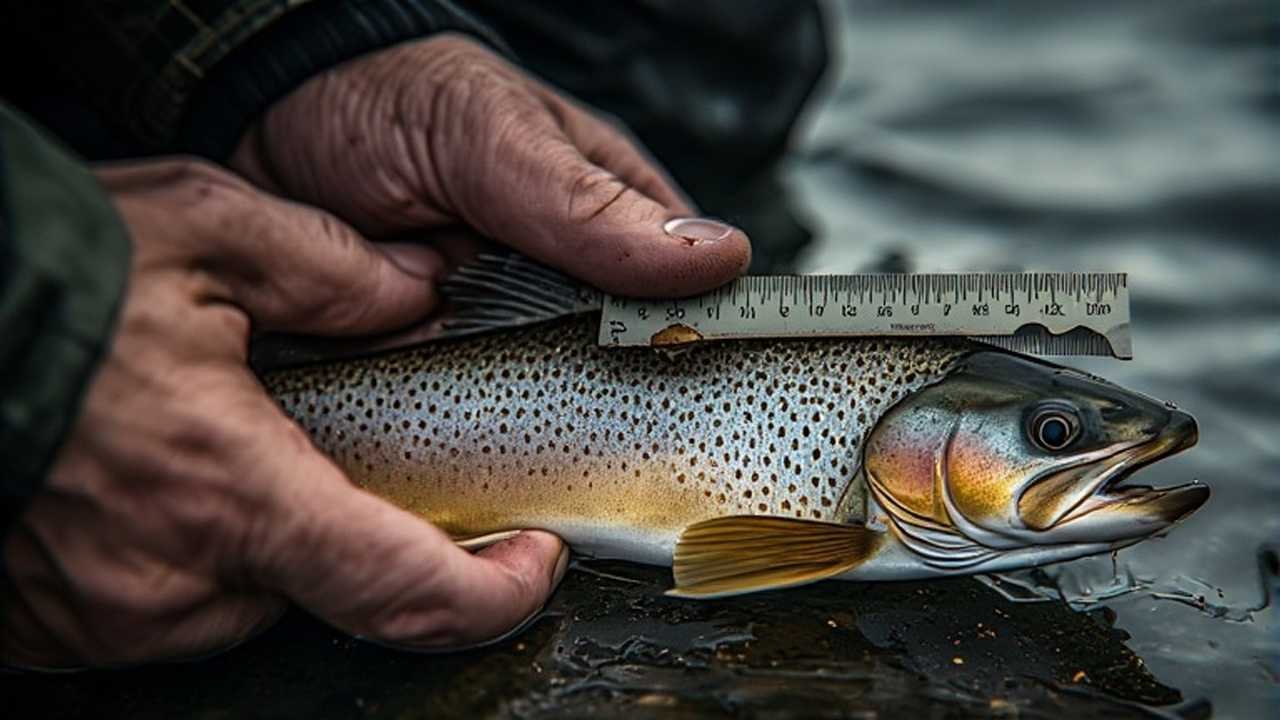
Proper fish measurement is critical for legal compliance. Most states use total length (TL), though some specify other methods.
Total Length (TL)
Measured from the tip of the snout with mouth closed to the end of the tail fin fully compressed. This is the most common measurement for speckled trout regulations.
Fork Length (FL)
Measured from the tip of the snout to the center of the fork in the tail. Less common for speckled trout but used for some species.
Measuring Tips
- Lay fish flat on measuring board
- Close mouth completely
- Compress tail fin fully
- Measure to the furthest point
- When in doubt, release fish near size limits
- Carry a proper measuring device on all trips
License Requirements by State
All states require appropriate fishing licenses for speckled trout harvest. Requirements vary significantly:
Saltwater Fishing License Requirements
Texas: Saltwater fishing license with saltwater endorsement required
Louisiana: Recreational fishing license with saltwater component
Mississippi: State saltwater fishing license or recreational offshore landing permit
Alabama: Alabama saltwater fishing license required
Florida: Florida saltwater fishing license required (various exemptions apply)
North Carolina: Coastal Recreational Fishing License required for all coastal waters
South Carolina: South Carolina saltwater fishing license required
Georgia: Georgia fishing license with saltwater endorsement
Virginia: Virginia saltwater fishing license required
Maryland: Maryland fishing license required; tidal fishing license for Chesapeake Bay
Delaware: Delaware saltwater fishing license
Most states offer daily, annual, and multi-year licenses, with discounts for residents, seniors, military members, and disabled individuals. Several states participate in reciprocal agreements for certain border waters.
Reporting Requirements and Harvest Reporting
Mandatory Reporting States
North Carolina implemented mandatory speckled trout harvest reporting beginning December 1, 2025. Recreational anglers must report any spotted seatrout harvested to support population monitoring and adaptive management.
South Carolina requires harvest reporting for cobia, red drum, spotted seatrout, striped bass, and tarpon.
Federal Highly Migratory Species
While speckled trout are not classified as highly migratory species, anglers targeting multiple species should be aware that some catches may require federal permits and reporting. Understanding these requirements prevents violations when targeting mixed species.
Conservation Challenges Facing Speckled Trout
Cold Stun Events
Cold stun mortality represents one of the most significant threats to speckled trout populations, particularly in North Carolina and Virginia waters. Rapid temperature drops during winter months cause thermal shock, leading to mass die-offs.
2025-2026 Impact: Multiple cold stun events during winter 2025-2026 prompted extended closures in North Carolina through June 30, 2026. These events have cascading effects on northern populations as fewer fish survive to migrate from southern nursery areas.
Habitat Degradation
Seagrass bed loss, water quality degradation, and coastal development continue pressuring speckled trout habitat. These fish depend on healthy estuarine environments with adequate vegetation for feeding, spawning, and juvenile survival.
Overfishing Pressure
Increased recreational fishing pressure, particularly in accessible near-shore waters, has necessitated tighter restrictions in several states. Texas’s emergency three-fish limit reflects serious concerns about overharvest combined with environmental stressors.
Red Tide and Harmful Algal Blooms
Red tide events along Florida’s Gulf Coast have caused periodic mass mortality of speckled trout and other marine species. These harmful algal blooms reduce dissolved oxygen and produce toxins that affect fish populations.
Penalties for Violations
Violating speckled trout regulations can result in significant penalties, including:
Typical Penalty Structure
- Undersized fish possession: $50-$500 per fish
- Over-limit violations: $100-$1,000 per fish over limit
- Fishing during closure: $250-$2,500
- License violations: $100-$500
- Repeat offenses: Increased fines, potential license revocation
Additional Consequences
- Confiscation of catch and fishing equipment
- Court costs and administrative fees
- Points against fishing license
- Potential license suspension or revocation
- Criminal charges for egregious violations
For comprehensive information on fishing violations and their consequences, review the Fishing Regulation Violation Penalties and Consequences Guide.
Important Safety Considerations
Beyond regulatory compliance, anglers should prioritize safety when targeting speckled trout in coastal waters. Essential safety practices include:
- Checking weather forecasts before trips
- Wearing appropriate personal flotation devices
- Understanding tidal patterns and currents
- Carrying communication devices
- Informing others of your fishing plans
- Recognizing signs of hypothermia in cold conditions
- Understanding first aid for fishing-related injuries
For detailed safety protocols, consult the Essential Fishing Safety Guidelines for Anglers to ensure safe and enjoyable fishing experiences.
Ethical Angling Practices
Responsible speckled trout fishing extends beyond legal compliance to include ethical practices that support long-term sustainability:
Selective Harvest
Consider keeping mid-sized fish while releasing trophy-class breeders and small juveniles, even when regulations allow their harvest. This voluntary conservation supports population health.
Avoid Spawning Aggregations
While legal in most areas, targeting densely concentrated spawning aggregations can disproportionately impact reproductive success. Ethical anglers recognize the importance of allowing undisturbed spawning.
Proper Fish Handling
Minimize stress and injury to fish you intend to release. Avoid unnecessary handling, use appropriate tackle to prevent exhaustion, and release quickly.
Respect Private Property and Public Resources
Fish only in authorized areas, respect private property boundaries, and follow all access regulations. Understanding Public vs Private Waters: Dos and Don’ts ensures you fish legally and ethically.
For comprehensive guidance on responsible angling, review Ethical Fishing Practices: Responsible Angling Guide to understand your role in conservation.
Common Mistakes and How to Avoid Them
Size Measurement Errors
Mistake: Measuring fish improperly or generously
Solution: Use proper measuring boards and technique; when in doubt, release borderline fish
Unaware of Regional Regulations
Mistake: Assuming regulations are uniform across a state
Solution: Always check specific regulations for your exact fishing location, especially in Florida where regional zones apply
Exceeding Vessel Limits
Mistake: Each person keeping their limit without considering vessel restrictions
Solution: Understand vessel-wide limits on oversize fish in states like Florida
Fishing During Closures
Mistake: Not checking for emergency closures or cold stun proclamations
Solution: Review current proclamations before each trip, especially in North Carolina
License Oversights
Mistake: Fishing without proper licenses or endorsements
Solution: Verify license requirements before fishing; carry proof of license
For additional information on avoiding common violations, read Common Fishing Mistakes: Fines, Injuries Guide.
Resources for Anglers
Official State Wildlife Agencies
- Texas: Texas Parks and Wildlife Department (TPWD)
- Louisiana: Louisiana Department of Wildlife and Fisheries (LDWF)
- Mississippi: Mississippi Department of Marine Resources (DMR)
- Alabama: Alabama Department of Conservation and Natural Resources (ADCNR)
- Florida: Florida Fish and Wildlife Conservation Commission (FWC)
- North Carolina: North Carolina Division of Marine Fisheries (NCDMF)
- South Carolina: South Carolina Department of Natural Resources (SCDNR)
- Georgia: Georgia Department of Natural Resources (GDNR)
- Virginia: Virginia Marine Resources Commission (VMRC)
- Maryland: Maryland Department of Natural Resources (DNR)
- Delaware: Delaware Division of Fish and Wildlife (DFW)
Mobile Applications
FishRules App: Provides up-to-date regulations, measurement guides, and identification tools for all coastal states
State-Specific Apps: Many states offer dedicated mobile applications with real-time regulation updates and reporting features
Interstate Fisheries Management
Atlantic States Marine Fisheries Commission (ASMFC) coordinates management of spotted seatrout along the Atlantic coast, establishing minimum coastwide standards while allowing state-specific regulations.
Youth and First-Time Anglers
Many states offer special provisions for youth and first-time anglers, including:
- Reduced or waived license fees for children
- Youth-only fishing events and clinics
- Educational programs on regulations and conservation
- Simplified regulations for beginners
Parents and mentors should ensure young anglers understand Fishing Rules for Youth and First-Time Anglers to build responsible fishing habits from the beginning.
Looking Ahead: Future Regulation Changes
Expected Trends
Continued Tightening: States facing population declines may implement further restrictive measures, including reduced bag limits, expanded slot limits, or seasonal closures.
Enhanced Reporting: More states likely to adopt mandatory harvest reporting systems to improve population assessment and adaptive management.
Regional Coordination: Increased cooperation between adjacent states to align regulations and support coastwide conservation efforts.
Climate Adaptation: Regulations may evolve to address climate change impacts, including cold stun events, warming waters, and habitat changes.
Staying Informed
Regulations can change mid-season through emergency proclamations responding to population assessments or environmental events. Responsible anglers should:
- Check regulations before each fishing trip
- Subscribe to state agency email alerts
- Follow official social media accounts
- Review proclamations and emergency closures
- Participate in public comment periods for proposed regulation changes
Frequently Asked Questions
Q: Can I transport speckled trout across state lines?
A: Yes, but the fish must comply with regulations of the state where they were caught. Keep documentation showing where fish were harvested.
Q: What’s the difference between speckled trout and spotted seatrout?
A: They’re the same species (Cynoscion nebulosus). “Speckled trout” and “spotted seatrout” are regional names for the identical fish.
Q: Do federal regulations apply to speckled trout?
A: No, speckled trout are managed by individual states. Federal regulations do not supersede state rules for this species.
Q: Can I keep speckled trout caught in federal waters beyond state boundaries?
A: You must comply with the regulations of the state where you land the fish. Possession in state waters or landing in a state requires following that state’s rules.
Q: What should I do if regulations seem unclear?
A: Contact the state wildlife agency directly for clarification. It’s always better to ask before fishing than face potential violations.
Q: Are there different regulations for shore fishing versus boat fishing?
A: Some states (like Florida) have different oversize fish allowances for shore versus vessel fishing. Always check specific regulations for your fishing method.
Q: Can charter captains and crew keep fish while working?
A: Most states prohibit captain and crew from retaining bag limits while on for-hire trips. This prevents commercial exploitation under recreational regulations.
Q: How are slot limits enforced?
A: Law enforcement officers measure fish using standardized techniques. Any fish outside the legal slot (too small or too large) counts as a violation.
Q: What happens if I accidentally catch an undersized fish?
A: Release it immediately and carefully. Possession of undersized fish is illegal, but unintentional catches that are promptly released typically don’t result in penalties if handled properly.
Q: Do I need a saltwater license if I’m fishing from a pier?
A: Most states require licenses regardless of where you fish, though some piers have facility licenses covering customers. Always verify requirements.
Q: Are there exemptions for disabled anglers or seniors?
A: Many states offer reduced fees or exemptions for seniors, disabled individuals, and veterans. Check your state’s specific provisions.
Q: Can I use speckled trout as bait?
A: Regulations vary by state. Some allow using legally caught speckled trout as bait, while others prohibit it. Check local regulations.
Conclusion
Understanding speckled trout regulations for 2026 is essential for every coastal angler planning to target this prized gamefish. With bag limits ranging from 2 to 15 fish, size requirements between 12 and 15 inches minimum, and various slot limits, seasonal closures, and special provisions, staying informed prevents costly violations while supporting sustainable fisheries.
The most restrictive regulations currently exist in Texas (3-fish limit), Florida’s Central East region (2-fish limit), and North Carolina (seasonal closures following cold stun events). Conversely, states like Louisiana, Mississippi, and Georgia maintain liberal 15-fish limits, reflecting healthier population metrics and productive estuarine environments.
Regional management approaches, particularly Florida’s multi-zone system, demonstrate sophisticated conservation strategies tailored to local population dynamics. Trophy tag programs in Texas and voluntary conservation initiatives like Georgia’s Operation ROE show innovative approaches balancing recreational opportunity with long-term sustainability.
As climate change, habitat degradation, and fishing pressure continue affecting speckled trout populations, anglers should expect ongoing regulation adjustments. Responsible anglers who stay informed, practice ethical catch-and-release, support conservation measures, and comply with all regulations play a critical role in ensuring speckled trout remain abundant for future generations.
Before your next fishing trip, verify current regulations, obtain proper licenses, understand measurement techniques, and commit to sustainable harvest practices. These actions ensure legal compliance while preserving one of America’s most beloved inshore gamefish.