
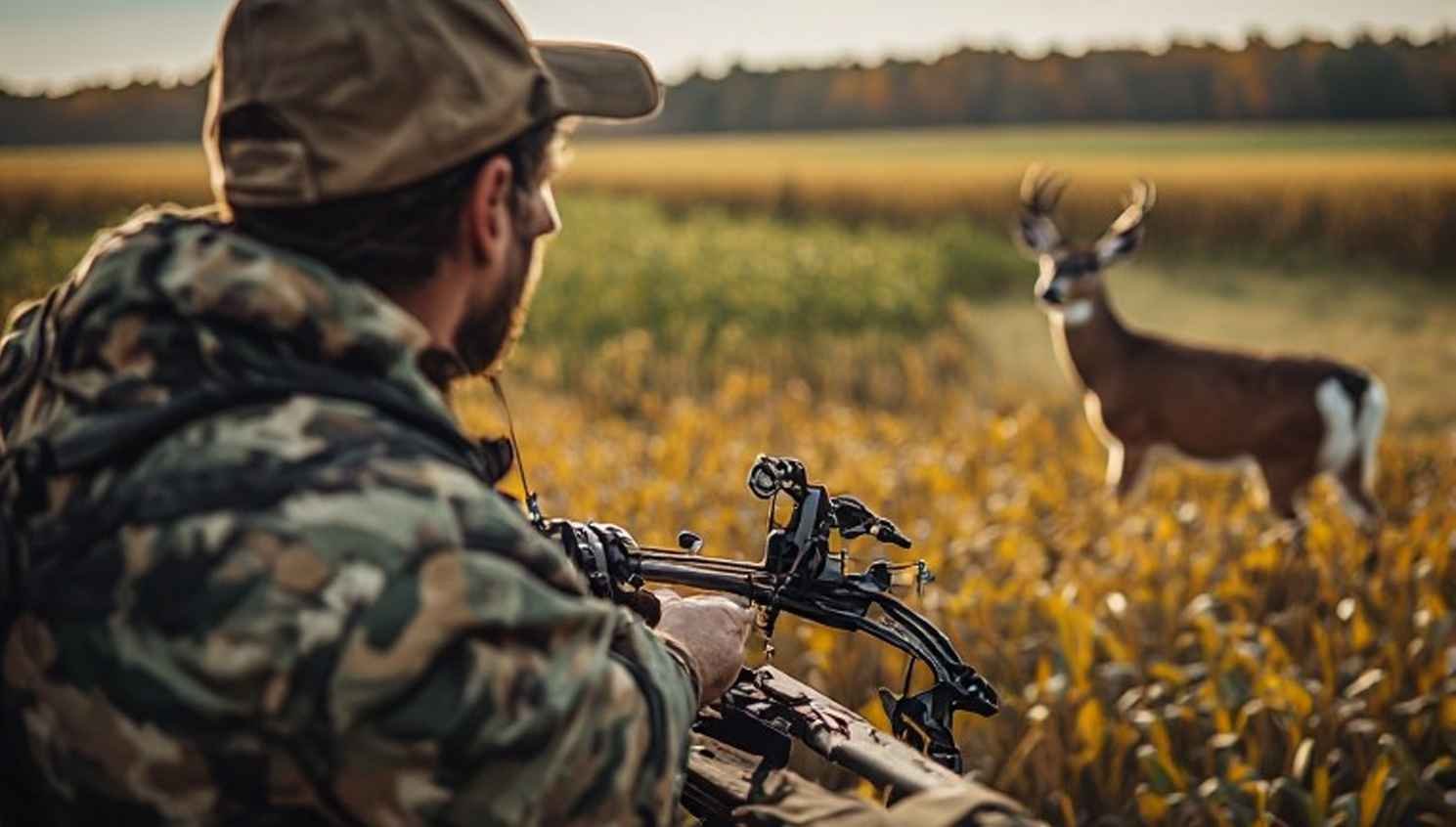
Archery Deer Hunting Tips for September & October 2026: A Complete Early-Season Guide
September and October bow season is the best window of the entire year to pattern, approach, and arrow a mature whitetail while he is still predictable, and the 2026 calendar lines up beautifully for it. Across the U.S., archery openers fall between September 5 and October 15, meaning velvet-phase bucks, bachelor group breakups, soft-mast transitions, and the first pre-rut scrapes all happen inside this two-month stretch — and each phase demands a different stand, a different time of day, and a different calling game.
This guide breaks down what actually changes for whitetails between September and October 2026, which weather windows turn early-season hunts into slam dunks, how to enter and exit stands without torching your best spots, and how to handle shot placement and meat care when temps flirt with 80 degrees, all organized so you can scroll straight to the stage you are hunting right now.
If you have ever watched a giant buck vanish from your trail camera the week before your opener, you already know the early season has a brutal learning curve. The good news is that every one of those mistakes is avoidable. This isn’t a collection of recycled generalities — every tip below is tied to a specific buck behavior, a specific calendar stage, or a specific piece of stand strategy you can execute this fall.
Why September and October 2026 Are Different
Let’s start with the single biggest insight of the early season: bucks are most predictable in September and least predictable in late October — and that reversal is exactly what you plan around. In early September, most whitetails are still running on summer patterns built around food, water, and security cover. By Halloween, those same bucks are splitting from bachelor groups, hammering scrapes, and chasing does, which makes them vulnerable to entirely different tactics.
The 2026 opener calendar confirms the early window is wide open for bowhunters. Confirmed and published dates include Wisconsin’s archery season opening September 12 (confirmed by the Wisconsin DNR), Ohio’s archery opener set for September 26 (approved by the Ohio Wildlife Council), and New York’s bow-only zones running from September 12–20 and again October 1 through December 31 as listed by NYSDEC. Kentucky typically opens the first weekend of September, while southern states like Alabama (Zone A) and Virginia push their archery start later into October, which shifts the entire strategy calendar for those regions.
| State | 2026 Archery Opener | What It Means |
|---|---|---|
| Wisconsin | Sept. 12 (confirmed) | Full velvet window; hunt food-heavy evening patterns |
| Ohio | Sept. 26 (approved) | Early pre-rut scrapes begin appearing by mid-October |
| New York (bow-only zones) | Sept. 12–20, then Oct. 1 | Two distinct early windows; plan stand sets separately |
| Florida | Mid-September (published cycle) | Heat is the #1 variable; hunt water and thermals |
| Virginia | Oct. 3 | Opens straight into changing food sources |
| Alabama (Zone A) | Oct. 15 | Deep-south heat; evening sits near water dominate |
Season dates change and zone lines shift, so always double-check your state fish and wildlife agency page before burning a morning. One verified 30-second check beats a wasted 40-mile drive.
September vs. October: A Behavioral Shift in One Table
If you only remember one thing, remember this comparison. The two months look identical on paper but hunt completely differently.
| Factor | September | October |
|---|---|---|
| Social structure | Bachelor groups still mostly together | Groups split; bucks go semi-solitary |
| Antler phase | Velvet until mid-month, then hard-horned | Fully hard antlers; rubbing begins |
| Daylight movement | Minimal; mostly last 30–45 minutes of shooting light | Increasing as cooler fronts roll through |
| Primary food draw | Soybeans, alfalfa, clover, water sources | Acorns, cut corn, apples, persimmons |
| Response to calls | Weak; occasional grunt curiosity | Light rattling and grunts start working |
| Best overall tactic | Evening ambush near food | Morning sets on rub lines and scrapes |
| Scent risk | Extreme — thermals carry heat at ground level | Moderate but still high on warm days |
The takeaway is straightforward: September rewards patience and food, October rewards aggression and sign. Plan your sits around that split and you will always be hunting the right pattern for the right week.
Mastering the Velvet Window and Bachelor-Group Breakup
Here is where most early-season hunters blow it: they keep hunting the same cedar thicket where they saw bucks all summer, never noticing those deer have already split up. The day a buck sheds velvet, his whole world changes — antlers stop being sensitive, testosterone climbs, and he starts wandering away from his summer buddies.
- Hunt the food draw, not the summer trail. In September, a buck’s routine revolves around high-protein agriculture, and he will hit those fields nearly every evening. Set up where he enters the field edge, not where you saw him bedded in July.
- Expect the breakup to scatter your intel. Camera activity often drops 40–50% in the two weeks after velvet shed. That is normal — don’t change your plan, just shift your cameras to feed edges and staging areas.
- Target the “in-between” hours. Velvet bucks often move a touch earlier in the evening because the antlers are still sensitive and they prefer cooler comfort. Being in the tree 90 minutes before last light is rarely wrong.
- Window-shopping works here too. Glass open fields and powerline cuts at last light from 300-plus yards; a velvet buck on a field edge is the easiest big buck you will ever pattern.
- Use the first sit like it is a fishing trip with one cast. The first time you hunt a stand location is statistically your best chance at that buck. Make it count — don’t waste it on a marginal wind.
Reading the Early-Season Food Switch
Food is the engine of every early-season hunt, but the engine changes fuel types twice between September and October. During the first weeks, deer need protein for antler growth and fawn nutrition; by late September they shift to carbs — specifically hard mast — to pack on fat ahead of the rut.
| Food Type | When It Peaks | Where to Set Up | Ideal Stand Distance |
|---|---|---|---|
| Soybeans / alfalfa / clover | Early September | Field corners, staging edges, entry pinch points | 30–60 yards from field line |
| Water sources (ponds, creeks) | Warm, dry stretches | Downwind trail junction leading to water | 50–80 yards from the water |
| Acorns (white oak first) | Mid-September onward | Inside the timber near the drop line | 20–40 yards from the tree |
| Apples / persimmons / soft mast | Late September | Fence-row or woodlot edge trees | 25–50 yards |
| Cut corn / harvested ag | October | Standing corn corners, field stubble funnels | 40–70 yards |
One practical note from years of burning acorn-stand mistakes: white oak acorns hit the ground first and get eaten first. When you find a white oak with fresh-cut acorn caps on the ground and daylight-busted rubs nearby, you have found the exact tree — hunt it immediately, because that spot may only hold for a week before the deer clean it out.
Weather Windows That Turn the Early Season On
Early-season deer are heat-activated and cold-front driven. A 7-to-10-degree temperature drop is the single most reliable trigger for daylight movement in September and October. You can hunt 20 warm afternoons and see nothing, then kill a buck on the first crisp morning after a front.
| Weather Condition | Deer Response | Your Best Play |
|---|---|---|
| 7–10°F temperature drop | Major daytime movement spike | Hunt the first morning AND evening of the front |
| Bluebird high pressure after rain | Bucks on their feet feeding all day | Stay in the stand all day if possible |
| Steady rain / storm approach | Deer feed hard just before the worst weather | Hunt the calm hour before the storm hits |
| Extreme heat (85°F+) | Movement collapses to last-light only | Skip mornings; hunt water and shade edges |
| Rising barometer after a warm front | Poor movement for 2–3 days | Scout, hang stands, or hunt midday food plots |
The honest math: in any four-week stretch of early season, you’ll get maybe five to seven truly great hunting days. The hunters who out-kill everyone else are the ones who are in the stand on those five days and resting on the other thirty.
Stand Placement, Entry Routes, and Low-Impact Access
You can have the perfect tree and ruin it with a careless walk-in. Early-season deer are still on tight summer routines, so one whiff of human scent can push a mature buck off his pattern for a week. Think of your stand location as a three-part system: the tree, the entry, and the exit.
- Enter along the downwind edge of a field or creek, never through the bedding area. Slip in slowly, stop often, and give bedding deer time to stay put.
- Hang stands a full 30–50 yards inside the timber from the food edge, not on top of the field line. Deer that smell you on the edge will simply feed elsewhere.
- Create a mock scrape 3–4 weeks before you intend to hunt it. Early-season bucks investigate new sign aggressively, and a mock scrape doubles as a daytime travel anchor.
- Rotate stands on a 3-day cycle. Each fresh stand location offers its best hunt the first time you sit it — so never burn a perfect cold front on a tired spot.
- Match your access to the wind you have, not the wind you want. Keep three or four stands pre-hung per property so every wind direction has a huntable answer.
- Stay off the bedding side entirely once the season opens. By late October, pressure alone can turn a daylight buck nocturnal.
Two strong property-level resources worth bookmarking before you plan your season: the 2026 Michigan archery season dates and Wisconsin’s September 12 opener details, both from Michigan page and Wisconsin page — handy for locking your travel and vacation days to real opener dates.
Thermals, Scent Control, and the Heat Problem
Here is the reality of September bowhunting: it is hot, you will sweat, and your scent is more dangerous than any other month of the year. Thermal currents pull your scent down into bedding areas during the morning and push it up into stands in the evening, which is exactly backwards from what instinct tells you.
- Wear scent-control clothing and change layers at the truck, not at the tree. Walking a mile in your hunting shirt guarantees you arrive soaked and stinking.
- Use a climbing stand or preset sticks to minimize ground contact time. Less time on the ground equals fewer scent trails across the entry route.
- Shower with scent-free soap and store your gear in an airtight bag. This sounds obsessive until a mature 5.5-year-old walks straight into your wind and freezes.
- Hunt evening stands when thermals are falling. Your scent flows downhill away from the food source most of the time, which makes evening food-edge sits safer than morning sets.
- Consider a thermacell or permethrin-treated outer layer. In mosquito-heavy Septembers, swatting at bugs at full draw is a real shot-ruiner — fix it before it costs you a buck.
Calling, Rattling, and Decoys in September vs. October
Calling early-season whitetails requires enormous restraint. In September, an aggressive grunt sequence is more likely to push a buck away than pull him in. By late October, the same call can turn a cruising buck 100 yards out of his way.
- September: curiosity only. Soft, occasional doe bleats and a single low grunt every 20–30 minutes. Never call at a buck you can’t see, and always be at full draw ready when the call goes out.
- October: switch to sign-based calling. Set up 20–30 yards downwind of a fresh scrape line, then use a grunt tube and light rattling in short 5-second bursts.
- Decoys work best the last 10 days of October. A small doe decoy positioned in a funnel channels cruising bucks into your lane; add a buck decoy only if you’re comfortable with the aggression risk.
- Rule of thumb that saves hunts: never call without being ready to shoot. If you can’t draw silently right now, don’t call at all.
Broadhead Choice, Shot Placement, and Warm-Weather Meat Care
September and October bring two problems gun season never deals with: thick cover at close range and 75-degree afternoons. Your setup has to put deer down fast and keep the meat cold.
| Shot Angle | Target Zone | Follow-Up Plan |
|---|---|---|
| Quartering away | Back edge of near shoulder, exiting opposite shoulder | Mark the impact, wait 1–2 hours |
| Broadside | Tight behind the shoulder, one-third up the body | Wait 30–60 minutes before tracking |
| Quartering toward | Avoid — only shoot when you can reach the near-side vitals | If unsure, pass the shot |
| Straight-on / away | Pass on it | Find another lane |
Broadhead selection matters more in warm weather because recovery times matter. A fixed-blade head like a 1-1/8-inch cut with a sharp edge creates a better blood trail than a small mechanical that may not open on a quartering shot. Whatever you choose, practice at 20, 30, and 40 yards until your groups stay arrow-on-arrow, then practice once more — the confidence compounds at full draw.
Warm-weather meat care is the step nobody talks about until it’s too late:
- Field-dress immediately and carry the animal out as fast as physically possible.
- Skin and quarter it within 2–3 hours when temps sit above 60°F.
- Pack quarters in game bags and lower them into a cool creek or shaded spot if you can’t reach refrigeration quickly.
- Never let the animal soak in direct sunlight while you wait for help — that is how the best hunt of your life turns into wasted venison.
The Gear Checklist That Covers the Whole Early Season
| Category | Must-Have | Why It Earns Its Weight |
|---|---|---|
| Stand & safety | Lineman’s belt, climbing sticks, harness | Non-negotiable; a 20-foot fall ends the season |
| Scent & bugs | Scent-free soap, cover scent, thermacell | Scent discipline plus mosquito-free draws |
| Optics | Quality 10x binoculars, lightweight tripod | Glass fields at last light, learn where bucks enter |
| Trail cameras | 2–4 cams on feed edges and water | Intel that keeps you off the wrong tree |
| Blood trailing | Flashlight headlamp, marking tape, tracking string | Warm-weather recovery speed |
| Meat care | Game bags, rope/cart, ice chest with cold packs | The difference between venison and waste |
Surviving the October Lull: The Playbook
Every bowhunter knows the phrase “October lull,” and every October there’s a stretch where daylight buck sightings stall completely. It is not that the deer left — it is that the food changed and the bucks went quiet mid-day. Here’s how to beat it:
- Quit hunting the empty food plots and follow the acorns. Deer abandon ag fields for the timber the week the hard mast drops.
- Hunt Sanctuaries the lull ignores. Funnels, saddles, and creek crossings 200+ yards from the nearest stand get activity precisely because nobody hunts them.
- Shift to midday sits. October lull bucks move around 10 a.m. to 2 p.m. more than any other time of day — being in the tree at noon is a cheat code most hunters refuse to use.
- Ramp up mock scrapes and rub lines now. The last week of October is pre-rut prime time; fresh manufactured sign pulls cruising bucks straight into your lane.
Frequently Asked Questions
When does archery season start in 2026?
Openers vary widely — Wisconsin begins September 12, Ohio on September 26, New York’s bow-only segments from September 12–20 and again October 1, and southern states like Virginia open October 3. Always confirm with your state agency, since zone lines shift every year.
Why don’t I see bucks in daylight during September?
September bucks are still on summer patterns and avoid heat by moving at last light. Your best strategy is evening sits on food and water edges, plus patience — the cold fronts of late September flip daylight movement on quickly.
Is the October lull real?
Yes, but it’s a food-source shift, not a deer exodus. When deer leave bean fields for the acorn timber, they adjust schedules and become nocturnal briefly. Hunt the new food, use midday sits, and set up on funnels to stay in the game.
Should I rattle in September?
Rarely. Velvet-phase and freshly shed bucks respond poorly to aggression. A soft grunt or gentle doe bleat works better; save the serious rattling for late October pre-rut.
How do I keep venison from spoiling in warm weather?
Field-dress immediately, quarter and bag quickly, and get the meat cooled within a few hours. Ice chests, cold creek water, and shaded quartering stations are the difference between great table fare and a wasted animal.
How close should my stand be to the food source?
Generally 30–60 yards from the field edge inside the timber, and 20–40 yards from a hot acorn tree. Set up tighter on funnels and looser on open field corners so your scent stays out of the feeding lane.