
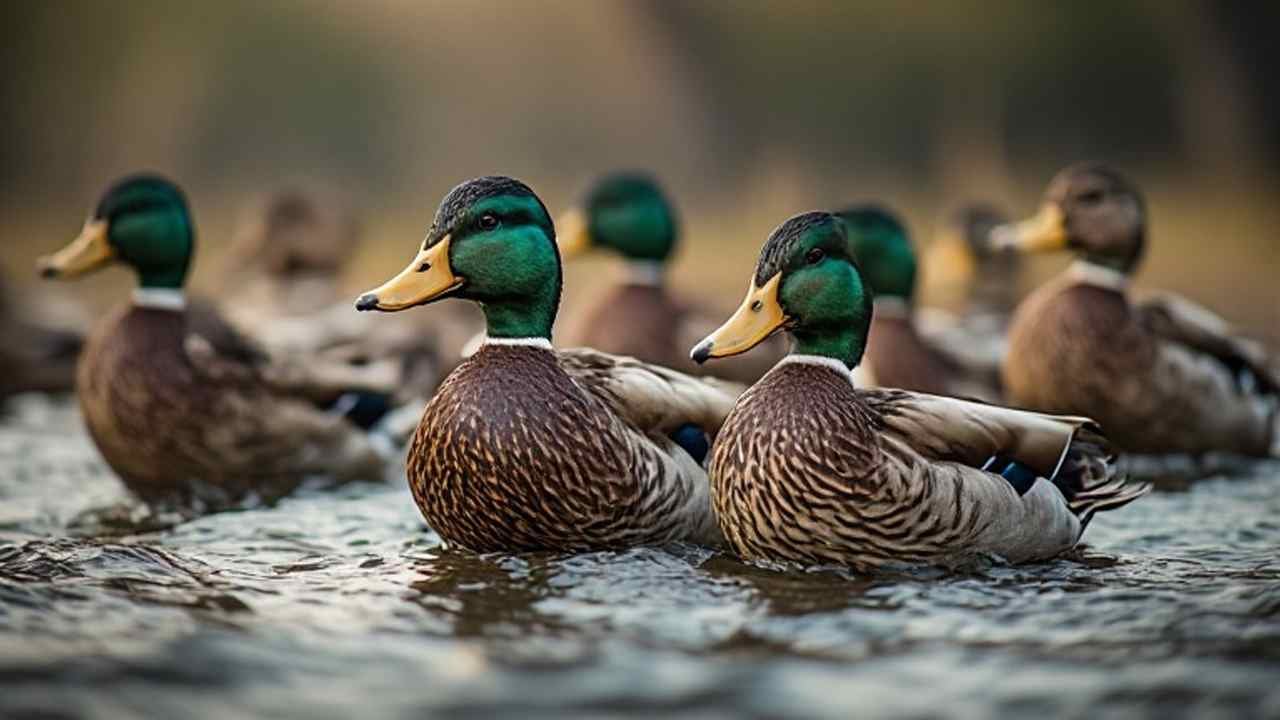
South Dakota Duck Hunting Season 2026-2027: Dates & Regulations
South Dakota’s duck season 2026-2027 opens in late September 2026 and runs into mid-January 2027 depending on the hunting zone. The state splits duck hunting into four zones — High Plains, Low Plains North, Low Plains Middle, and Low Plains South — each with its own continuous season rather than split segments. The official 2026-2027 season dates have been finalized and published by South Dakota Game, Fish and Parks (GFP), so hunters can plan with confidence. Before heading afield, remember that migratory bird regulations can change, so always verify the current rules on the official South Dakota GFP duck hunting page before you hunt.
South Dakota sits at the heart of the Prairie Pothole Region, one of North America’s most productive duck breeding grounds, and offers a mix of pothole hunting, Missouri River big-water hunts, and field hunting over harvested grain. This guide covers every 2026-2027 date, bag limit, license requirement, and regulation you need to hunt legally.
South Dakota Duck Season 2026-2027 at a Glance
| Information | 2026-2027 Details |
|---|---|
| Regular Duck Season | Sep 26 – Dec 8 (Low Plains North & Middle); Oct 24 – Jan 5 (Low Plains South); Oct 10 – Jan 14 (High Plains) |
| Hunting Zones | 4 zones: High Plains, Low Plains North, Low Plains Middle, Low Plains South |
| Daily Bag Limit | 6 ducks (Traditional option) or 3 ducks (Three-Duck option); no split seasons |
| Possession Limit | 3× daily bag limit: 18 ducks (Traditional) or 9 ducks (Three-Duck option) |
| Shooting Hours | One-half hour before sunrise to sunset |
| Youth Waterfowl Days | September 12–13, 2026 (statewide) |
| Veteran/Military Days | No separate veterans weekend; nonresident active-duty military 3-day license available |
| Early Teal Season | None — bonus blue-winged teal allowed during the first 9 days of each zone’s regular season |
| Required License | Resident: small game license (or youth/1-day/combo); Nonresident: nonresident waterfowl license (lottery) |
| South Dakota Waterfowl Stamp | No separate duck stamp — State Migratory Bird Certification ($5 resident) |
| Federal Duck Stamp | Required age 16+; $25; electronic E-Stamp available, South Dakota is a participating state |
| HIP Registration | Completed through the State Migratory Bird Certification purchase |
| Habitat Stamp | Required age 18+; $10 resident / $25 nonresident |
South Dakota Duck Season Dates for 2026-2027
The official dates below were published by South Dakota Game, Fish and Parks for the 2026-2027 waterfowl season. Each zone runs one continuous season — there are no split segments in South Dakota.
| Duck Hunting Zone | 2026-2027 Season Dates |
|---|---|
| Low Plains North | September 26, 2026 – December 8, 2026 |
| Low Plains Middle | September 26, 2026 – December 8, 2026 |
| Low Plains South | October 24, 2026 – January 5, 2027 |
| High Plains | October 10, 2026 – January 14, 2027 |
Key takeaways for planning:
- Opening day: September 26, 2026, in the Low Plains North and Middle zones — the earliest regular-season opener in the state.
- Closing day: The High Plains zone runs longest, closing January 14, 2027.
- Youth waterfowl weekend precedes the regular season statewide on September 12–13, 2026.
- Zone differences matter: A hunter licensed for one zone must follow that zone’s dates; confirm which zone covers your hunting location before you go (official key dates source).
South Dakota Duck Hunting Zones
South Dakota divides the state into four duck hunting zones, established by GFP administrative rule. Understanding which zone you hunt in is essential because dates and, in the case of the nonresident lottery, license options vary by zone.
| Zone | General Location |
|---|---|
| High Plains | Western South Dakota, west of a boundary line that runs south from the North Dakota state line along US 83 to US 14 and then east along US 14 — covering the Missouri River country and points west |
| Low Plains North | Northeastern prairie pothole region, roughly north of US 14/Interstate 90 country east of the Missouri River |
| Low Plains Middle | Central/east-central portion of the state between the North and South Low Plains zones |
| Low Plains South | Southeastern South Dakota, including the James River and Missouri River bottoms near Yankton and the Nebraska border |
The exact boundary lines are described in detail in the GFP administrative rules, and GFP publishes an official interactive waterfowl zone map plus a dedicated Waterfowl Access Map that shows zones, public access, and habitat. Always confirm the zone for your hunting location — hunting on the wrong side of a boundary on opening weekend is one of the most common waterfowl violations in South Dakota. If you’re planning a trip across state lines, note that neighboring North Dakota duck season rules differ, so check each state’s own regulations.
South Dakota Duck Season Bag Limits
South Dakota uses a two-tier duck regulation system (shared with Nebraska) that lets each hunter choose between two daily bag limits when buying their State Migratory Bird Certification. You must pick one option and stick with it for the entire duck season.
Traditional Option (6-Duck Limit)
| Duck Species | Daily Limit | Important Restrictions |
|---|---|---|
| Mallard | 5 | No more than 2 hen mallards |
| Wood Duck | 3 | — |
| Northern Pintail | 3 | — |
| Redhead | 2 | — |
| Canvasback | 2 | — |
| Scaup | 1 | — |
| Other Ducks | Included in 6-bird total | Includes gadwall, teal, wigeon, shoveler, mergansers, and others with no additional sub-limits |
| Total Daily Limit | 6 ducks | Possession limit: 18 (3× daily bag) |
| Bonus Blue-winged Teal | Extra teal allowed | Only during the first 9 days of each zone’s regular season; not available during youth waterfowl weekend |
Three-Duck Option
| Rule | Details |
|---|---|
| Daily Limit | 3 ducks of any species or sex per day — no species or sex restrictions |
| Possession Limit | 9 ducks (3× daily bag) |
| Eligibility | All hunters, all ages |
| Note | Bonus blue-winged teal does not apply under this option; applies only to ducks, not geese |
Tips: The three-duck option is designed to help new hunters who struggle with duck identification at distance. If you hunt with a mixed group (some traditional, some three-duck), that’s legal — hunters with different certifications may hunt together, but each hunter’s personal limit still applies. Possession limits are a multiple of the daily bag limit (3×), so plan your transportation accordingly.
What License Do You Need to Hunt Ducks in South Dakota?
Hunting ducks legally in South Dakota requires a combination of state licenses, stamps, and certifications. Here is the complete checklist for 2026-2027.
South Dakota Hunting License
Residents must hold one of the following base hunting licenses: a resident small game license, a 1-day small game license, a combination license, or a resident youth small game license (ages 12–17). Resident youth under age 16 must complete hunter education or use the mentored hunting program.
Nonresidents cannot buy a general small game license to duck hunt. Instead, they must obtain a Nonresident Waterfowl License, which is limited in number and issued through an online lottery drawing with an application fee. Applications for 2026 closed June 8, 2026, at 8 a.m. Central Time; any unfilled licenses (“leftover” licenses) go on sale to nonresidents beginning August 3, 2026. Options include a 3-day license and a 10-day license, plus a special military license (see below).
South Dakota Migratory Bird Certification
Every duck hunter — resident and nonresident — must buy the South Dakota Migratory Bird Certification (this is the state’s waterfowl/HIP registration). It costs $5 for residents and is required for ducks, geese, tundra swan, sandhill crane, mourning dove, snipe, and coot. You select your bag-limit option (Traditional 6-duck or Three-Duck) at the time of purchase, and the choice is locked for the season.
South Dakota Habitat Stamp
Hunters age 18 and older must purchase the state Habitat Stamp when buying any hunting or fishing license: $10 for residents, $25 for nonresidents. It’s not required with the 1-day small game license or youth licenses, but it is required for the standard small game license and nonresident waterfowl license.
Federal Duck Stamp
Hunters age 16 and older must possess a current Federal Migratory Bird Hunting and Conservation Stamp while waterfowl hunting. The 2026-2027 stamp costs $25, is valid July 1, 2026 – June 30, 2027, and goes on sale at post offices, many sporting goods stores, refuges, and online. The electronic E-Stamp is legal — and South Dakota is one of the participating states that sells E-Stamps through its licensing system. Physical stamps must be signed across the face to be valid; an E-Stamp requires a valid proof of purchase. See the official U.S. Fish and Wildlife Service duck stamp page for details.
HIP Registration
The federal Harvest Information Program (HIP) is integrated into South Dakota’s licensing system: when you purchase your State Migratory Bird Certification, you answer the HIP survey questions, which completes your registration. There is no separate HIP fee — the $5 certification covers it.
Summary Table
| Requirement | Resident | Nonresident | Notes |
|---|---|---|---|
| Hunting License | Small game / youth / 1-day / combo | Nonresident Waterfowl License (lottery) | Nonresident licenses are limited and drawn |
| HIP Registration | Included in Migratory Bird Certification | Included in Migratory Bird Certification | Free with certification purchase |
| South Dakota Migratory Bird Certification | $5 | Required (fee applies) | Choose 6-duck or 3-duck option at purchase |
| Federal Duck Stamp | Required age 16+ ($25) | Required age 16+ ($25) | E-Stamp available; sign physical stamps |
| Habitat Stamp | Required age 18+ ($10) | Required age 18+ ($25) | Also required for most other licenses |
South Dakota Duck Hunting License Costs for 2026-2027
The following fees come from official South Dakota GFP license tables and eRegulations listings. All prices are before any agent fee (typically $4–$8); none of these figures are estimates.
| License or Permit | Resident Cost | Nonresident Cost |
|---|---|---|
| Small Game License | $36 | $142 (two 5-day periods) |
| Youth Small Game License | $5 (ages 12–17) | $10 (ages 12–17) |
| Mentored Small Game License | $5 (under 16) | $10 (under 16) |
| Nonresident Waterfowl License | N/A | $106 (3-day) / $145 (10-day) |
| Migratory Bird Certification | $5 | Included with nonresident waterfowl package where applicable |
| Habitat Stamp | $10 | $25 |
| Federal Duck Stamp | $25 | $25 |
| Nonresident Military 3-Day Waterfowl | N/A | See application (limited to 100/year, private land only) |
Price notes: Resident small game fees exclude the required Habitat Stamp ($10, ages 18+). Nonresident small game licenses valid for two separate 5-day periods; start dates for both periods must be chosen when the license is purchased. Licenses sold over the counter add an agent fee, and big game/nonresident waterfowl licenses are purchased through the online licensing system at Go Outdoors South Dakota.
Youth Waterfowl Hunting Days in South Dakota
South Dakota sets aside one statewide weekend for youth waterfowl hunting before the regular seasons open:
| Youth Waterfowl Details | 2026-2027 |
|---|---|
| Dates | September 12–13, 2026 |
| Where | Statewide — all zones |
| Eligibility | Youth who have not reached age 18 by the first day of the season |
| Adult Supervision | An adult must accompany the youth; the adult may not hunt ducks but may hunt other open seasons (e.g., early Canada goose) |
| Bag Limits | Same daily limits and species restrictions as the regular duck season; the bonus blue-winged teal allowance is not available during youth weekend |
| Licenses | Resident or qualifying nonresident youth must hold a general hunting license (youth small game or equivalent) plus Migratory Bird Certification |
Adult role: The supervising adult serves as a mentor. They may carry a shotgun only if they hold the proper license for another season that’s open — they cannot shoot ducks during this weekend. It’s a great entry point for kids, and GFP encourages using the three-duck option so young hunters can focus on safe shooting and identification instead of species math.
Veteran and Active-Duty Military Waterfowl Hunting Days
South Dakota does not hold a separate veterans’ or active-duty weekend waterfowl hunt. Instead, the state offers two notable military-related benefits:
- Nonresident Military Three-Day Waterfowl License: Active-duty members of the U.S. armed forces (including National Guard and Reserve on active-duty orders) may purchase one fall three-day nonresident waterfowl license, valid only on private land. Only 100 licenses are issued per year, first-come, first-served beginning August 3, 2026 (after the traditional draw). You must upload your active-duty orders during purchase in Go Outdoors South Dakota. A Federal Waterfowl Stamp and State Migratory Bird Certification are still required. Regular (non-military) nonresidents who won the draw aren’t eligible to buy this license unless it’s after November 1 and licenses remain.
- Resident Veteran License Card: South Dakota offers qualifying resident veterans a discounted license available for a $10 fee that is good for four years, simplifying annual license purchases.
All regular bag limits and regulations apply — these licenses change the licensing path, not the harvest rules.
Early Teal Season in South Dakota
South Dakota does not offer a separate early teal season. The state’s regular duck season opens early enough (September 26 in the northern Low Plains zones) that waterfowl managers instead provide a bonus blue-winged teal allowance during the first nine days of each zone’s regular season, under the traditional 6-duck option. This lets hunters target early-migrating bluewings without a standalone September teal opener. There is no separate teal license, shooting-hour change, or bag-limit framework — the regular duck rules apply.
South Dakota Duck Hunting Shooting Hours
Shooting hours for ducks in South Dakota are one-half hour before sunrise to sunset — the standard Central Flyway framework, confirmed on the official GFP duck page. Key reminders:
- Shooting hours are identical across all four zones and all seasons (regular, youth, geese).
- The early Canada goose season and August goose management take follow the same half-hour-before-sunrise-to-sunset schedule.
- Always verify local property rules: some WMAs, national wildlife refuges, and Walk-In Areas may restrict shooting hours, entry times, or vehicle use.
- Use a sunrise/sunset app for your exact location — times shift through the season as days shorten.
Where Can You Hunt Ducks in South Dakota?
Public Land
South Dakota offers generous public waterfowl access, especially east of the Missouri River:
- Game Production Areas (GPAs) — the state’s primary public hunting lands, managed by GFP, concentrated in the eastern pothole region.
- Waterfowl Production Areas (WPAs) — U.S. Fish and Wildlife Service lands, open to walk-in waterfowl hunting with the Federal Duck Stamp acting as your entry permit.
- National Wildlife Refuges — including Waubay, Sand Lake, and Lacreek NWRs, with waterfowl hunting allowed under refuge-specific rules (some refuges require checking in or have closed areas).
- Missouri River lakes — Lake Oahe and other mainstem reservoirs offer big-water duck hunting, plus the Lower Oahe Access Program with designated public access points.
- Walk-In Areas and other GFP hunting areas — found through the GFP hunting areas map and the interactive Waterfowl Access Map.
Each area has its own rules on entry, vehicle use, blinds, and shooting hours — check the specific area’s regulations before hunting.
Private Land
Most South Dakota waterfowl hunting (especially field hunting for mallards and geese) happens on private land. Written or verbal permission from the landowner is required before entering any private property not enrolled in a public-access program. South Dakota’s trespass laws are strictly enforced, and GFP recommends confirming access verbally each trip — field access can change season to season. The Nonresident Military Three-Day license is valid only on private land, so military license holders especially must secure permission.
Public Hunting Draws and Reservations
The main draw system relevant to duck hunters is the Nonresident Waterfowl License lottery:
| Item | 2026 Details |
|---|---|
| Application Window | May 26 – June 8, 2026 (closed at 8 a.m. Central Time) |
| Process | Online application + fee via Go Outdoors South Dakota |
| Quota | Licenses limited by zone and type (3-day / 10-day) |
| Leftovers | Unsold licenses available starting August 3, 2026, first-come, first-served |
| Refuge/Reservation Permits | Some national wildlife refuges and tribal lands require separate permits or have designated hunt areas — contact the individual refuge or tribal office |
There is no statewide duck blind reservation system for general public lands; hunting is first-come, first-served except where refuge-specific draws exist.
Important South Dakota Duck Hunting Regulations
South Dakota waterfowl hunting follows both state law and federal migratory bird regulations. The essentials:
- Non-toxic shot only — lead shot is prohibited for all waterfowl hunting. Steel, bismuth, tungsten, and other approved non-toxic loads are required.
- Shotgun capacity — shotguns must be plugged to hold no more than three shells (one in the chamber, two in the magazine) while hunting migratory birds.
- Legal methods — shotguns 10 gauge or smaller, fired from the shoulder; no rifles or handguns for ducks. No motorized decoys in many federal contexts; check local rules.
- Electronic calls are prohibited for waterfowl hunting under federal rules — mouth calls and manual calls only.
- Baiting is illegal — you may not hunt ducks over bait, baited areas, or in areas where bait was placed; take down decoys and leave baited fields when birds abandon them (fields of standing/fallen crops or flooded normal agricultural practices are legal).
- Wanton waste — you must make a reasonable effort to retrieve and keep all birds you kill.
- Species identification responsibility — you are responsible for correctly identifying each duck before shooting; this is why GFP offers the three-duck option.
- Transportation/tagging — a federal duck stamp must be in your possession while hunting; birds in transit should have species and sex identification possible (leaving one wing attached meets most transport requirements).
- Retrieval — crippled birds must be pursued and retrieved promptly.
- Roads and buildings — hunting from or across public road rights-of-way is generally prohibited; never discharge a firearm within the safety zone around occupied buildings without permission.
- Tagging of tribal lands — state licenses are not valid on tribal trust lands; contact tribal offices for those areas.
Best Ducks to Hunt in South Dakota
| Species | Where & Habitat | Timing Notes |
|---|---|---|
| Mallard | Everywhere — potholes, river bottoms, flooded corn and soybean fields; the state’s bread-and-butter duck | Peak numbers build through October and November as cold fronts push birds south from Canada |
| Blue-winged Teal | Shallow potholes and marsh edges, especially early season | Arrive first — September/early October; the 9-day bonus teal rule targets them |
| Green-winged Teal | Same shallow-water habitats; more abundant later in the season | Strong late-October through November flights |
| Gadwall | Potholes and big-water lakes; frequently in the bag across all zones | Midseason staple, October–November |
| Northern Pintail | Open wetlands, lake edges, and field hunting situations | Early migrant, often best in October; sub-limit of 3 |
| Canvasback | Big water — Missouri River reservoirs, large glacial lakes | Late October–November; sub-limit of 2 |
| Redhead | Big water and large marsh complexes | November focus; sub-limit of 2 |
| Scaup (Bluebill) | Open deep water on Oahe and other reservoirs | Late season, often December; sub-limit of 1 |
| Wood Duck | Timbered river corridors — Missouri River tributaries, James River, farm ponds with brush | September–October; sub-limit of 3 |
| Northern Shoveler / Wigeon | Shallow marshes and potholes; common incidental bag | October–November |
South Dakota lacks Atlantic Flyway species like black ducks and mottled ducks, so those don’t appear in the state’s daily limit framework — the sub-limits above are the complete South Dakota set per GFP’s published rules.
Tips for Hunting During the South Dakota Duck Season
- Scout the potholes early: Eastern South Dakota’s GPA network holds water in wetlands you can’t see from the road. Canvas permission and wetland conditions before opening day — a dry September can concentrate birds on the few remaining basins.
- Watch weather and migration: The first hard front out of Canada (typically late September through October) moves mallards and pintails into the state. Monitor GFP’s weekly migration reports and the Prairie Pothole forecasts.
- Set up on the wind: Ducks land into the wind. Position decoys so birds work into a crosswind in front of your hide, with the sun at your back.
- Right-size your spread: For pothole puddles, 1–2 dozen decoys are plenty; on Missouri River big water or in field setups over corn, scale up to 3–6 dozen.
- Call with restraint: Prairie mallards are call-shy. Use a soft feed chuckle early, and skip the hail call unless birds are swinging wide.
- Concealment beats gear: In cattails, a dozen cattail stems in front of a layout blind beats a fancy pit. In harvested fields, get low and break up your silhouette with natural cover.
- Hunt the “field-duck” pattern: Mallards in South Dakota routinely feed in stubble fields and corn — layout-blind field hunting is a proven prairie tactic, especially late season.
- Check water levels and access: Lake Oahe and river habitats change with water levels; the Lower Oahe Access Program and Waterfowl Access Map show current access points.
- Identify before you shoot: With a 1-scaup or 2-hen-mallard sub-limit under the traditional option, misidentification is costly — practice with the FWS duck ID guide.
Frequently Asked Questions About South Dakota Duck Season
When does South Dakota duck season 2026-2027 start and end?
The Low Plains North and Middle zones open September 26, 2026 and close December 8, 2026. The Low Plains South zone runs October 24 – January 5, 2027, and the High Plains zone runs October 10 – January 14, 2027. These are official GFP-published dates.
How many ducks can I take per day in South Dakota?
Under the traditional option you may take 6 ducks per day (18 in possession), with sub-limits of 5 mallards (max 2 hens), 3 wood ducks, 3 pintails, 2 redheads, 2 canvasbacks, and 1 scaup. Under the three-duck option you may take 3 ducks of any species or sex (9 in possession).
Is the bonus blue-winged teal rule still in effect?
Yes — under the traditional option, extra blue-winged teal are allowed during the first nine days of each zone’s regular season. The bonus teal allowance does not apply during the youth waterfowl weekend or under the three-duck option.
Do I need a special South Dakota duck stamp?
South Dakota does not issue a separate “duck stamp.” Instead you need the State Migratory Bird Certification ($5, includes HIP), the Federal Duck Stamp (age 16+, $25), and the Habitat Stamp (age 18+, $10 resident / $25 nonresident).
Can nonresidents hunt ducks in South Dakota?
Yes, but fall nonresident waterfowl licenses are limited and issued by lottery. The 2026 application window (May 26 – June 8) has closed; leftover licenses go on sale August 3, 2026, online. Alternatives include the nonresident active-duty military 3-day license (private land only, 100 available).
When is the youth waterfowl season, and can parents hunt?
Youth waterfowl weekend is September 12–13, 2026, statewide. Youth under 18 on the season’s first day may hunt; an adult must accompany them. The adult cannot hunt ducks that weekend (though other open seasons like early Canada goose are allowed).
What are the shooting hours for ducks in South Dakota?
Shooting hours are one-half hour before sunrise to sunset statewide, on all zones and seasons. Always confirm area-specific restrictions on WMAs, refuges, and Walk-In Areas.
Is baiting allowed for duck hunting in South Dakota?
No. Hunting waterfowl over bait or baited areas is prohibited under federal law. Hunting over standing crops, flooded crops, or fields manipulated through normal agricultural practices (e.g., disking or mowing) is legal — but be aware that once bait is present, the area can remain “baited” for up to 10 days.
Before You Hunt: Check the Latest South Dakota Regulations
Migratory bird seasons, public land rules, emergency closures (drought, disease like avian influenza, flooding), and special restrictions can change at any time. The dates, limits, and fees above were verified against official sources on September 13, 2026, but South Dakota GFP and the U.S. Fish and Wildlife Service can amend regulations seasonally. Always verify the current regulations with South Dakota Game, Fish and Parks immediately before hunting, and check the specific rules for any WMA, refuge, or Walk-In Area you plan to hunt.