
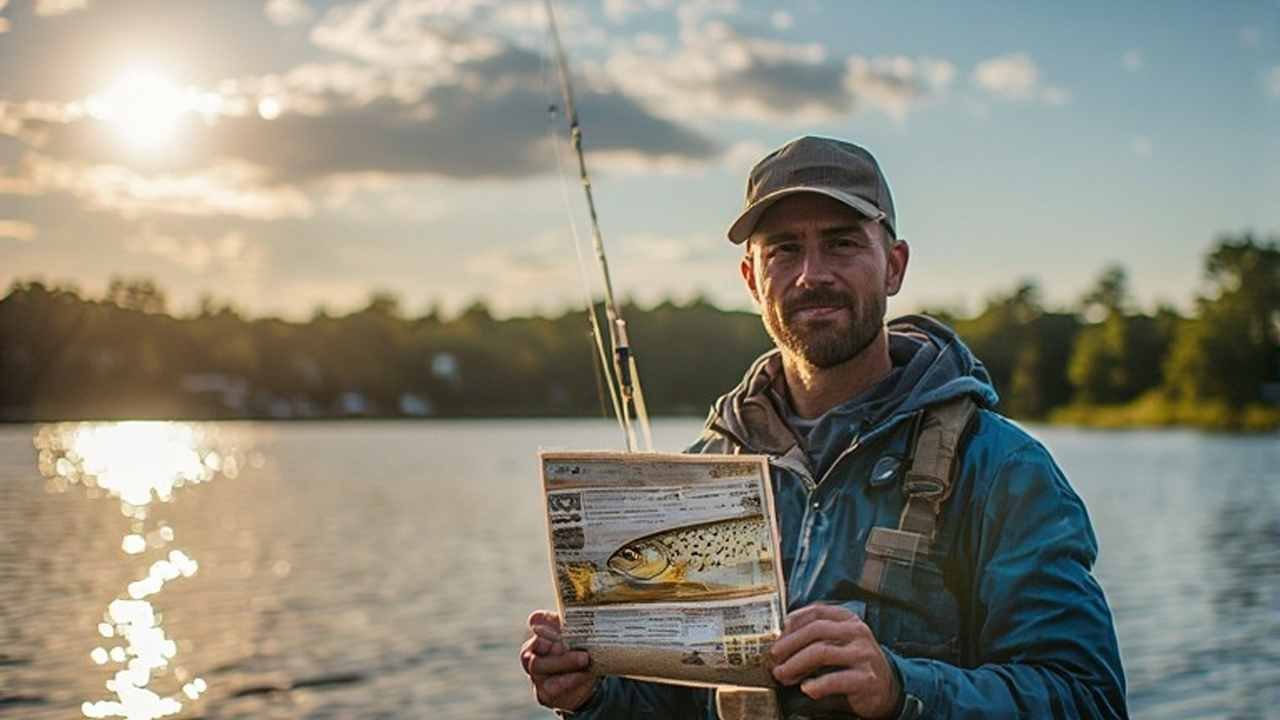
North Carolina Fishing License Guide 2026: Inland and Coastal Waters
Getting a North Carolina fishing license in 2026 is straightforward — but choosing the wrong type can cost you extra money or leave you out of compliance on the water. Whether you’re a first-time angler planning a trip to the Outer Banks, a mountain trout enthusiast headed to the Blue Ridge, or a lifelong NC resident who wants the best deal, this guide breaks down every license type, exact fee, exemption, purchase method, and updated regulation you need to know for the 2025–2026 fishing season. Read every section carefully, because some rules have changed significantly — and overlooking them carries real fines.
North Carolina divides its public waters into two main categories — inland (freshwater) and coastal (saltwater) — and the license you need depends entirely on where you plan to fish. Areas where fresh and saltwater overlap are called “joint waters,” which may be covered by either type. The NC Wildlife Resources Commission (WRC) and the Division of Marine Fisheries (DMF) jointly manage licensing, so staying informed about both agencies matters more than most anglers realize.
Who Needs a North Carolina Fishing License in 2026?
Any angler age 16 or older must hold a valid fishing permit when using any type of bait or gear to catch finfish in NC’s public waters. This includes helping someone else fish — even if you’re just baiting hooks or setting drag, you need your own valid authorization.
Situations That Do NOT Require a License
| Exemption Category | Details |
|---|---|
| Children under 16 | No permit required for any type of fishing |
| Charter/For-Hire Vessel Passengers | Passengers aboard licensed saltwater charter boats are covered |
| July 4th Free Fishing Day | Everyone — resident or visitor — can fish without a license on Independence Day |
| Military Members on Leave | NC residents on furlough may fish license-free for up to 30 days; must carry military ID and leave papers |
| Private Ponds on Private Land | No permit needed when fishing solely on privately owned, non-public water |
| Subsistence Recipients | NC residents receiving Medicaid, Food Stamps, or Work First Family Assistance qualify for a FREE Unified License Waiver through their county Department of Social Services |
| Legally Blind Residents | Certified legally blind NC residents receive a FREE Unified Inland/Coastal lifetime license |
| Adult Care Home Residents | Residents of adult care facilities receive a FREE Unified Lifetime license during their residency |
Types of North Carolina Fishing Licenses for 2026
Before purchasing, you need to know which waters you’ll be fishing. North Carolina issues three core recreational categories:
- Inland Fishing License — Covers all freshwater statewide, including mountain trout waters, game land trout streams, and joint waters. Does NOT include coastal saltwater.
- Coastal Recreational Fishing License (CRFL) — Authorizes recreational fishing in coastal and joint saltwater waters. Cannot be used for inland fishing.
- Unified Inland/Coastal License — Available to NC residents only, this single permit covers both freshwater and saltwater statewide. It’s the best value if you fish in both environments.
Additionally, there are short-term (10-day), annual (12-month), and lifetime versions of each category.
North Carolina Fishing License Fees 2026 — Complete Table
Short-Term (10-Day) License Fees
| License Type | Resident Fee | Non-Resident Fee |
|---|---|---|
| 10-Day Inland Fishing | $11 | $28 |
| 10-Day Coastal Recreational Fishing | $8 | $14 |
Short-term permits are valid for the 10 consecutive days specified on the license. They are ideal for vacationers and out-of-state visitors.
Annual (12-Month) License Fees
| License Type | Resident Fee | Non-Resident Fee |
|---|---|---|
| State Inland Fishing | $30 | $54 |
| Coastal Recreational Fishing | $19 | $38 |
| Unified Inland/Coastal Recreational | $49 | N/A (Residents only) |
| Subsistence Unified Inland/Coastal | FREE | N/A |
| Special Device Inland Fishing | $95 | $630 |
Note: A $5 transaction fee is added to most orders at checkout. The Special Device Inland Fishing permit authorizes the use of seines, cast nets, gill nets, bow nets, fish pots, and other gear for nongame species in inland waters.
Lifetime Fishing License Fees (Inland)
| License Type | Resident Fee | Non-Resident Fee |
|---|---|---|
| Comprehensive Inland Fishing (Adult) | $315 | N/A |
| Senior Inland Lifetime | $19 | N/A |
| Disabled Veteran Inland | $14 | N/A |
| Totally Disabled Inland | $14 | N/A |
Lifetime Coastal Recreational Fishing License Fees
| Age Group | Resident Fee | Non-Resident Fee |
|---|---|---|
| Adult (age 12 and older) | $315 | $630 |
| Youth (ages 1–11) | $189 | $189 |
| Infant (under age 1) | $126 | $126 |
| Senior | $19 | N/A |
| Disabled Veteran (50%+ VA rating) | $14 | N/A |
| Totally Disabled | $14 | N/A |
| Legally Blind (unified) | FREE | N/A |
| Adult Care Home Resident (unified) | FREE | N/A |
Senior lifetime eligibility: Residents born on or before August 1, 1953 qualify at age 65. Those born after that date qualify at age 70.
Unified Inland/Coastal Lifetime License Fees
| License Type | Resident Fee |
|---|---|
| Unified Inland/Coastal (All Ages) | $567 |
| Legally Blind Unified | FREE |
| Adult Care Home Unified | FREE |
Hunting and Fishing Combination License Fees
If you hunt and fish, these bundled options save you money compared to buying separate permits.
| License Type | Resident Fee |
|---|---|
| Combination Hunting + Inland Fishing (Annual) | $42 |
| Sportsman License — Hunting + Inland Fishing (Annual) | $63 |
| Unified Sportsman + Coastal Recreational (Annual) | $82 |
| Lifetime Sportsman Adult (12+) | $630 |
| Lifetime Sportsman Youth (1–11) | $441 |
| Lifetime Sportsman Infant (under 1) | $252 |
| Lifetime Sportsman Age 50+ | $315 |
| Lifetime Sportsman Senior | $19 |
| Lifetime Unified Sportsman + Coastal Adult | $851 |
| Disabled Veteran Unified Sportsman + Coastal | $139 |
| Totally Disabled Unified Sportsman + Coastal | $139 |
How to Buy a North Carolina Fishing License in 2026
There are three straightforward ways to get your permit before heading to the water:
Option 1 — Purchase Online (Fastest)
Visit GoOutdoorsNorthCarolina.com to complete your purchase using Visa or MasterCard. A $2 transaction fee applies. Your permit is immediately available digitally, so you can fish the same day. Note that certain lifetime licenses (youth, infant, and disability-based) cannot be purchased online.
Option 2 — Buy by Phone
Call 1-888-248-6834 during business hours (Monday through Friday, 8 a.m. to 5 p.m.). Customer service representatives will process your purchase over the phone.
Option 3 — In-Person Agents
Visit any of the following locations across the state:
- NC Wildlife Resources Commission license agents
- Division of Marine Fisheries (DMF) regional offices
- Most sporting goods retailers and tackle shops
- Major chains including Walmart
Pro Tip: If you purchase online or by phone, you can fish immediately using your license number and a government-issued photo ID. Your physical permit will arrive by mail. Once it arrives, carry it on your person while fishing.
What to Do If You Lose Your NC Fishing License
If you misplace your permit, do not simply skip fishing — replacement is easy. Print and complete the official replacement form and mail it to:
NC Wildlife Resources Commission, License Section
1707 Mail Service Center, Raleigh, NC 27699-1707
Include a check or money order for the administrative fee:
- $1 for lifetime licenses
- $7 for all other license types
2025–2026 North Carolina Fishing Regulation Changes You Need to Know
The NC Wildlife Resources Commission and the Division of Marine Fisheries updated several rules for the 2025–2026 season. Here’s a concise breakdown:
| Regulation Change | Details |
|---|---|
| Youth Age Standardization | The definition of “youth” is now uniformly set at under 16 years of age across all rules |
| Crappie at Shearon Harris Reservoir | New 8-inch minimum size limit; 20-fish daily creel limit now in effect |
| Striped & White Mullet Daily Creel | Reduced from 200 to 100 fish in aggregate; maximum 400 fish per vessel |
| Mandatory Harvest Reporting (Dec. 1, 2025) | Anglers must report harvest of Red Drum, Flounder, Spotted Seatrout, Striped Bass, and Weakfish at deq.nc.gov/report-my-fish |
| Sheepshead Size & Bag Limit | Minimum 10-inch total length; 10 fish per person per day bag limit |
Failing to report your harvest of the five designated species is now a compliance violation. The new reporting system applies to both inland joint waters and coastal waters. Take a few minutes after your trip to log your catch at the official portal.
Popular Saltwater Fish: 2026 Size and Bag Limits (Snapshot)
| Species | Minimum Size | Daily Bag Limit |
|---|---|---|
| Red Drum | 18″ – 27″ slot limit | 1 per person |
| Flounder | 12″ total length | 8 per person |
| Spotted Seatrout | 14″ total length | 10 per person |
| Striped Bass (coastal) | 18″ total length | 1 per person |
| Sheepshead | 10″ total length | 10 per person |
| Weakfish | 12″ total length | Consult current proclamations |
Important: Always verify current bag limits before heading out, as proclamations can change mid-season. Download the FishRules App or visit the DMF website for the most up-to-date coastal limits.
NC Fishing License Reciprocal Agreements with Neighboring States
North Carolina has reciprocal agreements with most bordering states — but notably not South Carolina. Here’s where your NC license is valid when fishing from a boat:
| State | Waters Where NC License Is Honored |
|---|---|
| Georgia | Chatuge Reservoir and all boat-accessible tributaries |
| Tennessee | Slick Rock Creek and Calderwood Reservoir (boat fishing only) |
| Virginia | Kerr and Gaston Reservoirs, Dan River, and confluence of the New and Little Rivers |
Resident vs. Non-Resident: How to Qualify as an NC Resident
Many anglers are confused about residency status. You qualify as an NC resident if you have lived continuously in the state for the past 6 months. Acceptable proof includes your Social Security number, NC driver’s license, or any government-issued ID showing your NC address. Full-time students enrolled in NC colleges or universities also qualify for resident rates.
Planning Your Fishing Trip Around NC’s Open Seasons
Knowing when and where to fish is just as important as having your permit. Before you plan your next outing, check out North Carolina fishing season dates and open water schedules to make sure your target species is in season and to avoid regulatory surprises on the water.
North Carolina Fishing License
Q1: Do I need a separate trout stamp in 2026?
No. Trout privileges are included with any valid Inland Fishing License as of 2020. You do not need to purchase a separate trout stamp or endorsement.
Q2: Can I fish on July 4th without any permit in NC?
Yes. July 4th is a Free Fishing Day in North Carolina. All anglers — resident and non-resident alike — may fish in public waters without a license. However, standard size limits, bag limits, and seasonal restrictions still apply.
Q3: Is a fishing permit required aboard a saltwater charter boat?
No. Passengers on licensed for-hire (charter) vessels do not need their own Coastal Recreational Fishing License. The vessel’s party boat license covers them.
Q4: What happens if I fish without a license in NC?
You face a Class 3 misdemeanor charge, a fine ranging from $35 to $500, and potentially up to 30 days in jail. It’s not worth the risk — permits are affordable and easy to get.
Q5: Can non-residents buy a unified (inland + coastal) license?
No. The Unified Inland/Coastal Recreational Fishing License is available to NC residents only. Non-residents must purchase separate inland and coastal permits if they plan to fish both water types.
Q6: How long is an annual NC fishing license valid?
Annual permits are valid for 12 months from the date of purchase, not on a calendar-year basis. So if you buy on March 15, your permit is valid through March 14 of the following year.
Q7: What species require mandatory harvest reporting starting in 2025?
Effective December 1, 2025, you must report your harvest of Red Drum, Flounder, Spotted Seatrout, Striped Bass, and Weakfish at deq.nc.gov/report-my-fish after each fishing trip where you keep these fish.
Q8: Can military veterans get a discounted permit?
Yes. NC residents with a VA disability rating of 50% or more qualify for a Disabled Veteran license at $14 for inland, coastal, or combination options — a significant discount from standard fees.