
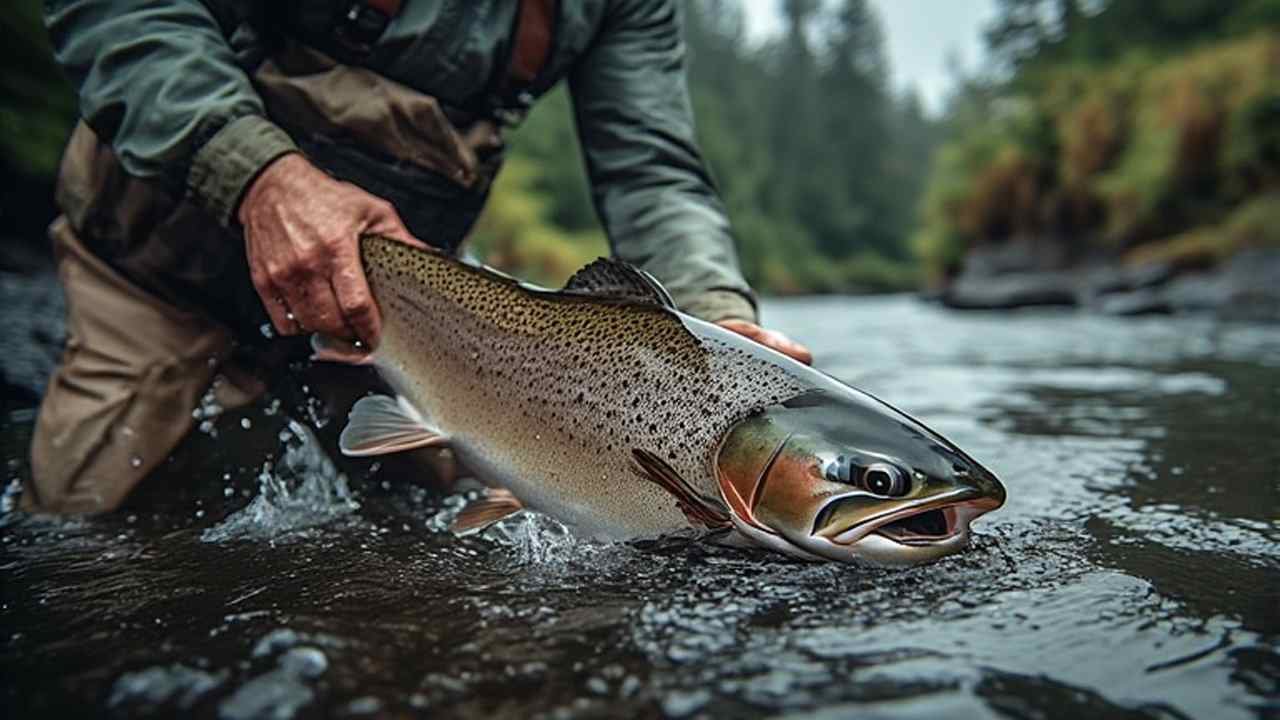
2026 WDFW Coastal Trout & Steelhead Rules: Dates, Limits & Closures
The Washington Department of Fish and Wildlife (WDFW) has implemented updated coastal steelhead and trout regulations for the 2025-26 season, effective December 1, 2025 through April 30, 2026. The daily bag limit is two hatchery steelhead with mandatory release of all wild steelhead, rainbow trout, and cutthroat trout across coastal rivers and streams. Most major fishing areas operate from December 1 through March 31, with notable exceptions including the Humptulips River closing February 2 and the Chehalis River closing February 16. These regulations represent permanent rule changes adopted by the Washington Fish and Wildlife Commission to address declining steelhead populations while maintaining sustainable recreational fishing opportunities. Anglers must use single-point barbless hooks in most areas, with selective gear rules and bait restrictions varying by location and season dates. Understanding these regulations is critical as wild steelhead populations have declined over five decades, with most areas returning below escapement goals in recent years.
If you’re planning to fish Washington’s coastal waters this season, you need to know these regulations inside and out—not just to stay legal, but to help protect struggling steelhead runs that have defined Pacific Northwest fishing culture for generations.
Overview of 2025-26 Coastal Steelhead Season Changes
The 2025-26 season marks a significant shift in how Washington manages its coastal steelhead fisheries. After extensive public input, multiple virtual town halls, and commission meetings throughout 2025, WDFW finalized permanent regulations that replace the emergency rules anglers had grown accustomed to seeing year after year.
Key Changes This Season
Standardized Season Dates: Most major coastal steelhead rivers now operate on a December 1 through March 31 schedule, providing consistency across the region. This represents a departure from the varied, often confusing patchwork of emergency closures that characterized previous seasons.
Stricter Gear Requirements: Single-point barbless hooks are now required across most coastal systems, with many rivers transitioning to full selective gear rules (no bait) partway through the season. This reduces mortality rates for wild steelhead that must be released.
Earlier Closures on Key Rivers: High-priority conservation rivers like the Humptulips and Chehalis have earlier closure dates to protect spawning fish during critical periods.
Enhanced Wild Fish Protection: The prohibition on removing wild steelhead from the water is now universal across coastal systems, reducing handling stress on fish that have declined dramatically in recent decades.
Understanding the Daily Bag Limit and Retention Rules
Current Bag Limits
The daily bag limit for coastal steelhead is two (2) hatchery fish per day across all rivers and streams in the coastal management area. This limit applies universally, regardless of the specific river system you’re fishing.
What You Can Keep:
- Hatchery steelhead (adipose fin clipped)
- Minimum size: 20 inches
- Maximum: 2 fish per day
What You Must Release:
- All wild steelhead (intact adipose fin)
- All rainbow trout
- All cutthroat trout
Identifying Hatchery vs. Wild Steelhead
Proper identification is not just important—it’s legally required and essential for conservation. According to WDFW mass-marking programs, here’s how to tell the difference:
Hatchery Steelhead:
- Missing adipose fin (small fatty fin between dorsal fin and tail)
- Clean removal site, typically with healed scar tissue
- May have slightly worn or eroded fins from hatchery rearing
- Often have slightly different body proportions
Wild Steelhead:
- Intact adipose fin clearly visible
- Generally sleeker body profile
- More vibrant coloration patterns
- Fins typically in pristine condition
If you cannot determine whether a steelhead is hatchery or wild, you must release it immediately. When in doubt, let it go. Understanding essential fishing safety guidelines is crucial when handling these powerful fish—check out this comprehensive resource on essential fishing safety guidelines anglers should follow.
Handling Requirements for Wild Steelhead
New regulations explicitly state that anglers may not fully remove wild steelhead from the water. This means:
- Keep the fish in the water while removing the hook
- Use long-nose pliers or hemostats for hook removal
- Minimize handling time to reduce stress
- Take photos only with the fish in the water
- Support the fish gently until it swims away strongly
License and Permit Requirements for 2026
Basic Fishing License
Everyone age 16 and older must possess a valid Washington fishing license to fish for steelhead. Standard license options include:
| License Type | Resident Cost | Non-Resident Cost | Duration |
|---|---|---|---|
| Annual Combination | $59.50 | $168.40 | 12 months |
| Annual Freshwater | $33.30 | $77.15 | 12 months |
| 3-Day Freshwater | $17.20 | $32.90 | 3 consecutive days |
| 1-Day Freshwater | $11.45 | $16.05 | Single day |
Note: License fees increased effective July 1, 2025. Seniors 70+ and youth under 16 may qualify for reduced or free licenses.
Columbia River Salmon and Steelhead Endorsement (NEW for 2026)
Important: Starting January 1, 2026, all anglers age 15 and older must purchase a Columbia River Salmon and Steelhead Endorsement (CRSSE) to fish for salmon and steelhead in the Columbia River and its Washington tributaries. This endorsement costs $15.75 and is required in addition to your regular fishing license.
While this endorsement primarily applies to Columbia River fishing, coastal anglers should be aware of this requirement if they plan to fish both regions. For comprehensive information on licenses across all states, refer to this complete fishing license guide USA.
Catch Record Card Requirement
You must have a catch record card in your possession when fishing for steelhead. This card is:
- Free with annual licenses
- Required for all steelhead fishing
- Must be filled out immediately upon catching or releasing steelhead
- Used by WDFW to estimate harvest and manage populations
Failure to possess and properly complete your catch record card can result in citations and fines.
Coastal Steelhead Management Areas: A Complete Breakdown
Washington’s coastal steelhead management area encompasses rivers and streams from the Elwha River west on the Strait of Juan de Fuca, continuing through Washington’s Pacific Coast, Grays Harbor, Chehalis Basin, and Willapa Bay.
North Coast/Olympic Peninsula Rivers
This region includes some of Washington’s most iconic steelhead waters, with regulations focused on protecting wild fish while providing sustainable harvest opportunities for hatchery steelhead.
Major North Coast Rivers and Regulations
| River System | Season Dates | Gear Restrictions | Special Notes |
|---|---|---|---|
| Quillayute River | Dec 1-31: Open Jan 1-Mar 31: Open Apr 1-30: CLOSED | Dec: Hatchery limit 2 Jan-Mar: Bait prohibited, single-point barbless | Release all cutthroat and wild rainbow |
| Bogachiel River (mouth to Hwy 101) | Dec 1-31: Open Jan 1-Mar 31: Open Apr 1-30: CLOSED | Dec: Hatchery limit 2 Jan-Mar: Bait prohibited, single-point barbless | Popular winter steelhead destination |
| Sol Duc River | Dec 1-Mar 31: Open Apr 1-30: CLOSED | Jan-Mar: Bait prohibited Single-point barbless hooks | Below concrete pump station at hatchery |
| Hoh River (Park boundary to Oxbow) | Dec 1-31: Open Jan 1-Mar 31: Open Apr 1-15: CLOSED | Dec: Hatchery limit 2 Jan-Mar: Bait prohibited, single-point barbless | Earlier closure than other systems |
| Calawah River (mouth to Hwy 101) | Dec 1-31: Open Jan 1-Mar 31: Open Apr 1-30: CLOSED | Dec: Hatchery limit 2 Jan-Mar: Bait prohibited | Consistent with Quillayute system |
Smaller North Coast Tributaries
Hoko River: Open Dec 1-Mar 15, slightly shorter season than major rivers
Lyre River: Open Dec 1-Jan 31, very short season for this smaller system
Clallam River: Open Dec 1-Jan 31, primarily a winter fishery
Dickey River: Dec 1-Mar 31 with bait prohibited from January onward, April 1-30 CLOSED
These smaller systems generally have shorter seasons and more restrictive gear rules to protect limited wild steelhead populations.
Queets, Quinault, and Central Coast Rivers
Quinault River Regulations
The Quinault River remains open December 3-March 31 with specific regulations:
- December 3-31: Selective gear rules (bait allowed this period)
- January 1-February 28: Bait prohibited, single-point barbless hooks
- March 1-31: Catch-and-release only, selective gear
- April 1-15: CLOSED
The Quinault flows through both Quinault Indian Reservation and Olympic National Park boundaries—ensure you understand where tribal and federal jurisdictions apply.
Queets River – CLOSED
The Queets River is CLOSED for the 2025-26 winter steelhead season by Olympic National Park due to critically low forecasted returns. This represents the second consecutive year of closure for this historically productive system.
Grays Harbor Rivers and Tributaries
The Grays Harbor basin includes numerous river systems with varied regulations designed to protect depressed wild steelhead runs.
Chehalis River System
| River Section | Season Dates | Gear Requirements | Bag Limit |
|---|---|---|---|
| Mouth to Skookumchuck confluence | Dec 3-31: Open Jan 1-Feb 15: Open Feb 16-Apr 15: CLOSED | Dec: Single-point barbless Jan-Feb 15: Selective gear only | 2 hatchery steelhead |
| Skookumchuck to Crim Creek | Dec 3-31: Open Jan 1-Apr 15: CLOSED | Dec: Single-point barbless hooks | Earlier closure due to conservation concerns |
| Above Crim Creek | Dec 3-Apr 15: CLOSED | N/A – Closed entire season | Year-round protection |
Important: The Chehalis River has one of the earliest closures (February 16) among major coastal systems due to poor wild steelhead returns and habitat concerns.
Humptulips River
The Humptulips has staggered closures by river section:
Mouth to Highway 101 Bridge:
- Dec 3-31: Single-point barbless hooks required
- Jan 1-Feb 1: Selective gear rules
- Feb 2-Mar 31: CLOSED
Highway 101 Bridge to East/West Fork confluence:
- Dec 3-31: Single-point barbless hooks
- Jan 1-Feb 28: CLOSED
This early February closure reflects the biological importance of protecting spawning fish in this system.
Wynoochee River
| River Section | Season Dates | Gear Rules |
|---|---|---|
| Mouth to 7400 Line Bridge | Dec 3-31: Open Jan 1-Feb 15: Open Feb 16-Mar 31: CLOSED | Dec: Single-point barbless Jan-Feb: Selective gear |
| 7400 Line Bridge to Wynoochee Dam | Dec 3-Mar 31: CLOSED | Closed entire season |
| Above Wynoochee Dam | Dec 3-Mar 31: CLOSED | Closed entire season |
Satsop River
The Satsop River and East Fork follow similar patterns to the Chehalis, with closure on February 16 to align with basin-wide conservation measures.
Additional Grays Harbor Tributaries
Hoquiam River (including West and East Forks):
- Open Dec 3-31 with selective gear rules
- CLOSED Jan 1-Feb 28
Wishkah River:
- Open Dec 3-31 with single-point barbless hooks
- CLOSED Jan 1-Feb 28
Elk River:
- Open Dec 3-31 with selective gear rules
- CLOSED Jan 1-Feb 28
Johns River:
- Open Dec 3-31 with single-point barbless hooks
- CLOSED Jan 1-Feb 28
Willapa Bay Tributaries
The Willapa Bay drainage includes several important steelhead rivers with regulations designed to balance harvest and conservation.
Naselle River
The Naselle River has complex, reach-specific regulations:
Highway 101 Bridge to Hatchery Attraction Channel:
- Dec 1-Jan 31: Anti-snagging rule, single-point barbless, night closure
- Feb 1-Mar 31: Selective gear rules
- Apr 1-15: CLOSED
Hatchery to Falls (Sec. 6):
- Same regulations as lower reach
Falls to Crown Mainline Bridge:
- Dec 1-Mar 31: Selective gear rules
- Apr 1-15: CLOSED
Willapa River
| Section | Dec 1-Jan 31 | Feb 1-Mar 31 |
|---|---|---|
| Mouth to Ward/Wilson Creeks | Anti-snagging rule, single-point barbless, night closure | Selective gear rules |
| Ward/Wilson to Highway 6 Bridge | Anti-snagging rule, single-point barbless, night closure | Selective gear rules |
Bear River
- Open Dec 1-Mar 31
- Selective gear rules entire season
- Release all cutthroat and wild rainbow trout
Nemah River System
North Fork Nemah:
- Hwy 101 Bridge to fishing boundary sign: Open Dec 1-Mar 31, selective gear
- Hatchery Dam to N-700 Road: Open Dec 1-Mar 31, selective gear
- N-700 Road to Cruiser Creek: CLOSED Dec 1-Mar 31
Middle Fork Nemah:
- Mouth to DNR decommissioned bridge: Open Dec 1-Mar 31, selective gear
- Above DNR bridge: CLOSED Dec 1-Mar 31
South Fork Nemah:
- Open Dec 1-Mar 31, selective gear rules throughout
Gear Restrictions and Selective Gear Rules Explained
Understanding gear regulations is crucial for legal fishing and conservation compliance. Washington employs specific gear terminology that anglers must understand.
Single-Point Barbless Hook Requirements
Single-point barbless hooks are required in most coastal steelhead waters, especially from January forward. This means:
✓ Allowed:
- Single barbless hooks
- Hooks with barbs pinched down completely flat
- Jigs with single hooks
- Flies with single hooks
✗ NOT Allowed:
- Treble hooks of any kind
- Double hooks or double-hook rigs
- Barbed hooks (unless specifically allowed)
- Multiple hooks on one line
How to Create Barbless Hooks: Use needle-nose pliers to pinch down the barb completely flush with the hook shank. The barb should not protrude at all.
Selective Gear Rules Definition
When regulations specify “selective gear rules,” this means:
Allowed Gear:
- Artificial flies
- Artificial lures
- Single-point barbless hooks only
Prohibited:
- Bait of any kind (including cured eggs, shrimp, sand shrimp, worms)
- Barbed hooks
- Treble hooks
- Multiple hooks on a single line
Purpose: Selective gear rules significantly reduce mortality rates for wild fish that must be released. Studies show that fish hooked on bait and treble hooks have much higher mortality rates than those caught on single barbless hooks with artificial lures.
Bait Restrictions by Season and Location
Many rivers allow bait in December but prohibit it from January onward. This staggered approach provides:
- Early season flexibility when water temperatures are cold and fish metabolism is slower (lower mortality)
- Late season protection as fish move closer to spawning and temperatures increase
December: Bait often allowed with single-point barbless hooks
January-March: Most rivers transition to bait prohibition (selective gear)
April: Most areas closed entirely
Anti-Snagging Rules and Night Closures
Certain rivers (particularly in Willapa Bay) have anti-snagging rules and night closures:
Anti-Snagging Rule:
- Hooks must be fished in a manner consistent with legal angling
- No weighted treble hooks
- No deliberate snagging or foul-hooking
Night Closure:
- Fishing prohibited from one hour after sunset to one hour before sunrise
- Applies to specific rivers like the Naselle and Willapa
These rules protect fish during vulnerable periods when they stage in pools or rest at night.
Conservation Context: Why These Regulations Matter
The current regulations didn’t emerge in a vacuum—they’re a direct response to decades of declining coastal steelhead populations.
Population Status and Trends
Steelhead survival rates have declined over five decades in rivers flowing into Washington’s Pacific Coast, Grays Harbor, and Willapa Bay. Key statistics include:
- Most populations returning below escapement goals in recent years
- Preliminary 2024-25 data shows continued below-target returns
- Lower Granite Dam forecast for 2025-26 predicts only 25,790 steelhead—about one-third of the 85,152 that returned in 2024-25
NOAA Endangered Species Act Status
In January 2026, NOAA Fisheries published a finding that listing Olympic Peninsula steelhead under the federal Endangered Species Act (ESA) is not warranted at this time. However, this determination came with conditions:
- State and tribal co-managers must implement improved monitoring
- Sustainable fishery management practices must continue
- Enhanced hatchery programs must support rebuilding
- Habitat restoration efforts must proceed
The decision represents both a vote of confidence in current management efforts and a warning that continued vigilance is essential.
The Role of Anglers in Conservation
Recreational anglers play a critical part in steelhead conservation through:
- Selective Harvest: Only keeping hatchery fish while releasing wild steelhead
- Proper Handling: Minimizing stress and injury to released fish
- Regulation Compliance: Following gear restrictions and seasonal closures
- Reporting: Accurately completing catch record cards
- Advocacy: Supporting habitat restoration and hatchery reform efforts
Understanding ethical fishing practices responsible angling guide principles helps ensure sustainable fisheries for future generations.
How to Stay Updated on Emergency Rule Changes
Despite the new permanent regulations, emergency rule changes can occur during the season due to in-season population assessments, harvest rates, or environmental conditions.
Official Information Sources
WDFW Emergency Rule Changes Page: https://wdfw.wa.gov/fishing/regulations/emergency-rules
- Updated in real-time as emergency rules are adopted
- Organized by region and species
- Includes effective dates and detailed descriptions
Fish Washington Mobile App:
- Download free for iOS or Android
- Provides GPS-based regulation lookup
- Includes emergency rules and season updates
- Allows offline access to regulations
Email Notifications:
- Sign up at https://wdfw.wa.gov/about/lists
- Receive alerts when regulations change
- Customize by species and region
WDFW Social Media:
- Facebook: @WashingtonFishWildlife
- Instagram: @wdfw
- Timely updates on closures and openings
Checking Before You Fish
Make it a habit to check for emergency rules within 24 hours before every fishing trip. Even mid-week, rivers can close due to low flows, high temperatures, or harvest quotas being met.
The Fish Washington mobile app is especially valuable because it automatically updates with current regulations based on your GPS location.
Common Violations and Penalties
Understanding what can get you into trouble helps ensure you stay on the right side of regulations. According to WDFW enforcement statistics, the most common coastal steelhead violations include:
Top Violations
- Retaining Wild Steelhead: Keeping a steelhead with an intact adipose fin
- Exceeding Bag Limits: Possessing more than two steelhead
- Fishing Closed Waters: Angling in areas or during times when fishing is prohibited
- Illegal Gear: Using barbed hooks, bait, or treble hooks where prohibited
- No License or Catch Card: Fishing without proper permits or documentation
- Improper Reporting: Failing to immediately record catch on catch record card
Penalty Structure
Washington fish and wildlife violations carry serious penalties:
- Misdemeanor citations: $50-$500 fines for most violations
- Gross misdemeanors: Up to $5,000 and 364 days jail for serious violations
- Equipment forfeiture: Rods, reels, boats can be seized
- License suspension: Loss of fishing privileges for 1-10 years
- Restitution: Replacement value penalties for illegally harvested fish (steelhead valued at $500-$1,000 per fish)
For comprehensive information on violations and consequences, review this guide on fishing regulation violation penalties consequences.
What to Do If You Make a Mistake
If you accidentally retain a wild steelhead or make another error:
- Stop fishing immediately
- Self-report to WDFW enforcement (360-902-2936)
- Be honest and cooperative – courts often look more favorably on self-reporting
- Seek to correct the violation if possible
WDFW enforcement officers have discretion in issuing citations. Honest mistakes handled properly often result in warnings rather than citations, especially for first-time minor violations.
Regional Fishing Opportunities and Techniques
While regulations are the focus of this guide, understanding where and how to fish can enhance your success within legal parameters.
Top Coastal Steelhead Rivers for 2025-26
Quillayute River System (Bogachiel, Sol Duc, Calawah):
- Most consistent hatchery steelhead returns
- Good access throughout the system
- Winter conditions December-March
- Fly fishing and gear fishing both productive
Hoh River:
- Wild character with stunning scenery
- Earlier closure (April 15) requires planning
- Lower reaches most productive for hatchery fish
- Bank and drift boat access available
Naselle River:
- Excellent late-winter fishery
- Night closures limit pressure somewhat
- Hatchery program supports harvest opportunities
- Technical water requiring stealth and presentation
Willapa River:
- Less fishing pressure than Olympic Peninsula
- Good access from South Bend area
- Productive through February
- Anti-snagging rules require clean presentations
Effective Techniques Within Regulation Parameters
Drift Fishing: The most popular technique for coastal steelhead, effective with single barbless hooks and bait (where/when legal) or artificial lures. Use enough weight to tick bottom with a proper drift.
Float Fishing: Center-pin reels and floats excel in slower, deeper runs. Effective with jigs, beads, or flies beneath the float. Single barbless hooks required throughout the coast.
Fly Fishing: Increasingly popular, especially during selective gear periods. Sink-tip lines, weighted flies, and proper presentation are key. Swing presentations or indicator nymphing both work.
Jig Fishing: Marabou jigs in pink, purple, and chartreuse are deadly on coastal steelhead. Work them through seams, slots, and tailouts with short hops and pauses.
Spoon and Spinner Fishing: Simple but effective, especially in higher water. Cast across and slightly downstream, allow the lure to swing through holding water.
Additional Resources and Planning Tools
Official WDFW Resources
2025-26 Washington Sport Fishing Rules Pamphlet: Available online at eRegulations.com or as a printed booklet at license vendors.
Coastal Steelhead Management Page: https://wdfw.wa.gov/fishing/management/steelhead/coastal – Background information, management documents, and research.
Statewide Steelhead Management Plan: https://wdfw.wa.gov/publications/00149 – The overarching framework for all steelhead management in Washington.
River Conditions and Flow Information
USGS Water Data: https://waterdata.usgs.gov/wa/nwis/current/?type=flow – Real-time river flow and gauge data for most major coastal rivers.
NOAA Weather: https://www.weather.gov/ – Detailed forecasts including rain predictions that affect river levels.
Conservation and Advocacy Organizations
Wild Steelhead Coalition: https://www.wildsteelheadcoalition.org/ – Advocacy organization focused on wild steelhead recovery and habitat protection.
Wild Fish Conservancy: Works on habitat restoration, water quality, and fish passage projects throughout Washington.
Trout Unlimited – Washington Chapters: Numerous local chapters engaged in habitat work and advocacy on coastal rivers.
Frequently Asked Questions (FAQs)
Q: Can I keep steelhead on rivers not specifically listed in emergency regulations?
A: Yes, if a river is not listed in emergency regulations, it remains open under the standard regulations listed in the 2025-26 Washington Sport Fishing Rules pamphlet. However, always verify by checking the pamphlet for that specific water body—some may be closed year-round or have unique regulations.
Q: What if I hook a wild steelhead while fishing with bait during December when it’s legal?
A: You must release the fish immediately. Cut the line if the fish is deeply hooked rather than attempting to remove a hook from the gills or stomach. Wild steelhead must be released regardless of how they were hooked, even when bait is legal.
Q: Do I need a separate Columbia River endorsement to fish coastal rivers?
A: No. The Columbia River Salmon and Steelhead Endorsement (CRSSE) only applies to the Columbia River and its tributaries. Coastal rivers draining into the Pacific Ocean, Grays Harbor, or Willapa Bay do not require this endorsement. However, you still need a valid Washington fishing license and catch record card.
Q: Can I fish from a boat on coastal steelhead rivers?
A: Yes, fishing from floating devices is allowed on most coastal steelhead rivers unless specifically prohibited for individual water bodies. Check the specific river regulations in the pamphlet, as some stretches prohibit fishing from floating devices during certain periods.
Q: How do I pinch down barbs properly to comply with barbless hook regulations?
A: Use needle-nose pliers or hemostats to compress the barb completely flat against the hook shank. The barb should not protrude at all when you run your finger along it. If there’s any resistance or you can feel the barb, pinch it more. Many anglers pinch barbs on all their tackle before the season to avoid confusion.
Q: What happens if I lose count and accidentally exceed my two-fish limit?
A: Exceeding the daily bag limit is a violation even if unintentional. If you realize the error, stop fishing immediately and consider self-reporting to WDFW enforcement. Possession limits exist to protect the resource—keep careful track of your catch throughout the day and consider using a fish counter app or tally system.
Q: Are there any additional restrictions for fishing in Olympic National Park?
A: Yes. Sections of coastal rivers flowing through Olympic National Park may have additional federal regulations, and some areas like the Queets River are closed entirely by the National Park Service. Always check National Park regulations in addition to WDFW rules when fishing in park waters. National Park fishing does not require a Washington state fishing license within park boundaries.
Q: Can I use treble hooks if I pinch down all three barbs?
A: No. When regulations specify “single-point barbless hooks,” this means only one point per hook is allowed. Treble hooks with pinched barbs still have three points and are prohibited. You must use single-point hooks even if barbless.
Final Thoughts on the 2025-26 Season
The 2025-26 coastal steelhead regulations represent a pivotal moment in Washington fisheries management. After years of emergency rules and uncertainty, WDFW has established a more predictable framework that balances conservation needs with recreational opportunities. These regulations aren’t perfect, and coastal steelhead populations still face serious challenges from climate change, habitat degradation, and ocean conditions beyond anyone’s control.
But they’re a step forward—a commitment to science-based management, stakeholder engagement, and adaptive strategies that can evolve as populations change. As anglers, our role is clear: follow the regulations meticulously, handle wild fish with care, accurately report our catch, and advocate for the habitat and hatchery reforms that will ultimately determine whether our children and grandchildren get to experience the thrill of hooking a coastal steelhead.
The regulations in this guide are current as of publication, but steelhead management is dynamic. Before every trip, check WDFW emergency rules, download the Fish Washington app, and stay connected with local fishing communities who share real-time information. Tight lines, and respect the resource.