State-by-State Guide to 2026 Trout Opening Day: Dates, Regulations & Tips
The 2026 trout fishing season marks another exciting year for anglers across America, with states preparing their waterways and releasing updated schedules for opening day festivities. Whether you’re targeting rainbow trout in Pennsylvania’s stocked waters, fishing catch-and-release streams in Minnesota, or exploring California’s Sierra rivers, understanding your state’s specific opening day dates and regulations ensures you start the season legally and successfully.
Trout season opening dates vary significantly by state, ranging from year-round fishing opportunities in western states like Colorado and Utah to traditional spring openers in northeastern and mid-Atlantic regions. Pennsylvania kicks off its statewide opening day on April 4, 2026, while California’s general season begins April 25, and Minnesota’s early catch-and-release season started January 1. This comprehensive guide breaks down opening day information for all 50 states, including specific dates, bag limits, size restrictions, and special regulations to help you plan your 2026 trout fishing adventures.
Understanding Trout Season Regulations Across America
Before hitting the water, anglers must familiarize themselves with their state’s specific regulations. Trout seasons typically fall into several categories: general seasons with harvest allowed, catch-and-release periods, delayed harvest areas, and special regulation waters. Many states now implement different seasons for various water types, including streams, rivers, lakes, and ponds.
Licensing requirements remain consistent across most jurisdictions—anyone age 16 or older needs a valid fishing license, and many states require an additional trout stamp or permit. States like Pennsylvania, New York, and Virginia have specific mentored youth days before the general opener, allowing young anglers to experience fishing with reduced pressure. Understanding these nuances helps ensure compliance and protects trout populations for future generations.
Most states now publish their trout stocking schedules online, allowing anglers to plan trips around fresh stockings. Pennsylvania alone stocks 3.2 million trout annually, while states like California, New York, and Michigan maintain robust stocking programs throughout the season. Checking stocking schedules maximizes your chances of encountering recently released fish that are actively feeding.
Regional Variations in 2026 Opening Days
The United States divides roughly into four trout fishing regions, each with distinct seasonal patterns. Northeastern states traditionally hold spring openers between late March and mid-April, with Pennsylvania’s April 4 opener drawing tens of thousands of anglers statewide. Mid-Atlantic states follow similar patterns, though Virginia maintains year-round trout fishing with continuous stocking.
Western mountain states including Montana, Wyoming, and Colorado often feature year-round seasons on many waters, with the third Saturday in May marking Montana’s general fishing season opener. Pacific Northwest states like Washington and Oregon maintain complex regulations with many waters open year-round, though specific streams have seasonal closures to protect spawning fish.
Southern states present unique opportunities, with Arkansas and Tennessee offering excellent winter trout fishing on tailwater fisheries. These states maintain year-round seasons on major trout waters, with Arkansas implementing new regulations in 2026 that reduce daily limits on popular tailwaters like the White and Little Red Rivers to two trout per day, with all fish over 14 inches requiring release.
Midwest states typically open inland trout streams in April, with Minnesota’s catch-and-release season beginning January 1 and harvest season opening in mid-April. Wisconsin, Michigan, and other Great Lakes states follow similar patterns, balancing winter catch-and-release opportunities with spring harvest seasons.
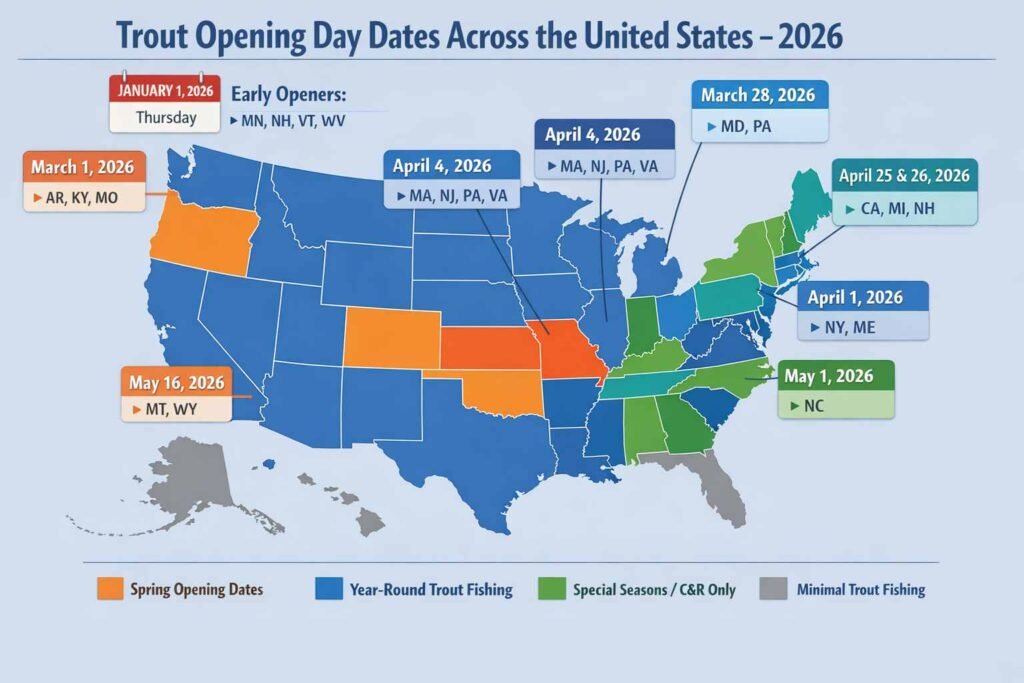
Trout Opening Days Calendar by Date
January 1, 2026 (Thursday)
- Minnesota: Early catch-and-release season for streams begins.
- New Hampshire: Rivers and streams open (through October 15).
- Vermont: Catch-and-release season begins (through March 15).
- West Virginia: Year-round fishing; stockings for the year began January 8.
January 2026 (Date Varies)
- Delaware: Winter stocking begins.
- Rhode Island: Winter stockings began in January.
March 1, 2026 (Sunday)
- Arkansas: Opening for some smaller streams (major tailwaters are year-round).
- Kentucky: Primary stocking begins; unofficial start of peak season.
- Missouri: Regular trout harvest season begins (runs through October 31).
March 11, 2026 (Wednesday)
- Idaho: Some special regulation waters open (most are year-round).
Mid-March 2026
- Connecticut: Spring stocking typically begins.
March 28, 2026 (Saturday)
- Maryland: Opening Day at 6:30 AM.
- Pennsylvania: Mentored Youth Trout Day.
April 1, 2026 (Wednesday)
- Maine: General opener for most waters.
- New York: General opener for most waters.
April 4, 2026 (Saturday)
- Massachusetts: First Saturday in April opener for many waters.
- New Jersey: Opening Day of Trout Season (first Saturday in April).
- Pennsylvania: Opening Day of Trout Season at 8:00 AM.
- Virginia: Heritage Day (first Saturday in April).
April 5, 2026 (Sunday)
- California: Eastern Sierra waters (Owens River, Hot Creek, etc.) open.
April 11, 2026 (Saturday)
- Minnesota: Stream trout harvest season opens.
- Rhode Island: Opening Day (second Saturday in April).
April 12, 2026 (Sunday)
- Vermont: Harvest season opens (second Saturday in April).
April 25, 2026 (Saturday)
- California: General trout season opener for streams and rivers.
April 26, 2026 (Sunday)
- Michigan: Last Saturday of April opener.
- New Hampshire: Trout ponds open (fourth Saturday in April).
May 1, 2026 (Friday)
- North Carolina: Harvest season begins (runs through September 30). *(Note: Catch-and-release season runs Oct 1, 2025 – June 5, 2026)*.
May 3, 2026 (Sunday)
- Wisconsin: Inland trout season opener (first Saturday in May).
May 9-10, 2026 (Weekend)
- Minnesota: Governor’s Fishing Opener in Stillwater (May 8-9), marking the general fishing season including lake trout.
May 16, 2026 (Sunday)
- Montana: General fishing season opener (third Saturday in May).
- Wyoming: Unofficial regional opening celebrations (aligns with MT opener).
May 22, 2026 (Friday)
- Oregon: General season opener for most westside streams.
States with Specific “Seasons” but No Single “Opening Day”
- Missouri: Winter catch-and-release season ran from November 14, 2025 through February 9, 2026 (Fridays-Mondays only).
- North Carolina: Catch-and-release season runs October 1, 2025 through June 5, 2026.
States with Year-Round Fishing on Most/All Waters
(These states may have specific water closures or special regulations, but no broad opening day)
- Alabama
- Alaska (varies)
- Arizona
- Arkansas (tailwaters)
- Colorado
- Connecticut
- Georgia
- Idaho (most)
- Illinois
- Indiana
- Iowa
- Kansas
- Nebraska
- Nevada
- New Mexico
- North Dakota
- Ohio
- Oklahoma (tailwaters)
- South Carolina
- South Dakota
- Tennessee
- Texas (where present)
- Utah
- Virginia
- Washington (many)
States with Minimal or No Coldwater Trout Fishing
- Florida
- Hawaii
- Louisiana
- Mississippi
2026 State-by-State Trout Opening Day Breakdown
Alabama Trout Opening Day
Alabama maintains limited wild trout habitat, primarily in the northeastern mountain region. Most trout fishing occurs through put-and-take stockings in urban lakes and ponds during winter months. The state stocks rainbow trout from November through March when water temperatures support trout survival.
Opening Day: Year-round for most waters; winter stocking typically begins November 2025
Daily Bag Limit: 5 trout
Minimum Size: None on stocked waters
Special Notes: Focus fishing efforts from November through March when temperatures remain cool enough to support trout.
Alaska Trout Opening Day
Alaska offers world-class wild trout and char fishing, with no traditional opening day. Native species include rainbow trout, Arctic char, Dolly Varden, and lake trout. Most waters remain open year-round, though specific rivers have seasonal closures to protect spawning salmon and resident trout.
Opening Day: Varies by water; many open year-round
Daily Bag Limit: Varies by species and location (typically 2-5 trout)
Minimum Size: Varies by regulation area
Special Notes: Check Alaska Department of Fish and Game regulations carefully, as rules vary significantly between drainages and even specific river sections.
Arizona Trout Opening Day
Arizona stocks trout in high-elevation lakes and urban ponds during cooler months. The state maintains no traditional trout season, with fishing open year-round where trout are stocked. Most stocking occurs from October through April, with summer stockings in high-elevation lakes.
Opening Day: Year-round
Daily Bag Limit: 4 trout
Minimum Size: None for most waters
Special Notes: Arizona stocks rainbow trout primarily. Focus efforts during winter and spring months for best success.
Arkansas Trout Opening Day
Arkansas features exceptional tailwater trout fishing on the White River, Little Red River, and Norfork Tailwater. New regulations implemented in 2026 reduce bag limits on major tailwaters to protect quality fishing. No traditional opening day exists, with year-round fishing permitted.
Opening Day: Year-round on major tailwaters; March 1 on some smaller streams
Daily Bag Limit: 2 trout on White and Norfork tailwaters (any fish over 14 inches must be released); varies elsewhere
Minimum Size: All trout over 14 inches must be released on designated tailwaters
Special Notes: Arkansas passed significant regulation changes in 2026 to improve trophy trout opportunities on popular tailwaters.
California Trout Opening Day
California’s 2026 general trout season opens on April 25, one of the most anticipated fishing events in the western United States. The season runs through November 15 on most waters, though many streams and all lakes remain open year-round with winter bag limit reductions.
Opening Day: April 25, 2026 (general season for streams and rivers)
Daily Bag Limit: 5 trout (2 trout in some wilderness areas)
Minimum Size: Varies by water (many waters have no minimum)
Special Notes: Eastern Sierra waters including the Owens River and Hot Creek open May 1. Many lakes open year-round. Check specific regulations for waters like the Klamath Basin which have unique rules.
Colorado Trout Opening Day
Colorado offers year-round trout fishing on most waters, with no traditional statewide opening day. Specific streams have seasonal closures to protect spawning trout, typically running from late fall through spring. Gold Medal waters maintain year-round seasons with special regulations.
Opening Day: Year-round on most waters; check specific stream regulations
Daily Bag Limit: 4 trout (2 trout on many Gold Medal waters)
Minimum Size: Varies widely; many waters require catch-and-release or have 16-inch minimum sizes
Special Notes: Colorado features extensive special regulation waters. Always verify regulations for specific streams before fishing.
Connecticut Trout Opening Day
Connecticut updated inland sportfishing regulations effective January 1, 2026, with new protections for native brook trout. The state maintains year-round trout fishing, though many anglers consider the spring stocking period the unofficial opening season.
Opening Day: Year-round; spring stocking typically begins mid-March
Daily Bag Limit: 5 trout
Minimum Size: 9 inches for brook trout on approved waters; 12 inches for brown and rainbow trout on certain streams
Special Notes: New 2026 regulations increased brook trout minimum size to 9 inches to protect Connecticut’s only native trout species.
Delaware Trout Opening Day
Delaware maintains a small trout program focused on put-and-take stocking in ponds and accessible waters. The state stocks rainbow and brown trout during winter and early spring months, providing fishing opportunities primarily from January through April.
Opening Day: Year-round where trout are stocked; winter stocking begins January
Daily Bag Limit: 6 trout
Minimum Size: None on most waters
Special Notes: Focus fishing efforts immediately after stocking announcements for best success. Summer heat eliminates trout survival.
Florida Trout Opening Day
Florida does not maintain traditional trout fishing due to warm water temperatures. When anglers reference “trout” in Florida, they typically mean speckled seatrout (spotted seatrout), a saltwater species with different seasons and regulations managed separately from freshwater trout.
Opening Day: Not applicable for coldwater trout species
Daily Bag Limit: Not applicable
Minimum Size: Not applicable
Special Notes: Florida does not stock or manage coldwater trout due to climate. Saltwater spotted seatrout have separate regulations.
Georgia Trout Opening Day
Georgia’s trout waters concentrate in the northern mountainous region, with year-round seasons on most streams. Trout fishing peaks from March through October, with stocking occurring throughout the cooler months. The state maintains both wild trout streams and heavily stocked put-and-take waters.
Opening Day: Year-round; peak season March through October
Daily Bag Limit: 8 trout on most waters; varies by stream classification
Minimum Size: 7 inches on general trout waters; varies on special regulation streams
Special Notes: Georgia offers excellent wild trout fishing in streams like the Chattahoochee headwaters and numerous creeks in the Blue Ridge Mountains.
Hawaii Trout Opening Day
Hawaii does not maintain coldwater trout fisheries due to tropical climate. The state focuses on warmwater species and saltwater fishing opportunities. No trout stocking or trout seasons exist.
Opening Day: Not applicable
Daily Bag Limit: Not applicable
Minimum Size: Not applicable
Special Notes: Hawaii’s climate does not support coldwater trout species.
Idaho Trout Opening Day
Idaho features world-class trout fishing with most waters open year-round. Special regulations apply to specific streams, with some spring closures to protect spawning fish. Many waters remain accessible throughout winter, though conditions can be challenging.
Opening Day: Year-round on most waters; March 1 on some special regulation waters
Daily Bag Limit: 6 trout (varies by water; many special regulation streams have reduced limits)
Minimum Size: Varies significantly by water
Special Notes: Idaho released February 2026 stocking highlights with scheduled stockings throughout the state. Check specific regulations for waters like the South Fork Snake and Silver Creek which have special rules.
Illinois Trout Opening Day
Illinois maintains a limited trout program focused on urban put-and-take fishing. The state stocks rainbow trout during winter and spring months in accessible lakes and ponds. No formal opening day exists, though spring stocking generates significant angler interest.
Opening Day: Year-round where stocked; winter stocking typically begins November
Daily Bag Limit: 5 trout
Minimum Size: None
Special Notes: Illinois trout fishing is primarily a cool-season activity from November through April. Summer heat eliminates trout.
Indiana Trout Opening Day
Indiana stocks rainbow trout in select waters during fall and spring seasons. The state maintains year-round trout fishing where stocked, with peak opportunities from October through May when water temperatures support trout survival.
Opening Day: Year-round; fall stocking begins October, spring stocking typically starts March
Daily Bag Limit: 5 trout
Minimum Size: None on most waters
Special Notes: Focus efforts on newly stocked waters during cooler months for best success.
Iowa Trout Opening Day
Iowa features limited trout habitat in spring-fed northeast streams. The state maintains year-round trout fishing, with both stocked and naturally reproducing populations. Stream trout fishing peaks during spring and fall, while winter provides opportunities for anglers willing to brave cold conditions.
Opening Day: Year-round
Daily Bag Limit: 5 trout
Minimum Size: Varies by stream; many streams have no minimum
Special Notes: Iowa’s northeast region contains spring creeks supporting wild brown and brook trout populations alongside stocked rainbows.
Kansas Trout Opening Day
Kansas stocks trout seasonally in select lakes and urban ponds during winter months. The state maintains no traditional trout season, with year-round fishing permitted where trout are present. Stocking typically occurs from November through March.
Opening Day: Year-round; winter stocking begins November
Daily Bag Limit: 5 trout
Minimum Size: None
Special Notes: Kansas trout fishing is a cool-season activity. Summer temperatures eliminate trout survival in most waters.
Kentucky Trout Opening Day
Kentucky offers limited trout fishing, primarily in tailwaters below major dams and in stocked streams in the eastern mountain region. The state maintains year-round fishing, with March 1 marking increased stocking efforts and the unofficial start of peak season.
Opening Day: March 1, 2026 (primary stocking begins); year-round on most waters
Daily Bag Limit: 5 trout (varies on some waters)
Minimum Size: 7 inches on most trout waters
Special Notes: Focus efforts on Cumberland and Laurel River tailwaters for year-round opportunities, or stocked mountain streams from March through May.
Louisiana Trout Opening Day
Louisiana maintains minimal coldwater trout habitat due to subtropical climate. When available, trout fishing occurs through winter stockings in select north Louisiana waters during brief cold periods. No formal season exists.
Opening Day: Not applicable; occasional winter stockings only
Daily Bag Limit: Varies by location when stocked
Minimum Size: Varies by location
Special Notes: Louisiana rarely maintains trout populations. Anglers should focus on warmwater species and saltwater fishing.
Maine Trout Opening Day
Maine features both wild and stocked trout fishing, with different seasons for lakes, ponds, rivers, and streams. Many waters maintain open seasons from April 1 through September, though specific waters have unique regulations. Brook trout, Maine’s state fish, thrive in remote ponds and streams.
Opening Day: April 1, 2026 (general opener for most waters); some waters open year-round
Daily Bag Limit: 5 brook trout, 3 brown trout, 3 rainbow trout (combined species limits apply)
Minimum Size: Varies by water; many waters require 6-inch minimum
Special Notes: Maine offers exceptional wild brook trout fishing in remote ponds. Check specific water body regulations before fishing.
Maryland Trout Opening Day
Maryland’s trout season opens on the last Saturday in March, with opening day scheduled for March 28, 2026. This highly anticipated event draws thousands of anglers to stocked rivers and streams across the state, particularly in the western mountain region.
Opening Day: March 28, 2026 at 6:30 AM
Daily Bag Limit: 5 trout
Minimum Size: 9 inches
Special Notes: Maryland conducts extensive pre-season stocking. Essential fishing safety guidelines become particularly important during crowded opening day conditions.
Massachusetts Trout Opening Day
Massachusetts maintains year-round trout fishing, though the traditional opener occurs on the first Saturday in April for many popular waters. The Wachusett Reservoir opens the first Saturday in April and closes December 31, providing nine months of fishing opportunities.
Opening Day: First Saturday in April 2026 (April 4) for many waters; year-round on others
Daily Bag Limit: 3 trout
Minimum Size: None on most waters
Special Notes: Massachusetts stocks both spring and fall, with varying regulations across different water bodies.
2026 Michigan Trout Opening Day
Michigan’s traditional trout opener falls on the last Saturday of April, though many sections of rivers and all lakes remain open year-round. The 2026 opener is scheduled for April 26, marking one of the state’s most celebrated fishing events.
Opening Day: April 26, 2026 (last Saturday of April)
Daily Bag Limit: 5 trout (combined species)
Minimum Size: None on most waters; specific rivers have slot limits
Special Notes: Year-round sections exist on many trout streams. Check regulations for specific streams like the Manistee and Au Sable which have complex rules.
Minnesota Trout Opening Day
Minnesota offers multiple trout season dates depending on water type. The early catch-and-release season for streams began January 1, 2026. Stream trout harvest season opens April 11, 2026, while the Governor’s Fishing Opener on May 9, 2026 in Stillwater marks the general fishing season including lake trout.
Opening Day: January 1, 2026 (catch-and-release); April 11, 2026 (harvest season for streams)
Daily Bag Limit: 5 trout during harvest season (varies by water)
Minimum Size: Varies by water and season
Special Notes: Minnesota’s 78th Governor’s Fishing Opener takes place May 8-9, 2026 in Stillwater on the St. Croix River, marking the official start of the general fishing season.
Mississippi Trout Opening Day
Mississippi maintains no significant coldwater trout fisheries due to warm climate. Occasional winter stockings may occur in extreme northern regions during brief cold periods, but no formal trout season exists.
Opening Day: Not applicable
Daily Bag Limit: Not applicable
Minimum Size: Not applicable
Special Notes: Mississippi focuses management on warmwater species. Trout fishing opportunities are extremely limited or nonexistent.
Missouri Trout Opening Day
Missouri’s trout parks and designated trout waters maintain specific seasonal structures. The regular trout season runs March 1 through October 31, 2026, with a winter catch-and-release season from November 14, 2025 through February 9, 2026 on Friday, Saturday, Sunday, and Monday only.
Opening Day: March 1, 2026 (harvest season); November 14, 2025 (winter catch-and-release began)
Daily Bag Limit: 4 trout during regular season; catch-and-release only during winter season
Minimum Size: 12 inches on most trout park waters
Special Notes: Missouri trout parks require daily trout permits in addition to fishing licenses. Some trout parks have additional fees.
Montana Trout Opening Day
Montana’s general fishing season opens the third Saturday in May, which falls on May 16, 2026. However, many streams and rivers remain open year-round, with specific waters having seasonal closures from late fall through spring to protect spawning fish.
Opening Day: May 16, 2026 (third Saturday in May—general season); many waters open year-round
Daily Bag Limit: 5 trout (combined species); many special regulation waters have reduced limits or catch-and-release requirements
Minimum Size: Varies significantly by water
Special Notes: Montana features extensive special regulations on blue-ribbon trout streams. Always check specific regulations for waters like the Madison, Bighorn, and Missouri rivers.
Nebraska Trout Opening Day
Nebraska maintains limited trout habitat, with most trout fishing occurring through stockings in select waters during cooler months. Several northwest streams support wild trout populations. The state maintains year-round seasons where trout are present.
Opening Day: Year-round on designated trout waters
Daily Bag Limit: 5 trout on most waters
Minimum Size: Varies by location
Special Notes: Focus efforts in the Pine Ridge region for wild trout or check stocking schedules for put-and-take fishing at stocked waters.
Nevada Trout Opening Day
Nevada offers year-round trout fishing on most waters, with no traditional statewide opening day. The state stocks rainbow trout throughout the year in accessible waters, while high-mountain lakes and streams support wild populations of various trout species.
Opening Day: Year-round on most waters
Daily Bag Limit: 5 trout (varies on some special regulation waters)
Minimum Size: None on most waters; specific streams have minimum sizes
Special Notes: Nevada’s high desert climate creates excellent year-round fishing on tailwaters like the East Walker River and below Lahontan Dam.
New Hampshire Trout Opening Day
New Hampshire divides trout seasons by water type. Trout ponds open the fourth Saturday in April (April 26, 2026), while rivers and streams open January 1 and close October 15. Lake trout and salmon waters maintain year-round seasons.
Opening Day: January 1, 2026 (rivers and streams); April 26, 2026 (fourth Saturday in April for trout ponds)
Daily Bag Limit: Varies by water (typically 5 trout combined species)
Minimum Size: None on most waters; specific waters have minimum sizes
Special Notes: New Hampshire maintains diverse regulations across different water types. Always verify rules for specific waters before fishing.
New Jersey Trout Opening Day
New Jersey’s trout season runs year-round, with Opening Day of Trout Season occurring the first Saturday in April. The 2026 opener is scheduled for April 5, with extensive pre-season stocking creating excellent fishing opportunities. Daily limits reduce from 6 to 4 trout beginning June 1.
Opening Day: April 5, 2026 (first Saturday in April)
Daily Bag Limit: 6 trout from opening day through May 31; 4 trout June 1 through March 2027
Minimum Size: None on most waters; specific streams have minimum sizes
Special Notes: New Jersey stocks heavily before opening day. The state maintains year-round fishing, making it possible to fish trout every day of the year.
New Mexico Trout Opening Day
New Mexico features year-round trout fishing on most waters, with no traditional statewide opening day. The state offers diverse trout fishing from high-mountain streams to quality tailwaters like the San Juan River, one of America’s premier trout destinations.
Opening Day: Year-round on most waters
Daily Bag Limit: Varies significantly by water (typically 5 trout; San Juan River has special regulations)
Minimum Size: Varies by water
Special Notes: New Mexico’s 2025-2026 fishing regulations include extensive special rules for trophy waters. The San Juan River Quality Waters section requires barbless hooks and has a limit of one trout over 20 inches.
New York Trout Opening Day
New York’s trout season opens on April 1, 2026 for most waters, though some streams and all lakes remain open year-round. The state maintains complex regulations with different seasons for streams, rivers, and lakes, plus numerous special regulation waters.
Opening Day: April 1, 2026 (general opener); varies by water type and location
Daily Bag Limit: 5 trout (combined species) on most waters
Minimum Size: None on most waters; specific streams have minimum sizes
Special Notes: New York features extensive catch-and-release and special regulation streams. Delaware River system tributaries have unique rules to protect wild trout populations.
North Carolina Trout Opening Day
North Carolina maintains year-round trout fishing, with catch-and-release season running October 1 through June 5, 2026, and harvest season from June 6 through September 30. The state released its 2026 stocking schedule with reduced stockings due to $50 million in hatchery renovations.
Opening Day: Year-round; catch-and-release season October 1, 2025 through June 5, 2026
Daily Bag Limit: 7 trout during harvest season (June 6 through September 30)
Minimum Size: 7 inches on most waters; special regulation streams vary
Special Notes: North Carolina announced significant reductions in 2026, 2027, and potentially 2028 trout stockings due to hatchery infrastructure improvements.
North Dakota Trout Opening Day
North Dakota maintains limited trout fishing opportunities, primarily through stockings in select lakes and streams. The state features year-round seasons where trout are present, with most fishing occurring during cooler months.
Opening Day: Year-round where trout are present
Daily Bag Limit: Varies by water (typically 3-5 trout)
Minimum Size: None on most waters
Special Notes: North Dakota’s trout fishery is small compared to neighboring states. Check stocking schedules for current information.
Ohio Trout Opening Day
Ohio stocks trout in designated waters during spring and fall, with spring stocking typically beginning in March. The state maintains year-round trout fishing where fish are stocked, though summer heat eliminates many populations.
Opening Day: Year-round; spring stocking typically begins early March
Daily Bag Limit: 5 trout
Minimum Size: None on most waters
Special Notes: Ohio’s Mad River and several northeast Ohio streams support wild trout populations with special regulations. Check specific stream rules.
Oklahoma Trout Opening Day
Oklahoma’s trout fishing centers on winter stockings in select waters and year-round fishing in cold tailwaters. The Lower Illinois River below Tenkiller Dam provides consistent trout fishing throughout the year, while other waters receive seasonal stockings.
Opening Day: Year-round on tailwaters; seasonal stocking begins November
Daily Bag Limit: Varies by water (typically 5 trout)
Minimum Size: None on most waters
Special Notes: The Lower Illinois River offers Oklahoma’s most consistent trout fishing. Other waters receive rainbow trout stockings during winter months.
Oregon Trout Opening Day
Oregon maintains year-round trout fishing on most waters, though specific streams have seasonal closures. Rivers and streams typically open May 22, 2026 and close October 31, with year-round seasons on eastside waters and most lakes.
Opening Day: May 22, 2026 (general season for most westside streams); many waters open year-round
Daily Bag Limit: 5 trout (varies on many special regulation waters)
Minimum Size: Varies significantly by water
Special Notes: Oregon features complex regulations with extensive special rules. The Deschutes, McKenzie, and many coastal streams have specific regulations requiring careful review.
Pennsylvania Trout Opening Day
Pennsylvania’s Opening Day of Trout Season ranks among America’s most celebrated fishing events. The 2026 opener falls on Saturday, April 4, with Mentored Youth Trout Day scheduled for March 28, one week prior. The state stocks 3.2 million trout annually in over 700 miles of streams.
Opening Day: April 4, 2026 (8:00 AM); Mentored Youth Day March 28, 2026
Daily Bag Limit: 5 trout (7 inches minimum) during regular season (April 4 through Labor Day); 3 trout during extended season (Labor Day through February 16, 2027)
Minimum Size: 7 inches
Special Notes: Pennsylvania released comprehensive 2026 stocking schedules in late January. Fishing is prohibited on designated stocked trout waters from February 16 through 8:00 AM on opening day. The state added five waters and removed nine from the 2026 stocking list.
Rhode Island Trout Opening Day
Rhode Island’s trout season opens the second Saturday in April, scheduled for April 11, 2026. The season continues through February 28, 2027, providing nearly year-round fishing opportunities. The state stocks rainbow, brown, and brook trout, plus kokanee salmon.
Opening Day: April 11, 2026 (second Saturday in April)
Daily Bag Limit: 5 trout and/or salmon (maximum 2 salmon)
Minimum Size: None on most waters
Special Notes: Rhode Island began winter trout and salmon stockings in January 2026, creating early season opportunities. Some special regulation waters have unique rules.
South Carolina Trout Opening Day
South Carolina maintains year-round trout fishing in mountain streams and stocked waters. The state features both wild trout streams in the upstate region and put-and-take fisheries in accessible locations. No traditional opening day exists.
Opening Day: Year-round
Daily Bag Limit: 5 trout on most waters
Minimum Size: 7 inches on general trout waters; varies on special regulation streams
Special Notes: Focus efforts in the northwestern mountain counties (Oconee, Pickens, Greenville) for both wild and stocked trout.
South Dakota Trout Opening Day
South Dakota offers year-round trout fishing, with Black Hills streams providing the state’s primary trout habitat. Both wild and stocked populations exist, with spring and fall offering peak fishing conditions. No statewide opening day occurs.
Opening Day: Year-round
Daily Bag Limit: 5 trout (combined species); varies on some waters
Minimum Size: None on most waters; specific streams have minimum sizes
Special Notes: Spearfish Creek and Rapid Creek offer excellent wild and stocked trout fishing within urban settings. Many Black Hills streams support wild populations.
Tennessee Trout Opening Day
Tennessee features year-round trout fishing on most waters, with particular strength in tailwater fisheries below major dams. The Clinch River, Hiwassee River, and South Holston River provide world-class trout fishing throughout the year. Mountain streams support both wild and stocked populations.
Opening Day: Year-round on most waters
Daily Bag Limit: 7 trout on most waters (combined species); varies on special regulation streams
Minimum Size: 7 inches on general trout waters; varies significantly on special regulation waters
Special Notes: Tennessee’s tailwaters offer exceptional fishing year-round. Spring and summer bring excellent hatches and eager fish, while fall provides beautiful scenery and active brown trout.
Texas Trout Opening Day
Texas maintains minimal coldwater trout habitat, with seasonal stockings in high-elevation waters in the Guadalupe Mountains and select urban waters during winter. Year-round fishing exists where trout are present, though summer heat eliminates most populations.
Opening Day: Year-round; winter stocking begins November
Daily Bag Limit: 5 trout where stocked
Minimum Size: None
Special Notes: Texas trout fishing is extremely limited. Focus efforts on Guadalupe River below Canyon Dam during winter months or immediately following winter stockings elsewhere.
Utah Trout Opening Day
Utah offers year-round trout fishing on virtually all waters, with no traditional statewide opening day. The state features diverse opportunities from high-mountain lakes to quality tailwaters like the Green River below Flaming Gorge Dam. Free Fishing Day occurs June 6, 2026.
Opening Day: Year-round
Daily Bag Limit: 4 trout on most waters; varies significantly on special regulation streams
Minimum Size: Varies by water; many waters have slot limits protecting fish between 15-22 inches
Special Notes: Utah’s fishing regulations include extensive special rules. Check the 2026 guidebook for specific waters before fishing. June 6, 2026 is Free Fishing Day—no license required.
Vermont Trout Opening Day
Vermont’s trout season opens the second Saturday in April for harvest, scheduled for April 12, 2026. However, catch-and-release fishing runs January 1 through March 15 and again from the April opener through October 31. New regulations effective January 1, 2026 include updated panfish limits.
Opening Day: January 1, 2026 (catch-and-release); April 12, 2026 (harvest season—second Saturday in April)
Daily Bag Limit: 6 trout during harvest season (combined species)
Minimum Size: None on most waters; specific waters have minimum sizes
Special Notes: Vermont updated fishing regulations for 2026, including a new combined daily limit of 50 panfish. Always check specific water body regulations.
Virginia Trout Opening Day
Virginia maintains year-round trout fishing, with no traditional statewide opening day. The state conducts extensive stocking throughout the year, with particularly heavy pre-Heritage Day (first Saturday in April) stockings. Virginia updated its catchable trout stocking program for 2026.
Opening Day: Year-round; Heritage Day is April 5, 2026 (first Saturday in April)
Daily Bag Limit: 6 trout on most waters
Minimum Size: 7 inches on general trout waters; varies on special regulation streams
Special Notes: Virginia released its 2026 Catchable Trout Stocking Plan with changes to stocking dates and amounts. Trout license required November 1 through April 30 on stocked waters.
Washington Trout Opening Day
Washington maintains complex regulations with many waters open year-round, while specific streams have seasonal openers. The state features diverse trout fishing from high desert streams to lush westside rivers and alpine lakes.
Opening Day: Varies by water; many streams open year-round, others open late spring
Daily Bag Limit: 5 trout (combined species); varies significantly on special regulation waters
Minimum Size: 8 inches on many westside waters; varies by location
Special Notes: Washington’s regulations are highly complex with different rules for eastside versus westside waters. Always check specific regulations for waters you plan to fish. Special attention needed for fishing rules for first-time anglers due to regulation complexity.
West Virginia Trout Opening Day
West Virginia began 2026 trout stockings in early January, with year-round fishing permitted where trout are stocked. The state maintains no traditional opening day, though spring stockings generate significant angler interest. All anglers must purchase a 2026 fishing license and trout stamp.
Opening Day: Year-round; 2026 stockings began January 8
Daily Bag Limit: 5 trout
Minimum Size: 9 inches
Special Notes: West Virginia restocked 46 locations during the first week of January 2026. The state maintains active year-round stocking in designated trout waters. Fall trout stockings during late October provide additional opportunities.
Wisconsin Trout Opening Day
Wisconsin’s inland trout season traditionally opens the first Saturday in May, though many streams remain open year-round. The 2026 opener falls on May 3. Some early season catch-and-release streams open in March. Wisconsin-Minnesota boundary waters have unique rules.
Opening Day: May 3, 2026 (first Saturday in May for most waters); some streams open earlier
Daily Bag Limit: 5 trout (combined species)
Minimum Size: None on most waters; special regulation streams vary
Special Notes: Wisconsin features exceptional wild trout fishing in spring creeks, particularly in the southwestern Driftless Region. Many streams support naturally reproducing brown and brook trout populations.
Wyoming Trout Opening Day
Wyoming implemented new fishing regulations effective January 1, 2026. Most waters remain open year-round, with Montana’s general fishing season opening the third Saturday in May (May 16, 2026) also marking unofficial opening celebrations in Wyoming border regions.
Opening Day: Year-round on most waters; May 16 marks unofficial regional celebrations
Daily Bag Limit: 6 trout (combined species); extensive special regulations exist on many waters
Minimum Size: Varies significantly by water
Special Notes: Wyoming passed new 2026 regulations including changes to tackle restrictions and specific water rules. Jackson Lake now remains open in October. Snake River regulations were updated with new daily limits.
Essential Preparation for Opening Day Success
Successful opening day fishing requires more than knowing dates. Physical preparation includes organizing tackle, checking gear condition, purchasing licenses and required stamps, and reviewing regulations. Many states now offer online licensing, making it convenient to secure credentials before the rush.
Tackle preparation varies by target species and water type. For stocked trout in streams, bring an assortment of spinners, small spoons, and bait rigs. Fly anglers should stock boxes with nymphs, streamers, and dry flies appropriate for early season conditions. Leaders should test strong enough to handle fresh, feisty stocked fish that often run 10-14 inches.
Understanding local hatch patterns proves valuable even during stocked trout fishing. Early season mayflies like Blue Winged Olives begin emerging when water temperatures reach the low 40s, while midges hatch throughout winter and early spring. Matching natural insects increases success rates, particularly after initial opening day pressure subsides.
Safety considerations become paramount during opening day festivities. Crowded conditions along popular streams require extra caution when casting. Cold water temperatures present hazards for anyone who slips or falls while wading. Wearing appropriate layers, packing emergency supplies, and fishing with partners improves safety. Understanding common fishing mistakes that lead to fines or injuries helps avoid problems.
Stocking Schedules and Finding Fresh Fish
States publish stocking schedules at varying times before the season. Pennsylvania released its 2026 schedule in late January, while other states maintain rolling schedules throughout the year. Following state wildlife agency social media accounts provides real-time stocking updates.
Most agencies stock designated waters in the days and weeks before opening day, ensuring abundant fish for the season kickoff. Pre-season stockings allow fish to acclimate and distribute throughout the system, creating more natural fishing compared to same-day releases. However, some states conduct day-of or day-before stockings at specific locations.
Post-opening day stockings continue throughout spring and sometimes into early summer in northern states. These maintenance stockings replenish harvested fish and ensure consistent opportunities. Anglers who fish mid-week after fresh stockings often enjoy better success than weekend warriors hitting heavily pressured waters.
Understanding fish behavior after stocking improves catch rates. Recently stocked trout often hold in slower, deeper water near stocking access points before gradually distributing upstream and downstream. They readily take bait and lures that resemble hatchery feed pellets in color and size—explaining the effectiveness of corn, salmon eggs, and small orange or pink baits.
Special Regulations and Trophy Opportunities
Beyond general statewide rules, most states designate special regulation waters offering unique fishing experiences. These include catch-and-release sections, delayed harvest areas, wild trout streams, and trophy waters with restrictive harvest limits and minimum sizes.
Catch-and-release waters protect fish populations while providing consistent fishing opportunities. These sections typically allow only artificial lures with single, barbless hooks and require immediate release of all trout. Popular examples include Pennsylvania’s Catch and Release Fly Fishing Only areas, Montana’s numerous catch-and-release sections, and designated wild trout streams throughout the Appalachians.
Delayed harvest areas remain catch-and-release for most of the year, then open to harvest during brief windows. This management strategy creates quality fishing during prime seasons while allowing some harvest. Maryland, North Carolina, and other states utilize delayed harvest extensively.
Trophy trout regulations focus on growing larger fish through restrictive harvest. These waters typically allow keeping only one or two trout daily, with minimum sizes often ranging from 14-20 inches. The slot limit concept protects mid-sized breeding stock while allowing harvest of smaller and trophy-class fish.
Wild trout streams contain naturally reproducing populations requiring special protection. These waters often have reduced bag limits, minimum sizes, and sometimes fly fishing only or catch-and-release requirements. Finding wild trout in their native habitat provides experiences markedly different from stocked fisheries.
License Requirements and Legal Compliance
All anglers age 16 or older must possess valid fishing licenses in their respective states. Most states offer annual, short-term, and daily licenses at varying price points. Resident licenses typically cost $20-40 annually, while non-resident licenses range from $40-100 or more depending on the state.
Trout stamps or permits represent additional requirements in many states. These special endorsements fund trout stocking programs and habitat improvements. Pennsylvania, Maryland, Virginia, and numerous other states require trout stamps costing $10-15 annually beyond the base fishing license.
Understanding harvest regulations prevents violations. Daily bag limits specify how many fish you can keep per day, while possession limits (often twice the daily limit) control how many fish you can have in your possession including those at home or in transit. Size limits protect juvenile fish or breeding stock depending on the regulation intent.
Gear restrictions apply on many waters, particularly special regulation streams. Common restrictions include fly fishing only, artificial lures only, single-hook only, and barbless hook requirements. Using prohibited gear risks citations and fines, even if you practice catch-and-release. Always verify regulations for specific waters before fishing.
Senior citizen and military discounts exist in most states, with some offering free or reduced-price licenses for veterans, active military, and anglers over 65. Youth under 16 typically fish free, though some states require free youth licenses for record-keeping purposes.
Ethics and Conservation Practices
Responsible angling extends beyond legal compliance to encompass ethical practices protecting resources and ensuring quality experiences for all anglers. Proper catch-and-release technique tops the list—keeping fish in water during hook removal, using barbless hooks, avoiding excessive handling, and releasing fish quickly.
Respecting spawning activity preserves future populations. Anglers should avoid fishing directly on spawning redds (gravel nests visible in streams during spawning periods) and exercise caution in areas where fish congregate to spawn. While legal during open seasons, targeting spawning fish raises ethical questions many anglers prefer to avoid.
Following stream etiquette maintains positive relationships among anglers. When approaching a occupied pool or run, ask before entering or walk wide around actively fishing anglers. On popular waters during opening day, expect closer proximity to other anglers but maintain reasonable spacing and avoid crossing lines.
Pack-it-in, pack-it-out principles apply to all outdoor recreation. Fishing line, bait containers, and other trash too often litter popular fishing access areas. Carry a small trash bag and pack out everything you bring. Consider picking up litter left by others—a few extra pieces collected by each conscientious angler dramatically improves conditions.
Understanding ethical fishing practices and responsible angling benefits both the resource and the experience. Supporting conservation organizations through license purchases, donations, and volunteer efforts ensures healthy fisheries for future generations.
Finding Public Access and Waters
Identifying legal fishing access prevents trespassing violations and conflicts with landowners. Most states maintain online mapping tools showing public waters, access points, and land ownership. State wildlife agency websites typically feature interactive maps or downloadable PDFs detailing public fishing opportunities.
Designated fishing access areas provide parking, stream access, and sometimes facilities like restrooms and fishing piers. These locations see heavy pressure during opening day but offer guaranteed legal access and often feature recent stockings.
Understanding public versus private waters and associated rules proves essential. Western states generally follow the “high water mark” rule where rivers and streams remain public up to the ordinary high water line even when flowing through private property, though accessing these waters by trespassing across private land remains illegal. Eastern states vary, with some allowing public access to waterways regardless of land ownership, while others recognize private ownership extending to the stream bed.
Bridge crossings represent traditional access points where road rights-of-way allow anglers to access streams. However, state laws vary on how far anglers can travel from bridge access, and some private landowners post bridges prohibiting fishing. When in doubt, seek explicit permission or fish designated public areas.
National forests, state forests, and wildlife management areas provide extensive public fishing access. These lands generally allow free access, though some states require additional permits or stamps for WMA access. Federal lands like national forests follow federal regulations supplemented by state fishing rules.
Weather and Water Conditions Impact
Early season weather significantly impacts fishing success and comfort. Water temperatures dictate trout activity levels—fish become more active as temperatures climb from the mid-30s into the 40s and 50s. Cold fronts preceding opening day can slow fishing, while warming trends increase activity.
Stream flows affect fishing conditions and techniques. Snowmelt runoff in mountain states creates high, turbid water making fishing difficult or impossible. Conversely, low winter flows concentrate fish and improve visibility for sight-fishing. Checking USGS stream gauge data before trips prevents wasted travel to unfishable conditions.
Precipitation leading up to opening day influences water levels and clarity. Recent rains raise water levels and add color, often improving fishing by giving trout confidence to feed openly. Conversely, extended dry periods create low, clear conditions requiring stealthy approaches and lighter tackle.
Weather forecasts guide appropriate clothing and gear decisions. Early season fishing often means cold temperatures, wind, and possible precipitation. Layering remains critical—moisture-wicking base layers, insulating mid-layers, and waterproof outer shells prepare you for variable conditions. Don’t forget hats, gloves, and neck gaiters for warmth.
Time of day matters during early season. Unlike summer when dawn and dusk provide peak fishing, spring trout often feed most actively during afternoon warmth. Water temperatures climb several degrees during sunny afternoons, triggering insect activity and feeding. Plan trips for late morning through mid-afternoon for best results.
Techniques and Tactics for Stocked Trout
Stocked trout behavior differs somewhat from wild fish, particularly immediately after release. Understanding these patterns improves success rates. Fresh stockers often congregate near stocking points in slower water, gradually dispersing over days and weeks.
Bait fishing produces consistent results for stocked trout. Nightcrawlers, salmon eggs, corn, marshmallows, and commercial dough baits all catch fish. Bottom rigs with split shot positioning bait near stream bottoms work well in pools and slower runs. Drift fishing suspends bait downstream in current, covering more water.
Spinner fishing provides active, mobile presentations covering extensive water. Small inline spinners like Mepps, Panther Martins, and Rooster Tails in sizes 0-3 catch stocked trout reliably. Gold, silver, and bright colors all produce. Cast upstream or across stream, allowing spinners to sink before retrieving steadily. Vary retrieve speed until finding what triggers strikes.
Spoon fishing with small spoons like Thomas Buoyants, Kastmasters, and Little Cleos produces aggressive strikes. Flutter spoons on the drop by casting and allowing them to sink on slack line, then lift the rod tip and repeat. This technique imitates dying baitfish, triggering predatory strikes.
Fly fishing for stocked trout begins with nymph rigs—weighted flies drifted along bottom. Use strike indicators (bobbers) to detect takes and maintain proper depth. Productive early season patterns include San Juan Worms, Pheasant Tails, Hare’s Ears, and egg patterns. Streamer fishing with Woolly Buggers and small baitfish imitations produces aggressive strikes, particularly in deeper pools.
Youth and Family Fishing Opportunities
Many states prioritize youth fishing participation through mentored youth days preceding general openers. These special events allow young anglers to fish with reduced pressure and crowds while learning proper techniques from parents, grandparents, or mentors.
Pennsylvania’s Mentored Youth Trout Day on March 28, 2026 permits anglers under 16 accompanied by a licensed adult to fish stocked waters one week before opening day. The adult may not fish but can assist and teach. Similar programs exist in Maryland, New York, and other states.
Youth fishing clinics and programs offered by state agencies, fishing clubs, and conservation organizations teach skills while building enthusiasm. These events typically provide gear, instruction, and supervised fishing in safe environments. Check state wildlife agency calendars for scheduled youth events.
Family-friendly access locations with easy wading, parking, and facilities improve experiences for young or inexperienced anglers. Urban put-and-take fisheries often feature these amenities. Stocked ponds and lakes eliminate current and wading challenges facing families on streams.
Setting realistic expectations helps ensure positive experiences. Focus on fun rather than catch numbers. Celebrate any fish caught and teach gentle release techniques even if keeping some for dinner. Patient instruction and encouragement build lifelong anglers.
Violations, Penalties, and Enforcement
Fish and game law enforcement officers patrol popular waters during opening day, checking licenses, measuring harvested fish, and verifying compliance with regulations. Violations carry consequences ranging from warnings to substantial fines and potential loss of fishing privileges.
Common violations include fishing without licenses, exceeding bag limits, keeping undersized fish, fishing closed waters, and using prohibited gear. These infractions typically result in citations with fines ranging from $50-500 or more depending on the violation severity and state.
Serious violations like intentional poaching of multiple fish, fishing during closed seasons on sensitive spawning streams, or repeated offenses can result in misdemeanor or felony charges. Courts may impose substantial fines, license revocation, and even jail time for egregious violations.
Understanding fishing regulation violation penalties and consequences emphasizes the importance of compliance. Beyond legal penalties, violations harm fish populations and damage angling’s public reputation.
Cooperation with enforcement officers smooths interactions. Have licenses readily available, be honest about catches, and accept responsibility if you’ve made mistakes. Most officers appreciate respectful interactions and provide educational warnings for minor, unintentional violations.
Planning Your 2026 Trout Season
Successful seasons begin with advance planning. Mark state opening days on calendars and request time off work if needed. Popular destinations fill with anglers opening day—arriving early secures parking and access to prime spots.
Research specific waters before trips. State agency websites provide detailed information on regulations, stocking schedules, access points, and sometimes current conditions. Online forums and fishing reports offer recent intelligence on what’s working.
Building a season-long fishing plan ensures you experience diverse opportunities. Start with opening day excitement on stocked streams, then explore less-pressured waters as crowds dissipate. Late spring brings insect hatches on wild trout streams. Summer provides high-country fishing in mountain states. Fall activates spawning browns and offers beautiful scenery.
Investing in proper gear pays dividends throughout the season. Quality waders last for years and keep you comfortable. Multiple rod setups let you adapt to varying conditions. Well-organized tackle boxes save time and frustration.
Continuing education improves skills season-long. Reading fishing books and magazines, watching instructional videos, taking casting lessons, and hiring guides all advance abilities. Each season provides opportunities to refine techniques and learn new waters.
Frequently Asked Questions
Q: Do I need a fishing license to fish on opening day?
A: Yes. Anyone age 16 or older requires a valid fishing license on opening day and throughout the season. Many states also require trout stamps or permits in addition to base fishing licenses. Some states offer free fishing days during the year when licenses aren’t required, but opening day typically isn’t one of those days. Always purchase licenses before fishing to avoid citations. Understanding the complete fishing license guide for the USA helps ensure compliance.
Q: When do states typically release stocking schedules?
A: Most states publish preliminary stocking schedules 2-4 weeks before the season opens, with some releasing schedules as early as January for spring openers. Schedules are typically available on state wildlife agency websites. Many agencies now provide email notifications or social media updates when specific waters are stocked, allowing anglers to plan trips around fresh stockings.
Q: Can I keep trout caught on opening day?
A: Yes, in most states during regular season, you can harvest trout within daily bag limits and size restrictions. However, catch-and-release only periods and specially designated catch-and-release waters prohibit keeping fish. Always verify specific regulations for the water you’re fishing. Some states have reduced limits during certain periods or on particular waters.
Q: What is a mentored youth day?
A: Mentored youth days allow young anglers (typically under 16) to fish with a licensed adult mentor one or more days before general opening day. The youth can harvest fish within regular limits, but the adult mentor cannot fish—only assist and teach. Pennsylvania, Maryland, and numerous other states offer mentored youth days to promote youth participation with reduced crowds and pressure.
Q: Are stocked trout safe to eat?
A: Yes, stocked trout are safe to eat and raised on quality feed in state hatcheries. They taste similar to farm-raised trout available in grocery stores. Wild trout generally have firmer texture and more varied diets affecting flavor. Check fish consumption advisories for specific waters, as some have contamination issues unrelated to stocking programs.
Q: Can I fish multiple states if I travel?
A: Yes, but you need valid fishing licenses and trout permits for each state where you fish. Fishing licenses are not reciprocal between states—each state requires its own credentials. However, a few states have reciprocal agreements for border waters. Non-resident licenses cost more than resident licenses but grant the same fishing privileges.
Q: What happens if I accidentally catch a fish over the bag limit?
A: If you’ve reached your bag limit, you must immediately release any additional trout caught. Using catch-and-release techniques on unintentionally caught fish doesn’t violate regulations. However, intentionally continuing to fish and keeping fish beyond limits constitutes a violation. When approaching your limit, consider switching to different species or stopping fishing to ensure compliance.
Q: Do wild trout and stocked trout have different regulations?
A: Not typically. Regulations apply to all trout regardless of origin unless specifically designated otherwise. However, wild trout streams often have special regulations like reduced bag limits, minimum sizes, or catch-and-release requirements to protect naturally reproducing populations. Check specific water regulations before fishing.
Q: Can I fish the day before opening day?
A: In most states, yes, unless specifically prohibited. Pennsylvania and some other states close designated stocked trout waters during the pre-season stocking period (typically 2-3 weeks before opening day) to allow fish to acclimate. Other states maintain year-round fishing, meaning you can fish right up until and including opening day. Verify regulations for your specific state and water.
Q: What’s the best bait for stocked trout?
A: Nightcrawlers rank among the most effective baits for stocked trout, along with salmon eggs, commercial dough baits like PowerBait, corn, and marshmallows. Stocked trout were raised on pellet feed in hatcheries, making them receptive to baits resembling pellets in color and size. Small spinners and spoons also produce excellent results.