
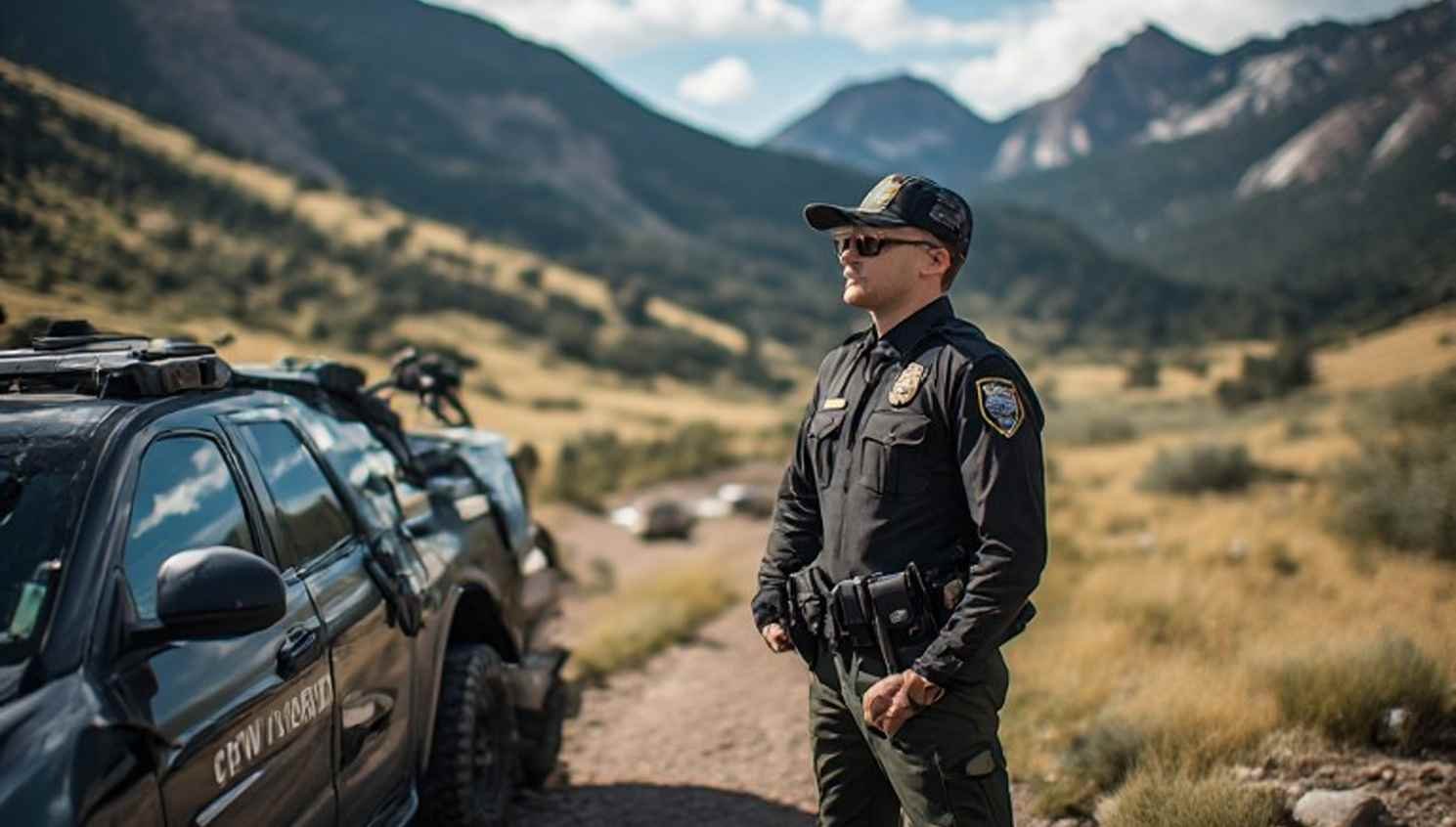
Colorado Game Warden: Wildlife Officer Requirements, Salary & Jobs
Colorado game wardens are officially employed by Colorado Parks and Wildlife (CPW) under the titles “Wildlife Officer” and “District Wildlife Manager.” Applicants generally must be at least 21, be U.S. citizens, meet Colorado residency requirements or obtain an approved waiver, pass a 2,000-meter rowing fitness test, complete psychological and polygraph screening, and attend a POST academy in the Denver area. CPW pays trainees a full salary during training, although the agency does not publish a current dollar salary range on its career overview page.
If you are researching a career in wildlife law enforcement, this guide explains the Colorado-specific requirements, hiring process, physical test, academy, benefits, job-search process, public contact options, and the laws enforced by CPW officers.
What Is a Colorado Game Warden Called?
Colorado uses the everyday term game warden, but the official CPW position titles are Wildlife Officer and District Wildlife Manager.
A District Wildlife Manager combines wildlife management, conservation work, public education, and law enforcement. That is different from a position focused only on writing hunting citations. CPW officers manage wildlife within assigned districts while enforcing Colorado wildlife laws and regulations.
The title also matters when searching for jobs. A search for “Colorado game warden jobs” may not show the official vacancy if the posting is listed as Wildlife Manager I, Wildlife Officer, or District Wildlife Manager.
What Does a Colorado Wildlife Officer Do?
A Colorado Wildlife Officer or District Wildlife Manager performs both law-enforcement and natural-resource duties. Core responsibilities include:
- Enforcing Colorado hunting regulations
- Enforcing fishing and trapping laws
- Checking licenses, tags, harvest records, and permits
- Investigating illegal hunting and poaching
- Investigating illegal possession or transportation of wildlife
- Enforcing season dates, bag limits, and species protections
- Enforcing boating and water-safety rules where applicable
- Enforcing Colorado Parks and Wildlife regulations
- Protecting wildlife habitat and natural resources
- Responding to human-wildlife conflicts
- Assisting with wildlife emergencies
- Providing public-safety support
- Conducting educational programs and community presentations
- Teaching or supporting hunting, fishing, and boating safety
- Preparing reports and evidence
- Testifying in court
- Working with local sheriffs, the Colorado State Patrol, prosecutors, and other agencies
Colorado Wildlife Officers work on a rotating on-call schedule. CPW states that wildlife officers can be reached for wildlife emergencies 24 hours a day, seven days a week, and that many officers are dispatched through the Colorado State Patrol or a local sheriff’s department.
Colorado Game Warden Requirements
Colorado’s requirements can vary slightly by recruitment announcement. Candidates should always compare their qualifications with the specific CPW or State of Colorado vacancy before applying.
Minimum Age
Applicants must be at least 21 years old. CPW’s career information states that there is no maximum age for the Wildlife Officer/District Wildlife Manager pathway.
Education Requirements
CPW describes the position as entry-level and identifies a bachelor’s degree in biology, wildlife management, or a closely related field as the normal educational preparation.
Relevant degrees may include:
- Wildlife biology
- Biology
- Zoology
- Ecology
- Natural-resources management
- Forestry
- Range management
- Environmental science
- Animal science
- Related conservation or natural-science fields
The applicable Colorado job classification may also allow a combination of related education and experience. Candidates should not assume that any bachelor’s degree automatically satisfies the requirement; the announcement controls.
Citizenship Requirements
Applicants must be U.S. citizens for the CPW Wildlife Officer/District Wildlife Manager pathway described on the agency’s career page.
Applicants should be prepared to provide documentation establishing identity and employment eligibility during the hiring process.
Driver’s License Requirements
Trainees must have a Colorado driver’s license before the first day of training.
Because District Wildlife Managers routinely work in rural, mountainous, and rugged areas, applicants should also expect driving responsibilities involving agency vehicles, uneven terrain, winter conditions, and long-distance travel.
Residency Requirements
Colorado residency is generally required for the Wildlife Officer/District Wildlife Manager recruitment pathway. CPW states that a waiver may be available for out-of-state applicants.
A residency waiver is not automatic. Candidates should review the individual job announcement to determine whether the recruitment is open to nonresidents and whether a selected applicant must establish Colorado residency.
Work Experience
CPW identifies the position as entry-level, meaning prior game-warden or law-enforcement experience is not required to qualify for the basic pathway.
Relevant experience can still strengthen an application. Useful backgrounds may include:
- Wildlife or natural-resource work
- Park operations
- Outdoor recreation
- Environmental education
- Conservation research
- Hunting or fishing education
- Emergency response
- Military service
- Public safety
- Law enforcement
- Working with the public in outdoor settings
Education or experience substitutions depend on the classification and specific announcement.
Background Check
Candidates should expect an extensive background investigation. CPW also requires a polygraph examination and a psychological assessment before a final job offer.
A background investigation may review employment history, criminal history, driving history, drug use, financial or personal conduct issues, and the accuracy of information provided during the application.
Applicants should answer all questions honestly. Omissions or misleading statements can become disqualifying issues even when the underlying conduct might otherwise be reviewable.
Physical Requirements
Applicants must pass a CPW physical fitness examination involving a 2,000-meter row on a Concept2 rowing machine.
CPW’s career page identifies a minimum performance standard of the 60th percentile VO₂ max. The agency states that the row is conducted with the damper set at level 5.
Because official standards can change between recruitments, applicants should use the test instructions attached to the current announcement rather than relying on an old training guide or third-party website.
Medical Requirements
A medical examination is part of the conditional-offer process. Candidates must be medically capable of performing the essential duties of a wildlife law-enforcement and field-management position.
The job involves outdoor work, physical exertion, remote travel, variable weather, emergency response, firearms, vehicle operation, and extended periods on foot.
Vision and Hearing Requirements
The CPW career overview does not publish a detailed numerical vision or hearing chart. Applicants should expect vision and hearing to be evaluated as part of the medical and law-enforcement qualification process.
Do not rely on an unofficial eyesight or hearing score unless it appears in the current recruitment documents.
Firearm Requirements
Firearms training is part of the law-enforcement preparation required for the position. The role may involve carrying and safely using firearms in accordance with Colorado law, CPW policy, and POST standards.
Applicants should expect firearms qualification and safety instruction during the law-enforcement training process. Specific qualification scores are not stated on the CPW career overview page.
Colorado Game Warden Salary
Starting Salary
CPW states that trainees receive a full salary during training. However, the current CPW career overview does not publish a specific dollar amount for the starting salary.
This is important because many third-party Colorado game-warden salary pages display old figures from prior fiscal years. Those figures should not be treated as current starting pay.
Academy or Cadet Pay
Colorado trainees are paid while attending the required training program. CPW specifically states that trainees receive a full salary during training rather than unpaid cadet status.
Probationary Pay
CPW does not publish a separate probationary salary figure on its career overview page. Whether a different step or classification applies after academy completion depends on the relevant job announcement and state personnel classification.
Experienced Officer Pay
CPW does not publish a current experienced-officer salary figure on the career overview page. Experienced employees may advance through state classifications or supervisory wildlife-management positions, but candidates should verify the compensation range in the active posting.
Maximum Salary
A current maximum salary for Colorado Wildlife Officers or District Wildlife Managers is not stated on the CPW career overview page. Older salary tables found on third-party websites should not be used as current compensation information.
Overtime and Bonuses
The CPW career page does not publish a standard overtime rate, signing bonus, performance bonus, or guaranteed annual bonus for this position.
Work schedules may include on-call assignments and irregular hours, but compensation for overtime or other premiums should be confirmed from the specific State of Colorado employment announcement.
Colorado Game Warden Benefits
CPW states that benefits begin on the first day of employment.
The agency also states that:
- Trainees receive full salary during training.
- Training-year housing is the trainee’s responsibility.
- CPW does not pay housing costs during the training year.
- CPW does not pay relocation costs for the training year.
- CPW does pay relocation costs for the final park or district assignment.
State employment benefits may include health, dental, vision, leave, life-insurance, disability, retirement, and savings-plan options, but the exact package depends on employment status and the current State of Colorado benefits guide.
How to Become a Colorado Game Warden
The Colorado process generally follows this order, although the exact sequence can change by recruitment:
- Check eligibility. Confirm age, citizenship, residency, education, driver’s-license, and legal-history requirements.
- Prepare education and experience. Build a background in wildlife, natural resources, outdoor recreation, public safety, or a related field.
- Monitor official job postings. Search for Wildlife Officer, District Wildlife Manager, and Wildlife Manager classifications.
- Submit the application. Provide complete employment, education, residency, and supplemental information.
- Complete initial screening. The agency reviews minimum qualifications and application materials.
- Complete written or online testing if required. Some recruitments may use an examination, writing prompt, or other screening device.
- Complete the physical fitness test. Prepare for the 2,000-meter Concept2 row and the applicable VO₂ max standard.
- Attend interviews. Candidates may participate in panel or management interviews.
- Complete the background investigation. This may include fingerprints, employment verification, reference checks, and a polygraph.
- Complete psychological and medical screening. A conditional offer may depend on successful completion.
- Attend POST training. Selected candidates attend the required peace-officer academy.
- Complete field training and probation. New officers apply law-enforcement and wildlife-management skills in their assigned field setting.
Colorado Game Warden Application Process
Colorado does not maintain a permanently open game-warden application. Recruitment periods and closing dates depend on staffing needs and the specific announcement.
Applicants should:
- Monitor the CPW careers page.
- Search the State of Colorado job portal.
- Look for Wildlife Officer, District Wildlife Manager, and Wildlife Manager I postings.
- Read the complete minimum-qualification section.
- Prepare transcripts or degree documentation if requested.
- Document relevant work experience carefully.
- Maintain a valid Colorado driver’s license by the required date.
- Prepare for written testing, interviews, physical testing, polygraph, psychological screening, and medical evaluation.
- Apply separately to each vacancy when required.
CPW’s general careers page does not state that applications are currently open or provide a permanent annual opening date. Therefore, applicants should not assume that a vacancy is active simply because the career path is listed.
Colorado Game Warden Physical Fitness Test
The CPW career overview identifies one specific physical test:
- Event: 2,000-meter row
- Equipment: Concept2 rower
- Damper setting: Level 5
- Minimum standard: 60th percentile VO₂ max
Applicants should train for:
- Aerobic endurance
- Short-term power output
- Sustained rowing pace
- Recovery between hard efforts
- Core and posterior-chain strength
- Pacing over the full 2,000 meters
CPW does not publish a universal table of male and female times, age brackets, or weight-based scores on the career overview page. Do not invent a time standard. The official recruitment instructions should control if they provide a newer or more detailed requirement.
Colorado Game Warden Academy and Training
Colorado trainees attend a POST academy at a local community college in the Denver area. CPW describes the academy period as running from approximately January through May, or about five months.
Training prepares recruits for peace-officer responsibilities, including:
- Colorado criminal law
- Arrest procedures
- Use-of-force principles
- Officer survival
- Report writing
- Interviewing and investigations
- Courtroom testimony
- Firearms safety and qualification
- Emergency response
- Public interaction
- Wildlife law and regulations
- Boating and outdoor enforcement
- Wildlife handling
- Field safety
- Physical conditioning
- Conservation and resource management
After academy training, new officers continue learning through field experience and agency-specific instruction. Candidates should confirm the current academy length, location, curriculum, and graduation requirements in the active announcement.
Colorado Game Warden Jobs
Colorado game-warden jobs are usually posted under official classifications rather than only under the phrase “game warden.”
Search for:
- Wildlife Officer
- District Wildlife Manager
- Wildlife Manager I
- Wildlife Manager/District Wildlife Manager Trainee
- Colorado Parks and Wildlife law-enforcement positions
The main job-search locations are:
- The CPW careers page
- The State of Colorado employment portal
- Official CPW recruitment announcements
- State hiring webinars or recruitment notices
The CPW careers page does not function as a live vacancy board and does not confirm that applications are open at all times. Check the official State of Colorado posting for the opening date, closing date, salary, location, minimum qualifications, and testing schedule.
For related hunting-law context, readers can also review Colorado hunting seasons and regulations before applying or working in the field.
What Laws Do Colorado Game Wardens Enforce?
Colorado Wildlife Officers enforce laws and regulations involving:
- Hunting licenses and permits
- Fishing licenses
- Trapping
- Season dates
- Bag and possession limits
- Tagging and harvest reporting
- Illegal take of wildlife
- Poaching
- Illegal possession or transportation of wildlife
- Protected species
- Wildlife trafficking
- Hunting methods and equipment
- Boating rules
- Parks regulations
- Off-highway vehicle rules
- Wildlife-related public safety
- License suspensions and wildlife-violation penalties
The exact authority and enforcement procedure depend on the statute, regulation, location, and circumstances of the incident. A Colorado Wildlife Officer is a specialized conservation-law-enforcement professional, not a replacement for every municipal, county, state, or federal law-enforcement agency.
How to Find a Colorado Game Warden
Colorado does not present a simple statewide public directory of every officer’s personal contact information on the CPW law-enforcement page.
The appropriate method is to:
- Contact the nearest CPW office or state park.
- Use the CPW contact page to locate the appropriate regional or local office.
- For an active wildlife emergency, contact local dispatch, the Colorado State Patrol, or the county sheriff as appropriate.
- Explain the county, location, species, and nature of the incident.
- Avoid posting an officer’s personal information from unofficial websites.
CPW states that many wildlife officers are dispatched through the Colorado State Patrol or a local sheriff’s department. This is particularly important when the incident is occurring now or presents an immediate public-safety risk.
How to Report a Hunting or Wildlife Violation
Colorado Parks and Wildlife operates Operation Game Thief for anonymous reports of poaching and other hunting or fishing violations.
Report by:
- Phone: 1-877-COLO-OGT
- Verizon mobile shortcut: #OGT
- Email: game.thief@state.co.us
- Online: Through the reporting option connected with the Hunt Regs App
Reports can be routed to Operation Game Thief dispatchers and wildlife officers who are available around the clock. When reporting, provide the date and time, exact location, type of violation, suspect description, vehicle information, weapon details, and information about any illegally taken or transported animal.
Do not confront a suspected poacher. Protect your safety, observe from a safe location, and contact emergency services if there is an immediate threat.
Colorado Game Warden vs. Police Officer
A Colorado Wildlife Officer is a specialized law-enforcement officer whose primary focus is wildlife, natural resources, outdoor recreation, and related public safety.
A municipal police officer generally focuses on crimes and public safety within a city or town. A county sheriff’s office may handle broad county law enforcement, jail operations, court duties, and emergency response. Colorado State Patrol focuses primarily on statewide highway safety and related enforcement.
The roles can overlap. Wildlife Officers may investigate criminal conduct, make arrests where authorized, issue citations, gather evidence, testify in court, and work with other agencies. However, their day-to-day mission is centered on Colorado’s wildlife and outdoor resources rather than general patrol policing.
Frequently Asked Questions
What is a game warden called in Colorado?
The common term is game warden, but CPW’s official titles are Wildlife Officer and District Wildlife Manager. Job seekers should use all three terms when searching for information and vacancies.
How much does a Colorado game warden make?
CPW confirms that trainees receive a full salary during training, but its current career overview does not publish a specific dollar amount for starting, probationary, experienced, or maximum pay. Applicants should rely on the salary listed in the active State of Colorado job announcement rather than old third-party salary tables.
How do I become a game warden in Colorado?
You generally need to meet the age, citizenship, residency, education, driver’s-license, background, medical, and fitness requirements; apply through the official state hiring process; pass interviews and screening; complete the polygraph and psychological assessment; and attend the required POST academy and field training.
What is the Colorado game warden age requirement?
Applicants must be at least 21 years old. CPW states that there is no maximum age for the Wildlife Officer/District Wildlife Manager pathway.
What degree do you need to become a game warden in Colorado?
CPW identifies a bachelor’s degree in biology, wildlife management, or a closely related field as the normal education route. Depending on the classification and announcement, related experience or a combination of education and experience may satisfy the minimum qualification.
Is there a physical test for Colorado game wardens?
Yes. CPW identifies a 2,000-meter Concept2 rowing test with a minimum performance at the 60th percentile VO₂ max. The agency does not publish a universal public chart of exact times by age, gender, or weight on its career overview page.
Where do Colorado game wardens work?
District Wildlife Managers work throughout Colorado in assigned wildlife districts. Their work can involve mountains, forests, grasslands, rivers, reservoirs, rural roads, state parks, and other areas where hunting, fishing, boating, wildlife management, and conservation activity occur.
Can a Colorado game warden arrest someone?
Wildlife Officers are law-enforcement personnel and may enforce applicable wildlife and related laws within their authority. The exact arrest authority depends on Colorado law, the facts of the case, and the officer’s jurisdiction. They also issue citations, investigate violations, preserve evidence, and testify in court.
How do I contact a Colorado game warden?
For a nonemergency, contact the nearest CPW office or state park and explain the county and nature of the issue. For an active wildlife emergency, CPW states that officers may be dispatched through the Colorado State Patrol or the local sheriff’s department.
How do I contact and report a game warden in Colorado?
If you need to report a concern about an officer’s conduct, document the date, location, officer information if known, witnesses, and what occurred, then contact Colorado Parks and Wildlife through its official administrative or regional office channels. Do not use Operation Game Thief to report officer conduct; that program is for poaching and hunting or fishing violations.
| Situation | Appropriate contact route |
|---|---|
| Active threat or immediate danger | 911 or local emergency dispatch |
| Wildlife emergency | Local dispatch, Colorado State Patrol, or county sheriff |
| Suspected poaching or illegal wildlife activity | Operation Game Thief: 1-877-COLO-OGT or #OGT |
| Nonemergency wildlife or officer-contact question | Nearest Colorado Parks and Wildlife office |
| Complaint about an officer’s conduct | Colorado Parks and Wildlife regional or administrative contact channel |
| Citation or license matter | Follow the contact information on the citation or CPW correspondence |