
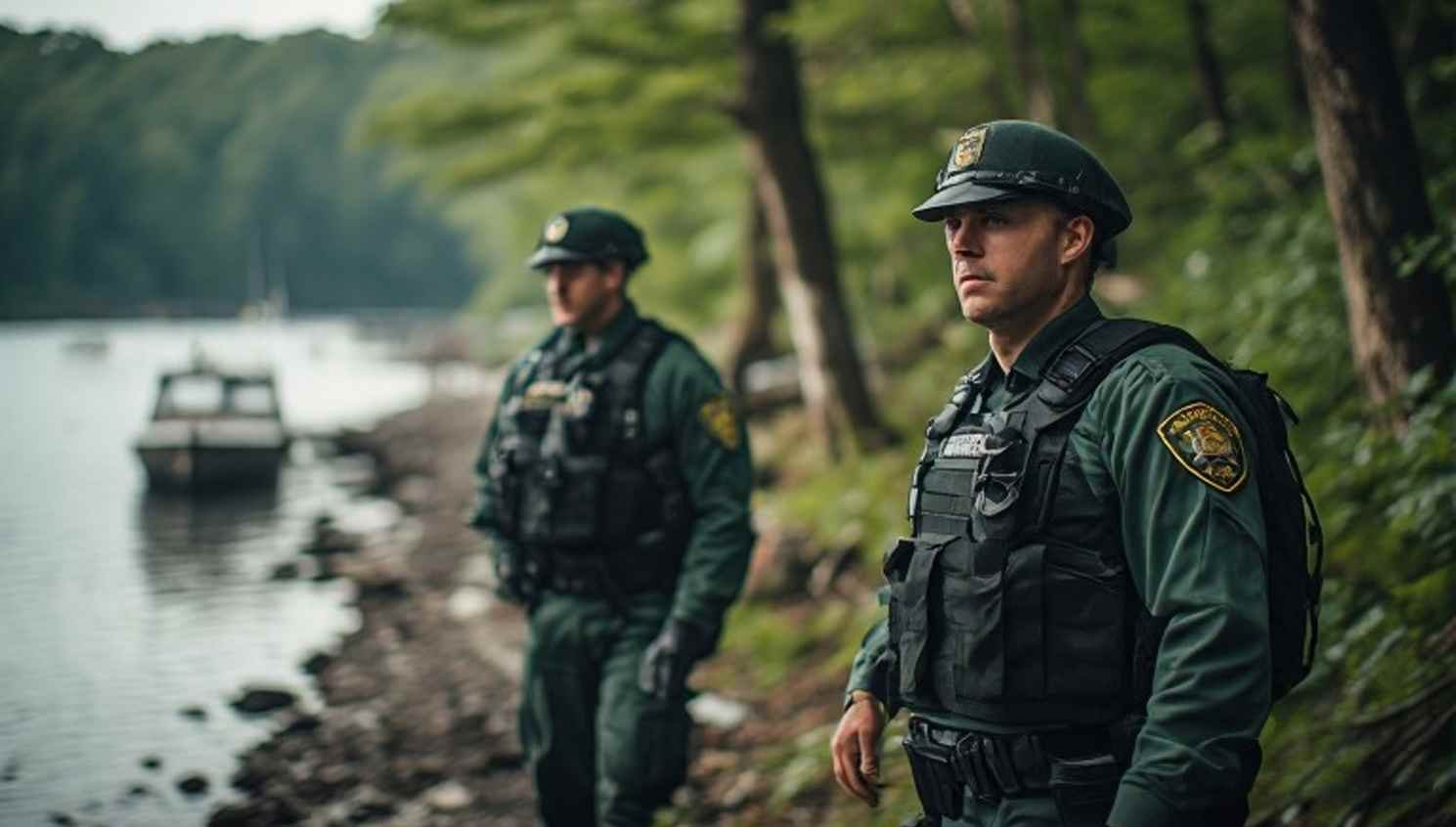
Connecticut Game Warden: Environmental Conservation Police Officer Requirements & Jobs
Who enforces hunting, fishing and boating laws in Connecticut, what do you have to do to become one, and how much does the job pay? The current official title in Connecticut is Environmental Conservation Police Officer (commonly shortened to EnCon Police), and the agency hiring them is the Connecticut Department of Energy & Environmental Protection (DEEP). Many residents still recognize the older “game warden” label, but every modern recruit is hired, trained and paid as a sworn state police officer with a conservation enforcement assignment. Below is a state-specific, no-fluff breakdown of what the role actually looks like.
What Is a Connecticut Game Warden Called?
Connecticut officially uses the title Environmental Conservation Police Officer, but the public-facing nickname EnCon Police shows up in every state job posting, recruitment video and uniform patch. The agency itself notes that “some people may recognize them by their old title of ‘Game Warden.’” That dual identity is intentional: the state wants hunters, anglers and boaters to find the right agency when they search the older term, while formal hiring, payroll and legal authority run through the EnCon Police title. Connecticut is one of a handful of states that have rebranded “game warden” into a broader environmental law enforcement role, which is why the EnCon badge carries full police authority, not just wildlife-cop authority.
What Does an Environmental Conservation Police Officer Do?
A Connecticut EnCon Police Officer’s daily workload goes well beyond checking hunting licenses. The DEEP-issued description of duties includes:
- Fish and game law enforcement, including undercover operations against illegal commercialization of wildlife.
- Deputy Special Agent authority for the U.S. Fish and Wildlife Service and the National Marine Fisheries Service, meaning an EnCon Officer can also enforce federal wildlife codes in the field.
- Recreational boating enforcement on every inland waterway and on Long Island Sound, including BUIs (Boating Under the Influence), safety equipment checks and accident reconstruction. The agency even runs a dedicated Boating Accident Reconstruction Unit (B.A.R.U.).
- Commercial fishing oversight, with authority over lobster boats, shellfish harvests and the FDA-marked seafood supply chain.
- Wildlife management response, including chemical immobilization of the state’s growing moose herd and human-bear conflict calls.
- State park and forest policing, plus snowmobile and ATV enforcement on frozen waters and state-owned land.
- Search and rescue (SAR) on land and water, including Long Island Sound, often as the primary backup to the U.S. Coast Guard.
- Homeland security patrols around the Millstone Point Nuclear Power Plant waters and the state’s harbor areas.
- K-9 search-and-rescue and evidence detection, plus public outreach at fairs, schools, fishing clubs and youth organizations.
If you’re coming from a hunting or fishing background, the throughline is simple: every site-check, season-bag-limit question, and wildlife violation report eventually lands on an EnCon desk.
Connecticut Game Warden Requirements
The DEEP recruitment page lists both special requirements (must-have) and preferred qualifications (nice-to-have).
Age
At least 21 years old at the start of training. This is the same cutoff used by the Connecticut Police Officer Standards and Training Council (POSTC), and it appears in every recent CT DAS job posting.
Education
A high school diploma or GED is the minimum, and it must be in hand before admission to the Connecticut Police Academy. A college degree is not required, but the state flatly says it will substitute year-for-year for the in-service experience requirement described below.
Citizenship
Applicants must be lawfully authorized to work in the United States by the date of appointment. U.S. citizenship is not formally codified in the latest DAS posting, but federal Deputy Special Agent status is much easier to obtain for citizens, and that’s why the recruitment page emphasizes identity and employment-eligibility documents at hire.
Driver’s License
A valid Connecticut driver’s license is required, and incumbents must retain it. Out-of-state licenses work during the application process, but you’ll need a CT license before final appointment.
Residency
You must establish Connecticut residency. New hires routinely receive a window of time after academy graduation to relocate.
Work Experience
Becoming a full-fledged EnCon Police Officer generally requires three years of law enforcement experience with DEEP. Two of those three years may be substituted with any combination of:
- College coursework in Natural Resource Management, Recreation Management, Biology / Biological Sciences, Agriculture or Law Enforcement.
- Prior sworn law enforcement experience.
- Wildlife conservation, commercial shellfishing, forestry, farm management or fish-culture work.
Background Check
Expect a full background investigation plus a polygraph examination. Automatic disqualifiers include recent controlled-substance use, a felony conviction, current probation, any domestic-violence record, or having been discharged (or resigned under threat of discharge) from another law-enforcement job.
Physical Requirements
Candidates must pass a Physical Fitness Assessment that the recruitment page spells out by event:
- 1.5-mile run
- Push-ups (timed)
- Sit-ups (timed)
- 300-meter run
A current CHIP card (validated through certifyfit.com) can be used in lieu of the in-house test.
Medical Requirements
A comprehensive medical examination is required, including a controlled-substance screening. Once you’ve submitted your application, the state’s rules say you cannot use marijuana, even if Connecticut otherwise allows it.
Vision and Hearing Requirements
You must hear with or without hearing aids (long-distance, directional and conversational acuity) and see with both eyes, with or without corrective lenses. There’s no formal unaided acuity number published on the recruitment page, but the Connecticut Police Academy medical screen mirrors POSTC standards.
Firearm Requirements
Formal certification occurs during academy training rather than at hiring. EnCon recruits must qualify with department-issued firearms before field deployment.
Swim Test
The state-issued Protective Services Trainee posting is explicit: candidates must swim 100 yards within 4 minutes. This is non-negotiable for anyone who’ll be working on patrol vessels in Long Island Sound.
Connecticut Game Warden Salary
Connecticut’s pay scale moves faster than most states because EnCon Police Officers are paid on the state police officer pay grid, not a separate “wildlife” wage. The current (late 2026) Protective Services Trainee / Entry-Level Police Officer posting on the state job portal lists:
| Pay Tier | Annual Salary |
|---|---|
| Starting salary (Protective Services Trainee) | $51,096 – $64,489/year |
| Conservation Police Officer – first year on the job | ~$74,153/year |
| Top step, Conservation Police Officer 1 | ~$120,744/year |
The very latest DEEP recruitment communications also indicate a first-day officer salary of about $64,200, climbing through annual step increases plus longevity pay. Combined with overtime at premium rates (marine patrols, holiday BUIs and snowmobile enforcement routinely generate OT), total compensation for an experienced EnCon Officer comfortably clears six figures.
Salary Notes for Hunters / Anglers Considering the Job
- Pay steps kick in at 1 year, 3 years and 7 years, with the top step reached around year 7–8.
- Geographic transfers are allowed, so you can chase salary bumps across districts.
- Specialty assignments (B.A.R.U., K-9, Chemical Immobilization Team, Marine District) typically come with add-on pay or assignment differentials.
How to Become a Connecticut Game Warden
Connecticut’s process is more rigorous than most states and can take several months from first application to sworn appointment. The seven-stage flow published by DEEP is:
- Check eligibility — confirm age, education, residency and driver’s license.
- Apply through the Connecticut Department of Administrative Services (DAS) during an open posting window.
- Answer referral questions in the Online Employment Center.
- Pass the Physical Fitness Assessment (1.5-mile run, push-ups, sit-ups, 300-meter run) or present a valid CHIP card.
- Pass the polygraph exam covering employment, criminal and drug history.
- Pass the background investigation — employment, education, motor-vehicle, credit and criminal record.
- Pass the psychological and medical evaluations, including the controlled-substance screen.
- Attend the Connecticut Police Academy for about 26 weeks of POSTC-certified training.
- Serve a probationary field-training period with a senior EnCon Officer before you reach full Officer status.
Connecticut Game Warden Application Process
Recruitment cycles are not on a fixed annual schedule. The Environmental Conservation Police Division opens postings opportunistically, and openings typically appear on the Connecticut DAS Job Openings page. As of late 2026, the Protective Services Trainee / Entry-Level Police Officer posting is open, and the seasonal EnCon Ranger posting is also open each fall through February for ranger training that runs March–May.
Candidates should monitor the official DEEP Law Enforcement Recruitment page, where recruiting Sergeant Jeffrey Bruno (jeffrey.bruno@ct.gov) is the named contact. The state explicitly asks applicants not to call or email just to confirm receipt — keep your application packet complete and move on.
Application Documents You’ll Need
- Completed online State of Connecticut application.
- Referral-question responses through the Online Employment Center.
- High school / GED documentation (required before academy admission).
- Valid driver’s license.
- Proof of identity and U.S. work eligibility (I-9 documents).
- Any military discharge paperwork (DD-214) if applicable.
Connecticut Game Warden Physical Fitness Test
This is one of the highest-value keyword clusters for hunters who want the job. Connecticut does not publish the precise point thresholds the way Texas does, but the recruitment page lists every event:
| Event | What It Tests |
|---|---|
| 1.5-mile run | Cardiovascular endurance, the most common “cutoff” event. |
| Push-ups (timed) | Upper-body muscular endurance. |
| Sit-ups (timed) | Core endurance. |
| 300-meter run | Anaerobic sprint capacity — relevant for foot pursuits. |
| Swim test (100 yards in 4:00) | Required for any marine or SAR duty. |
Train for these the way you’d train for preseason elk hunting: long slow runs for endurance, hill sprints for the 300, and pool time for the swim.
Connecticut Game Warden Academy and Training
Accepted recruits attend a POSTC-approved police academy (most EnCon classes run alongside municipal officers at the Connecticut Police Academy in Meriden). Expect:
- Approximately 26 weeks of classroom, practical and physical training (some recent classes have run closer to 30 weeks; the seasonal EnCon Ranger Academy runs about 28 weeks / 1,400 hours).
- Lodging Monday–Friday is often required — recruits live at the academy during the cohort cycle.
- Subjects covered: Connecticut criminal law, search & seizure, firearms, first responder medical aid, defensive tactics, criminal investigations, crime-scene processing, motor-vehicle operations and physical conditioning.
- EnCon-specific follow-on training (roughly a year of field work) covers boating safety, Personal Watercraft certification, National Marine Fisheries courses, USFWS courses, license and equipment inspection, winter observations, lease enforcement, wildlife rescue and hunting/trapping law.
Connecticut Game Warden Jobs
EnCon job openings flow through the official Connecticut Department of Administrative Services (DAS) portal, and DEEP’s own recruiting page links out to the live posting. Live or recent openings include:
- Protective Services Trainee (Police) — the normal pathway to full EnCon Police Officer.
- EnCon Ranger (seasonal) — posted October through February; this is the entry point for many college students or career-changers who want a foot in the door.
- Environmental Protection Dispatcher — supports EnCon Police and other DEEP divisions.
- Conservation Police Colonel — the leadership-tier posting for promotional candidates.
You won’t find a Connecticut “Game Warden Jobs” aggregator at DEEP; listings live on the DAS portal. If the DAS page is showing no openings right now, that’s genuinely the truth — DEEP hires in cohorts, not continuously.
Connecticut Game Warden Benefits
Connecticut’s package is what makes the 25-year hazardous-duty retirement such a recruiting pitch. State-published benefits include:
- Health and wellness benefits plus supplemental coverage through the state’s General Employee Benefits program.
- State Employees Retirement System (SERS) Tier IV – Hazardous Duty plan, which lets EnCon Officers retire with full benefits after 20–25 years of service, regardless of age.
- Paid leave, holidays, uniform and equipment allowances.
- Take-home patrol vehicle assignment in many districts, plus agency-issued marine vessels, ATVs and snowmobiles for field work.
- Promotional and geographic-transfer opportunities within DEEP.
- Education benefits through the state’s tuition reimbursement program for full-time employees.
What Laws Do Connecticut Game Wardens Enforce?
Because EnCon Police Officers are state police officers with conservation assignments, they enforce the full spectrum of natural-resource and general-criminal statutes that apply to wildlife, the outdoors and public safety:
- Hunting violations, season/bag-limit violations, illegal possession of game.
- Fishing violations, including creel limits, license checks and commercial-shellfish law.
- Trapping violations and illegal fur trade.
- Boating safety law, BUIs, mandatory equipment, accident reporting.
- License, permit and tag violations across all of the above.
- Poaching, including commercial poaching rings and black-market species like glass eels.
- Protected-species and threatened/endangered-species law.
- Snowmobile, ATV and off-road motorcycle law on state land and frozen waters.
- General criminal law when operating as primary police agency inside state parks/forests or as backup to municipal departments.
If you already fish, hunt or boat in Connecticut, your favorite season calendar lives right next to the laws these officers enforce. For a state-by-state breakdown of current season dates, our Connecticut hunting seasons guide is updated every year.
How to Find a Connecticut Game Warden
Unlike Texas or Florida, Connecticut does not publish a public officer-by-county directory. Connecticut EnCon Police are organized into three district headquarters plus specialized units (Marine District, B.A.R.U., K-9, Chemical Immobilization). To reach the agency:
- DEEP Main Office: 79 Elm Street, Hartford, CT 06106 — (860) 424-3000
- Recruiting Sergeant: Jeffrey Bruno — jeffrey.bruno@ct.gov
- 24/7 DEEP Dispatch: (860) 424-3333 for emergencies, in-progress violations and SAR.
- General wildlife inquiries: DEEP Wildlife Division at (860) 424-3011.
If you need to find the specific officer for your town, the fastest path is to call your local DEEP district office or non-emergency dispatch rather than searching for a public roster (which the agency doesn’t publish, for officer-safety reasons).
How to Report a Hunting or Wildlife Violation
Reporting in Connecticut is genuinely straightforward, and it’s faster than people think. Three numbers matter:
- DEEP Dispatch (24/7, in-progress): (860) 424-3333
- TIP – Turn In Poachers Hotline: 1-800-842-HELP (4357) — anonymous tips welcome.
- U.S. Fish & Wildlife Service TIPS Line: 1-844-FWS-TIPS (397-8477) — for federal wildlife violations, including migratory birds and endangered species.
For non-emergency bear sightings, nuisance wildlife or environmental damage, the DEEP Wildlife Division reporting page lays out options including an online ArcGIS bear-sighting form. Reporting timely, with as much detail as possible (location, vehicle plate, time of day), is the single best way EnCon Police catch repeat offenders.
Connecticut Game Warden vs. Police Officer
A Connecticut EnCon Police Officer is a state police officer — the badge carries full arrest authority under Connecticut General Statutes. The difference is jurisdiction and mission:
- EnCon Police are assigned to conservation enforcement but retain full police powers statewide and are primary police agency inside state parks, forests and on state waters. They act as backup to municipal departments and the Coast Guard for everything from narcotics to domestic disputes.
- Municipal / State Police prioritize general criminal enforcement and traffic, with conservation as a secondary duty; EnCon officers prioritize hunting, fishing, boating and natural-resource law, with general criminal enforcement as a secondary duty.
In short: if your complaint starts with a fish, a deer, a lobster trap, a boat ramp or an ATV trail, call EnCon first. If it starts with a break-in, an assault or a highway pursuit, call municipal or state police.
Frequently Asked Questions
What is a game warden called in Connecticut?
The official title is Environmental Conservation Police Officer (EnCon Police), employed by the Connecticut Department of Energy & Environmental Protection. The “game warden” label is still publicly recognized.
How much does a Connecticut game warden make?
Starting salary is approximately $51,096 – $64,489/year as a Protective Services Trainee, climbing to about $74,153 in year one as a Conservation Police Officer, with top-step pay reaching ~$120,744/year.
How do I become a game warden in Connecticut?
Apply through DAS, pass the physical fitness assessment (or present a CHIP card), complete polygraph, background, psychological and medical screening, then graduate from the Connecticut Police Academy.
What are the Connecticut game warden age requirements?
21 years old at the start of training.
What degree do you need to become a game warden in Connecticut?
A degree is not required, but two years of relevant coursework (Natural Resource Management, Recreation Management, Biology, Agriculture or Law Enforcement) substitute for two of the three required years of DEEP law-enforcement experience.
Is there a physical test?
Yes — a 1.5-mile run, push-ups, sit-ups and 300-meter run, plus a 100-yard swim in under 4 minutes.
Where do Connecticut game wardens work?
Statewide — across three district headquarters, marine patrol on Long Island Sound, state parks and forests, and specialized units like B.A.R.U., K-9 and the Chemical Immobilization Team.
How do I contact a Connecticut game warden?
Call DEEP Dispatch at (860) 424-3333 for in-progress incidents or the TIP Hotline at 1-800-842-HELP (4357) to report violations anonymously.
Can a Connecticut game warden arrest someone?
Yes. EnCon Police Officers are sworn state police officers with full arrest authority, including as Deputy Special Agents of the U.S. Fish & Wildlife Service and National Marine Fisheries Service.
What laws do game wardens enforce in Connecticut?
Hunting, fishing, trapping, boating, ATV/snowmobile, license/permit, commercial fishing and shellfish, plus general criminal law when acting as primary agency inside state lands.
How do I contact and report a game warden in Connecticut?
| Situation | Who to Contact | Number / Channel |
|---|---|---|
| In-progress wildlife/boating violation or SAR | DEEP 24/7 Dispatch | 860-424-3333 |
| Anonymous poaching tip | TIP — Turn In Poachers Hotline | 1-800-842-HELP (4357) |
| Federal wildlife violation | U.S. Fish & Wildlife TIPS Line | 1-844-FWS-TIPS (397-8477) |
| Non-emergency wildlife inquiry | DEEP Wildlife Division | 860-424-3011 |
| Bear sighting / nuisance wildlife | DEEP online reporting tool | portal.ct.gov/deep/wildlife/combat-illegal-wildlife-trade |
| Recruitment questions | Sergeant Jeffrey Bruno, DEEP Recruiting | jeffrey.bruno@ct.gov |
Final Take
A Connecticut game warden — officially an Environmental Conservation Police Officer — is one of the more competitive outdoor careers in New England because it pairs a full state police salary grid, a 25-year hazardous-duty retirement, and a mission that lets you work outside every day. If you’re already a hunter or angler in the state, your background check, field experience and species knowledge put you ahead of the typical applicant pool. Watch the Connecticut DAS Job Openings page for the next Protective Services Trainee cohort, start training for the 1.5-mile run and the swim test now, and remember that DEEP hires in cohorts — when the window opens, apply immediately.