
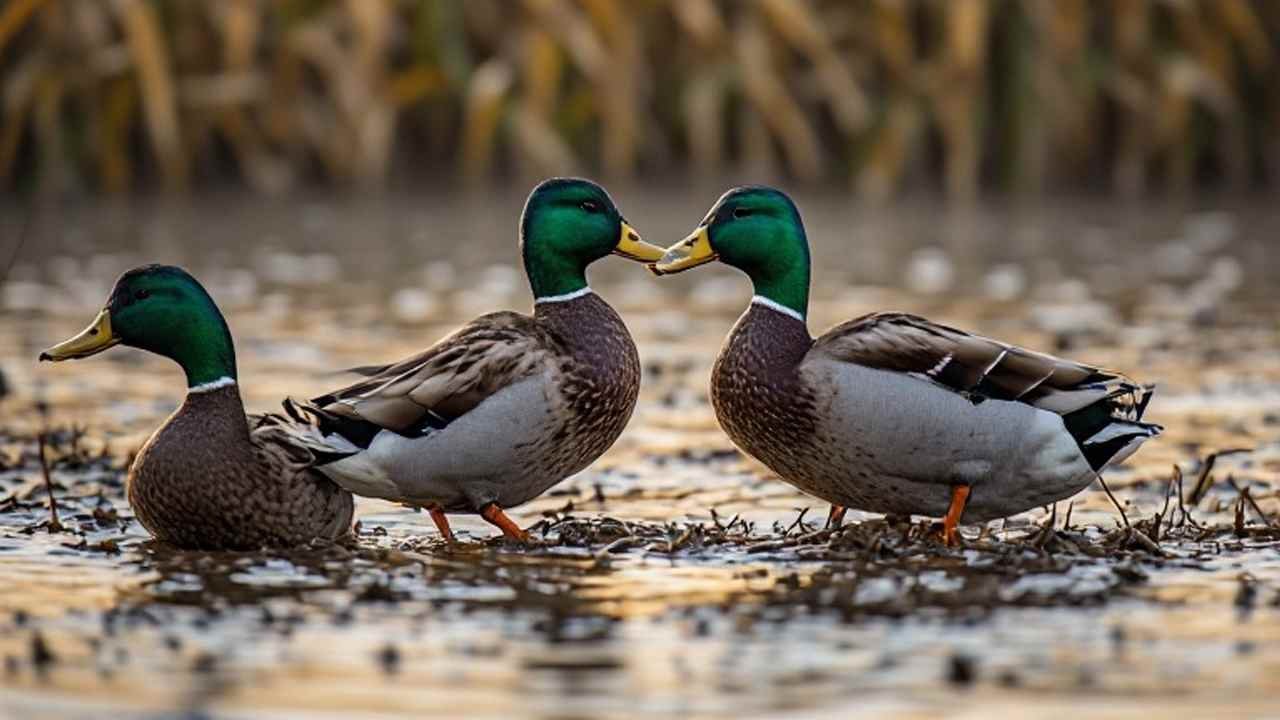
Kentucky Duck Season Dates 2026-2027, Rules & Bag Limits
Kentucky’s duck season 2026-2027 runs from late November through the end of January, built around a Thanksgiving opener and a long second segment that carries hunters through the heart of winter. The state operates a single statewide duck season with two split segments rather than multiple duck zones, so every hunter in Kentucky — from the Mississippi River bottoms in the west to the Cumberland Plateau in the east — follows the same duck season framework. Kentucky adds a September teal-and-wood-duck season, two youth-only days, and two veteran/military-only days to round out the waterfowl calendar.
Before you go afield, know that you’ll need a Kentucky hunting license, a Kentucky Migratory Bird/Waterfowl Permit, a federal duck stamp (if you’re 16 or older), and a completed HIP survey. Regulations can change from year to year, so always verify the current rules with the Kentucky Department of Fish and Wildlife Resources (KDFWR) before hunting.
Kentucky Duck Season 2026-2027 at a Glance
| Information | 2026-2027 Details |
|---|---|
| Regular Duck Season | Nov. 26–29, 2026 (Thanksgiving segment) and Dec. 7, 2026 – Jan. 31, 2027 (second segment) |
| Hunting Zones | One statewide duck season; no duck zones (goose zones only) |
| Daily Bag Limit | 6 ducks (species sub-limits apply) |
| Possession Limit | 18 ducks (3× daily bag) |
| Shooting Hours | One-half hour before sunrise to sunset |
| Youth Waterfowl Days | Nov. 21, 2026 and Feb. 13, 2027 (statewide) |
| Veteran/Military Days | Nov. 22, 2026 and Feb. 14, 2027 (statewide) |
| Early Teal Season | Sept. 19–23, 2026 (teal & wood duck) |
| Required License | Kentucky hunting license (unless exempt) |
| Kentucky Waterfowl Permit | Kentucky Migratory Bird/Waterfowl Permit — $15.86 |
| Federal Duck Stamp | $25 — required for hunters 16 and older |
| HIP Registration | Free, required before hunting |
Kentucky Duck Season Dates for 2026-2027
Kentucky’s regular duck season is one statewide season split into two segments — a format the state has used for years and confirms for 2026-2027 in its official Migratory Birds and Waterfowl Hunting Guide:
| Season Segment | Dates |
|---|---|
| Segment 1 — Thanksgiving Segment | Nov. 26–29, 2026 (4 consecutive days, beginning on Thanksgiving Day) |
| Segment 2 — Main Season | Dec. 7, 2026 – Jan. 31, 2027 (56 consecutive days) |
- Opening day: Thursday, Nov. 26, 2026 (Thanksgiving Day)
- Main-season opening: Monday, Dec. 7, 2026
- Closing day: Sunday, Jan. 31, 2027
Kentucky’s split-season structure means you can hunt the four-day Thanksgiving weekend, then the season pauses for a week before reopening Dec. 7 and running uninterrupted for 56 days through the end of January. This late-season-heavy format lines up with the movement of mallards and other dabbling ducks into the state as northern waters freeze — not surprising for a state sitting in the middle of the Mississippi Flyway.
The official 2026-2027 Kentucky waterfowl dates are finalized and published in the KDFWR hunting guide, so the dates above are official, not proposed or estimated.
Kentucky Duck Hunting Zones
Kentucky does not divide the state into duck hunting zones. The regular duck season, youth days, and military/veteran days are all statewide with identical dates everywhere. That’s one of the simpler parts of planning a duck hunt in Kentucky: you don’t need to check a zone map for ducks.
Where zones do exist in Kentucky, they apply to geese:
- September Canada goose season uses an Eastern Zone and a Western Zone, each with its own early-season dates.
- The Ballard Zone is a special restricted boundary in far western Kentucky (around the Mississippi–Ohio River confluence near Ballard and McCracken counties) with its own goose regulations.
So when you’re confirming “duck season in Kentucky,” the only question is whether you’re hunting during the Thanksgiving segment, the main segment, or one of the special statewide days — not which part of the state you’re in. For goose hunting, however, you must confirm your zone before you go, and it’s worth checking KDFWR’s official waterfowl page for the current goose zone map and boundaries.
Kentucky Duck Season Bag Limits
Kentucky follows the federal framework, with a 6-duck daily bag limit and several species-specific sub-limits that hunters must know cold. These are the official 2026-2027 limits published by KDFWR:
| Duck Species | Daily Limit | Important Restrictions |
|---|---|---|
| Total Ducks | 6 | Overall daily bag |
| Mallard | 4 | No more than 2 may be hens |
| Wood Duck | 3 | — |
| Northern Pintail | 3 | — |
| American Black Duck | 2 | — |
| Canvasback | 2 | — |
| Redhead | 2 | — |
| Scaup | 1 before Dec. 18 | Rises to 2 from Dec. 18 to Jan. 31 |
| Other Ducks | Count toward 6-bird total | Combined with sub-limits |
Possession limit: 18 ducks — exactly three times the daily bag limit — per 50 CFR Part 20 federal rules.
A few things to remember when you’re counting birds in the blind:
- Your total is 6 ducks per day, no exceptions — species sub-limits cannot push you past 6.
- The hen mallard rule (max 2) is the easiest limit to accidentally break, since hens and drakes share the 4-mallard allowance.
- The scaup limit changes mid-season: 1 per day through Dec. 17, then 2 per day for the final stretch (Dec. 18 – Jan. 31).
- During the February youth day, the scaup limit is 2 (the standard late-season limit), since that hunt falls well after Dec. 18.
What License Do You Need to Hunt Ducks in Kentucky?
Hunting ducks in Kentucky requires a stack of state and federal authorizations. Here’s the full breakdown, straight from KDFWR and the U.S. Fish and Wildlife Service.
Kentucky Hunting License
Unless you’re explicitly license-exempt, every duck hunter must hold a valid Kentucky hunting license. Kentucky offers annual, 1-day, and 7-day options for nonresidents, and annual or lifetime options for residents. License exemptions in Kentucky apply in limited situations (such as certain landowners hunting on their own land), but if you’re not sure you qualify for an exemption, assume you need the license.
Kentucky Migratory Bird/Waterfowl Permit
Kentucky requires a Kentucky Migratory Bird/Waterfowl Permit for anyone who must hold a hunting license and hunts ducks, geese, teal, doves, woodcock, snipe, or other migratory birds. The fee is $15.86 for both residents and nonresidents (2026-2027 license year). This is Kentucky’s state waterfowl “stamp” equivalent, and it’s sold alongside your license at license agents and on the KDFWR license portal.
Federal Duck Stamp
Anyone 16 years of age or older who hunts migratory waterfowl must purchase and carry a current Federal Migratory Bird Hunting and Conservation Stamp — the classic “duck stamp.” For the 2026-2027 season it costs $25.00 and is valid from July 1, 2026 through June 30, 2027. The good news for planning: the federal stamp is good in every state, so one stamp covers you wherever you hunt. Learn more on the official Federal Duck Stamp program page.
- Electronic stamps (E-Stamps) are available online and give you an immediate, printable temporary certificate good for 45 days while the physical stamp arrives in the mail.
- Sign your stamp — an unsigned physical stamp or a mere sales receipt is not legal to hunt with. Signatures must cross the stamp’s face.
HIP Registration
The Harvest Information Program (HIP) is a federal survey that states use to estimate migratory bird harvest. Before hunting any migratory bird in Kentucky — ducks included — you must complete the free HIP survey through your KDFWR “My Profile” account. It takes about 5 minutes, and you’ll receive a confirmation number you should record on your license. If you’re hunting doves, teal, geese, woodcock, or snipe, HIP applies to those too.
Summary Table
| Requirement | Resident | Nonresident | Notes |
|---|---|---|---|
| Hunting License | Yes | Yes | Exemptions limited; verify yours |
| HIP Registration | Yes | Yes | Free, online, ~5 min |
| KY Migratory Bird/Waterfowl Permit | Yes | Yes | $15.86, state waterfowl permit |
| Federal Duck Stamp | 16+ | 16+ | $25, E-Stamp OK, must sign |
Kentucky Duck Hunting License Costs for 2026-2027
These are the official 2026-2027 fees published on the KDFWR license and permit fee page:
| License or Permit | Resident Cost | Nonresident Cost |
|---|---|---|
| Annual Hunting License | $28.54 | $169.12 |
| 1-Day / 7-Day Hunting License | Check fee page | 1-Day not valid for deer/elk |
| KY Migratory Bird/Waterfowl Permit | $15.86 | $15.86 |
| Federal Duck Stamp | $25.00 | $25.00 |
| HIP Registration | Free | Free |
Notes:
- Nonresidents have 1-day and 7-day hunting license options — a practical choice for out-of-state hunters who only have a weekend or a few days of duck hunting in mind. The 1-day license is not valid for deer or elk, but it covers waterfowl.
- Kentucky also offers combination and sportsman-style packages that bundle the hunting license with the state migratory bird/waterfowl permit and other privileges. Because package contents and prices vary, check the official KDFWR fee page for the exact bundle that fits you.
- Fees can change annually (the license year runs March 1 – February 28), so confirm the current price at purchase time. Fees quoted here are for the 2026-2027 license year.
Youth Waterfowl Hunting Days in Kentucky
Kentucky sets aside two youth-only waterfowl days each season, and under the current framework they’re statewide — no zone restrictions. For 2026-2027:
- Saturday, Nov. 21, 2026 (the Saturday before Thanksgiving)
- Saturday, Feb. 13, 2027 (the second Saturday in February)
Who qualifies: Youth hunters who have not yet reached their 16th birthday on the day of the hunt.
Bag limits: Same as the regular season (6 ducks with the standard species sub-limits; the scaup limit is 2 on the February date). Youths may also take coots and mergansers under the same rules as the regular season.
Licenses and stamps: Youth participants follow the same license framework — a Kentucky hunting license (or applicable exemption), the Kentucky Migratory Bird/Waterfowl Permit, and for youth 16 and over, the federal duck stamp (youth under 16 are exempt from the federal stamp). A completed HIP survey is required.
Adults: These are youth-only days — the bird comes from the young hunter’s gun. Accompanying adults are there to supervise and call, not to shoot. Kentucky eliminated zone-based youth seasons precisely so families across the state have the same two well-timed hunt days, one in November and one in February. Check the official guide for the current adult supervision expectations before the hunt.
Veteran and Active-Duty Military Waterfowl Hunting Days
Kentucky created special waterfowl seasons for veterans and active-duty military members — a statewide opportunity that also runs twice per year:
- Sunday, Nov. 22, 2026 (the Sunday before Thanksgiving)
- Sunday, Feb. 14, 2027 (the second Sunday in February)
Who qualifies: Veterans and active-duty members of the U.S. armed forces. These are separate from the youth days — the Sunday dates immediately follow the Saturday youth dates, letting families with a veteran often hunt back-to-back days.
Rules and limits: The hunts are statewide, and the regular seasons’ bag limits apply (6 ducks with the same species sub-limits). All standard license, state permit, federal duck stamp (16+), and HIP requirements apply. Be prepared to document qualifying military service; check the official KDFWR guide for any specific validation expected at the time of the hunt.
Important: On these days, only qualifying veterans and active-duty personnel may harvest waterfowl. These are not “everyone hunts” days — they’re dedicated opportunities for those who served.
Early Teal Season in Kentucky
Yes — Kentucky offers an early-season waterfowl hunt each September, officially framed as the Teal & Wood Duck season:
- Dates: Sept. 19–23, 2026 (five days, beginning on the third Saturday in September)
- Legal species: Blue-winged teal, green-winged teal, cinnamon teal, and wood ducks
- Daily bag limit: 6 birds total, with no more than 2 wood ducks
- Possession limit: 18 birds, with no more than 6 wood ducks
- Shooting hours: One-half hour before sunrise to sunset
The September season follows the same license stack as the regular duck season: Kentucky hunting license, Kentucky Migratory Bird/Waterfowl Permit, HIP registration, and the federal duck stamp for hunters 16 and older.
Hunters often call this the “teal season,” but note the wood duck allowance — Kentucky pairs the two species intentionally, giving early-season hunters a chance at blue-winged teal just passing through plus resident wood ducks in timber and creek bottoms. Early-season limits are separate from the regular duck season, so birds you take in September don’t count against your November-January bag, and vice versa (the 6-bird September daily limit does not carry over into the regular season’s possession math).
Kentucky Duck Hunting Shooting Hours
The legal shooting hours for ducks and other waterfowl in Kentucky are:
- One-half hour before sunrise until sunset — the standard for ducks, geese, coots, mergansers, teal, wood ducks, snipe, and woodcock.
- Sandhill crane is the exception: sunrise to sunset.
Two practical reminders:
- Dawn often starts “too early” for ducks — that’s by design. The half-hour of pre-sunrise shooting window catches ducks at first movement, but you must be in position and legal well before it.
- Public areas can tighten the clock. Some Kentucky WMAs and public hunting areas require hunters to be out of the area by early afternoon (commonly around 2 p.m.) or impose special closures, so always confirm the local rules for the specific WMA or tract you plan to hunt — posted signs and area-specific pages in the KDFWR guide are the authority.
Where Can You Hunt Ducks in Kentucky?
Public Land
Kentucky offers waterfowl hunting across a large network of wildlife management areas (WMAs), mostly concentrated along the Ohio and Mississippi river drainages and the Tennessee/Cumberland lake systems. Major public waterfowl opportunities include:
- Ballard WMA — Kentucky’s premier public waterfowl area on the Mississippi River bottoms; quota-based waterfowl hunting.
- Sloughs WMA — the crown jewel of Kentucky public waterfowl hunting in Henderson and Union counties, with multiple units, flooded timber, and managed moist-soil impoundments.
- Lake Barkley WMA — riverine and reservoir habitat with season-long blind sites drawn annually in September.
- Boatwright WMA and Doug Travis WMA — lower Ohio River bottomland areas with quota waterfowl hunts.
- Obion Creek WMA, Peabody WMA, Ohio River Islands WMA, Land Between The Lakes (LBL), and numerous lake-associated WMAs (Barren River Lake, Green River Lake, Kentucky River, Taylorsville Lake, Yatesville Lake, and more).
Every area has its own rules — entry requirements, unit closures, blind restrictions, and hunting hours vary. Check the official Kentucky waterfowl hunting page for the current WMA list and the specific regulations for the area you plan to hunt.
Private Land
On private land, written or verbal permission from the landowner is required before you hunt — Kentucky enforces trespass laws, and entering posted property without permission is a violation. For a state where much of the best duck hunting lies in privately owned river bottoms and farm ponds, building landowner relationships is often the single biggest factor in access. Ask well in advance of the season, offer to help with chores, and respect the landowner’s wishes on where you can park and walk.
Public Hunting Draws and Reservations
Kentucky runs a waterfowl quota hunt system on its most productive WMAs. Here’s how it works for 2026-2027:
- Sloughs WMA — Sauerheber, Crenshaw, and Duncan II units: Access during duck season (Nov. 26–29 and Dec. 7, 2026 – Jan. 31, 2027) is through an online quota hunt drawing, with the application period running in September (Sept. 1–30). If you draw, expect specific rules: a 25-shell daily limit, hunting within 25 feet of party members, and a post-hunt survey due by 3 p.m. each day.
- Sloughs WMA — Jenny Hole unit: Weekly on-site drawings held Mondays at 6 p.m. at the Sloughs WMA office, plus availability through the online quota system.
- Ballard, Boatwright, and Doug Travis WMAs: Waterfowl access runs through the same Waterfowl Quota Hunts program — see the KDFWR quota hunt page for dates and application windows.
- Lake Barkley WMA: Season-long hunting blind sites are drawn in September.
Quota systems fill fast, so apply as soon as the September window opens and treat a successful draw as your ticket to Kentucky’s best public duck hunting.
Important Kentucky Duck Hunting Regulations
Practical rules every duck hunter in Kentucky must follow (all enforceable under state and federal law):
- Non-toxic shot required: Lead shot is illegal for waterfowl. Use steel, bismuth, tungsten, or other approved non-toxic loads only.
- Plugged shotgun: Your shotgun must be plugged to a maximum capacity of three shells while hunting migratory birds.
- Prohibited equipment: Electronic calls are illegal for hunting ducks and geese. (Electronic calls remain legal for crows only.)
- Baiting: Hunting over baited areas — grain, seed, or other bait placed to attract birds — is illegal. If the area is baited, you must not hunt there.
- Wanton waste: You must make a reasonable effort to retrieve crippled or killed birds; leaving them to waste is a violation.
- Species identification: You are responsible for positively identifying every duck before you shoot. The hen mallard, pintail, scaup, and black duck limits make ID mistakes costly — study your birds.
- Possession limits: In the field and at your destination, you may possess no more than the daily bag limit per hunter before the end of the day; possession limited to 3× the daily bag at home.
- Hunting near refuges and posted areas: Kentucky’s Ohio River waterfowl refuge areas and any area marked with signs are closed to all hunting — respect refuge boundaries.
- WMA entry/exit and shell limits: Quota areas may impose shell limits (e.g., 25 shells at Sloughs quota hunts) and early-afternoon exit requirements.
Best Ducks to Hunt in Kentucky
Kentucky’s position on the Mississippi Flyway makes it a genuinely diverse duck state — most of the eastern and central flyway species show up somewhere. Here’s the lineup hunters actually target:
- Mallard — The bread-and-butter duck statewide. Mallards flood the Ohio and Mississippi river bottoms, flooded timber at Sloughs, and farm ponds; numbers build steadily after cold fronts in late November and December, which is exactly when Kentucky’s main season opens.
- Wood Duck — A Kentucky resident favorite, found in flooded timber, beaver swamps, creek bottoms, and oxbows. Wood ducks are locally abundant through the early season and early regular season before many migrate south.
- Blue-winged Teal — The star of the September season; these early migrants pass through Kentucky in waves in September, making them the No. 1 target of the teal & wood duck hunt.
- Green-winged Teal — Smaller, faster, and later than blue-wings; they show up in the regular season on shallow sloughs and potholes throughout western Kentucky.
- Gadwall and American Wigeon — Classic open-water dabblers on reservoirs like Kentucky Lake, Barkley Lake, and Lake Cumberland; gadwall numbers pick up through December and January.
- Northern Pintail — Slender, fast birds found on open water and mud flats; the 3-bird daily limit reflects national population concerns.
- Northern Shoveler — Spoonbills work the shallow, mucky edges of wetlands and ditches; common on western Kentucky lake systems late in the season.
- Canvasback, Redhead, and Scaup — The diver group, found on big open water: the Ohio River, Mississippi River, and large reservoirs. Scaup are the most consistent divers in Kentucky; canvasback and redhead show up with hard winter weather.
- American Black Duck — Mostly a Mississippi/Ohio River fringe bird in Kentucky, prized by hunters; the tight 2-bird limit demands careful ID against hen mallards.
For most Kentucky hunters, the season builds from teal and wood ducks in September, through mallard-heavy action in December, to divers and late-arriving dabblers in January as northern ice pushes birds down the flyway.
Tips for Hunting During the Kentucky Duck Season
- Apply for quota hunts in September. If Sloughs, Ballard, or Boatwright is on your list, the Sept. 1–30 application window is the single most important date on your calendar.
- Scout the water before the season. Kentucky’s best hunting — flooded timber at Sloughs, river sloughs along the Ohio, reservoir backwaters — changes with every rain event. Find where ducks are feeding and loafing in the week before Thanksgiving, then re-scout after each weather shift.
- Hunt cold fronts and wind. Ducks move in Kentucky when northern cold fronts push through; the first hard freeze up north triggers the mallard pushes that make December hunting shine. Plan hunts for the day after a front, and set up with the wind at your back so birds work into it.
- Match your decoys to the terrain. In flooded timber, a dozen to two dozen mallard decoys brushed tight to cover work best; on open Ohio River backwaters and reservoir flats, scale up to 3-6 dozen with motion (spinners where legal) to pull birds from distance.
- Call with restraint in timber, harder on open water. Timber mallards respond to soft, low-end quacks and feeding chuckles; open-water birds will commit to more aggressive greeting and comeback calls.
- Concealment is everything. Kentucky ducks get pressured. Brush your blind, break up your silhouette with a full layout or silhouette netting, and don’t skyline yourself on riverbanks.
- Know the special seasons’ timing. The Thanksgiving 4-day segment and the February youth/military days are short windows — pre-stage gear and blinds well ahead of opening morning so you don’t burn a hunt day on setup.
- Check water levels and access. River-level changes on the Ohio and Mississippi can flood or strand your access; reservoir drawdowns move birds overnight. Check current conditions before each hunt, especially on WMAs with unit closures.
- Identify before you shoot. With hen mallard, black duck, pintail, and scaup limits on the board, make a habit of confirming the species and sex before pulling the trigger — a moment of patience saves a citation.
Frequently Asked Questions About Kentucky Duck Season
When does duck season open in Kentucky in 2026?
Kentucky’s duck season opens in two segments: Nov. 26–29, 2026 (Thanksgiving segment) and Dec. 7, 2026 – Jan. 31, 2027 (main segment). The early teal & wood duck season runs Sept. 19–23, 2026 first.
What is the duck bag limit in Kentucky?
The daily bag limit is 6 ducks, including no more than 4 mallards (only 2 of which may be hens), 3 wood ducks, 3 pintails, 2 redheads, 2 black ducks, and 2 canvasbacks. Scaup are limited to 1 before Dec. 18 and 2 from Dec. 18 through the end of the season. The possession limit is 18 ducks (3× the daily bag).
Do I need a federal duck stamp to hunt ducks in Kentucky?
If you’re 16 or older, yes — a current Federal Duck Stamp or E-Stamp is required to hunt ducks in Kentucky (and every other state). The 2026-2027 stamp costs $25 and is valid July 1, 2026 – June 30, 2027. Sign it before you hunt; a receipt alone is not legal.
Does Kentucky have a youth waterfowl hunt?
Yes — two statewide youth-only days: Saturday, Nov. 21, 2026 and Saturday, Feb. 13, 2027, for hunters under 16. Bag limits match the regular season.
Is there an early teal season in Kentucky?
Yes. Kentucky runs a 5-day Teal & Wood Duck season Sept. 19–23, 2026 — blue-winged, green-winged, and cinnamon teal plus wood ducks, with a 6-bird daily limit (max 2 wood ducks).
Can veterans and active-duty military hunt special days in Kentucky?
Yes — veterans and active-duty members get two statewide waterfowl days: Sunday, Nov. 22, 2026 and Sunday, Feb. 14, 2027, under regular-season bag limits.
What licenses and permits do I need to hunt ducks in Kentucky?
You need a Kentucky hunting license (unless exempt), the Kentucky Migratory Bird/Waterfowl Permit ($15.86), a federal duck stamp if 16+, and a completed (free) HIP survey. Nonresidents can use a 1-day or 7-day license option.
Can I hunt ducks on public land in Kentucky without a draw?
Partially. Many WMAs (including lake-area WMAs like Taylorsville or Green River Lake) allow walk-in waterfowl hunting under their area rules, but the best areas — Sloughs, Ballard, Boatwright, and Doug Travis — require the quota hunt draws or weekly on-site drawings. Always check the specific WMA page for entry rules.
17. Before You Hunt: Check the Latest Kentucky Regulations
Migratory bird regulations, public land rules, emergency closures, and special restrictions can change at any time. Kentucky’s official 2026-2027 waterfowl dates and limits are published, but state and federal rules are updated regularly — including emergency waterfowl refuge closures, WMA unit adjustments, and any mid-season changes. Verify the current regulations with the Kentucky Department of Fish and Wildlife Resources immediately before hunting, and check the USFWS for any federal updates on stamps, HIP, and frameworks. If you’re considering neighboring states for a trip, compare opportunities like the Tennessee duck season before you book, since flyway dates differ by state.