
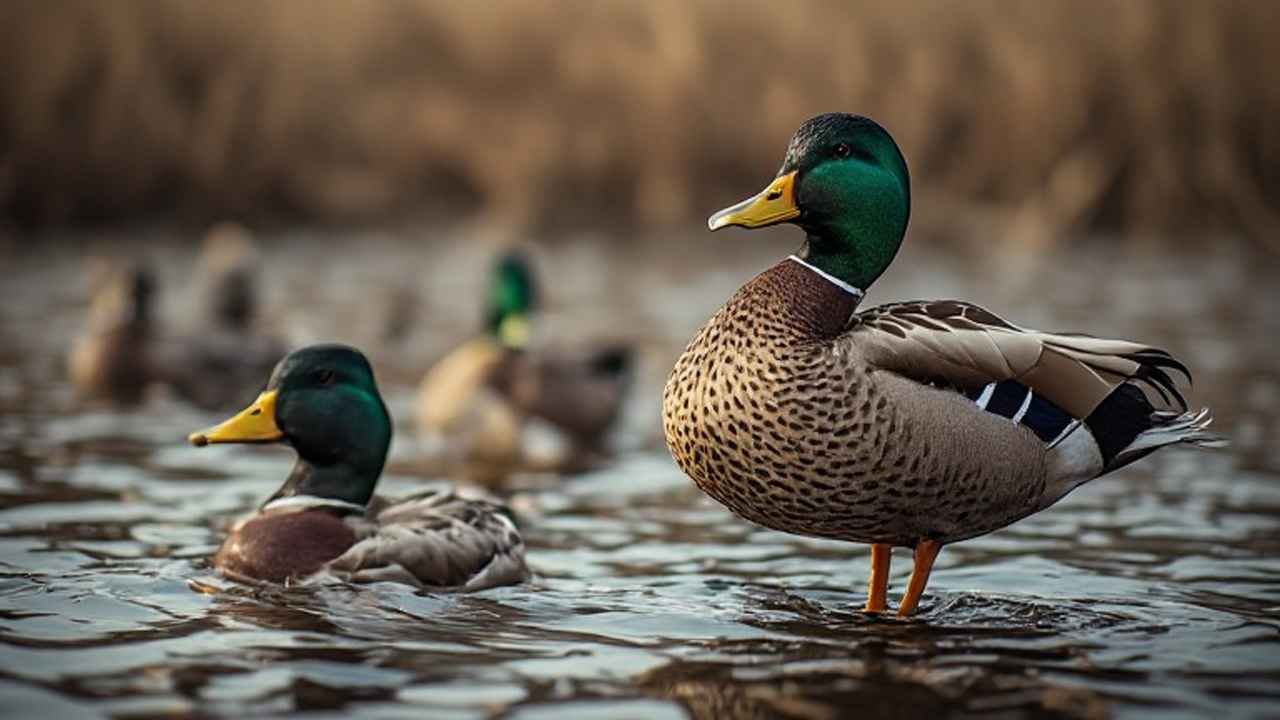
North Dakota Duck Hunting Season 2026-2027: Dates & Limits
Few states can match North Dakota when it comes to waterfowl. The Prairie Pothole Region — the “duck factory” of the continent — runs straight through the state, and when the migration lights up in fall, the sloughs, potholes, and the Missouri River system hold some of the best duck hunting in North America. The 2026-2027 North Dakota duck season officially opens for residents on September 26, 2026, and nonresidents get their first crack at the prairie on October 5, 2026.
Here’s the short version before we dive into details: North Dakota uses a two-unit system (Low Plains Unit and High Plains Unit) rather than a single statewide season, the High Plains Unit includes a split season that extends into January, and the state runs a resident-only opening period of nine days. Bag limits follow the federal framework of six ducks per day with strict species sub-limits, and every waterfowl hunter needs a North Dakota waterfowl habitat stamp, HIP registration, and — if you’re 16 or older — a Federal Duck Stamp.
All dates and regulations below come directly from the official 2026-2027 Small Game, Waterfowl and Furbearer Proclamation published by the North Dakota Game and Fish Department, and are marked “Finalized” by the agency. Regulations can still change, so always verify current rules with the Department before you head afield.
North Dakota Duck Season 2026-2027 at a Glance
| Information | 2026-2027 Details |
|---|---|
| Regular Duck Season | Resident opener Sept 26, 2026; closes Dec 6, 2026 (both units), with a High Plains late segment Dec 12, 2026 – Jan 3, 2027 |
| Hunting Zones | Two units: Low Plains Unit (east) and High Plains Unit (west); 6 nonresident waterfowl zones (NE, NC, NW, SE, SC, SW) |
| Daily Bag Limit | 6 ducks (including mergansers), plus species sub-limits; +2 bonus blue-winged teal Sept 26 – Oct 4 |
| Possession Limit | 3× the daily bag limit (18 ducks) |
| Shooting Hours | One-half hour before sunrise to sunset |
| Youth Waterfowl Days | Sept 19–20, 2026 (hunters 15 and younger) |
| Veteran/Military Days | Sept 19–20, 2026 (same weekend, statewide) |
| Early Teal Season | No separate season — instead a bonus blue-winged teal allowance during the season’s first 9 days |
| Required License | Small game license + general game & habitat license + certificate (resident or nonresident versions) |
| North Dakota Waterfowl Stamp | Waterfowl Habitat Restoration Electronic Stamp — $5, required of all waterfowl hunters |
| Federal Duck Stamp | $25 — required for all hunters 16 and older |
| HIP Registration | Free, required annually for every hunter, any age |
North Dakota Duck Season Dates for 2026-2027
The 2026-2027 duck, coot, and merganser season is officially set. The table below shows every segment exactly as published by the North Dakota Game and Fish Department:
| Season | Hunting Unit | Opens | Closes |
|---|---|---|---|
| Regular – Resident | Low Plains Unit | Sept 26, 2026 | Dec 6, 2026 |
| Regular – Resident | High Plains Unit | Sept 26, 2026 | Dec 6, 2026 |
| Regular – Nonresident | Low Plains Unit | Oct 5, 2026 | Dec 6, 2026 |
| Regular – Nonresident | High Plains Unit | Oct 5, 2026 | Dec 6, 2026 |
| Late Season (Resident & Nonresident) | High Plains Unit | Dec 12, 2026 | Jan 3, 2027 |
| Youth Waterfowl | Statewide | Sept 19, 2026 | Sept 20, 2026 |
| Veteran/Active Military Waterfowl | Statewide | Sept 19, 2026 | Sept 20, 2026 |
| Bonus Blue-winged Teal | All units | Sept 26, 2026 | Oct 4, 2026 |
Key dates to mark on your calendar:
- Resident opening day: Saturday, September 26, 2026
- Nonresident opening day: Monday, October 5, 2026
- Late-season split (High Plains): December 12, 2026 – January 3, 2027 — open to both residents and nonresidents, subject to nonresident license conditions
- Final closing day statewide: December 6, 2026 (Low Plains and first High Plains segment); January 3, 2027 for the High Plains late segment
One important note for nonresidents: only North Dakota residents may hunt waterfowl from September 26 through October 4, 2026. The Department extended this resident-only window from seven days to nine days for 2026, giving resident hunters a longer exclusive shot at early-season birds. Nonresidents may not hunt waterfowl during this period under any circumstances.
North Dakota Duck Hunting Zones
North Dakota divides duck hunting into two management units along a roughly north-south line, and the unit where you hunt determines your season dates.
Low Plains Unit (eastern North Dakota): The season runs September 26 – December 6, 2026, with no split. The unit is the portion of the state east of a line that begins at the South Dakota border, runs north on U.S. Highway 83 and Interstate 94 to ND Highway 41, north on ND Highway 41 to ND Highway 53, west on ND Highway 53 to U.S. Highway 83, north on U.S. Highway 83 to U.S. Highway 2, west on U.S. Highway 2 to the Williams County line, then north and west along the Williams and Divide County lines to the Canadian border.
High Plains Unit (western North Dakota): The season runs September 26 – December 6, 2026, plus a second segment December 12, 2026 – January 3, 2027. This is the split season — the core waterfowl country west of the Low Plains boundary, including the Missouri River corridor, the west-river potholes, and the grasslands along the Montana border. The late December-January segment extends the season for late-migrating mallards.
Nonresident waterfowl zones: In addition to the two management units, the Department divides the state into six nonresident waterfowl zones — Northeast (NE), North Central (NC), Northwest (NW), Southeast (SE), South Central (SC), and Southwest (SW). Nonresidents must choose which zones they’ll hunt when they buy their license (more on this below).
Because the split season means the High Plains Unit stays open about a month longer than the Low Plains Unit, it’s essential to confirm which unit applies where you plan to hunt. The official interactive maps are available on the Game and Fish website: the High/Low Plains hunting units map and the nonresident waterfowl zones map.
North Dakota Duck Season Bag Limits
North Dakota follows the federal duck framework with a 6-duck daily bag limit (including mergansers) and strict species sub-limits. These are the official 2026-2027 limits from the proclamation:
| Duck Species | Daily Limit | Important Restrictions |
|---|---|---|
| Mallard | 5 | Total mallards; only 2 may be hens (female) |
| Hen Mallard | 2 | Counted within the 5-mallard limit |
| Wood Duck | 3 | — |
| Northern Pintail | 3 | — |
| Canvasback | 2 | — |
| Redhead | 2 | — |
| Scaup | 1 | — |
| Mergansers | Included in 6-duck limit | Count toward the daily bag |
| Other Ducks | Part of 6-duck limit | All other species count within the total |
| Bonus Blue-winged Teal | +2 | Sept 26 – Oct 4, 2026 only; in addition to the 6-duck bag |
Possession limit: The possession limit for ducks (including mergansers) and coots is three times the daily bag limit — a maximum of 18 ducks in your possession (dressed, at camp, or in transit) at any time.
The bonus blue-winged teal twist: From September 26 through October 4, 2026, hunters may take 2 additional blue-winged teal beyond the 6-duck daily limit. Because this bonus window overlaps exactly with the resident-only period, it’s effectively a resident hunter perk. Note that the bonus teal does not apply during the youth or veteran/military seasons.
One thing veteran duck hunters often trip on: mergansers count toward the six-bird limit in North Dakota, and the scaup limit is just one bird per day — identify your divers carefully before you pull the trigger.
What License Do You Need to Hunt Ducks in North Dakota?
North Dakota Hunting License
Duck hunting in North Dakota requires a combination of base licenses and stamps. Residents need:
- Fishing, Hunting, Furbearer Certificate ($2) — required to hunt anything in the state
- General Game and Habitat License ($20) — required for all hunting licenses
- Small Game License ($20 for ages 16 and older; free for 15 and younger)
Nonresidents need the same structure but with nonresident pricing and, for waterfowl specifically, a zone-restricted waterfowl license that replaces the standard small game license for hunting ducks and geese. Nonresidents who hold that waterfowl license select their hunting zones at purchase.
Age exemptions: Hunters 15 and younger are exempt from the small game license fee (free) and the Federal Duck Stamp. Youth 12 and older must have passed a certified hunter education course before hunting.
North Dakota Waterfowl Stamp or Validation
Every waterfowl hunter — resident or nonresident, any age — must possess the Waterfowl Habitat Restoration Electronic Stamp ($5). It’s an electronic stamp issued through the Game and Fish licensing system, and there is no paper version to sign. “Waterfowl” here includes ducks, geese, swans, mergansers, and coots, so this is non-negotiable for duck season. There is no separate “duck stamp” in North Dakota beyond this stamp plus the federal stamp.
Federal Duck Stamp
Hunters 16 years of age and older must also possess the Federal Migratory Bird Hunting and Conservation Stamp — the classic “Federal Duck Stamp.” It costs $25 and is sold at most post offices, many sporting goods stores, refuges, and online. An E-Duck Stamp (electronic version) is available from the U.S. Fish and Wildlife Service and can be used immediately for hunting; a physical stamp is mailed to you between March and June. If you buy a physical stamp, sign it in ink across the face — an unsigned stamp is not valid for hunting. Ninety-eight percent of stamp proceeds fund wetland habitat acquisition and easements, which is exactly why your stamp dollars matter (U.S. Fish & Wildlife Service — Duck Stamps).
Exception: The Federal Duck Stamp is not required during the spring light goose conservation season.
HIP Registration
The Harvest Information Program (HIP) is a federal program run jointly with the U.S. Fish and Wildlife Service that measures migratory bird harvests. All hunters — regardless of age — must register with HIP each year in every state where they hunt ducks, geese, swans, mergansers, coots, cranes, snipe, doves, or woodcock. Registration is free. In North Dakota you complete it online through your Game and Fish account (or when buying licenses through the Department), answer a short survey, and receive a HIP number to record on your certificate.
Summary Table — What You Need
| Requirement | Resident | Nonresident | Notes |
|---|---|---|---|
| Hunting License | Certificate $2 + General Game & Habitat $20 + Small Game $20 | Certificate $5 + General Game & Habitat $20 + Zone-Restricted Waterfowl License $153 | Youth 15 and under: small game free |
| HIP Registration | Required, free | Required, free | Every hunter, every year, any age |
| North Dakota Waterfowl Stamp | Required, $5 | Required, $5 | Waterfowl Habitat Restoration Electronic Stamp |
| Federal Duck Stamp | Required 16+, $25 | Required 16+, $25 (listed at $29 incl. mailing in nonresident pricing) | Not required for hunters under 16 |
North Dakota Duck Hunting License Costs for 2026-2027
All fees below come from the official Game and Fish licensing pages for 2026:
| License or Permit | Resident Cost | Nonresident Cost |
|---|---|---|
| Fishing, Hunting, Furbearer Certificate | $2 | $5 |
| General Game and Habitat License | $20 | $20 |
| Small Game License | $20 (16+); free (15 and under) | Included in zone-restricted waterfowl license |
| Zone-Restricted Waterfowl License | Not required (residents use small game) | $153 |
| Waterfowl Habitat Restoration Electronic Stamp | $5 | $5 |
| Federal Duck Stamp | $25 (+$4 mailing for physical) | $29 (as listed, incl. delivery) |
| HIP Registration | Free | Free |
Note that the nonresident license page lists the Federal Waterfowl Stamp at $29 — that’s the $25 stamp plus mailing/handling costs. E-Duck Stamps are $25. If prices vary by age or by the license package you buy, the Department’s licensing pages (linked below) are the authoritative source. Never rely on a third-party fee chart — stamp and license prices are set annually.
Youth Waterfowl Hunting Days in North Dakota
North Dakota’s two-day youth waterfowl season is September 19–20, 2026, statewide — the weekend before the regular season opens.
Who qualifies: Legally licensed resident and nonresident hunters 15 years of age and younger.
Adult supervision: An adult at least 18 years old must accompany the youth hunter into the field. That adult may not hunt ducks, geese, cranes, coots, or mergansers during the youth weekend — unless they independently qualify for the veteran/active-duty military waterfowl season running the same weekend.
What the youth can hunt: Ducks, coots, mergansers, and geese, statewide. The regular-season bag limits and species restrictions apply, except that bonus blue-winged teal are not available.
Licenses and stamps: Youth hunters must possess a general game and habitat license; all waterfowl hunters must have the $5 Waterfowl Habitat Restoration Electronic Stamp; hunters 16 and older need the Federal Duck Stamp (relevant for 16-year-olds who are no longer eligible as “youth” — 15 is the cutoff); youth 12 and older need hunter education certification; and everyone must complete HIP registration.
Veteran and Active-Duty Military Waterfowl Hunting Days
The special veteran and active military personnel waterfowl season runs the same weekend as the youth hunt — September 19–20, 2026, statewide.
Who qualifies: Veterans as defined in Title 38, U.S. Code, and members of the Armed Forces on active duty, including members of the National Guard and Reserves on active duty (other than for training). This season runs concurrently with the youth season, which is why an adult who qualifies can hunt while supervising a youth hunter.
Documentation: Hunters must provide proof of veteran or active-duty status upon request from a game warden.
Licenses and stamps: Qualifying hunters must possess a resident hunting license (which includes the general game and habitat license and a small game license — note the requirement is for a resident license, so this opportunity is limited to resident veterans/active-duty members). Hunters 16 and older need the Federal Duck Stamp, everyone needs the waterfowl habitat stamp and HIP registration.
Bag limits: Regular duck season bag limits and species restrictions apply, with one exception — bonus blue-winged teal are not available during this special season.
Early Teal Season in North Dakota
North Dakota does not offer a separate early teal season before the regular duck opener. Instead, the state builds teal opportunity into the regular season with the bonus blue-winged teal provision: from September 26 through October 4, 2026, hunters may take 2 additional blue-winged teal on top of the 6-duck daily bag limit, statewide.
Because that bonus window coincides exactly with the resident-only opening period, only resident hunters can take advantage of it in practice. Blue-winged teal are early migrants in the prairie potholes, so the first two weeks of October (nonresidents join October 5) still deliver excellent teal shooting on the regular bag. There is no separate teal license, stamp, or set of rules — the bonus allowance rides on your regular duck setup.
North Dakota Duck Hunting Shooting Hours
Legal shooting hours for ducks (and all waterfowl except as noted) are one-half hour before sunrise to sunset each day of the season, per the 2026-2027 proclamation.
There are special hours for geese and sandhill cranes you should know if you’re mixing ducks and geese:
- Regular goose/crane hours: One-half hour before sunrise to 2:00 p.m.
- Exceptions: From September 26 through November 28, 2026, goose and sandhill crane shooting hours extend to sunset on Saturdays and Wednesdays; from November 29, 2026, through the end of each goose season, goose/crane hours run to sunset every day.
For straight duck hunting, the rule is simple: legal light starts 30 minutes before sunrise and ends at sunset. Sunrise/sunset times vary dramatically across the North Dakota season (September versus December), and late-season late segment hunters in December are hunting into potentially brutal cold — be off the water legally by sunset and have a plan for the changing light. Also, individual WMAs and refuges may post stricter hours, so check local signs and the area’s rules.
Where Can You Hunt Ducks in North Dakota?
Public Land
North Dakota is famous for public waterfowl access. The Game and Fish Department manages a vast network of Wildlife Management Areas (WMAs) — over 200,000 acres of wetlands and grasslands — plus the PLOTS program (Private Land Open To Sportsmen), which opens millions of acres of enrolled private land to walk-in hunting free of charge. These are the backbone of duck hunting access in the state.
In addition, national wildlife refuges across the state offer waterfowl hunting, including several major refuge complexes managed by the U.S. Fish and Wildlife Service. Each WMA and refuge can have its own rules — special closures, restricted entry points, or limited hunting methods — so check the site-specific regulations before you set up. The refuge system and WMA signage will tell you what applies.
Every waterfowl hunter in North Dakota should learn the PLOTS program: look for open-access signs on enrolled parcels, respect the posted boundaries, and note that PLOTS acres are private land made public by agreement — the rules of a WMA apply while you’re on them. Water levels and access can change with rain or drought, so scout drive-by routes and check conditions before opening weekend.
Private Land
Most of North Dakota is private, and the state takes trespassing seriously. You need permission from the landowner to hunt private land that isn’t signed into PLOTS or another public access program. North Dakota law requires that land be posted or “reasonably identifiable” as private, but the smart play is always asking first — and many landowners who post will grant permission to a courteous hunter who asks in person. Never assume open fields are open to hunting.
Public Hunting Draws and Reservations
There are no waterfowl draws, lotteries, or blind reservations for regular duck hunting in North Dakota — ducks, geese, mergansers, and coots are huntable on a first-come, open-access basis across public lands. (Lotteries do exist for big game and swans, but not for ducks.) The one waterfowl-related quota system to know is the nonresident zone-restricted waterfowl license, discussed below — that’s a license restriction, not a hunt draw. Some national wildlife refuges do manage waterfowl hunting through designated areas or self-registration systems, so check each refuge’s local rules.
Important North Dakota Duck Hunting Regulations
A practical checklist of the rules that matter most in the field, per the 2026-2027 proclamation:
- Non-toxic shot only: Possession or use of anything other than federally approved non-toxic shot (steel, bismuth, tungsten, etc.) is prohibited while hunting ducks, geese, mergansers, coots, cranes, snipe, and swans. This applies in the field and while carrying shot for these species.
- Shotgun requirements: Firearms must be no smaller than .410 and no larger than 10 gauge, loaded with shot, and capable of holding no more than three shells — a plugged magazine is required for semi-autos and pumps.
- No electronic calls: Possession or use of an electronic or recorded call is prohibited while hunting waterfowl. Mouth calls are the standard — and in North Dakota, that’s the law.
- Baiting prohibited: Hunting waterfowl over bait — including baited or “salted” fields, and hunting within a baited area — is illegal under federal migratory bird regulations; the area must have been free of bait for at least 10 days.
- Retrieval and waste: You must make a reasonable effort to retrieve any bird you kill or cripple, and you may not waste, destroy, spoil, or abandon the edible flesh (breast meat) of any migratory game bird.
- Species identification: It’s on you to know your birds before you shoot. With a 1-bird scaup limit and a 2-hen mallard limit, misidentification can cost you a citation fast. Late-season divers in the Missouri River corridor require real attention to the wing and head.
- Transportation: When transporting ducks, federal rules (adopted in the proclamation) require a fully feathered wing or head to remain attached so species and sex can be determined — the Game and Fish proclamation includes diagrams of exactly which parts must stay on; keep this in mind if you’re giving birds to a processor.
- Game and Fish lands: Nonresidents are prohibited from hunting on Game and Fish Department lands from October 10 through October 16, 2026 (N.D.C.C. 20.1-08-04.9) — plan your license period around this if it applies to you.
Best Ducks to Hunt in North Dakota
Mallard — The king of the prairie. Mallards are everywhere in North Dakota: pothole sloughs in the east, the Missouri River, Devils Lake, and grain fields across the west. Millions of mallards stage in the state through October, and the High Plains late segment (December-January) is built around late-arriving mallards. It’s why the state allows 5 per day.
Gadwall — One of the most abundant nesting ducks in the prairie potholes, gadwall pour through North Dakota in late September and October. They decoy readily in small spreads on shallow wetlands — a bread-and-butter bird for ND gunners.
Blue-winged Teal — The early-season specialty. Blue-wings are the first ducks to leave the Canadian prairies and stack up in ND in September and early October — which is exactly why the state added the bonus teal allowance for the opening nine days. Fast, low, and incredibly rewarding to pass-shoot over a pothole.
Green-winged Teal — Smaller, later, and even faster than blue-wings. Green-wings peak in October and November on shallow, weedy sloughs, and they’re often the last teal you’ll see as water starts to lock up.
Northern Pintail — Elegant, early, and always a highlight. Pintails migrate through ND in strong numbers in late September and October, favoring large shallow marshes and big water. The 3-bird limit reflects their status — savor every one.
Northern Shoveler — Abundant on prairie wetlands through October, shovelers decoy aggressively and are often thick in mixed pothole spreads. They’re a classic ND “bonus” bird that fills out limits on slow days.
Canvasback & Redhead — The divers of the prairie. Canvasbacks and redheads use the Missouri River system, Devils Lake, and larger permanent wetland basins from late October through freeze-up. With 2-bird limits, these are trophy birds worth waiting for — glass them carefully to separate canvasbacks from redheads at distance.
Wood Duck — Found along wooded river corridors — the Sheyenne, the James, and the Missouri River breaks — and in tree-lined potholes and stock ponds. Early-season timber hunting for woodies is a specialty in eastern ND when leaves are still falling.
Scaup — Late-season divers on big water. Scaup (greater and lesser) move through in November and stack up on the Missouri River and Devils Lake; the 1-bird daily limit demands discipline. If you’re hunting the late High Plains segment, divers on open river water can be your best game.
The migration timing above follows the typical ND pattern of early teal, then mallards/gadwall/pintails through October, divers in November, and a push of late mallards into December — but migration varies with weather every year. Watch the forecast and the Game and Fish waterfowl reports, not just the calendar.
Tips for Hunting During the North Dakota Duck Season
- Scout the potholes, not just the big water. North Dakota’s duck numbers are spread across thousands of small wetlands. A 5-acre slough with open water and a food source will out-produce a 1,000-acre lake in most Octobers. Drive the section lines, glass every puddle, and mark the birds.
- Learn PLOTS and WMAs before opening day. Print the PLOTS map layer for your hunting area, check WMA boundaries, and identify walk-in parcels with wetland habitat. Access that looks promising from the road often requires a half-mile hike — that’s fine, so do the birds want it.
- Hunt the ag connection. Ducks in North Dakota feed heavily on small grains — barley, wheat, and corn stubble. Potholes adjacent to harvested fields are magnets morning and evening. Late-season mallards in particular will trade between roost water and feed fields.
- Match your spread to the habitat. Small potholes call for modest spreads: 1-2 dozen decoys, mostly mallards with a few gadwall or teal. Big water — the Missouri River, Devils Lake — calls for diver rigs or big mallard spreads with confidence decoys. Don’t over-deploy on a slough.
- Call less, watch more. North Dakota birds are among the most pressured in North America, especially after opening week. Soft, short calling sequences beat a concert of hail calls. If you can’t call well, decoying is often better than calling badly.
- Concealment is everything. Prairie ducks flare on motion and shine. Build natural blinds from cattails, use layout blinds in picked fields, and always set up with the sun at your back and wind at your face — birds land into the wind.
- Wind direction makes or breaks spots. The best setup has decoys in open water with the wind pushing birds toward your hide. Scout two or three plan-B spots so you can pivot when the wind shifts.
- Respect the water. Mud-flat access on sloughs is seasonal; check water levels and ice conditions, especially for the December-January High Plains segment. Bring waders and know your footing before dark.
- Identify before you shoot. With a 1-scaup limit and a 2-hen-mallard limit, sorting ducks at 40 yards is a skill you need before opening morning. Study wing patterns in the decoys on slow days.
- Non-toxic shot patterns differently. Steel and bismuth don’t pattern like lead — pattern your gun before the season, and carry the right choke for the ranges you actually shoot (most ND ducks die inside 35 yards).
Frequently Asked Questions About North Dakota Duck Season
When does duck season open in North Dakota in 2026?
The 2026-2027 regular duck season opens September 26, 2026, for residents and October 5, 2026, for nonresidents. Only North Dakota residents may hunt waterfowl from September 26 through October 4, 2026. The youth waterfowl and veteran/military seasons run earlier, September 19-20, 2026.
Does North Dakota have multiple duck hunting zones?
Yes. North Dakota uses a two-unit system — the Low Plains Unit (eastern ND) and the High Plains Unit (western ND). The High Plains Unit has a split season with a late segment December 12, 2026 – January 3, 2027. Nonresidents also select from six waterfowl zones (NE, NC, NW, SE, SC, SW) when purchasing their license.
What is the duck bag limit in North Dakota?
The daily bag limit is 6 ducks (including mergansers), with sub-limits of 5 mallards (max 2 hens), 3 wood ducks, 3 pintails, 2 canvasbacks, 2 redheads, and 1 scaup. From September 26 through October 4, you may take 2 additional blue-winged teal. The possession limit is 18 ducks (3× the daily bag).
What license do I need to hunt ducks in North Dakota as a nonresident?
Nonresidents need a zone-restricted waterfowl license ($153), a Fishing/Hunting/Furbearer Certificate ($5), a General Game and Habitat License ($20), the Waterfowl Habitat Restoration Electronic Stamp ($5), the Federal Duck Stamp ($29 including mailing), and free HIP registration. Nonresidents may hunt a maximum of 14 days per year in two 7-day periods across two different zones — the same zone may not be used twice.
Is there an early teal season in North Dakota?
No separate early teal season exists. Instead, North Dakota allows 2 bonus blue-winged teal per day in addition to the regular 6-duck bag from September 26 through October 4, 2026 — a window that falls entirely within the resident-only period.
What are the youth duck hunting dates in North Dakota?
The two-day youth waterfowl season is September 19-20, 2026, for licensed hunters 15 and younger. An adult 18+ must accompany them but may not hunt unless they qualify for the veteran/active-duty military season running the same weekend. Regular bag limits apply, but bonus blue-winged teal are not available.
Do I need a Federal Duck Stamp to hunt ducks in North Dakota?
Yes — the Federal Migratory Bird Hunting and Conservation Stamp is required for all waterfowl hunters 16 and older in North Dakota. It costs $25, and an E-Duck Stamp is available online. Hunters 15 and younger are exempt. An unsigned physical stamp is not valid — sign it across the face.
Can nonresidents hunt the late December duck season in North Dakota?
Yes. The High Plains Unit’s late segment (December 12, 2026 – January 3, 2027) is open to both residents and nonresidents. However, nonresidents must fit any December hunting into their two 7-day license periods and have the zones and dates marked on their license. Note that nonresidents are also restricted from hunting on Game and Fish Department lands October 10-16, 2026.
Before You Hunt: Check the Latest North Dakota Regulations
Migratory bird regulations, public land rules, emergency closures, water conditions, and special restrictions can change at any time — including mid-season. The dates and limits above reflect the finalized 2026-2027 proclamation as of September 11, 2026, but you are responsible for verifying the current regulations with the North Dakota Game and Fish Department immediately before every hunt. Check WMA and refuge signboards when you arrive, confirm the status of your hunting area, and know your unit boundary before daylight. Regulations published here are a planning guide — the official proclamation is the law.
If you’re already mapping out neighboring-state trips, compare dates and nonresident rules against our Minnesota duck season guide, and keep this page bookmarked for the latest North Dakota updates — our North Dakota duck season hub is refreshed as official season data changes.