
Massachusetts Fishing Season and limits for 2026–2027 by Month – Species, Licenses & Hotspots
Casting a line into the chilly, immaculate waters of Massachusetts has a certain allure. The Bay State provides anglers with an amazing array of freshwater and saltwater chances, whether they are standing on the rocky cliffs of the Quabbin Reservoir with morning mist coming off the lake or threading a fly through the Swift River’s catch-and-release zones.
With more than 450 lakes, ponds, rivers, and streams that are regularly supplied with trout, Massachusetts has subtly emerged as one of New England’s top fishing locations. Every ability level may find something to enjoy here, from the renowned trophy waters of the Quabbin to the urban fishing areas along Boston’s Charles River. This thorough guide will cover everything you need to know about the 2026–2027 fishing calendar, including seasons, bag limits, licensing requirements, and the best places to wet a line, whether you’re a local looking to check out new hotspots or a visiting angler organizing your next fishing trip.
Massachusetts 2026–2027 Recreational Fishing Seasons & Limits
| Species / Fishery | Season dates | Daily bag / possession limits | Size limits / special notes |
|---|---|---|---|
| Striped Bass | Year round | 1 fish/day | 28″ to less than 31″ total length |
| Tautog | Apr 1 – Dec 31 | Apr 1–May 31: 3 fish; Jun 1–Jul 31: 1 fish; Aug 1–Oct 14: 3 fish; Oct 15–Dec 31: 5 fish | 16″ to 21″; 1 fish per person per day may exceed 21″; vessel limit max 10 fish |
| Black Sea Bass | May 16 – Aug 31; Sep 1 – Oct 14 | May 16–Aug 31: 4 fish; Sep 1–Oct 14: 2 fish | 16″ minimum |
| Scup | May 1 – Dec 31 | 30 fish/day | 9.5″ shore; 11″ vessel; vessel aggregate limit max 150 fish |
| Summer Flounder (Fluke) | May 24 – Sep 23 | 5 fish/day | 16.5″ shore; 17.5″ vessel |
| Bluefish | Year round | 5 fish/day | No minimum size |
| Atlantic Mackerel | Year round | 25 fish/day from shore/private vessel; 50 fish/day from a for-hire vessel | No minimum size |
| Winter Flounder | North of Cape Cod: year round; South of Cape Cod: Mar 1 – Dec 31 | North of Cape Cod: 8 fish/day; South of Cape Cod: 2 fish/day | 12″ minimum |
| Atlantic Cod | Western Gulf of Maine: Sept 1 – Oct 31; Southern New England: closed | 1 fish/day in open area | 23″ minimum in open area |
| Haddock | Gulf of Maine: Apr 1 – Feb 28; Southern New England: year round | Gulf of Maine: 15 fish/day; Southern New England: no limit | 17″ minimum in Gulf of Maine; 18″ in Southern New England |
| Atlantic Bonito / False Albacore | Year round | 5 fish combined/day | 16″ curved fork length for both species combined |
📅 Quick Reference Table by Month
Understanding when you can fish for specific species is crucial for planning successful trips. Here’s a quick breakdown of major freshwater species and their regulations:
| Species | Open Season | Daily Bag Limit | Minimum Size | Special Notes |
|---|---|---|---|---|
| Trout (Brook, Brown, Rainbow, Tiger) 🐟 | Jan 1 – Dec 31 (Lakes/Ponds) Apr 1 – Sept 10 (Rivers/Brooks) | 3 (Lakes/Ponds) 8 (Rivers/Brooks Apr-Sept) | None | Spring & fall stocking |
| Black Bass (Largemouth/Smallmouth) | Jan 1 – Dec 31 | 5 fish | 12 inches | Year-round action! |
| Northern Pike | Jan 1 – Dec 31 | 1 fish | 28 inches | Trophy species |
| Chain Pickerel | Jan 1 – Dec 31 | 5 fish | 15 inches | Great ice fishing target |
| Walleye | Jan 1 – Dec 31 | 5 fish | 14 inches | Limited distribution |
| Lake Trout | Jan 1 – Dec 31 | 2-3 fish (varies by water) | 18 inches (Quabbin) | Check reservoir rules |
| Landlocked Salmon | Jan 1 – Dec 31 | 2 fish | 15 inches | Premium coldwater species |
| Tiger Muskellunge | Jan 1 – Dec 31 | 1 fish | 28 inches | Rare but exciting! |
For Saltwater Species:
| Species | Season | Daily Bag Limit | Size Limit | Notes |
|---|---|---|---|---|
| Striped Bass 🦈 | Year Round | 1 fish | 28″ to <31″ (slot limit) | Must stay within slot |
| Tautog (Blackfish) | Apr 1 – May 31 Jun 1 – Dec 31 | Varies by period | Min 16″ (only 1 over 21″) | Multiple seasons |
| Scup (Porgy) | Year Round | 30 fish | Min 9″ | Shore limit: 45 fish |
| Black Sea Bass | May 18 – Sept 7 | 5 fish | Min 16″ | Summer season |
🐟 Popular Sport Fish
Largemouth & Smallmouth Bass
Bass fishing in Massachusetts is sensational, and the best part? It’s year-round. You can keep five bass per day (in any combination of largemouth and smallmouth) with a 12-inch minimum length. Spring and early summer offer excellent topwater action as bass move into shallow spawning areas, while fall brings aggressive feeding patterns before winter.
Prime Waters: Wachusett Reservoir is legendary for monster smallmouth bass—some topping 5 pounds! Quabbin Reservoir also produces trophy smallies, along with solid largemouth action in the coves. Don’t overlook urban gems like the Charles River, which offers surprising bass fishing right in the heart of Boston.
Best Months: May through June (spawning period) and September through October (fall feeding frenzy).
Trout – The Heart of Massachusetts Angling 🎣
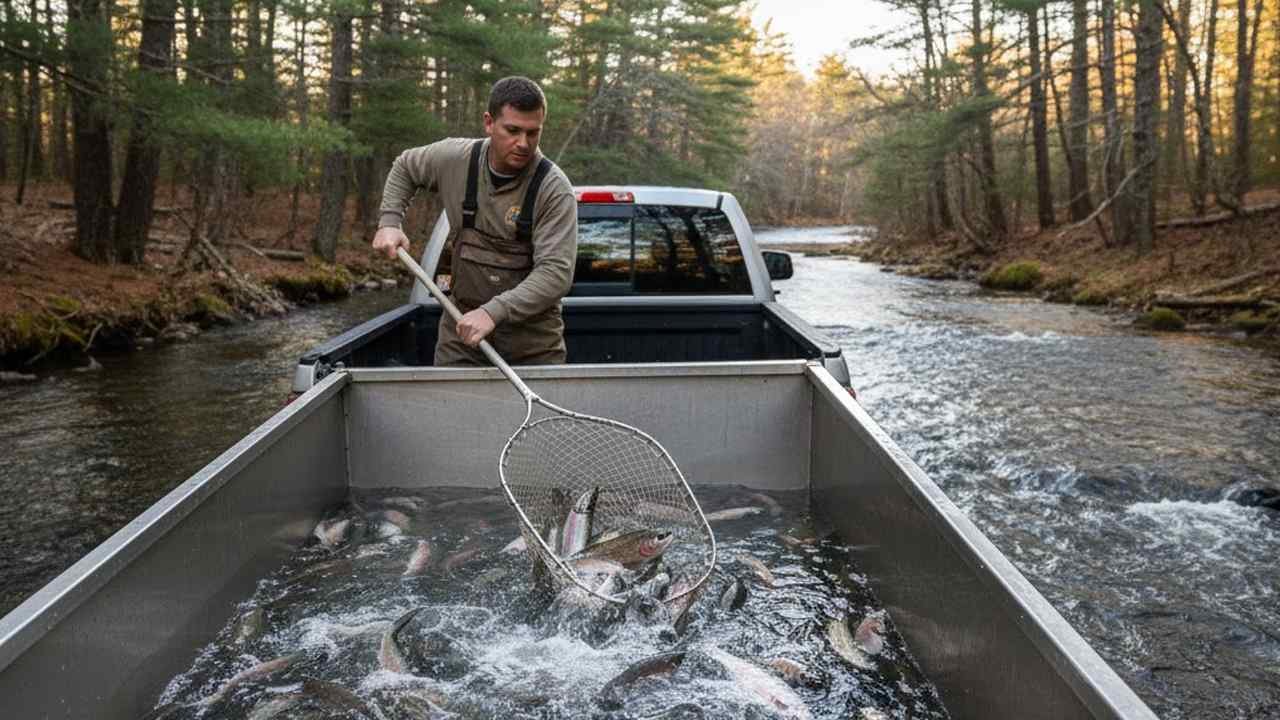
Massachusetts takes trout seriously. MassWildlife stocks over 450 water bodies with nearly half a million brook, brown, rainbow, and tiger trout from five state hatcheries. In 2025, approximately 80% of stocked trout measured over 12 inches, with 40% exceeding 14 inches—those are quality fish!
Season Dates:
- Lakes & Ponds: January 1 – December 31 (3-fish daily limit)
- Rivers & Brooks: April 1 – September 10 (8-fish limit), then September 11 – March 31 (3-fish limit)
- Housatonic River: Year-round (1 fish, 20-inch minimum)
Stocking Schedule: Spring stocking typically begins in mid-March and continues through May, with fall stocking running late September through October. Check the MassWildlife trout stocking report for daily updates on which waters were recently stocked.
Hot Tip: Hit freshly stocked waters within 48 hours for the best action. Stocked trout are hungry and less wary immediately after release.
Northern Pike & Chain Pickerel
These toothy predators offer explosive strikes and hard fights. Chain pickerel are widespread throughout Massachusetts and are a favorite winter target for ice anglers. You can keep five pickerel per day with a 15-inch minimum.
Northern pike are much less common but present in select waters. The daily limit is just one fish, with a substantial 28-inch minimum size—this is trophy fishing at its finest.
Top Waters: For pike, try Holland Pond, which produces quality northerns alongside bass and crappie. For pickerel, nearly any warmwater pond or slow-moving river will hold them, with Whitman Pond and Sunset Lake being local favorites.
Walleye
Walleye aren’t widespread in Massachusetts, but where they exist, they provide excellent table fare. The limit is five fish per day with a 14-inch minimum. Walleye prefer deeper, cooler waters and are most active during low-light periods—dawn, dusk, and overcast days.
Where to Find Them: Limited to a handful of waters; check with local tackle shops for current hotspots.
🦞 Specialty Species
Landlocked Salmon
These silver bullets are among the most prized freshwater fish in New England. Massachusetts allows you to keep two landlocked salmon per day with a 15-inch minimum length. These coldwater specialists are primarily found in the state’s premier reservoirs—Quabbin and Wachusett—where they feed heavily on smelt.
Tactics: Trolling with spoons or streamer flies in spring and fall when salmon are near the surface. Summer requires downriggers or lead-core lines to reach them in deeper, cooler water.
Tiger Muskellunge 🐠
Talk about a bucket-list fish! Tiger muskies—a hybrid between northern pike and muskellunge—are stocked sparingly in Massachusetts. The one-fish daily limit and 28-inch minimum size reflect their special status. These apex predators can exceed 40 inches and provide heart-stopping strikes.
Where: Very limited distribution; contact MassWildlife for current stocking locations.
Striped Bass (Saltwater & Anadromous)
Massachusetts striped bass fishing is world-class, drawing anglers from across the country. The slot limit of 28 to less than 31 inches (one fish per day) is designed to protect breeding stock while allowing harvest of healthy, table-sized fish. For those chasing striped bass in freshwater, similar to New York’s extensive freshwater fisheries, check with the Division of Marine Fisheries for specific regulations on anadromous runs.
Peak Season: May through November along the coast, with June and October being prime months.
🐠 Panfish & Everyday Catches
Here’s some great news for families and beginners: Massachusetts has NO size or bag limits for most panfish! That includes crappie, bluegill, yellow perch, and pumpkinseed sunfish. This makes panfishing an ideal way to introduce kids to angling or to fill a cooler for a fish fry.
| Species | Daily Creel Limit | Size Limit | Best Season |
|---|---|---|---|
| Crappie (Black/White) 🐟 | No limit | None | Spring (spawning) & winter (ice) |
| Bluegill | No limit | None | Late spring through summer |
| Yellow Perch | No limit | None | Year-round; excellent ice fishing |
| Pumpkinseed Sunfish | No limit | None | Summer months |
| White Perch | No limit | None | Spring and fall |
Family-Friendly Spots: Most public ponds and lakes offer excellent panfishing. Try Moosehorn Pond, Knops Pond, or Cheshire Reservoir for consistent action that’ll keep young anglers engaged.
Bonus: Panfish are delicious! Their mild, sweet flavor makes them perfect for a traditional New England fish fry.
🦆 Stocked & Managed Waters
MassWildlife operates five trout hatcheries—located in Sandwich, Palmer, Belchertown, Sunderland, and Montague—that collectively raise and stock hundreds of thousands of trout annually. In 2025, 458 water bodies across 264 cities and towns received trout.
Types of Stocked Waters:
Spring-Only Stockings: Most waters receive spring stockings from late March through May, perfect for opening-day excitement and consistent early-season action.
Spring & Fall Stockings: Select waters receive bonus fall stockings (late September through October) for a second wave of excitement. Over 65,000 trout were stocked in fall 2025!
Premium Waters:
- Ipswich River – Excellent trout habitat with natural reproduction
- Swift River – Catch-and-release tailwater below Winsor Dam
- Deerfield River – Multiple trophy trout sections
- Housatonic River – Year-round trophy water with special regulations
Finding Stocked Waters
Visit the official MassWildlife trout stocking map for an interactive tool that shows daily stocking updates. You can search by town, water body name, or explore regions to find new spots.
🌍 Public vs Private Waters
Public Access: Massachusetts offers abundant public fishing access through state forests, Wildlife Management Areas (WMAs), and public boat ramps. Most stocked waters have public access points, though parking may be limited during peak times.
Reservoir Fishing: The two crown jewels—Quabbin and Wachusett Reservoirs—are public drinking water supplies with special access rules:
- Quabbin Reservoir 🐟 Opens the third Saturday of April (April 19, 2025) and closes to boating on October 18, 2025. Shoreline fishing extends through December 31. Boat rentals available. Daily creel: 2 lake trout (18″ minimum), 2 landlocked salmon (15″ minimum).
- Wachusett Reservoir Opens the first Saturday in April and runs through November 30. Shore fishing only from Gate 6 (Route 70) to Gate 36 (Route 110), dawn to dusk. Similar species as Quabbin with trophy smallmouth bass potential.
Private Waters: Always obtain landowner permission before fishing private ponds. Trespassing laws are strictly enforced.
Interstate Waters: Some border waters allow reciprocal licensing with neighboring states (New Hampshire, Rhode Island, Connecticut). Check specific regulations for waters like Lake Monomonac or Wallum Lake.
🎟️ Fishing License Guide
Freshwater Licenses
Who Needs a License?
Everyone age 15 and older must have a freshwater fishing license. Licenses run from January 1 to December 31.
| License Type | Cost | Notes |
|---|---|---|
| Resident (Age 15-17) | FREE | Valid proof of age required |
| Resident (Age 18-69) | $27.50 | Annual license |
| Resident (Age 70+) | FREE | Lifetime free after 70! |
| Non-Resident (Age 15-17) | $8.00 | Great deal for visiting youth |
| Non-Resident (Age 18+) | $37.50 | Annual license |
| Resident 3-Day | $20.00 | Perfect for short trips |
| Non-Resident 3-Day | $30.50 | Weekend warriors |
Where to Buy: Purchase online through MassFishHunt or at authorized retailers (sporting goods stores, town clerks).
Saltwater Permits
All anglers fishing Massachusetts marine waters need a Recreational Saltwater Fishing Permit. The good news? It’s affordable and valid year-round.
| Permit Type | Cost |
|---|---|
| Individual (All Ages) | $10.00 |
| Age 60+ | FREE (but must still register) |
Bonus Reciprocity: A Massachusetts saltwater permit allows you to fish in Maine (regardless of residency) and New Hampshire (if you’re not a NH resident) without buying their permits!
Specialty Stamps
Unlike some states (check out Pennsylvania’s extensive stamp requirements), Massachusetts keeps it simple—no separate trout stamp or special permits for most species.
❓ FAQ Section
Q: Do kids need a license to fish in Massachusetts?
A: Anyone under 15 can fish without a license. Anglers aged 15-17 need a free youth license (for residents) or an $8 non-resident youth license.
Q: Can I use live bait in Massachusetts waters?
A: Yes, live bait is permitted in most waters. However, eight designated catch-and-release areas require artificial lures only (no bait allowed). These include sections of the Housatonic River, Deerfield River, Swift River, and others.
Q: Is night fishing allowed?
A: Yes! There are no statewide restrictions on night fishing, though individual water bodies may have specific hours. Quabbin and Wachusett Reservoirs restrict fishing to one hour before sunrise through one hour after sunset.
Q: Are there any catch-and-release-only waters?
A: Yes, Massachusetts has eight designated catch-and-release areas where you must release all fish and use artificial lures only. Popular ones include the Swift River (Winsor Dam to Route 9), upper sections of the Housatonic, and portions of the Deerfield River.
Q: Can I fish through the ice?
A: Absolutely! Ice fishing is popular once safe ice forms (typically January through early March). You can use up to five hooks total—any combination of tip-ups or jig sticks. Always check ice thickness and safety conditions before venturing out.
Q: What’s the penalty for fishing without a license?
A: Fines start at $50 for a first offense and increase significantly for repeat violations. Environmental Police patrol popular fishing areas regularly—it’s not worth the risk!
Q: How do I report a trophy catch?
A: MassWildlife operates a Freshwater Sportfishing Awards Program where you can submit catches for recognition. Minimum qualifying lengths include: 14″ crappie, 25″ chain pickerel, 20″ largemouth bass, and more.
🔗 Related Guides (Internal Links)
Planning fishing trips to neighboring states? Check out these comprehensive seasonal guides:
- Connecticut Fishing Seasons – Explore angling opportunities in the Constitution State
- Maine Fishing Seasons – Discover world-class trout and landlocked salmon fishing
Looking for more specialized information? Don’t miss:
- Florida Fishing Season Guide – Year-round warmwater action in the Sunshine State
🗺️ Map & Hotspots
Interactive Resources
The MassWildlife Trout Stocking Interactive Map is your best friend for finding recently stocked waters. It updates daily during stocking season and allows searches by town, water body, or species.
For reservoir fishing, download detailed maps:
Top 5 Must-Visit Hotspots for 2025–2026
- Quabbin Reservoir 🏆 – The crown jewel of Massachusetts fishing. Trophy lake trout, landlocked salmon, and smallmouth bass. Open April 19 – October 18 for boating; shoreline through December 31.
- Wachusett Reservoir – Shore fishing only, but don’t let that fool you—this place produces giant smallmouth bass and quality trout. First Saturday in April through November 30.
- Ipswich River – A beautiful, meandering river with excellent trout populations and some natural reproduction. Multiple public access points through Topsfield.
- Swift River (Below Winsor Dam) – Premium catch-and-release tailwater with trophy trout. Fly fishing only from the dam to Route 9—a true angler’s paradise.
- Charles River & Mystic River – Don’t overlook urban fishing! Both offer surprisingly good bass, pickerel, and panfish action with easy access from Boston.
Honorable Mentions: Webster Lake (great all-around fishing), Pontoosuc Lake (diverse species), Holland Pond (northern pike hotspot), and Cheshire Reservoir (family-friendly).
✅ Wrap-Up
Massachusetts might be small in size, but it’s mighty when it comes to fishing opportunities. From ice-fishing for yellow perch on a frozen January morning to casting for striped bass along Cape Cod beaches in October, there’s truly something for every angler in every season. The Bay State’s commitment to stocking programs, habitat management, and public access ensures that fishing remains accessible and productive for generations to come.
Before you head out, here’s your quick checklist:
✅ Purchase your fishing license through MassFishHunt
✅ Check current stocking reports at Mass.gov/Trout
✅ Review bag limits and size restrictions for your target species
✅ Verify reservoir opening dates (Quabbin and Wachusett have specific seasons)
✅ Pack appropriate gear for catch-and-release areas (barbless hooks recommended)
✅ Check weather and water levels
✅ Bring family and friends—fishing is better shared!
Remember, fishing regulations exist to protect our resources and ensure sustainable populations for the future. Practice ethical angling, respect size and creel limits, and consider releasing larger breeding-age fish when possible. Tight lines, and we’ll see you on the water! 🎣