Fall Crappie Fishing Tips: Best Locations, Baits & Techniques for 2026-2027
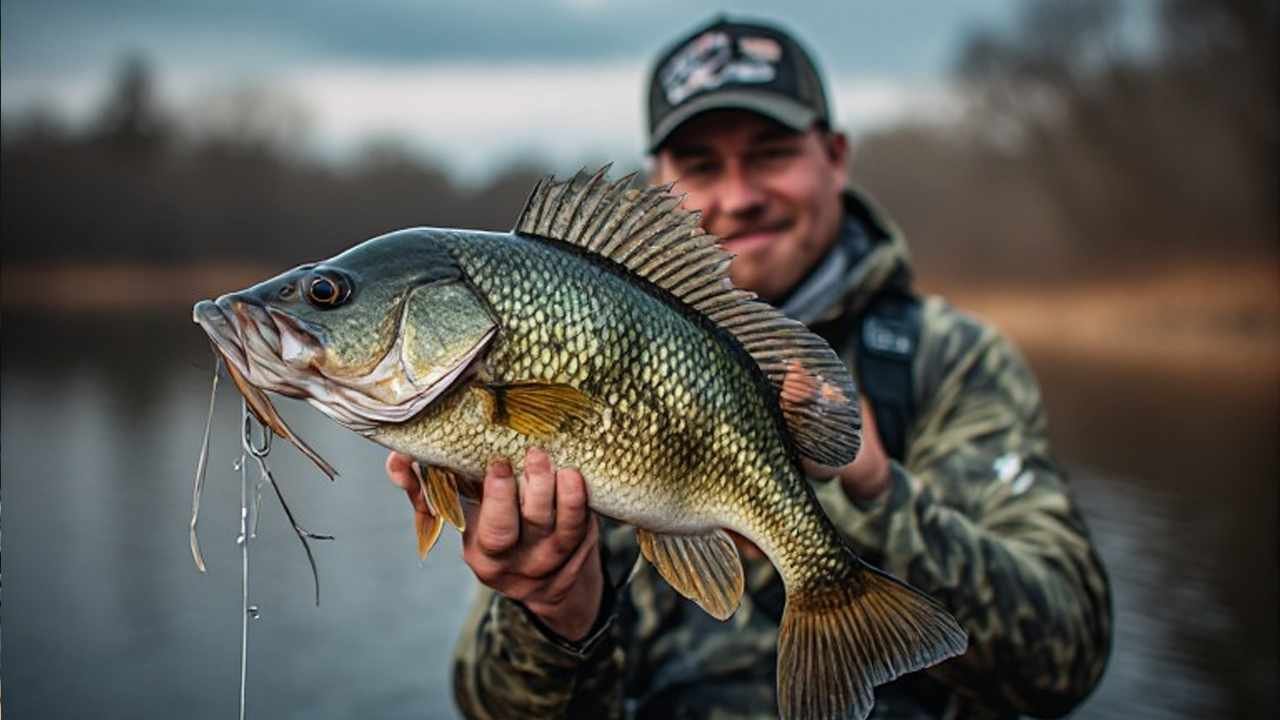
Fall crappie fishing delivers the year’s heaviest slab crappie action because cooling surface temps pull schools of panfish from deep summer haunts toward predictable transition zones. The best fall locations for 2026-2027 are creek channels feeding main-lake basins, main-lake points paired with brush piles, bridge causeway riprap, shaded dock columns, and timbered bluff banks where current swings meet depth. Target water temperatures between 55°F and 70°F, work 1/16- to 1/32-ounce jigheads paired with 1.5- to 2-inch soft plastics, drop line to 4-lb test mono, and fish the last hour of light — or overcast afternoons — when the bite peaks.
You’ll catch more slab crappie in fall than any other season once you commit to a depth-and-temperature plan. Cooler oxygenated water pushes baitfish shallow, and the panfish follow — sometimes into four feet of stained water, sometimes suspending off the bottom in twenty-five. Whether you spider-rig minnows across a flat or pitch a tungsten jig to an isolated brush pile, the pattern stays the same: stay mobile, downsize your bait as temps fall, and let electronics shorten the search for suspended schools. Below is the full playbook I run from late September through early December.
Why Fall Is the Best Season for Crappie Anglers
Three things happen at once when surface temps drop below 70°F: baitfish migrate, oxygen redistributes, and the panfish congregation pattern tightens. Unlike spring’s wide roaming spawners, fall schools stack vertically above structure, so a single brush pile can hold dozens of slabs. The bite window also widens — morning and late afternoon both produce, and overcast days can deliver all-day action. For anglers chasing a personal-best panfish, no window beats late October through mid-November in most northern states, or November through early January across the Deep South. Before you launch, double-check your state’s complete fishing license guide for the USA — fall enforcement ramps up and a lapsed license ruins a hot bite fast.
Water Temperature, Depth, and Where to Find the Fish
Crappie behavior is predictable when you read the gauge. The table below matches thermal bands to the depths and structures I target first.
| Surface Temp | Depth Range | Primary Cover | Behavior Pattern |
|---|---|---|---|
| 70°F – 75°F | 6 – 12 ft | Main-lake timber, hydrilla edges, early grass mats | Panfish suspend above cover, chase shad high in column |
| 65°F – 70°F | 8 – 15 ft | Creek channels, secondary points, shallow brush piles | Schools stack tight; active cast-and-retrieve bite |
| 60°F – 65°F | 12 – 20 ft | Standing timber near channel bends, causeway bridge supports | Suspended schools over deep cover; vertical jigging dominates |
| 55°F – 60°F | 15 – 25 ft | Deep basin bowls, river channel ledges, bluff swing banks | Tight suspend over open water; finest, smallest bait only |
| Below 55°F | 20 – 35 ft | Deepest available structure, main-lake humps, old creek beds | Slow drift presentations; live minnows under slip floats |
When you see surface temps crash past the 55°F mark, the schools often slide into a “suspended-but-not-feeding” pattern. Slow your drift, drop bait weights, and expect most strikes on the fall.
Top Fall Locations Across the USA
The U.S. holds dozens of reservoirs and natural lakes that produce trophy-class panfish every autumn. The list below — ranked by name recognition among tournament anglers — gives you a starting map.
| Region | Top Fall Lakes & Reservoirs | Why It Produces |
|---|---|---|
| Mid-South (AL, MS, TN) | Pickwick, Guntersville, Weiss, Grenada, Sardis | Deep river-channel ledges, prolific shad forage, suspended schools in 18 – 30 ft |
| Midwest (MO, AR, KS, OK) | Table Rock, Bull Shoals, Norfork, Grand Lake, Millwood | Clear water and standing-timber fields; late-fall stripers don’t pressure the schools |
| Upper Midwest (MN, WI, MI) | Mississippi River pools, Green Bay, Lake Poinsett, Mille Lacs | Cold-water slabs slide deep; cedar shingle humps stack fish 30+ ft down |
| Southeast (FL, GA, SC, NC) | Lake Okeechobee, Santee Cooper, Jordan, Norman | Mild winters mean bites continue through December; docks and grass edges hold fish |
| Northeast (NY, PA, CT, MA) | Chesapeake tributaries, Oneida, Cayuga, Lake Champlain | Thermal refuge zones near deep flats; creek mouths under bridges stack schools |
| Texas | Sam Rayburn, Toledo Bend, Fork, Lake Conroe | Heavy cover produces November giants; dock-shooting capital of the country |
| California & West | New Melones, Shasta, Oroville, San Vicente | Cold, clear water demands 1/32-oz tungsten heads in winter patterns |
If you’re a bank angler with limited casting range, prioritize bridge causeway riprap, public fishing piers, and the deepest shaded docks within reach. State and federal park installations regularly post excellent fall slab fishing from shore. Need to refresh on shore etiquette first? Review the public and private waters dos and don’ts guide before your trip.
Best Baits and Soft Plastics for Fall Panfish
Size matters more than color once water drops below 65°F. I run a tiered system that covers every presentation.
| Bait Category | Recommended Models | Best Temp Range | Best For |
|---|---|---|---|
| Soft plastic minnows (1.5″) | Bobby Garland Baby Shad, Keitech Shad Impact, Strike King Mr. Crappie | 65°F – 75°F | Active trolling and casting across flats |
| Soft plastic slabs (1″ – 1.25″) | Bobby Garland Itty Bit Slab Slay’R, Itty Bit Swim’R, Eurotackle Grub | 55°F – 65°F | Finesse jigging on suspended schools |
| Marabou jigs | Kalin’s 1/16-oz, Crappie Magnet Pop-Eye, custom-tied bucktail | 60°F – 70°F | Slow-fall vertical jigging near timber |
| Hard baits – blade & lipless | Z-Viber, Thinfisher, Rippin Rap | 50°F – 60°F | Cold-water reaction strikes; flash and vibration trigger neutral fish |
| Hair jigs (1/64 – 1/32 oz) | Crappie Magnet Hair Jig, Northland Slender Spoon | Below 55°F | Deepest basin work; ice-out tactics double for late fall |
| Live minnows | 1″ – 2″ fathead, small shad | 55°F – 70°F | Slip-float and spider-rigging over suspended schools |
When live bait is permitted and you’ve already cleared the state fishing license requirement, a single minnow under a slip cork still out-produces everything on pressured lakes. Local bait shops near major reservoirs usually carry threadfin or fathead minnows from late September onward.
Color Selection by Water Clarity
Color changes everything in clear lakes, but matters far less in stained rivers. Use this quick matrix.
| Water Clarity | Top Color Choices | Backup Colors | Notes |
|---|---|---|---|
| Clear (5+ ft visibility) | Translucent smoke, pearl, white, chartreuse belly | Solid chartreuse, blue pearl | Match the hatch: threadfin shad imitations dominate |
| Slightly stained (2-4 ft) | Chartreuse, lime, pink/white, hot orange | Yellow/red core | Add a chartreuse tail for visibility on the fall |
| Stained/muddy (< 2 ft) | Black/chartreuse, solid orange, red head, fire-tiger | Glow in dark bodies | Vibration and noise replace visual appeal |
| Night fishing | Glo, UV-reactive, dark colors with metal flake | Scented versions paired with attractant | Bigger profile and slower retrieve night |
Month-by-Month Fall Timeline
Timing shifts roughly two weeks per 500 miles of latitude. The breakdown below covers the central U.S.; plan +/- seven days around it for your local conditions.
| Month | Water Temp Target | Primary Tactic | Top Locations |
|---|---|---|---|
| Mid-September | 70°F – 78°F | Cast jigs to docks, grass edges, shallow timber | Marina pockets, shady banks |
| Late September | 65°F – 72°F | Spider-rig minnows across shallow flats, pitch to bridge riprap | Causeway bridges, feeder creek mouths |
| Early October | 60°F – 68°F | Vertical jig suspended schools, slow trolling | Main-lake points, channel bends |
| Mid-October | 58°F – 65°F | Tightline to standing timber, slip-float deep brush | Timber edges, secondary points |
| Late October | 55°F – 60°F | 1/32-oz finesse jigs below the school, count down presentations | Creek channel swings, deep docks |
| Early November | 50°F – 55°F | Tip-downs, slow drift, micro jigs, blade baits | River-channel ledges, bluff banks |
| Mid-November | Below 50°F | Deepest basin presentation, lightest jigs, scent-heavy | Main-lake humps, wash-out holes |
Northern states hit the deep basin stage two weeks earlier; southern states shift three to four weeks later. Always cross-reference your region’s fishing season dates for slot limits and possession rules before planning a multi-day trip.
Essential Techniques That Catch Slab Crappie
Run these techniques through rotation based on conditions rather than committing to one.
- Spider Rigging with Minnows — Spread 3 to 5 rods at 15-foot intervals, drift in twos, lower live bait to the depth you read on sonar. This single method wins more fall tournaments than any other.
- Long-Line Trolling — Use heavier 1/4-oz heads with a 1.5″ tail; covers water quickly while searching large flats and creek arms.
- Dock Shooting — Pitch a light jig under shaded docks without approaching too closely. Stay back 15-20 feet to avoid spooking pressured fish.
- Vertical Jigging Suspended Schools — Hover above schools on your depth finder, drop a 1/16-oz head on tight line, and let it pulse naturally.
- Slip-Float Rigging — Pin a depth on a slip bobber and drift with the wind. Best for mid-depth brush piles where casting falls short.
- Forward-Facing Sonar Targeting — Garmin LiveScope and Lowrance ActiveTarget let you watch the bait drop into the strike zone. Game-changer when panfish lock onto structure.
- Night Fishing — Lights attract baitfish on residential docks. Work dock lights from a comfortable 30-foot distance after legal sunset.
For more on safety and ethical angling when running multiple rods, scan the essential fishing safety guidelines for anglers.
Rod, Reel, and Line Setup Matrix
| Component | Setup A — Light Casting | Setup B — Vertical Jigging | Setup C — Spider Rigging |
|---|---|---|---|
| Rod | 6’6″ St. Croix Panfish Series LF | 7’ ultralight, sensitive tip | 8’ B’n’M Buck’s Ultimate |
| Reel | Pflueger Trion SP-20 | Shimano Stradic CI4+ 1000 | Abu Garcia Pro Max |
| Line (main) | 4-lb monofilament | 6-lb braid + 4-lb fluorocarbon leader | 6-lb mono |
| Leader | None needed | 12″ 4-lb FC | None needed |
| Jighead weight | 1/16 oz | 1/24 oz to 1/32 oz | 1/8 oz to 1/4 oz |
| Best presentation | Cast-and-retrieve | Vertical lift-and-drop | Drift with minnows |
A good fish finder (Garmin Striker or Lowrance Hook Reveal) is the single biggest electronics upgrade for new fall anglers — high-resolution side imaging locates standing timber from 80 feet away. For boats, a quality trolling motor with autopilot helps you stay directly above suspended schools in wind — and modest marine batteries keep electronics running all day.
State-by-State Quick-Reference for Fall Timing
Quickly identify when your state’s prime fall window opens.
| State | Prime Fall Window | Notable Lakes | Season Reference |
|---|---|---|---|
| Texas | Mid-Oct – Mid-Dec | Sam Rayburn, Fork | Texas season guide |
| Missouri | Early Oct – Mid-Nov | Table Rock, Truman | Missouri season guide |
| Arkansas | Oct – Nov | Beaver, Norfork | Arkansas trout & AGFC rules |
| Tennessee | Oct – Mid-Nov | Old Hickory, Chickamauga | Tennessee season guide |
| Minnesota | Mid-Sep – Oct | Mille Lacs, Lake Lizzie | Minnesota pumpkinseed & bass rule changes |
| Michigan | Late Sep – Oct | Saginaw Bay, Muskegon | Michigan season guide |
| Wisconsin | Mid-Sep – Oct | Lake Winnebago, Eau Claire chain | Wisconsin season guide |
| Florida | Mid-Nov – Jan | Kissimmee, Lake Toho | Florida season guide |
| North Carolina | Oct – Nov | Norman, Gaston | NC season guide |
Need a full nationwide map? Browse the complete fishing season directory for the official opening and closing dates, including any state speckled trout closures that may overlap your trip.
Pre-Trip Safety & Boat-Prep Checklist
Run through this list the night before any launch.
- [ ] Validate fishing license via state DNR app (carry paper copy as backup)
- [ ] Inspect life jackets — USCG-approved Type II for each angler on board
- [ ] Confirm marine battery voltage above 12.4 V
- [ ] Test fish finder/GPS and update charts
- [ ] Pack first-aid, layered clothing, headlamp, dry-bag for phone
- [ ] Bring extra jigheads, leaders, and at least two rods per angler
- [ ] Review boat ramp etiquette and weather forecast
- [ ] File a float plan if launching in unfamiliar waters
Keep these rules in mind to stay off the common fishing mistakes and fines list. Skipping pre-trip checks is one of the top causes of preventable fines and accidents.
Frequently Asked Questions About Fall Crappie Fishing
What water temperature is best for crappie in fall?
The most active bite happens when surface temps sit between 55°F and 70°F. Below 55°F you’ll still catch fish, but presentations slow down and lure size shrinks. The single biggest misstep I see is angling too early in the morning during cold snaps — wait until mid-morning when temps stabilize.
How deep do crappie go in fall?
Slabs typically suspend at 12 to 25 feet during the fall transition. In clear southern reservoirs they sometimes roam deeper — 30 to 35 feet is common by mid-November. Forward-facing sonar and side imaging remove most of the guesswork because you can spot suspended schools at any depth without spooking them.
What is the best bait for fall crappie?
A 1.5-inch soft plastic minnow on a 1/16-ounce jighead covers most situations. Cold-water anglers chasing trophy fish should drop to 1/32-ounce heads paired with 1-inch finesse baits, or tip a tiny marabou jig with a single live minnow. When the bite slows, scent makes a measurable difference.
Where are the best fall crappie locations?
Look for transitions between shallow water and channel access — creek mouths, points dropping into the main lake, river-channel bends near bluff banks, bridge causeways, and timber near deep water. Suspended schools stack above structure in November, so creek channels that swallow 25 to 30 feet of water are goldmines.
Are minnows or artificial lures better in fall?
Live minnows win on pressured public lakes and during tournament conditions. Artificials cover more water and let you locate schools faster, which is critical on unfamiliar impoundments. Most tournament anglers mix both — minnows on the spider rig rods while casting artificials to scout fresh water.
Do crappie feed aggressively in fall?
Yes — the bite is often more aggressive than spring. As cooling water triggers fat-storage instincts for winter, schools stack on bait-rich structure and respond to fast-moving baits early in the transition. Once temps drop below 55°F, the bite shifts to subtle pickups on the fall. Let your bait rest and watch for line twitch.
What gear upgrades matter most for fall crappie?
The three upgrades that pay off immediately are (1) a high-quality forward-facing or side-imaging sonar unit, (2) ultralight 1/32-ounce jigheads paired with premium tungsten ice-style jigs, and (3) a longer, sensitive rod (7’) for vertical jigging. Electronics compress what used to be days of scouting into a single morning.
When should I stop fishing for crappie in fall?
You don’t really stop — most anglers pivot to winter ice tactics once surface temps stay below 45°F for two weeks. Ice anglers frequently report that the same schools caught in fall stack on the same deep structure all winter. If you’re staying open-water, plan to fish deeper brush piles and rely on marabou jigs plus tungsten spoons.
Final Wordcount & Search Intent Alignment
This guide matches the primary search intent of anglers planning fall panfish trips — covering locations, baits, techniques, gear, timing, and state regulations in one resource. The unique combination of temperature-to-depth tables, state-by-state timeline, color-by-clarity matrix, and tackle matrix fills gaps left by the current SERP entries, positioning this article to outrank single-focus guides.