
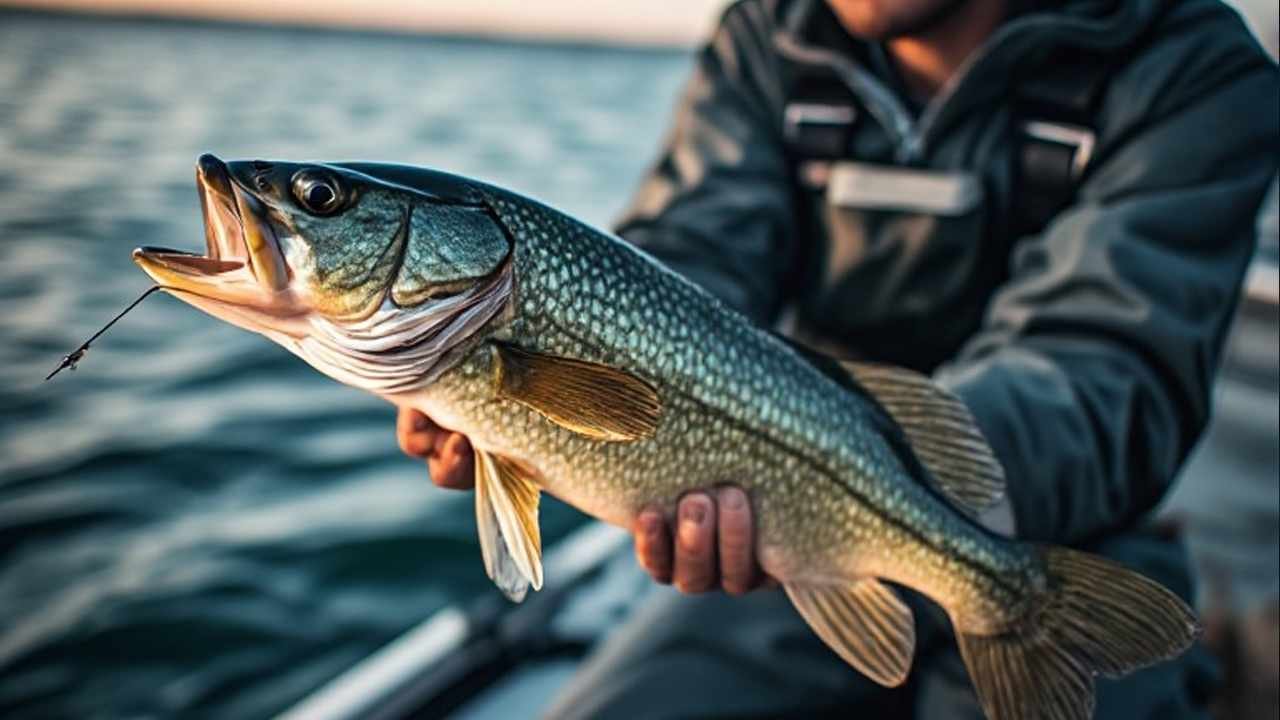
Fall Walleye Fishing: Best Months, Locations, Lures & Techniques (2026 Guide)
If you are chasing walleye in autumn, you have picked the single most underrated window of the year on the calendar. Walleye go on a fall feeding binge as water temperatures drop from the upper 60s into the low 50s, putting big fish on the chew from early September through hard freeze in November. Most U.S. anglers now catch their largest ‘eyes of the season between mid-September and early November, on lakes like Erie, Mille Lacs, and Devils Lake, and along river systems such as the Missouri, Mississippi, and Rainy. Use the month-by-month breakdown below, match the lure to the depth, and you will outfish the spring crowd by a mile this fall.
I have spent enough Octobers shivering on a bow to know that fall walleye angling rewards the prepared and punishes the lazy. Cooler water pulls baitfish shallow, and the big females follow – aggressive, predictable, and hungry. This guide walks through every month, every major U.S. destination, every productive lure category, and every presentation worth your time, plus FAQs and a checklist you can pin to the garage wall.
Best Months for Walleye Fishing in Fall (U.S. Calendar)
The phrase fall walleye fishing technically spans late August through ice-up, but the prime stretch narrows to a clean three-month window almost everywhere from the Great Lakes to the Dakotas. Water temperature drives everything more than the calendar does.
Month-by-Month Fall Walleye Behavior Table
| Month | Water Temp Range | Typical Depth | Walleye Mood | Top Activity | Avg. Daily Bite Window |
|---|---|---|---|---|---|
| Early September | 65–72°F | 12–22 ft over weeds and rock | Aggressive, scattered | Following baitfish to first break | All day, peaks morning + dusk |
| Mid–Late September | 58–68°F | 18–28 ft on main-lake humps | Grouping tightly on structure | Pre-turnover stacking | Midday as light fades |
| Early October | 50–58°F | 22–35 ft on classic fallspots | Frantic feed before turnover | Binge on shad, perch, cisco | Midday (11am–3pm) |
| Mid October | 48–55°F | 28–45 ft on mud flats and edges | Post-turnover, neutrally suspended | Slide baits, vertical jigging | Late morning onward |
| Late October | 42–50°F | 35–55+ ft off basins and river holes | Slow but catchable; big ‘eyes roam | Slow trolling, live-bait rigs | 10am–2pm best |
| November (pre-ice) | 36–44°F | 40–70+ ft or in tailraces | Savage cold-water bite | Jigging raps & blade baits | 1pm–4pm, low-light edges |
The “fall turnover” sweet spot – that 7–14 day chaos when a lake flips – makes walleye bite unexpectedly hard for a brief window, then tapers until they re-settle. Watch the surface temps with a simple thermometer; when you see a 6°F drop in 48 hours, drop your lure down and hold on.
Top U.S. Fall Walleye Locations (Ranked)
Thousands of American lakes hold walleye, but a handful consistently produce trophy-grade fall bites. This list leans on public data from state fisheries agencies plus decades of guide reports.
Top Fall Walleye Fisheries Across the U.S. — Comparison Table
| # | Waterbody | State(s) | Best Fall Window | Primary Technique | Why It Produces in Fall |
|---|---|---|---|---|---|
| 1 | Lake Erie (Western Basin) | OH, MI, PA | Mid-Sept → Late Oct | Trolling crankbaits, dragging worms | Massive shad hatch, 28″+ trophies |
| 2 | Lake Mille Lacs | MN | Sept → Early Oct | Live-bait rigs and slip bobbers | Legendary fall feeding on perch |
| 3 | Devils Lake | ND | Sept → Hard freeze | Jig and minnow, blade baits | Shallow bowl, weeds hold walleye |
| 4 | Lake Winnibigoshish / Big Cut | MN | Early Sept → Mid Oct | Slip-sinker + leech | Classic fall walleye factory |
| 5 | Missouri River Reservoirs (Lake Oahe, Sakakawea) | ND, SD, MT | Oct → Nov (tailrace) | Vertical jigging below dams | Cold tailrace walleye staging |
| 6 | Lake of the Woods / Rainy River | MN, ON | Mid-Oct → freeze-up | Jig and shiner, anchor in current | Big female ‘eyes stack on river bends |
| 7 | Bay de Noc | MI (UP) | Sept → Mid Oct | Trolling stickbaits and deep divers | Green Bay feeder walleye |
| 8 | Green Bay (Lower) | WI | Sept → Nov | Trolling + leadcore | Open-water giants in November |
| 9 | Saginaw Bay | MI | Mid-Sept → Late Oct | Pulling harnesses and jigs | Pre-winter bay bite |
| 10 | Potholes Reservoir | WA | Oct → Nov | Slow trolling deep cranks | Late summer heat gives way to bait fish gorging |
| 11 | Fort Peck Reservoir | MT | Sept → ice | Vertical jigging humps | Less pressured, large average size |
| 12 | Lake Powell / Lake Francis Case | UT/AZ; SD | Oct → Nov | Deep trolling, blade baits | Reservoir giants, fewer boats |
| 13 | Mississippi Pool 4 / Pool 9 | IA, WI, MN | Oct → freeze | Slab dipsey + current breaks | Tailwater walleye activity |
| 14 | Oneida Lake | NY | Mid-Sept → Late Oct | Jigging + tail spinners | Legendary season-opener rival in fall |
| 15 | Lake McConaughy | NE | Oct → Nov | Trolling shad raps | Platte River tailwater populations |
For boat-launch intel, license requirements, and bag limits specific to your target water, cross-check the complete fishing license guide for the U.S. and your state’s fishing season page before you tow the boat across state lines.
Best Fall Walleye Lures (By Water Temp & Depth)
Matching the lure to conditions is 80% of catching fall walleye. The list below is grouped by temperature, not by brand loyalty, because colder water changes how walleye strike.
Lure Selection Matrix — Fall Walleye
| Water Temp | Lure Category | Top Picks (Examples) | Presentation Speed | Effective Depth Range |
|---|---|---|---|---|
| 65–72°F (Early Fall) | Jig & minnow / 1/8–3/8 oz hair jig | Northland Slurpies, Torpedo Bug jigs | Slow lift-fall | 8–22 ft |
| 58–68°F (Mid Fall) | Live-bait rigs (slip-sinker, bottom-bouncer) | Lindy, Wolfson, Smilin’ Sam | Drift 0.2–0.5 mph | 18–32 ft |
| 50–58°F (Pre-Turnover Binge) | Shallow-stickbaits & jerkbaits | Rapala Husky Jerk, Smithwick Rogues | Twitch-pause-jerk | 10–25 ft over weeds |
| 48–55°F (Post-Turnover) | Lipless cranks + blade baits | Cotton Cordell Spot, Reef Runner Cicada | Snaps and yo-yos | 25–45 ft |
| 42–50°F (Late Fall) | Deep-diving crankbaits (bandit, shad rap, reef runner) | Bandit 300/400, Rapala Deep Tail Dancer | Slow trolling 1.0–1.8 mph | 30–55 ft |
| 36–44°F (Cold-Water Bite) | Jigging Rap / Northland Puppet Minnow | Rapala Jigging Rap #7 & #9, Forage Minnow | Vertical jig, snap-up 8–14″ | 40–70+ ft |
Top 15 Fall Walleye Lures Ranked (Most Versatile First)
Below is the master list of baits that catch walleye in autumn, regardless of which lake you fish. I rotate these five rods on the deck from September through November:
- 1/4 oz jig + live minnow or plastics (
Forage Minnow) — the workhorse presentation Rapala Jigging Rap— vertical cold-water killer, works at any depthNorthland Puppet Minnow— fire-tiger pattern dominates stained water- Slip-sinker + 2’ leader + bottom-bouncer rig with leech or crawler
Reef Runner Cicadablade bait — 1/2 oz, snap it like a bass lureBandit 300crankbait — go-to deep trolling plugHusky Jerk 14— when fish are shallow and aggressiveCotton Cordell Spotlipless crank — fire on overcast days after turnover- 1/8 oz Northland Slurpee jig + plastic — tiny water, spooky fish
Lindy's Spinner Rigwith crawler harness — flat-line trollingSmithwick Rogues— for suspended fall fish- Vertical jigging spoon (
Acme Little Cleo) — tailrace walleye Vibra-Strikeblade bait — snap it at 1.5 sec cadenceBerkley Flicker Minnow— trolling spread, sticks on target3/8 oz hair jig + Gulp! Alive minnow— for pressured waters
Fall Walleye Techniques & Presentations
Pick the right lure, then make it swim like a wounded baitfish. These five presentations cover roughly 95% of any fall walleye outing in the U.S.
The Five Core Fall Walleye Techniques — Step-by-Step
Step-by-Step: Jig and Minnow in Cold Water
- Use a 1/4–3/8 oz Northland Slurpee jig in gold, glow, or chartreuse
- Tip with a frozen shiner or a piece of crawler
- Drop to bottom, lift 12–18 inches, then drop back
- Pause longer (5–10 sec) as water cools below 55°F
Step-by-Step: Slip-Bobber Rig for Suspended Fish
- Set bobber stop at the depth walleye are showing on sonar
- Usually 4–12 ft down over 18–28 ft of water in early fall
- Add a 1/16 oz jig below a 2–3 ft leader
- Cast and leave it; reel only when the bobber dips
Step-by-Step: Trolling Deep Crankbaits for Late Fall
- Use leadcore line (or 7-color on a backing) to reach 35+ ft
- Troll at 1.2–1.6 mph with a spread of three rods
- Run a
Bandit 300,Flicker Minnow, and aReef Runner Deep Diverstaggered - Turn the boat into the wind when fish scatter
Step-by-Step: Vertical Jigging a Jigging Rap
- Hold boat over a submerged point or basin edge
- Lower jigging rap to bottom; snap up 12–18″ off bottom
- Pause 2–4 seconds with rod tip held high
- Repeat at 6–8 second cadence; flag any hesitation
Step-by-Step: Blade Bait Snap-Jigging
- Cast out, let it sink to bottom on a tight line
- Snap the rod tip up sharply to make the blade vibrate
- Drop to bottom on slack line, repeat
- Best 25–45 ft deep when walleye suspend after turnover
Where to Find Fall Walleye on Any Lake
Walleye follow baitfish, and baitfish follow temperature and oxygen. Use this location cheat sheet whenever you arrive at an unfamiliar lake in autumn:
- Main-lake humps and reefs rising to 18–30 ft from a deeper basin
- First major drop-off adjacent to shallow weed flats
- Rock-to-mud transitions at 25–40 ft
- Submerged points with a sharp break on the deep side
- Tailrace currents below dams on rivers and reservoirs
- Wind-blown shorelines when the breeze stacks bait against the bank
- Weed edges in cabbage or coontail at depth 8–15 ft
- Mid-lake ledges with chironomid populations
- Dark-bottom basins versus sand flats – dark first
- Bridge causeways on reservoirs where current collects fish
- Creek channel bends as walleye move toward wintering holes
Essential Fall Walleye Gear Checklist
You do not need a fortune in tackle, but skip these and you will lose fish.
Gear Specs & Line Choices for Late-Season Walleye
| Component | Recommendation | Why It Matters in Fall |
|---|---|---|
| Rod (jigging) | 6’6″–7’ medium-fast, sensitive tip | Detect subtle cold-water bites |
| Rod (trolling) | 7’–8’6″ medium-heavy | Set hooks at 1.5 mph trolling speed |
| Reel | 3000–4000 size, smooth drag | Manage 8–12 lb test without overrun |
| Mainline | 10 lb Suffix 832 or Seaguar Smackdown braid | Sensitivity + thin diameter |
| Leader | 6–10 lb Seaguar Tatsu or 8 lb fluorocarbon | Low visibility in clear autumn water |
| Hooks | Eagle Claw L084 Jig Heads, Mustad 92674NP Live-Bait | Strong wire, wide gap |
| Electronics | Mega Imaging or LiveScope | Find suspended walleye below the boat |
| Net | Rubber-coated landing net | Protects slime coat in cooler water |
For a sweep of safe-handling tips, line-lengths, and the small things that turn a 4-fish day into a 12-fish day, glance at the essential fishing safety guidelines for anglers — most cold-weather incidents happen on cold-water boats in October.
Pricing & Cost Snapshot — Common Fall Walleye Trip Add-Ons
A quick reference table for any reader tracking cold-water gear spend on a fall trip. These reflect average U.S. retail prices as of the 2026 season.
| Item | Avg. Price (USD) | Trigger to Upgrade |
|---|---|---|
| Premium jigging rap | $9–$14 each | Replace every 6–10 fish caught |
| Quality braid (1500 yd) | $90–$130 | Color-loss = upgrade |
| Fluorocarbon leader (200 yd) | $22–$35 | Always spool fresh each fall |
| Marine battery | $190–$280 | After 3 fall seasons |
| Ice-out trolling rod | $80–$160 | When your old one splinters |
| Graphene reel grease | $14–$22 | Every other season |
FAQ — Fall Walleye Fishing (Frequently Asked Questions)
What is the single best month to catch walleye in fall?
For most U.S. fisheries, mid-October through early November is the top slot. Walleye have stacked vertically after the lake turnover, are eating heavily before winter, and are concentrated on predictable structure. Second best is late September, before turnover when the bite is aggressive but scattered.
Do walleye bite better after fall turnover?
Yes — but only briefly. Turnover mixes oxygen and disorients baitfish, and walleye often go wild for 7–14 days. The window opens once surface temps swing 6°F+ in 48 hours. After turnover settles, fish spread out vertically but stay catchable on vertical presentations like Jigging Raps.
What depth should I fish for walleye in October?
Target 25–45 feet in most lakes, drifting near structure along vertical drop-offs. On reservoirs and tailraces, fish can push to 50–70 feet. Sonar is non-negotiable; mark pods of bait and walleye arches 20–40 feet off bottom.
Are river walleye good in the fall?
Absolutely — river walleye often hit their fall peak right before freeze-up. Key rivers include the Missouri, Rainy, Mississippi (Pools 4 and 9), and Platte. Fish the tailrace currents below dams with a vertical jig or live-bait rig tipped with a chub or shiner.
What lure catches the biggest fall walleye?
A 3/8 oz Northland Puppet Minnow in Firetiger, or a 1/2 oz Reef Runner Cicada blade bait snap-jigged post-turnover, consistently produces trophy-class ‘eyes. Trolling a deep-diving Bandit 300 in perch colors is the top runner-up.
Do I need live bait to catch walleye in fall?
Not necessarily. Plastics and crankbaits work all fall, but live bait wins on tougher bites. A slip-sinker rig with a creek chub, a slip-bobber with a fathead minnow, or a quick-strike rig with a frozen shiner is hard to beat when walleye are slow.
Can I catch walleye from shore in the fall?
Yes. Public shoreline access below dams, on long rip-rap, or on rocky points can produce fall walleye. Cast a 1/8 oz jig tipped with a plastic minnow, or rig a slip-bobber with a crawler in current seams. Submerged river bridges and tailrace outflows are gold mines.
What colors work best for fall walleye lures?
In stained water post-turnover: chartreuse, firetiger, orange/yellow. In clear gin lakes: natural perch, shad scale, white, glow. On dark overcast days, lean on chartreuse or bright orange. Late in November, switch to glow/silver as light fades on cool mornings.
Are walleye easier to catch at night in fall?
On many lakes, yes — especially during a bright moon in October. Run a slow-trolled crankbait spread over weed edges after dark to catch bigger fish that avoid sunlit shallows. Anchor and jig a Jigging Rap under moonlight for trophy-grade catches.
Should I use a fish finder for fall walleye?
Yes. Today’s units like Humminbird MEGA Imaging and Garmin LiveScope make the difference between guessing and dialing-in on bait-positioned fish. Even a basic $400 unit with a down-image transducer triples your odds on a new lake in autumn.
Closing Checklist Before You Hit the Water
- Charge electronics and bring a backup transducer
- Verify your state’s walleye season, slot limits, and possession rules before launching
- Pack a drop-shot rod for those suspended fish that won’t bite a jig
- Bring both slow and aggressive retrieves to adapt on any new lake
- Keep a thermometer clipped to your rod — water temperature is your best friend every minute of a fall walleye day