
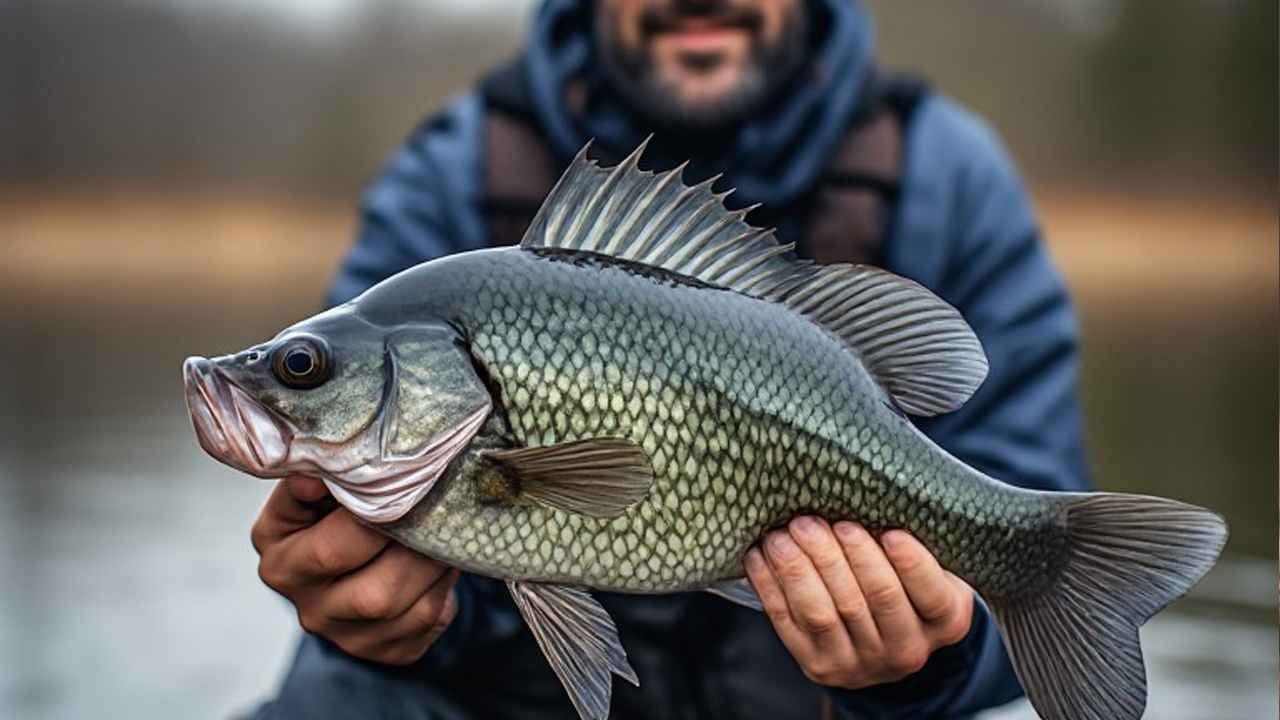
Lake Verret Crappie Spawn Months: Exact Timing, Patterns & Hot Spots
Lake Verret crappie spawn months run from February through April, with the heaviest bedding action on this 14,000-acre Atchafalaya Basin backwater falling between mid-February and mid-March, once water temperatures hold steady in the 58–67°F range From the Parish. Louisiana anglers call them sac-a-lait — “bag of milk,” a nod to their pearly white fillets — and Verret is roughly 99% black crappie, a shallow, cypress-choked lake where the spawn fires earlier than it does on most northern reservoirs, sometimes kicking off in late January during a warm stretch B’n’M Poles. Time your trip for the full moon in February or early March, target cypress knees, laydowns, and canal mouths with a live shiner or a 1/16-ounce chartreuse tube jig, and you have a realistic shot at the 14-inch, two-pound slabs this bayou is famous for.
Still, here’s the honest part most generic “spring crappie” that no one will tell you: Verret is a tidal, flat-as-a-pancake backwater that’s less than 10 feet deep across nearly its entire expanse, so the textbook staging patterns you read about on reservoirs simply don’t apply. The fish don’t climb 20-foot ledges to spawn; they slide a few hundred yards out of the canals, pin themselves to drowned timber, and spawn on whatever hard, sun-warmed bottom they can find. Get the timing, the temperature, and the structure right — and that’s exactly what this guide covers — and you’ll be hauling slabs while everyone else is still fishing the open lake. Below, you’ll find the month-by-month breakdown, temperature and depth triggers, proven lure and bait tables, hot-spot locations, gear checklists, and regulations, all specific to Lake Verret in Assumption Parish.
Lake Verret Crappie Spawn: Quick Facts
| Factor | The Numbers That Matter |
|---|---|
| Peak spawn window | Mid-February through mid-March |
| Full spawn season | Late January (warm years) through April |
| Trigger water temp | 58–67°F; hottest bite in the 60–67°F zone |
| Preferred depth | 1–6 feet of water around timber |
| Dominant species | ~99% black crappie |
| Average slab size | 10–12 inches, 1.25 lbs; 14-inch, 2-lb fish common |
| State record (white crappie) | 3.8 lbs, caught on Verret in May 2010 |
| Best bait | Live shiners and 1/16–1/32 oz tube jigs |
| Best water color | Lightly stained green; “green water” in the canals |
Understanding the Crappie Spawn Cycle on Verret
Before we dive into specific months, it helps to understand that the spawn isn’t a single event — it’s a three-act play. On Verret, those acts are compressed and overlap heavily because the lake is so shallow. Here’s how the cycle breaks down:
| Phase | Timing | Water Temp | Where the Fish Are | How to Work Them |
|---|---|---|---|---|
| Pre-spawn | Late January – early February | 55–60°F | Staging on flats near canal mouths and bayou entrances | Long casts with jigs; slow retrieve near channel edges |
| Peak spawn | Mid-February – mid-March | 60–67°F | Tight to cypress trees, stumps, laydowns in 1–5 ft of water | Drop shiners or jigs right beside cover; watch the cork |
| Post-spawn | Late March – April | 65–72°F | Transitioning back toward deeper runs and canal drops | Follow the bait; switch to faster presentations |
| Scatter phase | May onward | 73°F+ | Suspended over offshore wood in 6–8 ft of water | Vertical jigging over structure; electronics are key |
One detail that trips up first-time visitors: crappie don’t fan out visible beds the way bass do. They tuck eggs against submerged branches, root systems, and cypress bark, so on Verret, the cover is the bed. Furthermore, spawning here often happens in pulses — a warm front pushes a wave of fish shallow for a few days, then a cold snap pulls them back out. That pulsing pattern is why the “spawn months” span so many weeks.
Lake Verret Crappie Spawn Months: Month-by-Month Breakdown
This is the table I wish someone had handed me before my first Verret trip in February. Bookmark it.
| Month | Spawn Stage | Water Temps (typical) | Where the Fish Hold | Best Presentation |
|---|---|---|---|---|
| January | Early staging / first wave | 50–58°F | Deep canals, bayou mouths, creek channel edges | Slow-dragging jigs tight to bottom; shiners under corks |
| February | Spawn begins | 58–64°F | Cypress trees, stumps, and laydowns near canal entrances | Shiners + slip corks; 1/16 oz jigs pitched to wood |
| March | Peak spawn | 62–67°F | Shallow flats, visible wood cover, protected pockets | Vertical jigging beside cover; hair jigs in blue/white |
| April | Post-spawn transition | 65–72°F | Moving toward 6–8 ft drops and offshore stumps | Faster retrieves; Road Runners and spinner combos |
| May | Summer transition | 72–78°F | Suspended over deeper wood, bridge pilings | Spider rigging or tight-lining over structure |
| June–August | Summer pattern | 80°F+ | Drops into deeper runs, shaded timber | Livescope-assisted pitching; early morning windows |
| November–December | Winter feed-up | 55–62°F | Canals and river channel edges | Slow presentations; the classic “cold water” jig bite |
The red-letter takeaway: February and March are championship season on Lake Verret. As one veteran Louisiana Sportsman contributor put it, spawning fish start moving when temps reach the 60s, and February–March is “prime time” — the period when the state’s biggest slabs of the year come out of the basin Louisiana Sportsman. Field reports confirm slabs in the 1- to 2.5-pound class were already being caught on Verret in late January in warm years, when “green water” in the canals hit the 60–67°F mark Louisiana Sportsman Field Report.
Why Lake Verret Plays by Its Own Rules
If you cut your teeth on Toledo Bend or Lake D’Arbonne, a Verret spawn trip will rearrange your mental map. Here’s what makes this fishery genuinely different:
- It’s almost entirely black crappie — roughly 99%, according to B’n’M pro staffer and Verret regular Andre Smith B’n’M Poles. Black crappie love wood, so cover selection is everything.
- The lake is absurdly shallow — less than 10 feet deep across the whole 14,000-acre expanse; “deep” water means 6–8 feet where small bayous dump in.
- It’s part of a tidal system — water rises and falls with the Mississippi River system, and a falling river gauge almost always means better fishing.
- Southerly winds move more water than the tide — a strong south blow can shift shad and crappie within hours.
- Sunny-day behavior runs backwards — fish suspend a foot over structure when it’s sunny and bury deep in the cover on cloudy days, the exact opposite of textbook behavior B’n’M Poles.
- The spawn arrives early — because the basin warms fast and fish here spawn on shallow wood, not deep ledges.
Bear those quirks in mind, and the month table above makes a lot more sense. Ignore them, and you’ll be casting at open water while the slabs are cheering from the stumps.
Water Temperature & Depth Triggers
Water temperature is the single strongest predictor of spawn activity on Verret. Local pros don’t watch the calendar; they watch the thermometer. Use this reference:
| Water Temp | Crappie Behavior | Where to Fish | What to Throw |
|---|---|---|---|
| Under 55°F | Cold, sluggish, holding deep | Canal bottoms, channel edges, 6–10 ft | Small jigs, slow drag, minnows |
| 55–60°F | Pre-spawn movement begins | Flats near canal mouths, drop-offs | 1/32 oz jigs, shiners under corks |
| 60–67°F | Spawning window opens | Cypress trees, stumps, laydowns in 1–5 ft | Shiners beside cover; tube jigs in chartreuse/white |
| 68–72°F | Post-spawn recovery | Returning to 6–8 ft structure | Faster retrieves, spinner combinations |
| 73°F+ | Summer pattern | Offshore wood, shaded timber | Vertical jigging, spider rigging |
Depth is almost a non-issue on Verret — the entire lake is a shallow flat. What matters is depth change: even a 3-foot hole next to a 1-foot flat will hold spawning fish, because it gives them a quick escape route when a front blows through. Watch your chart plotter for the smallest contour breaks near wood cover.
Hot Spots & Structure: Where the Spawn Happens
Wood is the currency on Lake Verret. These are the proven spawn-season locations and how to work each one:
| Hot Spot | Why It Holds Fish | How to Fish It |
|---|---|---|
| Attakapas Landing canals | Primary launch area; warm, protected canal water reaches spawn temps early | Pitch jigs to every stump on the first 500 yards; hit it at first light |
| Cypress tree lines on main lake | Black crappie tuck eggs into bark and root systems | Drop shiners tight to trunks; tight-line a jig 6 inches off the tree |
| Laydowns near bayou mouths | Wood + current = shade + shad | Pause-and-twitch retrieves; fish are notoriously finicky here |
| Oilfield canals (Elm Hall WMA edge) | LDWF notes excellent crappie fishing in the northeast corner canals | Slow vertical jigging; live bait under slip corks |
| North and south end points | Narrow points funnel fish moving in and out of spawning areas | Long casts across the point; cover the drop with a spider rig |
| Belle River connection | Moving water concentrates bait and spawning fish | Fish the incoming tide; drifting jigs along the seam |
Attakapas Landing is the most popular launch for the lake proper, and the canals leading out of it double as early-season spawning grounds because they warm several degrees faster than open water Crappie.com forums. If you see “green water” — that lightly stained, algae-tinted clarity Verret is known for — in any canal with a temp in the low 60s, slow down and fish it thoroughly. That’s the exact recipe local anglers used to load the boat on the lake’s famous late-January warm-ups Louisiana Sportsman Field Report.
Best Lures, Baits & Colors for the Verret Spawn
You don’t need a wall of tackle to catch spawning sac-a-lait on Verret — you need the right six baits and the right colors for stained green water. All of these are proven producers on this specific lake:
| Bait | Best Time | Top Colors | Presentation |
|---|---|---|---|
| Live shiners | Peak spawn | — | 1/0 hook under a slip cork, 12–24 inches deep |
| Tube jigs | Pre-spawn & spawn | Chartreuse, white, black/chartreuse | 1/16–1/32 oz; slow vertical fall beside cover |
| Curly-tail grubs | Post-spawn | Junebug, electric chicken | Swim them faster along channel edges |
| Hand-tied hair jigs | Peak spawn | Blue/white, blue/chartreuse | Pitch-and-pause; dead-stick for finicky fish |
| Bobby Garland Baby Shad | All phases | Blue Ice, Bluegrass | On a 1/16 oz head with #4 hook; subtle twitch |
| Road Runner / spinner combos | Post-spawn scatter | White, chartreuse | Steady retrieve over deeper wood |
The color science is simple: Verret’s water has a green, lightly stained tint, and shades of blue, white, and chartreuse out-produce everything else — that’s the local pro consensus season after season B’n’M Poles. Also expect plenty of “bait sniffing”: fish on this lake routinely charge a jig, stare it down for a minute, and then decide. When that happens, don’t move the bait — let it sit. Some days they only want it dead still.
Spawn-Season Gear & Tackle Checklist
Pack these before you leave the house. Every item earns its spot during a Verret spawn run:
- [ ] 11-foot crappie jig pole or ultralight spinning rod — long poles let you pitch softly under branches
- [ ] 10-pound fluorocarbon line — nearly invisible in stained water
- [ ] 1/16-oz and 1/32-oz jig heads — the two weights that cover every presentation
- [ ] Tube jigs, grubs, and hair jigs in blue, white, and chartreuse
- [ ] Live shiners and a minnow bucket with aerator
- [ ] Slip corks / bobbers — essential for the shiner bite
- [ ] Fish finder with mapping — Livescope is a game-changer but optional; a basic 2D unit finds the drops
- [ ] Polarized sunglasses — spotting wood cover in glare is half the battle
- [ ] Landing net with rubber mesh — protect those big slabs for release
- [ ] PFDs and navigation lights — check your boat safety gear before every launch
Weather, Wind & Tide Factors
- Falling water beats rising water. When the nearby Mississippi River gauges show dropping levels, plan your trip — Verret’s tidal influence makes falling water the prime bite window B’n’M Poles.
- Strong south winds push water — and shad — into the back ends of canals, dragging crappie with them.
- Two or three warm days in a row in February will fire up the first big wave of spawners; the classic local strategy is waiting specifically for that warm stretch Louisiana Sportsman Field Report.
- Cloudy days put fish down in the cover; sunny days put them a foot above it. Adjust your jig depth accordingly.
- Stable weather for 3–4 days is worth more than any moon phase. Rapid barometric swings shut the bite down fast in shallow water.
Rules, Licenses & Limits on Lake Verret
Don’t let a citation ruin a perfect slab day. Here’s what’s non-negotiable:
| Rule | What You Need to Know |
|---|---|
| Fishing license | Everyone 16 and older must carry a valid Louisiana basic fishing license |
| Daily crappie creel limit | 50 crappie per licensed angler (statewide) |
| Closed season | None — crappie are open year-round in Louisiana |
| Size limit | No minimum size on crappie |
| New Atchafalaya Basin regs | Updated recreational rules took effect recently — verify current limits before you go |
Louisiana’s daily creel of 50 crappie per licensed angler is generous by any standard, and Verret sits inside the Atchafalaya Basin management area, which saw updated recreational regulations take effect recently LDWF. Before you head out, confirm the current season dates, license fees, and any basin-specific rules in the Louisiana fishing season guide — it pulls together the license structure, season calendars, and creel limits for every parish.
Spawn Season Ethics: Protect the Next Generation
Here’s the thing nobody likes to talk about: spawning fish are the most vulnerable fish in the lake. The good news is that crappie are prolific, and a 50-fish limit reflects that. Still, a few common-sense habits keep Verret producing those two-pound slabs for the next decade:
- Handle every fish with wet hands and support the belly when unhooking.
- Use rubber-mesh nets — knotted nylon tears up the protective slime coat.
- Release the big ones. A 14-inch black crappie is likely a female loaded with eggs; she’s worth more in the lake than in the cooler.
- Fish shallow cover lightly — don’t tear through spawning timber with big motors and heavy anchors.
- Know the ethical line between “keep a meal” and “ice the boat.” Check out the catch-and-release fishing rules for state-by-state standards before you plan a release-heavy trip.
Frequently Asked Questions
Q: What are the exact Lake Verret crappie spawn months?
A: The spawn runs from mid-February through mid-April, with the peak bedding period in most years falling between mid-February and mid-March. In warm years, the first wave can start in late January.
Q: What water temperature triggers the spawn on Lake Verret?
A: Crappie begin staging at 55–60°F and start bedding hard once water hits the 60–67°F range. Local field reports show the bite turning on in the low 60s in the lake’s canals.
Q: Is crappie season closed during the spawn on Lake Verret?
A: No. Crappie are open year-round in Louisiana, and there is no minimum size limit. The daily creel is 50 per licensed angler.
Q: Where do I launch for a Verret spawn trip?
A: Attakapas Landing is the most popular public launch on the lake, and the surrounding canals are productive spawning grounds themselves.
Q: What’s the best bait for spawning sac-a-lait on Verret?
A: Live shiners under a slip cork are the most reliable producer, followed by 1/16-ounce tube jigs in chartreuse, white, or black/chartreuse pitched tight to cypress trees.
Q: Why do they call crappie “sac-a-lait” in Louisiana?
A: The name means “bag of milk” in Cajun French, a reference to the fish’s white, milky-looking fillets. It’s the standard local name across south Louisiana.
A final word on planning: the Lake Verret crappie spawn is one of south Louisiana’s most reliable fishing events of the year, and it’s entirely temperature-driven. Watch the water temps, wait for a warm stretch with falling water, launch at Attakapas Landing, and fish the wood — do that, and the months of February and March will take care of the rest. And whatever you do, keep a few of those blue-and-chartreuse hair jigs in the boat. On Verret, they’re never the wrong answer.