
New Jersey Fishing Season and Limits for 2026–2027 by Month – Species, Licenses & Hotspots
Whether you’re launching your boat on the Delaware River in the hopes of catching a big bass or standing waist-deep in a chilly trout stream at daybreak, there’s something enchanting about the season’s first throw. Despite being a tiny state, New Jersey offers an abundance of fishing options. For both freshwater and saltwater anglers, the Garden State provides year-round activity from the saline estuaries along the coast to the pristine waterways of the Highlands.
Knowing the seasonal rules, creel restrictions, and licensing requirements is crucial, whether you’re an experienced angler looking to catch striped bass in the Raritan Bay or a parent introducing your children to panfish at Spruce Run Reservoir. Everything you need to know about New Jersey’s 2026–2027 fishing schedule is broken down in this book, including information on stocked waters, specialist species, popular sport fish, and hotspots that regularly yield remarkable catches. For organizing their next outdoor excursion, both locals and visitors from other states will find this guide to be quite helpful.
New Jersey fishing latest news and update
| Topic | 2026–2027 rule |
|---|---|
| Trout waters closed for stocking | Stocked rivers and streams are closed to fishing for all species from March 23 to April 11, 2026, at 8:00 a.m. because of trout stocking |
| Trout season opening | Trout season opens April 11, 2026, at 8:00 a.m. on stocked waters |
| Largemouth/Smallmouth Bass | Jan. 1–April 14 open; April 15–June 15 catch-and-release only; June 16–Dec. 31 open |
| Northern Pike | Open year-round statewide, with catch-and-release only March 20–May 20 on Echo Lake Reservoir, Mercer Lake, Mountain Lake, and Monksville Reservoir |
| Walleye | Jan. 1–Feb. 28 open; March 1–April 30 catch-and-release only; May 1–Dec. 31 open |
| Channel Catfish | Open year-round statewide |
| Crappie | Open year-round statewide |
| Sunfish/Perch | Open year-round statewide |
| Striped Bass, Salmon, Sturgeon, Paddlefish | These are not freshwater statewide table species in the NJ freshwater digest pages cited here; striped bass are covered under marine rules, and shad are handled separately in the Delaware River mainstem regulations dep. |
Special dates to remember in New Jersey
| Species | Date to remember | Why it matters |
|---|---|---|
| Trout-stocked rivers and streams | March 23 to April 11, 2026, at 8 a.m. | Closed to fishing for all species because of stocking |
| Trout opener | April 11, 2026, at 8 a.m. | Stocked waters reopen |
| Bass C&R window | April 15 to June 15 | Catch-and-release only, statewide for largemouth/smallmouth bass |
| Pike special C&R waters | March 20 to May 20 | Echo Lake Reservoir, Mercer Lake, Mountain Lake, Monksville Reservoir |
| Walleye C&R window | March 1 to April 30 | Catch-and-release only statewide |
| Bass harvest reopens | June 16 | Bass harvest resumes statewide |
| Trout limit change notice | Effective Feb. 17, 2026 | Trout limit reduced from 4 to 2 for the rest of the year, while opening day through May 31 stayed at 6 |
📅 Quick Reference Table by Month
Here’s a snapshot of New Jersey’s major species and their respective seasons. Always double-check the New Jersey Division of Fish and Wildlife for the most current updates.
| Month | Major species | Open/Close dates | Daily bag limit | Special regulations |
|---|---|---|---|---|
| January | Bass, pike, catfish, crappie, sunfish/perch, walleye | Bass open; pike open; walleye open; catfish/crappie/perch open | Bass 5 combined; pike 2; walleye 3; catfish 5; crappie 10 combined; sunfish/perch/catfish/eel/non-native 25 combined | Bass minimum 12 inches; walleye minimum 18 inches; catfish minimum 12 inches; crappie minimum 8 inches |
| February | Same winter freshwater pattern | Same as January | Same as January | Walleye stays open until Feb. 28 |
| March | Bass, pike, catfish, crappie, perch, sunfish; walleye close for C&R transition | Walleye March 1–April 30 C&R only; pike C&R only on select lakes March 20–May 20 | Same species limits unless C&R only | Trout-stocked rivers/streams close March 23–April 11, 8 a.m. |
| April | Trout opener, bass C&R, walleye C&R | Trout stocked waters reopen April 11 at 8 a.m.; bass C&R April 15–June 15; walleye C&R through April 30 | Trout 6/day opening day through May 31, then reduced later in year | Trout-stocked waters closed before opener for stocking |
| May | Bass C&R through June 15; pike special C&R ends May 20 in select waters | Bass C&R only; walleye opens May 1; pike special C&R until May 20 | Walleye 3; bass no harvest during C&R period | Bass minimum 12 inches, and special “lunker” waters have 15-inch minimum and 3 combined |
| June | Bass reopen June 16; trout season still active in many waters | Bass open June 16–Dec. 31 | Bass 5 combined; trout 6/day through May 31 then 2/day for the rest of the year per the 2026 update notice | Trout rules changed effective Feb. 17, 2026; the remainder of year uses the reduced limit |
| July | Full summer freshwater season | Open on most species | Species limits apply | Check special bass lakes and trout-stocked waters dep. |
| August | Warmwater peak | Open on most species | Species limits apply | No closed season for catfish, crappie, sunfish/perch |
| September | Bass, pike, catfish, panfish continue | Open on most species | Species limits apply | Some marine species are separate from freshwater rules |
| October | Fall bass/pike/trout opportunities | Open on most species | Species limits apply | Walleye remains open after May 1 |
| November | Bass, pike, catfish, crappie, sunfish/perch | Open on most species | Species limits apply | Always check water-specific exceptions |
| December | Winter bass/pike/catfish/panfish | Open on most species | Species limits apply | Bass and pike remain open statewide unless a special regulation applies |
Note: Saltwater species like fluke, tautog, and sea bass have separate regulations managed by marine fisheries.
🐟 Popular Sport Fish
Bass (Largemouth & Smallmouth) 🎣
Bass anglers in New Jersey can wet a line 365 days a year. Both largemouth and smallmouth varieties thrive in the state’s diverse waters—from shallow farm ponds to the rocky stretches of the Delaware River.
Largemouth and smallmouth bass are open Jan. 1–April 14, catch-and-release only April 15–June 15, and open again June 16–Dec. 31. The statewide limit is 5 combined, with a 12-inch minimum, and special “lunker bass lakes” use a 15-inch minimum and 3 combined. Bass are most common in reservoirs, ponds, and larger slow-moving waters statewide.
Spring and early summer mark prime time as bass move into the shallows to spawn. Top destinations include Lake Hopatcong, Round Valley Reservoir, and the scenic Greenwood Lake straddling the New York border. If you’re looking for smallmouth action specifically, the upper Delaware River system near the Water Gap delivers consistent results.
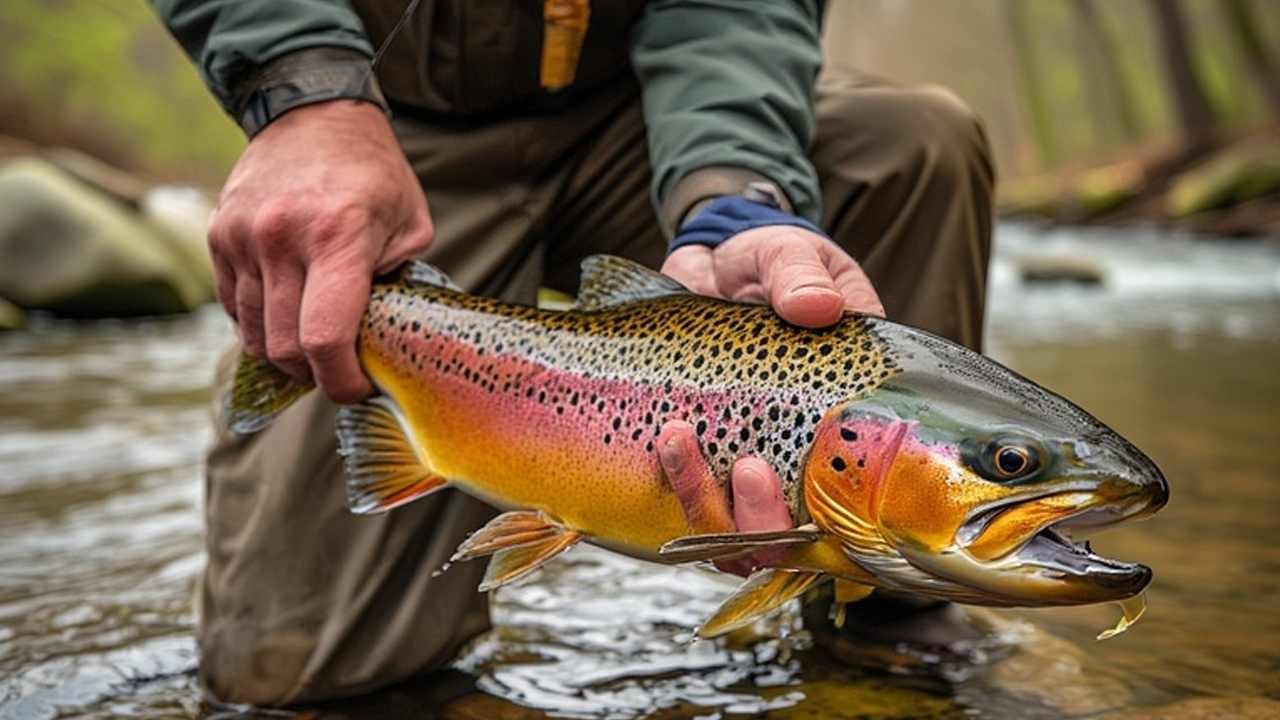
Trout (Rainbow, Brown & Brook) 🐠
Trout waters are the crown jewel of New Jersey’s freshwater program. The state stocks over 600,000 trout annually in more than 200 streams, rivers, and lakes.
Trout in stocked waters are central to New Jersey fishing content, especially in spring. The 2026 notice says the creel is 6 trout per day from opening day through May 31, then 2 trout per day for the rest of the year. Trout are most common in stocked rivers, streams, and designated trout-stocked lakes and ponds
You’re allowed six trout per day with a seven-inch minimum size. Certain waters have special fly-fishing-only or catch-and-release designations, so consult the New Jersey Freshwater Fishing Digest before heading out. Pro tip: hit the stocked waters early in the season—those recently planted rainbows are hungry and aggressive.
Walleye
Walleye might not be the first species that comes to mind when you think of New Jersey, but dedicated anglers know better. Lake Hopatcong and the Delaware River above Trenton hold respectable populations. Walleye bite best during low-light conditions, so plan your trips around dawn, dusk, or overcast days. Jigging with live minnows or trolling crankbaits along rocky drop-offs produces solid results.
Walleye are open Jan. 1–Feb. 28, then catch-and-release only March 1–April 30, then open again May 1–Dec. 31. The daily limit is 3 fish with an 18-inch minimum. They are most associated with larger reservoirs and connected river systems.
Catfish (Channel & Flathead)
If you’re after a hard-fighting fish that’s active after dark, channel catfish are your best bet. New Jersey’s rivers, reservoirs, and ponds harbor healthy catfish populations. The daily limit is generous at 10 fish with no size restrictions. Flatheads, though less common, can be found in the Delaware and are known for reaching impressive sizes. Chicken liver, stink bait, and cut shad are classic go-tos for bait.
🦞 Specialty Species
Muskellunge (Muskie) 🦈
Muskies are the apex predator of New Jersey’s freshwater world—elusive, powerful, and absolutely thrilling to hook. You can target them year-round, but there’s a strict one-fish daily limit and a 40-inch minimum size. These fish are stocked primarily in lakes like Monksville Reservoir, Greenwood Lake, and Union Lake. Muskie hunters are a patient breed; it’s often called “the fish of 10,000 casts.” Large bucktail spinners, jerkbaits, and oversized crankbaits are the weapons of choice.
Striped Bass (Freshwater)
While most people associate striped bass with saltwater, landlocked stripers thrive in several New Jersey reservoirs. The freshwater season runs March 1 through December 31, with a two-fish daily limit and a strict 28- to 38-inch slot limit—meaning you can only keep fish within that size range. Spruce Run Reservoir and Round Valley Reservoir are legendary for producing trophy-class stripers. Trolling umbrella rigs or casting topwater plugs during the early morning hours can yield explosive strikes.
American Shad
Every spring, American shad make their spawning runs up the Delaware River, creating one of the most exciting angling events of the year. The season typically runs from March 1 through May 31. While there’s no daily limit, certain sections of rivers enforce catch-and-release-only rules to protect spawning populations. Shad darts, small spinners, and brightly colored jigs are effective lures. The bite peaks in mid-to-late April when water temperatures hover around 50–60°F.
🐠 Panfish & Everyday Catches
Panfish represent the backbone of family-friendly angling in New Jersey. Bluegills, pumpkinseeds, crappies, and yellow perch are abundant, easy to catch, and delicious when cooked fresh. Here’s a quick breakdown:
| Species | Daily Bag Limit | Best Time | Top Spots |
|---|---|---|---|
| Crappie (Black & White) | 25 fish | Spring (pre-spawn) | Pompton Lake, Swartswood Lake |
| Bluegill & Sunfish | 25 fish (combined) | Late spring–summer | Manasquan Reservoir, Assunpink Lake |
| Yellow Perch | 25 fish | Early spring & fall | Lake Hopatcong, Budd Lake |
Panfish are perfect for introducing kids to the sport. A simple bobber rig with live worms or small jigs will keep young anglers entertained for hours. Most public lakes and ponds have healthy panfish populations, making them accessible even for those without boats.
🦆 Stocked & Managed Waters
New Jersey’s Division of Fish and Wildlife runs an aggressive stocking program to ensure quality angling experiences statewide. Trout receive the most attention, but the state also stocks hybrid striped bass, channel catfish, and walleye in select waters.
Key Stocked Trout Waters:
- Pequest River
- Musconetcong River
- Ramapo River
- Big Flatbrook
- Paulinskill River
Reservoirs with Regular Stockings:
- Round Valley Reservoir
- Spruce Run Reservoir
- Merrill Creek Reservoir
- Wanaque Reservoir
You can track stocking schedules in real time via the NJ Fish & Wildlife Stocking Schedule. Arriving within 24–48 hours of a stocking event dramatically increases your odds of success, especially for trout.
🌍 Public vs Private Waters
New Jersey offers abundant public access through state parks, wildlife management areas, and county parks. However, not all waters are open to the public. Some reservoirs have restricted access or require additional permits, while private ponds need landowner permission.
Public Access Highlights:
- Delaware River (free access along much of its length)
- Round Valley Recreation Area (boat launch requires fee)
- Wharton State Forest (multiple streams and rivers)
- Liberty State Park (urban saltwater access)
Private Waters:
Always respect “No Trespassing” signs. If you’re unsure whether a pond or stream is public, check with local authorities or consult the New Jersey Freshwater Fishing Digest. Trespassing violations can result in fines and loss of privileges.
If you’re exploring neighboring states, consider checking out the Pennsylvania fishing season guide—the Delaware River provides excellent cross-border opportunities.
🎟️ Fishing License Guide
Before you cast a line, make sure you’re properly licensed. New Jersey requires anglers aged 16 and older to possess a valid license. Here’s the breakdown:
Resident Licenses
- Annual Fishing License: $22.50
- Trout Stamp (if targeting trout): $10.50
- Senior Citizen (65+): $12.50
- Lifetime License (available at various ages): Prices vary
Non-Resident Licenses
- Annual Fishing License: $34.00
- Trout Stamp: $10.50
- 7-Day License: $19.50
- Vacation (3-Day) License: $7.50
Youth & Junior Anglers
- Free for kids under 16 (no license required)
- Juniors (16–17 years old) pay reduced rates
Specialty Stamps & Permits
- Trout Stamp: Required for any trout waters (stocked or wild)
- Saltwater Registry: Free registration required for saltwater/marine species
Licenses can be purchased online through the New Jersey Division of Fish and Wildlife License Portal, at authorized agents (tackle shops, sporting goods stores), or by phone. Combination hunting and licenses are available for those who pursue multiple outdoor activities.
❓ Frequently Asked Questions
Do kids need a license to fish in New Jersey?
No, children under 16 can fish without a license. However, they must still follow all size, creel, and seasonal regulations.
Can I use live bait in New Jersey?
Yes, live bait is permitted in most waters. However, importing certain baitfish species is restricted to prevent invasive species. Always purchase bait from licensed dealers.
Are there any catch-and-release-only waters?
Yes, several streams and river sections are designated as catch-and-release or fly-fishing-only. The Big Flatbrook and portions of the Pequest River have special regulations. Check the digest for specifics.
Is night fishing allowed?
Night angling is permitted in most public waters unless otherwise posted. Some parks and reservoirs have specific hours of operation, so verify before you go.
What about bowfishing?
Bowfishing is legal for certain non-game species like carp and suckers. A valid license is required, and standard size/creel regulations apply.
How do I report a trophy catch?
New Jersey’s Trophy Fish Program recognizes exceptional catches. You can submit your catch details, photos, and measurements through the Division of Fish and Wildlife website to potentially earn a certificate.
Can I fish in saltwater with a freshwater license?
No, saltwater angling requires a separate (free) saltwater registry. Marine species like fluke, striped bass, and bluefish fall under different regulations managed by the New Jersey Marine Fisheries.
🗺️ Map & Hotspots
New Jersey’s compact geography means you’re never far from quality angling. Here are five must-visit destinations:
- Round Valley Reservoir – Trophy trout and landlocked striped bass; pristine waters and boat-friendly.
- Delaware River (Water Gap Region) – Smallmouth bass, trout, and shad runs; scenic and accessible.
- Lake Hopatcong – The state’s largest lake; excellent for bass, walleye, and panfish.
- Raritan Bay (Saltwater) – Fluke, striped bass, and weakfish; perfect for kayak anglers.
- Big Flatbrook – Fly-fishing paradise with native brook trout; catch-and-release sections.
For interactive maps and GPS coordinates, visit the New Jersey Fish Finder. Many veteran anglers also recommend exploring the Wanaque Reservoir and Merrill Creek Reservoir for their trophy trout programs.
If you’re planning a multi-state trip, the New York fishing season guide offers valuable insights for neighboring waters just across the border.
✅ Wrap-Up
You might be surprised by the diversity of fishing available in New Jersey. Whether you’re fighting a landlocked striper that feels like a freight train, drifting live bait for catfish on a warm summer evening, or chasing wild brook trout in a mountain stream, this state delivers unforgettable thrills.
Before you depart, double-check your license, confirm the most recent baggage limitations, and engage in ethical angling to demonstrate your care for the resource. There is nothing like sharing the thrill of a bent rod and tight line with a buddy or family member. Be careful on the water, stick to the lines, and enjoy your best season ever! 🎣