
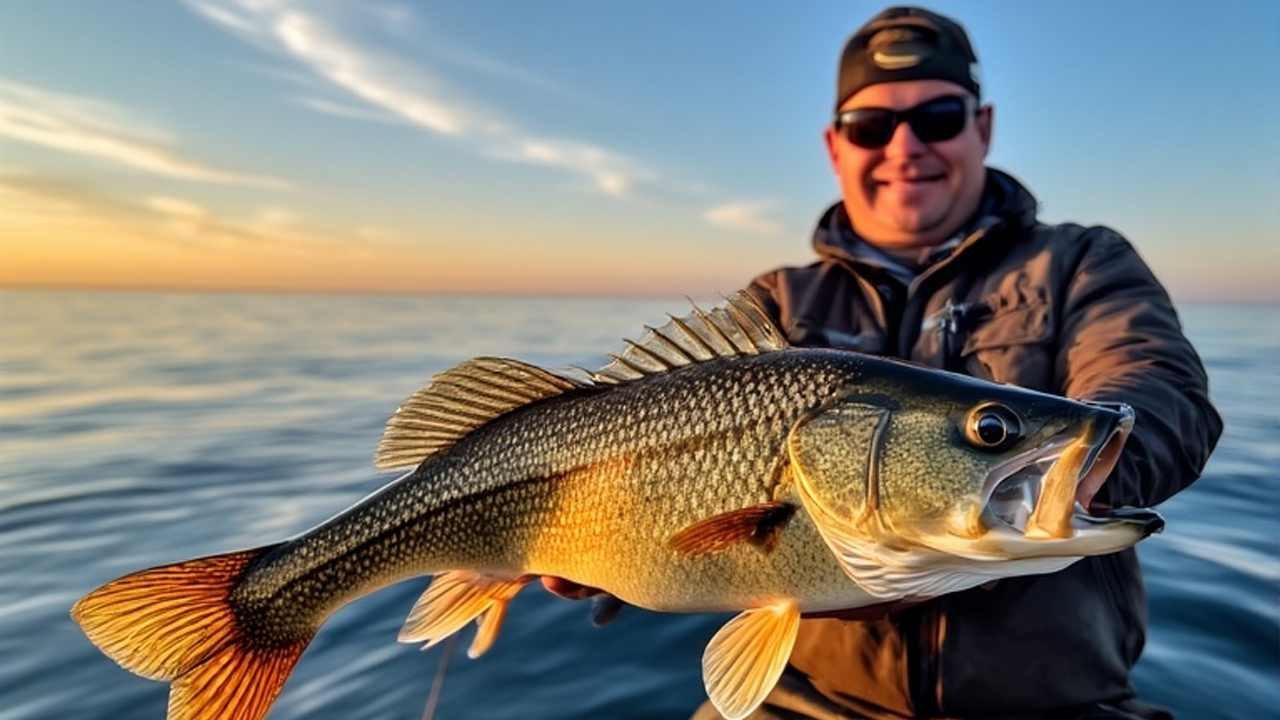
North Dakota Fishing Season and Limits for 2026–2027 by Month – Species, Licenses & Hotspots
If you’ve ever driven across North Dakota and thought, “There’s water everywhere out here,” you’re not wrong. Between prairie reservoirs, family ponds with public access, big river stretches, and famous names like Lake Audubon and Lake Metigoshe, this is one of those states where a simple weekend trip can turn into a pretty memorable angling story. The good news for beginners? Most hook-and-line opportunities run year-round, so you don’t need to memorize a dozen complicated opener dates. The real things to watch are bag limits, a few specialty seasons, and lake-specific rules. Residents and visitors 16 and older generally need a license, and the state’s official maps make it easy to track down public lakes, trout waters, ramps, and stocking reports.
For the 2026-2027 period, North Dakota keeps things refreshingly straightforward: the general hook-and-line season is open from April 1 through March 31 each fishing year on waters open to fishing, while specialty opportunities like paddlefish snagging and darkhouse spearing have their own windows. Popular catches include walleye, northern pike, yellow perch, trout, crappie, bass, and channel catfish, with creel limits that are beginner-friendly once you see them laid out. And yes—this is a freshwater-only state, so no saltwater stamp or coastal rulebook to worry about. If you also like comparing nearby regional patterns, this Minnesota fishing season guide makes a handy internal companion read.
📅 Quick Reference Table by Month
Here’s the “save-this-before-you-pack-the-cooler” version:
| Month | Major Species | Open/Close Dates | Daily Bag Limit | Special Regulations |
|---|---|---|---|---|
| January | Walleye, pike, perch, trout | General season open | Walleye 5, pike 5, perch 20, trout 3 | Ice fishing allowed; up to 4 poles while ice fishing |
| February | Walleye, perch, trout | General season open | Same as above | Darkhouse spear/bow season active through March 15 |
| March | Pike, perch, trout | General season open | Pike 5, perch 20, trout 3 | Darkhouse season ends March 15 |
| April | Walleye, bass, crappie | Fishing year starts April 1 | Walleye 5, bass 5, crappie 10 | Most waters open; watch refuge and local exceptions |
| May | Walleye, catfish, paddlefish | General season open; paddlefish May 1–21 | Catfish 5 east of Hwy 1 / 20 west; paddlefish 1 per season | Paddlefish requires tag; harvest season can close early |
| June | Walleye, bass, bluegill | General season open | Bluegill 10, bass 5 | Resident free-fishing days June 6–7, 2026 and June 5–6, 2027 |
| July | Bass, catfish, panfish | General season open | Crappie 10, bluegill 10 | Great warm-weather family angling window |
| August | Bass, pike, trout | General season open | Pike 5, trout 3 | Check stocking reports for carryover trout waters |
| September | Walleye, sauger, pike | General season open | Walleye/sauger combo 5 | Early fall bite picks up on larger reservoirs |
| October | Walleye, catfish, perch | General season open | Perch 20, catfish varies by region | Some refuge boating dates change on select waters |
| November | Pike, walleye, perch | General season open | Standard statewide limits | Darkhouse spear/bow season begins Nov. 15 |
| December | Walleye, perch, trout | General season open | Standard statewide limits | Resident free-fishing days Dec. 26–27 in both 2026 and 2027 |
Statewide standard limits include walleye/sauger/saugeye 5 daily and 10 possession; northern pike 5/10; bass 5/10; trout 3/6; salmon 5/10; crappie 10/20; bluegill 10/20; yellow perch 20/40; muskellunge 1/1. Lake sturgeon must be released immediately.
🐟 Popular Sport Fish
Walleye is still the headline fish for a lot of anglers, and thankfully it’s available through the general year-round season. The statewide daily limit is 5, with a possession limit of 10. Strong waters for walleye in the 2026 outlook include Lake Darling, Lake Metigoshe, Lake Ashtabula, Heart Butte Reservoir, Blacktail Dam, and the Upper Missouri River. If you’re new, walleye is the species that will make you feel like a hero one day and very humbled the next.
Northern pike also run on the general season, with a 5-fish daily limit and 10-fish possession limit. Lake Metigoshe, Blacktail Dam, Lake Darling, Lake Ashtabula, and Heart Butte Reservoir all stand out. Pike are a great “instant excitement” fish for beginners because when they hit, they don’t exactly send a polite RSVP.
Bass anglers have some genuinely fun options here. Largemouth and smallmouth share a combined 5-fish daily limit and 10-fish possession limit. Nelson Lake is highlighted as the best largemouth bass lake in the state, while Lake Audubon, New Johns Lake, and Lake Ashtabula are especially good for smallmouth. There’s no broad statewide bass “opener” to stress over—just check any water-specific rule before you start keeping fish.
Trout get a 3-fish daily limit and 6-fish possession limit. Northgate Dam is a notable trout water with annual rainbow stocking, and the state’s lake search tools make it easy to find other stocked trout waters and check recent reports.
Channel catfish are where North Dakota gets a little more specific: east of Highway 1, the daily and possession limit is 5; west of Highway 1, it jumps to 20 daily and 40 possession. The Upper Missouri River and Heart Butte Reservoir are both strong bets.
Crappie and muskie round out the fun stuff. Crappie are 10 daily and 20 possession, with Nelson Lake and Lake Ashtabula worth attention. Muskellunge are tightly managed at 1 fish daily and 1 possession, and Lake Audubon plus New Johns Lake are among the better-known options.
🦞 Specialty Species
The most unique fishery here is paddlefish snagging. It runs from May 1 through May 21 each fishing year, but harvest can close early if the statewide quota is reached. You need a valid fishing license plus a paddlefish tag, and the limit is one paddlefish per season. Snagging hours are 7 a.m. to 7 p.m. Central, and once you harvest one, you’re done for that season.
For sturgeon, the rule is even simpler: don’t plan dinner around them. Pallid, shovelnose, and lake sturgeon must be released immediately regardless of condition. Also worth noting, the 2026-28 proclamation brought back a chinook salmon snagging opportunity in designated settings, so serious salmon anglers should read the current rule package closely before going.
🐠 Panfish & Everyday Catches
For easy-going freshwater days—especially with kids or first-timers—panfish are the stars.
| Species | Daily Limit | Possession Limit | Statewide Note |
|---|---|---|---|
| Crappie | 10 | 20 | Great starter species in managed public lakes |
| Bluegill | 10 | 20 | Common in family-friendly warmwater lakes |
| Yellow Perch | 20 | 40 | One of the best “fill the bucket” everyday catches |
| Sunfish-type warmwater panfish | Check water listing if unsure | Check water listing if unsure | Lake-specific details can apply |
North Dakota also notes that lake-specific rules may be posted at access areas and bridges, so always read the sign before you keep fish.
🦆 Stocked & Managed Waters
North Dakota manages more than 440 fishing waters with public access and publishes lake-by-lake information that includes species present, directions, access, and often stocking history. Northgate Dam is a good example of a mixed fishery with walleye, bluegill, and annual rainbow trout stocking. If you want the official stocking schedule/map equivalent, the easiest route is the state’s lake search: open the lake record and look under “Lake Details > Reports” for stocking information.
🌍 Public vs Private Waters
This part matters more than beginners sometimes realize. North Dakota’s listed fisheries all have some form of public access, but that access may come through a boat ramp, public right-of-way, or an easement across private land. In other words, “fishable” doesn’t always mean “wander wherever you want.” Respect posted routes, don’t camp where access only covers fishing, and pack out your trash. A lot of those opportunities stay open because landowners keep cooperating with access easements.
🎟️ Fishing License Guide
For 2026-2027, residents and nonresidents age 16 and older generally need a license. Residents 15 and younger don’t need one for ordinary angling, and nonresidents 15 and younger can fish without a license when accompanied by a licensed adult. Residents also get designated free-fishing days, but paddlefish is excluded from that perk.
On the fee side, resident annual fishing is $27 plus the required $2 certificate; a resident married-couple fishing license is $42 plus the certificate; seniors 65+ can get a reduced $10 fishing license; and a resident paddlefish tag is $15 in addition to regular licensing. There’s also a resident combination license that includes fishing and hunting privileges.
For visitors, the nonresident options are pretty practical: annual season $68, 3-day $48, 10-day $58, married-couple season $108, and paddlefish tag $35, each with the required $5 certificate added where applicable. So if you were hoping for a one-day pass, the short-term choices are really the 3-day and 10-day options.
❓ FAQ
Do you need a fishing license in North Dakota?
Yes. Most residents and nonresidents age 16 and older need one.
Is there a fishing opener in North Dakota?
Not in the traditional “one big statewide opener” sense for regular hook-and-line fishing; the general season runs April 1 through March 31.
What is the walleye limit in North Dakota?
The statewide daily creel limit is 5, with 10 in possession.
Are there free fishing days in North Dakota?
Yes, for residents only, on designated days in June and late December each year.
Can nonresidents buy short-term licenses?
Yes. North Dakota offers 3-day and 10-day nonresident licenses.
Where can I check stocking reports?
Use the state lake search and open the lake record’s reports section for stocking details.
🗺️ Map & Hotspots
The handiest planning tool is the North Dakota Where to Fish map, which shows sport fish, stocking info, directions, boat ramps, shore access, and more. If I were narrowing a 2026-2027 road trip to five must-visit spots, I’d start with Lake Audubon for smallmouth and muskie, Nelson Lake for largemouth and slab crappie, Lake Metigoshe for walleye and pike, Lake Ashtabula for mixed-bag action, and the Upper Missouri River for sauger, walleye, and channel catfish.
✅ Wrap-Up
North Dakota is a terrific state for anglers who want solid public access, realistic rules, and enough variety to keep things interesting all year. Grab your license, check current water conditions, bring the family or a buddy who talks too much in the boat, and double-check the bag limits before you head out. A quick review of safety, access signs, and lake-specific regulations can save you a headache—and maybe save the trip. 🐟🎣