
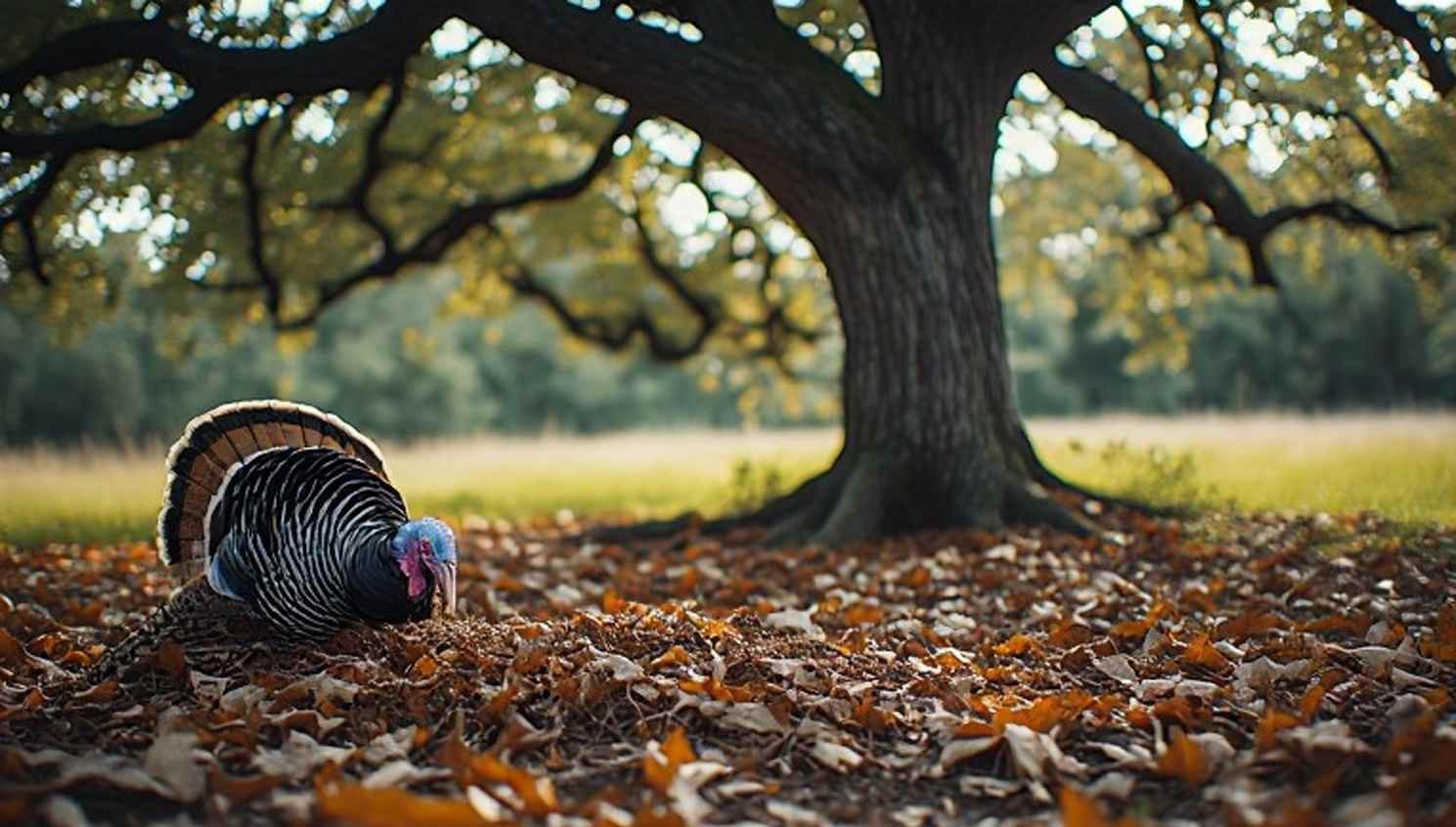
Fall Turkey Hunting Strategies 2026: Calls, Tactics, Scouting & Regulations
Fall turkey hunting in 2026 boils down to one mindset shift: find the flock, break it apart, and call the pieces back to you. Spring’s breeding-based playbook rarely carries over, because autumn birds think with their stomachs, stick to family groups and bachelor gangs, and answer loud, persistent calling — kee-kee runs, assembly yelps, cutts, and lost calls — far better than soft seductive yelping. A successful season starts with food-source scouting around oak flats, persimmon trees, and picked corn or soybean fields, then locks in with either-sex season dates that vary wildly from state to state. Below is the complete 2026 game plan: the calls that produce, the scatter tactics that work, the scouting system, and a state-by-state look at current regulations.
Honestly, I spent my first few November hunts doing everything backward — calling softly to a flock that never answered, sitting where birds had fed a week earlier, wondering why nothing worked. The turning point came the day I stopped treating the season like spring with colder weather. I busted a brood flock feeding under a white oak ridge, sat down against a stump, and twenty minutes later a confused jake came kee-keeing straight into my lap. That’s the whole sport in one paragraph: scatter the flock, then sell the loneliness.
Why Autumn Birds Break the Spring Playbook
Spring turkeys respond to sex; fall turkeys respond to calories and company. That single distinction drives every tactic in this guide, so it’s worth understanding the flock structure you’re actually hunting:
| Flock Type | Who’s In It | Autumn Behavior | Best Strategy |
|---|---|---|---|
| Brood flock | Hen with this year’s poults | Feeds daily on insect-rich fields and mast, stays tight | Bust and scatter, then kee-kee to the strays |
| Hen gang | Barren or adult hens | Territorial around groceries, will fight intruders | Loud assembly yelps plus a feeding hen decoy |
| Gobbler gang | Adult toms and jakes | Ranges widely through hardwood ridges | Roost them, bust at dawn, target stragglers |
| Mixed winter flock | Everything, late season | Merges into huge congregations near ag fields | Ambush the roost-to-feed travel corridor |
A few rules hold up across every flock type. First, if you see birds and can’t shoot, bust them — a half-hearted stalk that lets the group run off together teaches every bird where the predator lives. Second, keep pushing until they fly; turkeys that scatter by air panic, separate, and turn vocal. Third, remember that autumn birds are creatures of habit: find where they feed today, and they’ll likely eat in the same general area tomorrow, weather permitting.
The Flock-Bust Playbook: Scatter, Set Up, Call Back
The fastest route to autumn turkey meat is the time-honored scatter-and-call sequence. Here’s the full loop, step by step:
- Locate the flock from a distance with binoculars, a trail camera, or a pre-dawn roost listen.
- Sneak within 75–100 yards using terrain — creek bottoms, ridgelines, and standing corn all hide your approach.
- Bust them hard. Run at the birds, yell if you must; the goal is birds launching in every direction.
- Mark the scatter point and sit within 30–40 yards of it, against a tree wide enough to break your silhouette.
- Wait 10–20 minutes — let the panic settle before you make a sound.
- Open up calling with a kee-kee run or assembly yelp, building volume until you draw a response.
- Answer every response with matching pitch, then go quiet and let the bird close the distance.
- Shoot when the bird commits — a walking, calling bird is far easier to hit than a frozen one.
You’ll also run into situations where busting isn’t possible — like a flock feeding in an open field you can’t approach. Pivot instead:
| Scenario | What to Do | Why It Works |
|---|---|---|
| Flock far out in a picked field | Set up on the field edge with a feeding hen decoy, call loud | Dominant hens come to run the “intruder” off |
| Birds on a ridgeline while you’re in the bottom | Cut and yelp, then wait 30 minutes before moving | Sound carries upslope; they investigate on their own time |
| Late-season giant mixed flock | Don’t bust — ambush the feed line at first light | Too many eyes to scatter cleanly |
| Flock moving away from you | Bust them immediately, even at long range | A clean scatter beats a failed stalk every time |
That last point deserves repeating: a clean scatter beats a failed stalk every time. Veteran hunters with the National Wild Turkey Federation’s field rules for autumn birds have preached this for decades — if you’re close enough to bust a flock but not close enough to shoot, bust them anyway.
One thing I learned the hard way: don’t scatter a flock, then call from the exact spot where you stood. Sit slightly off to the side instead, because returning birds often land where the group “exploded” and then look outward from there. Setting up where they saw you is how you blow a perfect setup.
Turkey Calls That Get Answers in Autumn
Calling is the heart of this game, but the vocabulary shifts after October. Spring is seduction; autumn is assembly and loneliness. Master these five sounds and you’ll cover nine out of ten situations:
| Call | Sound It Makes | When to Use It | Hot Tip |
|---|---|---|---|
| Kee-kee run | High, whistled “kee-kee” notes ending in a yelp | After a scatter, or anytime you need to sound like a lost young bird | The go-to fall call; young birds can’t resist it |
| Assembly yelp | Series of sharp, rhythmic yelps | Calling scattered birds back together | Loud and bossy beats sweet every time |
| Cutts | Fast, aggressive staccato yelps | Grabbing attention from distant flocks | Combine with yelps every few seconds |
| Lost call | Plaintive, drawn-out yelps and kees | Midday silence when you’ve heard nothing | Sounds like a bird that’s alone and worried |
| Gobbler cluck | Deep, two-note “cluck-cluck” | Late season, answering jake gobbles | Throaty and airy — practice on a diaphragm |
Two rules from guys who call turkeys for a living. In autumn, you can rarely call too much or too loud — the exact opposite of spring, where silence wins. And once a bird starts answering, match its pitch and volume precisely; if it’s soft, be soft. If it’s screaming, scream back.
Your call lineup matters less than your confidence with it. That said, a slate or glass pot call delivers the kee-kee beautifully, a box call is the easiest assembly yelp for beginners, and a diaphragm call frees both hands for the shotgun. Bring at least two — one loud (box or pot), one subtle (diaphragm) — and practice the kee-kee run at home until you can whistle it without thinking.
Scouting Fall Turkeys: Follow the Food Chain, Not the Gobble
Spring scouting means hunting roosts and gobbling hotspots. Autumn scouting is simpler and more reliable: find the food, find the birds. Through October and November, flocks work down a predictable grocery list — and a dozen birds will vacuum up roughly 60 pounds of it every week, which is exactly why they get territorial about their favorite spots:
| Food Source | Where to Find It | Peak Timing |
|---|---|---|
| White oak acorns | Ridge tops and upper slopes | Early to mid fall — sweeter, preferred first |
| Red oak acorns | Lower slopes and creek bottoms | Late fall into winter — bitter, eaten after white oaks |
| Beech nuts | Mature beech stands | Mid fall |
| Soft mast (persimmons, wild grapes, black cherries, sumac, dogwood) | Field edges, fencerows, clearings | Early fall, until frost knocks it down |
| Waste grain (corn, soybeans) | Harvested ag fields | Late fall, especially after the first snow |
| Green forbs and clover | Food plots, pastures, ditches | Warm spells all season long |
When you’re in the timber, these five signs tell you turkeys are actively working an area:
- Fresh scratching — leaves kicked backward in long furrows; if the litter underneath is still dark and damp, it’s fresh.
- Droppings — hen droppings look like loose piles; gobbler droppings are bigger and J-shaped.
- Dusting bowls — shallow, oval scrapes in dry dirt near field edges.
- Feathers — molted body feathers in feeding areas mean regular visits.
- Tracks — a strutting tom’s track runs 4¼ inches or longer from heel to middle toe.
The dirty secret of good scouting is that trail cameras set over mast trees and field corners do most of the work for you. Hang one on a dropping white oak, check it weekly, and you’ll learn the flock’s movement window — often the same two-hour stretch daily. Once the pattern is confirmed, resist hunting that exact spot every day; pressure moves birds fast. Rotate instead — fields one day, timber the next.
2026 Fall Turkey Season Dates & Bag Limits by State
Fall frameworks for 2026 are locked in for many states, with a few still finalizing late-summer tweaks. The table below reflects what agencies had published as of this writing. At the time of writing, final season dates have not yet been officially released. The information below is based on the latest available regulations and official proposals. Where 2026 dates are confirmed, they’re listed; for everything else, the state agency is the final word.
| State | 2026 Fall Season (as published) | Bag Limit & Notes |
|---|---|---|
| Alabama | Nov 14–22; Dec 12–27 | December segment: no decoys allowed; zone-specific rules apply |
| Arkansas | Fall season open (zone dates on AGFC site) | 2 legal turkeys statewide |
| Illinois | Fall shotgun: Oct 24 – Nov 1 | 1 bird in counties open to fall firearm hunting |
| Maryland | Oct 31 – Nov 8 (regional windows vary) | 1 bird; Sundays included in hunt-area counties |
| Massachusetts | 2025 reference: Oct 5 – Nov 28; 2026 dates pending | 1 bird of either sex with a turkey permit |
| Missouri | Archery: Sep 15 – Nov 13; general fall: Oct 1–31 in open counties | Confirm the county list with MDC |
| Ohio | Oct 1–25 (specific county list) | 1 turkey of either sex |
| Tennessee | Archery only: Sep 26 – Oct 30; Nov 2–6 | 1 male turkey; no bearded hens allowed |
| Virginia | Youth/apprentice weekend: Oct 10–11 | 1 turkey for youth and apprentice hunters |
| Wisconsin | Sep 12 – Nov 20; Zones 1–5 extended through Jan 3, 2027 | 1 turkey of any age or sex per fall authorization |
Three takeaways jump out of that table. Most states allow either-sex harvest in the fall, which doubles your opportunity versus spring. One bird is the standard limit — two per day (Missouri, in open counties) or two per season (Arkansas) is the exception. And separate fall permits are the rule, not the exception — Wisconsin’s fall harvest authorizations went on sale August 15, and most Midwest states release theirs around the same window.
Two 2026 wrinkles are worth knowing before you book a trip. New Jersey closed its fall either-sex season outright, so Garden State hunters are spring-only for now. And several states — Alabama most notably — restrict decoys during portions of the fall season, so read the fine print for the zone you plan to hunt. Rules shift every year, which is why it pays to bookmark your agency’s turkey page the same way you’d track state season calendars for any other pursuit. When in doubt, the agency’s website beats any blog post, including this one.
Decoys, Setup Distance, and Shot Placement
Fall decoying is underrated — the pros carry one, and you should too. The difference is in the setup:
| Setup | Distance | Best Situation |
|---|---|---|
| Feeding hen decoy | 10 yards (bow), 20 yards (shotgun) | Field edges and food plots; dominant hens come to fight it |
| Jake decoy | 20–25 yards | Late season, when gobblers get territorial |
| Decoy plus ground blind | 20–30 yards | Open fields where you can’t hide otherwise |
| No decoy at all | — | Post-scatter setups, where the calling does the work |
Shot placement is a responsibility, not a suggestion: head and neck only. Turkeys are built like tanks in the body — dense breast meat, heavy feathering, and a nervous system that keeps them running on a body hit. Wait for a clear head shot with the bird’s head up, keep the bead on the base of the neck, and don’t rush the trigger when a bird comes in hot. A 12-gauge with a dedicated turkey choke shooting #4 or #5 loads in the 3-inch hull is the standard prescription, and a red-dot optic shrinks the margin for error in low light.
The Autumn Gear Checklist: What Earns Its Place
Fall hunts run long and cover ground, so pack accordingly — every item below earned its keep:
| Item | Why You Need It | Pro Tip |
|---|---|---|
| Shotgun with turkey choke | Patterns differ gun to gun — verify before opening day | Shoot three shells at 30, 35, and 40 yards |
| Red-dot or fiber-optic sight | Low-light accuracy at dawn and dusk | Zero with the exact loads you’ll hunt with |
| Diaphragm plus slate/box calls | Two-volume setup for any situation | Carry a spare diaphragm in your vest |
| One or two decoys | Feeding hen and jake cover every scenario | Keep them mud-caked — shine spooks birds |
| Folding seat or cushion | Long sits after scatters | Comfort keeps you motionless |
| Trail camera and batteries | Food-source surveillance | Check weekly, never daily |
| Headlamp with red mode | Pre-dawn setups without spooking birds | Tuck it away before first light |
| Tagging kit (zip ties, pen, tag) | Legal, efficient harvest documentation | Attach the tag before field dressing |
| Game bags and pack | Meat protection on long pack-outs | Shoulder-carries with rope beat hand-carries |
| ThermaCELL or bug net | October mosquitoes in the South | Bugs will wreck your stillness |
| Water and a snack | Midday sits run three-plus hours | Choose silence-friendly packaging |
That list is lean on purpose — heavier packs mean noisier movement and slower relocation. Meanwhile, don’t overlook logistics: a hunting license and fall-specific permit in your pocket, a GPS mapping app to mark scatter points, and a plan for getting birds out on public land where the walk is long. Where ATV access is legal, it turns a two-mile pack-out into a fifteen-minute chore.
Five Mistakes That Cost You Birds
| Mistake | The Fix |
|---|---|
| Calling softly, spring-style | Volume up — autumn birds answer loud, bossy calling |
| Hunting last week’s food source | Re-scout weekly; frost and harvest flip the food map fast |
| Busted birds, then calling from the scatter spot | Sit 30–40 yards off to the side, facing the scatter point |
| Hammering one hotspot daily | Rotate food sources; pressure moves flocks quickly |
| Quitting before noon | Fall birds feed all day — mid-morning and post-noon sits kill |
If there’s a single theme, it’s flexibility. The hunter who adapts — switching setups, changing calls, following the acorn drop — fills tags. The one who replays April’s playbook comes home empty. That adaptability pays off in the kitchen too, because autumn birds are often younger and notably better eating than spring toms.
From Feathers to Freezer: Using the Whole Bird
A fall harvest is a year-round gift if you treat it right. Ice the bird immediately — breast meat spoils faster than most hunters realize. Then:
- Breasts: Cut into portion-sized pieces; they brine beautifully and grill like chicken.
- Legs and thighs: Pressure cook with broth and seasoning, then shred for soups and tacos.
- Feathers and fans: Dry them flat; they’re decorative gold for friends and crafters.
- Skulls and beards: Boil, clean, and whiten for striking keepsakes.
Add a vacuum sealer and a meat grinder, and one November bird becomes a month of meals — honestly the best part of this season. It’s a second harvest without waiting for the spring woods to wake up.
Fall Turkey Hunting FAQs
Is fall turkey hunting harder than spring?
Different, not necessarily harder. You lose the gobbling soundtrack of April, but flocks are predictable around food, and either-sex tags double your odds.
Can you shoot hens in the fall?
In most states, yes — the fall season is either-sex. A few states restrict bearded birds or specific zones, so check the regs first.
What’s the best call for fall turkeys?
The kee-kee run, hands down. It mimics a lost young bird, which scattered flocks can’t resist investigating.
Do turkey decoys work in the fall?
Yes, especially a feeding hen — dominant hens come to run off the “intruder,” and late-season gobblers respond to a jake. Just respect decoy bans like Alabama’s December restriction.
Can you call in a gobbler during November?
Absolutely. Gobbler gangs answer jake gobbles and loud yelping, especially after rain or cold fronts when lone birds are anxious to regroup.
Do I need a separate fall turkey license?
Usually, yes. Fall permits, harvest authorizations, or either-sex tags are separate from spring licenses in most states, and sales often open in August.