
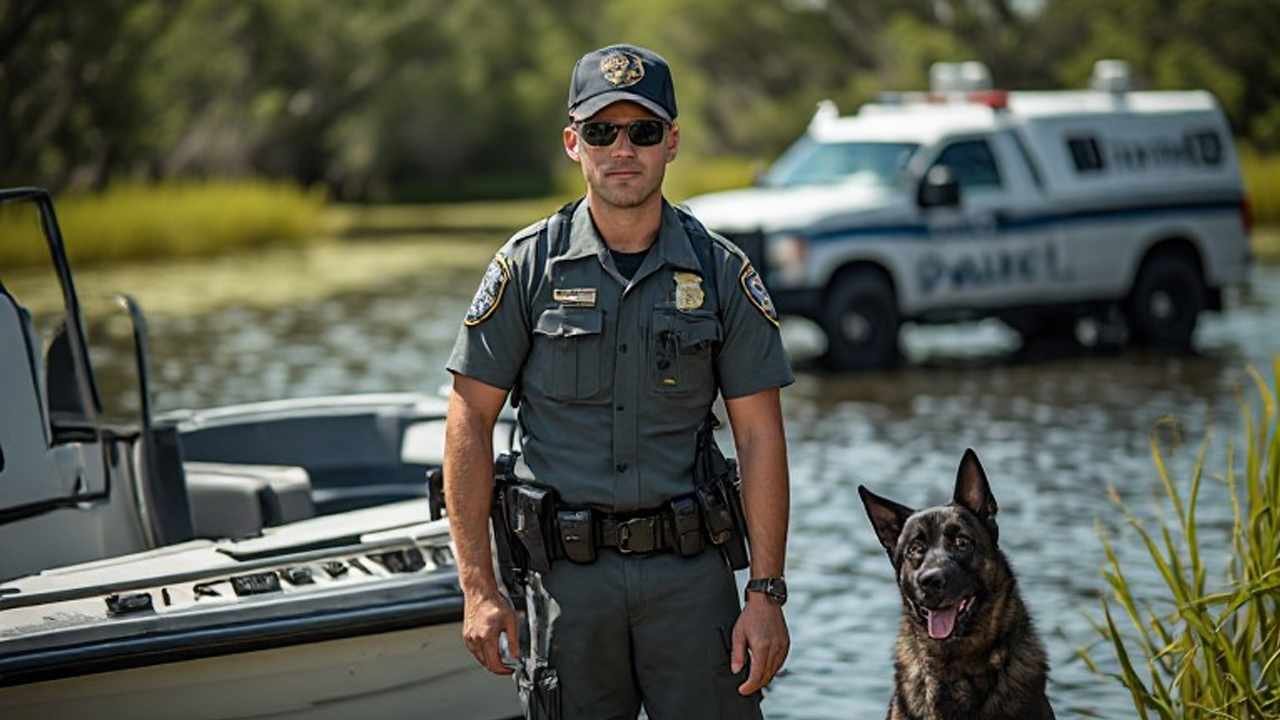
Florida Game Warden: Wildlife Officer Requirements, Salary & Jobs
Florida’s game wardens are sworn law enforcement officers with the Florida Fish and Wildlife Conservation Commission (FWC). As of July 1, 2025, the starting salary is $60,000 — plus a $5,000 signing bonus, higher base pay (up to $70,000) in high-cost counties, a $5,000 annual housing allowance in select counties, and fully paid training. Basic requirements start at age 18 to apply and 19 to be hired, a high school diploma or GED, U.S. citizenship, and a valid Florida driver’s license. Hiring runs through a written Basic Abilities Test, a 150-yard swim test in 5 minutes, a physical abilities test (passing time: 8 minutes, 36 seconds), a background investigation, medical and psychological screening, an ~22-week basic recruit academy in Havana, Florida, plus 10 weeks of FWC-specific training and a 16-week field training program. Below is the complete, state-specific guide covering requirements, pay, the application process, the physical test, the academy, benefits, and how to report wildlife violations.
What Is a Florida Game Warden Called?
Florida officially uses the title “Game Warden.” The state’s formal job classification is Law Enforcement Officer within the FWC’s Division of Law Enforcement, and officers are also commonly called wildlife officers, conservation officers, or simply “FWC officers.”
This matters because terminology is not uniform across the country. Alaska calls its officers Wildlife Troopers, Connecticut uses Environmental Conservation Police Officers, and other states use “conservation officer” or “game and fish officer.” In Florida, the official title is Game Warden — so whether you search “Florida game warden” or “FWC wildlife officer,” you’re looking at the same career. Throughout this guide, the terms are used interchangeably.
What Does a Florida Game Warden Do?
Florida game wardens are full law enforcement officers with complete peace-officer powers, certified by the Florida Criminal Justice Standards and Training Commission (CJSTC) and empowered under Florida Statute 379.3313 to enforce all laws of the state with the full power of arrest — not just wildlife laws. Their duties include:
- Hunting-law enforcement — seasons, bag limits, license checks, quota permits, and hunting-zone assignments
- Fishing-law enforcement — saltwater and freshwater regulations, catch limits, prohibited gear, commercial fishing rules
- Boating enforcement — vessel safety inspections, registration checks, and Boating Under the Influence (BUI) enforcement on Florida’s waterways
- Wildlife protection — protecting both game and non-game species, including threatened and endangered species
- Investigations — investigating alleged violations of resource laws, seizing evidence, and making arrests
- Anti-poaching enforcement — targeting illegal hunting, night hunting, alligator and deer poaching, and wildlife trafficking
- License violations — verifying hunting, fishing, and trapping licenses and quota permits
- Conservation management support — assisting biologists with species counts, habitat protection, and resource damage cases
- Public safety — general police protection for the public on Florida’s lands and waters, plus disaster and hurricane response when other agencies request assistance
- Search and rescue — water-based rescue support through dive teams and emergency response units
- Court testimony — presenting cases, evidence, and testimony in court
- Education and outreach — boater education, hunter safety programs, and public presentations
FWC’s Division of Law Enforcement lives by the motto “Patrol, Protect, Preserve”: its mission is “protecting Florida’s natural resources and people through proactive and responsive law enforcement services.” The division fields more than 1,000 members, including roughly 890 sworn officers, operating in six regions across all 67 counties — and officers work rotating shifts including nights, weekends, and holidays, and are subject to call 24 hours a day, 7 days a week.
Florida Game Warden Requirements
FWC publishes official minimum qualifications that apply to all law enforcement officer applicants. Here is the current state-specific breakdown:
Minimum Age
You must be at least 18 years old when you apply and at least 19 years old on the date of hire. (Note that some states require 21 — Florida’s threshold is set at 19 for appointment.)
Education Requirements
A high school diploma or GED is the minimum. There is no college degree requirement to apply, though note that holding an associate degree or higher (or qualifying veteran status) waives the Basic Abilities Test, and a college education may substitute for required work experience.
Citizenship Requirements
You must be a citizen of the United States.
Driver’s License Requirements
You must hold a valid Florida Class E driver’s license with an acceptable driving record — specifically, no more than four moving traffic violations within the past three years. DUI or BUI convictions within the past five years, and any violation involving refusal to submit to a breath, blood, or urine test within five years, are disqualifying.
Residency Requirements
Florida has no statewide residency requirement to apply. However, if you want assignment to Broward, Miami-Dade, or Monroe counties, you must already reside in that county at the time of application — and those counties carry higher base pay precisely because of local cost of living.
Work Experience
You must have a background in one of the following:
- Law enforcement (prior sworn or corrections experience)
- Public contact work (customer-facing roles dealing with the public)
- Military experience
- A college education may substitute for work experience
Background Check
Every applicant must have good moral character and pass a full background investigation. Automatic disqualifiers include:
- Any felony conviction
- Any misdemeanor conviction involving perjury, a false statement, or domestic violence
- Marijuana use within the past two years
- Controlled substance use (other than prescribed) within the past five years
- Dishonorable discharge from any branch of the U.S. Armed Forces
- Any sustained internal investigation for perjury or false statements (for prior law enforcement/corrections applicants)
Physical Requirements
You must pass FWC’s physical fitness assessment, which includes:
- A 150-yard continuous swim within 5 minutes, immediately followed by 1 minute of treading water
- The Physical Abilities Test (PAT) — a continuous obstacle course with a passing score of 8 minutes, 36 seconds or lower (detailed below)
Medical Requirements
- A thorough medical examination by a licensed physician, including a seven-panel drug screening (at the applicant’s expense)
- A psychological evaluation by a psychologist designated by the Division of Law Enforcement
Vision and Hearing Requirements
FWC has strict published vision standards:
- Unaided vision no less than 20/100 in each eye, correctable to 20/20
- Field of vision of at least 130 degrees
- Ability to distinguish primary colors (no red/green deficiency)
- Binocular vision required — no double vision, no lack of depth perception, and no chronic eye disorders affecting normal vision
Firearm Requirements
You must be legally eligible to possess and carry firearms (consistent with the criminal-history and character standards above). You do not need to buy your own firearm: firearms are provided during the basic recruit academy, and after passing the state law enforcement examination you are issued a Glock 9mm plus any other agency weapons required by your assignment (patrol rifles, shotguns, and specialty firearms as needed).
Florida Game Warden Salary
Florida is one of the better-paying states in the country for conservation law enforcement, and FWC publishes its own official pay structure. Effective July 1, 2025, the starting salary is $60,000 annually — and that rate applies to both certified/sworn hires and noncertified academy recruits (you are a paid state employee, at the full trainee rate, while in the academy).
Starting Salary (Academy / Cadet Pay)
Trainees are paid $2,307.70 bi-weekly ($60,000 annually) as Law Enforcement Officer Trainees while attending the basic recruit academy and FWC-specific training. You also get a one-time $5,000 signing bonus.
Experienced Salary & County Adjustments
Upon assignment to the field, officers residing in high-cost counties receive elevated base pay:
| Assignment Area | Annual Base Salary |
|---|---|
| Standard assignment (statewide) | $60,000 |
| Collier or Lee County | $63,000 |
| Palm Beach County | $65,000 |
| Broward County | $68,000 |
| Miami-Dade County | $68,000 |
| Monroe County | $70,000 |
Top pay grows with rank, tenure, and promotion through FWC’s career structure (field officer ranks, K-9, dive team, and supervisory positions). FWC’s vacancy postings include a total compensation estimator so applicants can see full pay for each announcement.
Overtime and Bonuses
- $5,000 signing bonus for new hires
- $5,000 per year housing allowance for officers assigned and residing in Lee, Collier, Monroe, Broward, or Miami-Dade counties
- Incentive pay of $20 to $130 per month for academic achievement and career development courses
- Overtime and extra-duty pay opportunities exist based on agency need and assignment — FWC officers are subject to 24/7 call, and rotating night/weekend/holiday shifts are standard
Benefits Summary
| Benefit | Details |
|---|---|
| Health insurance | Individual $50/month; family $180/month (state contributes $499.80/$1,063.34) |
| Retirement | 97% state-funded Special Risk Class plan; employee contributes 3% pre-tax; eligible at age 55 vested, or after 25 years of Special Risk service at any age |
| Paid holidays | 10 per year (9 recognized + 1 personal) |
| Annual leave | 4 hrs biweekly (0–5 yrs); 5 hrs (5–10 yrs); 6 hrs (10+ yrs) — 13/16/20 days per year |
| Sick leave | 4 hrs biweekly (104 hours annually) |
| Life insurance | Free $25,000 basic coverage; optional term life up to 7× salary |
| Uniforms | $250 uniform allowance twice a year |
| Equipment | All duty equipment provided: patrol vehicle (take-home), boats, ATVs, firearms, K-9 units |
| Education | Tuition-free college classes (up to 6 credit hours/term, 18/plan year) at Florida College System institutions; GI Bill for veterans |
| Additional | Deferred compensation plan, workers’ comp, supplemental dental/vision/disability/cancer coverage |
How to Become a Florida Game Warden
Here is the official process in order (for noncertified applicants):
- Check eligibility — confirm you meet FWC’s minimum qualifications (age, education, citizenship, driver’s license, background).
- Prepare education/experience — build qualifying experience in law enforcement, public contact, or the military; an associate degree or higher waives the Basic Abilities Test and college can substitute for experience.
- Submit your application — complete a State of Florida application and an FWC supplemental application through the People First portal (peoplefirst.myflorida.com).
- Pass the written test — complete the Basic Abilities Test (BAT / FBAT / CJBAT) unless you qualify for the waiver (veterans or degree holders).
- Pass the physical assessments — the 150-yard swim test and the Physical Abilities Test (PAT).
- Oral interview — interview before a review panel at the FWC Law Enforcement Training Center in Havana.
- Background investigation — a full investigation conducted if you are selected by the oral review panel.
- Medical and psychological screening — vision evaluation, psychological evaluation, and physical exam including drug screening.
- Academy and training — attend the ~22-week basic recruit academy (housing provided), then up to 10 weeks of FWC-specific training.
- Appointment and probation — report to your assignment and complete a 16-week Field Training Officer (FTO) program before you’re approved for full independent duty.
If you’re already a Florida-certified law enforcement officer, you attend an abbreviated training course instead. Out-of-state officers must first obtain Florida certification through the Equivalency of Training (EOT) process before taking the abbreviated course.
Florida Game Warden Application Process
- Where to apply: Applications are submitted through the People First website (peoplefirst.myflorida.com); vacancies are posted on the State of Florida jobs portal (jobs.myflorida.com) under Fish and Wildlife Conservation Commission.
- Recruitment periods: FWC hires in cycles — statewide Law Enforcement Officer announcements open periodically (recent postings have closed around mid-year), so check the portal frequently; the FWC also recruits continuously through regional recruiters.
- Application documents: State application profile, FWC supplemental application, and — for veterans claiming preference — supporting documentation including character-of-service records (e.g., DD Form 214).
- Testing: Basic Abilities Test (BAT/FBAT/CJBAT), swim test, and Physical Abilities Test.
- Interview: Oral review panel at the FWC Law Enforcement Training Center.
- Background investigation: Full background check for selected applicants.
- Medical examination: Physician exam with seven-panel drug screening plus vision and psychological evaluations.
- Academy: Basic recruit training (~22 weeks) and FWC agency-specific training (up to 10 weeks).
For the official recruiting page, current announcements, and recruiter contacts, see the FWC’s official law enforcement recruiting page.
Florida Game Warden Physical Fitness Test
FWC’s physical fitness program has two parts, and both are pass/fail with published standards:
1. Swim Test
- Swim 150 continuous yards in 5 minutes or less (any stroke; pushing off walls and flip turns allowed — stopping or touching the bottom is a failure)
- Immediately followed by 1 minute of treading water with your head above water
2. Physical Abilities Test (PAT) — a continuous, no-rest obstacle course; the passing score is 8 minutes, 36 seconds or lower:
| Event | What It Tests |
|---|---|
| Run (500 ft) | Speed, anaerobic and aerobic power |
| Hurdles (4; 12/18/12/24 in) | Agility, jumping obstacles in pursuit |
| Serpentine (10 cones) | Agility, balance, endurance |
| Wall (4-ft climb) | Upper-body strength-to-weight ratio |
| Bucket carry (2× 35 lb, 100 ft) | Upper-body strength and stamina |
| Stairs (70 steps, ~3 stories) | Muscular and aerobic endurance |
| Sled drag (150 lb, 100 ft) | Full-body strength and endurance |
| Low crawl (under 27-in markers) | Agility and flexibility |
| Balance beam (16 ft) | Balance, leg strength |
| Scuffle (180-lb sled + rope waves ×3) | Endurance, combat-relevant strength |
| Weapon fire (dry-fire ring drill) | Motor skills under stress |
| Finish (verbal completion) | Memory recall under stress |
FWC has not published age/gender-segmented score tables for this event — the 8:36 standard applies to all applicants, so train accordingly. Note this is a full-on, “no rest between events” course: applicants routinely report that cardio conditioning for the run and leg endurance for the stairs/sled are the biggest failure points. FWC publishes videos of each component on its physical assessment page.
Florida Game Warden Academy and Training
- Academy name/location: FWC Law Enforcement Training Center, located at the Florida Public Safety Institute (FPSI) in Havana, Florida, near Tallahassee
- Duration: ~22 weeks basic recruit curriculum, followed by up to 10 weeks of FWC agency-specific training, then a 16-week Field Training Officer (FTO) program at your assignment
- Schedule: Classes typically run 0800–1700, with some nighttime and weekend training events
- Physical conditioning: Recruits train 4 to 5 days per week
- Housing & meals: Free dormitory housing and weekday meals are provided (you cover weekend meals)
- Firearms training: Firearms are provided; you’re issued a Glock 9mm after passing the state exam; academy personal firearms are prohibited on grounds
- FWC-specific subjects include:
- Fish and wildlife conservation laws
- Land navigation and GPS
- Federal fisheries law enforcement
- Species identification (marine and wildlife)
- Vessel accident investigation
- Water safety and survival
- Man-tracking
- Commercial fishing regulations
- Vessel operation
- Graduation requirements: Pass the basic recruit curriculum and the state law enforcement certification exam, complete FWC breakout training, then successfully complete the field training program before carrying out independent duties
Florida Game Warden Jobs
- Where vacancies are posted: The State of Florida jobs portal (jobs.myflorida.com) under the Fish and Wildlife Conservation Commission, plus FWC’s own employment pages and GovDelivery bulletins
- Entry-level position: Law Enforcement Officer (sworn) is the entry-level class — statewide announcements open in cycles and are the standard route for new officers; FWC also fills OPS (non-sworn) support roles such as Duty Officer
- Recruitment cycles: FWC recruits year-round through regional law enforcement recruiters (listed on FWC’s contact page) with periodic statewide posting windows — check the portal regularly, because openings close on fixed dates
- Application requirements: People First profile application, FWC supplemental application, BAT (or waiver), and all screening steps described above
- Special programs: A Reserve Officer Program exists for volunteer/sworn support along Florida’s more than 8,400 miles of tidal shoreline, and veteran applicants receive preference under Florida law
- Application status: As of this guide’s publication, FWC staffing needs fluctuate by region — the most recent statewide officer postings have closed, so confirm currently open announcements directly on the official state job portal
Florida Game Warden Benefits
Beyond the salary and housing allowance detailed above, Florida game wardens receive one of the strongest benefit packages in state law enforcement:
| Benefit | Details |
|---|---|
| Health insurance | $50/month individual, $180/month family (state-subsidized) |
| Retirement | 97% state-funded Special Risk plan; vesting at age 55 or after 25 years of special-risk service; 3% benefit factor formula |
| Paid leave | 13–20 vacation days by tenure + 13 sick days annually + 10 paid holidays |
| Take-home vehicle | Assigned patrol vehicle for travel to/from residence (most FWC officers are on duty when they leave home) |
| Specialized equipment | Boats, ATVs, firearms, K-9 and dive gear provided by assignment |
| Uniforms | $250 allowance twice per year |
| Education benefits | Tuition-free college courses; GI Bill usable during the academy and probation year |
| Life insurance | Free $25,000 policy with optional term coverage up to 7× salary |
| Other | Deferred compensation, workers’ comp, sick leave pool |
What Laws Do Florida Game Wardens Enforce?
FWC officers enforce the full range of Florida wildlife and natural-resource statutes (primarily Chapter 379, F.S.), plus boating safety law and, with full peace-officer authority, general state law. The areas that matter most to hunters, anglers, and boaters:
- Hunting violations — hunting without a license, during closed seasons, without quota permits or zone assignments, and illegal take of deer or wild turkey
- Fishing violations — unlicensed fishing, exceeding bag limits, prohibited gear, taking commercial quantities of game fish, and commercial fisheries violations
- Trapping regulations — unlicensed trapping, trap tampering, and trap robbing (lobster, stone crab, and other commercial traps)
- Wildlife violations — molesting, killing, or possessing protected species, including endangered and threatened species
- Boating enforcement — vessel safety, registration requirements, and Boating Under the Influence (BUI)
- License violations — hunting, fishing, and trapping license checks; captive wildlife permits
- Illegal possession — possession, transport, or sale of illegally taken wildlife; commercial trafficking and black-market wildlife sales
- Poaching — including illegal take and sale of alligators and alligator eggs
- Seasons and bag limits — enforcing FWC’s rule-making on hunting and fishing seasons statewide; check the Florida hunting seasons page for current dates and limits before you head out
These laws carry real consequences — violation levels escalate from $100-level citations to felony charges with fines and possible jail time, and rewards for reporting violations rise with the severity of the offense.
How to Find a Florida Game Warden
Florida doesn’t publish a public statewide officer-by-county directory like some states, but reaching a game warden is straightforward:
- By region: FWC operates six regional commands covering all 67 counties — contact the regional office for your area through FWC’s website
- By phone: The FWC Division of Law Enforcement headquarters in Tallahassee can be reached at (850) 488-4676
- Recruiters: FWC lists regional law enforcement recruiters with direct phone numbers and email addresses on its official contact page
- Online: Start at myfwc.com and use the Law Enforcement section for regional contacts, or the Wildlife Alert page for reporting
- Note: FWC does not maintain a public map of individual officer assignments — respect officer privacy and use official agency channels rather than third-party directories
How to Report a Hunting or Wildlife Violation
Florida has one of the best-supported wildlife tip programs in the nation: the Wildlife Alert Reward Program. You can report wildlife, fishing, or boating violations anonymously, and if your information leads to a citation or arrest you may be eligible for a reward of up to $1,000:
- Call: 888-404-FWCC (888-404-3922) — or #FWC from your cell phone
- Online: Submit a tip at MyFWC.com/WildlifeAlert
- Reward tiers: $100 (license violations, litter infractions) · $300 (illegal small game/saltwater take, feeding alligators, molesting protected species) · $500 (illegal deer/turkey take, alligator sales) · $600 (trap robbing, killing endangered species or alligators) · $1,000 (felony litter, wildlife trafficking, black-market protected-species deals)
- Protections: Your identity is protected by Florida law — you are not required to give identifying information or testify in court
- The program is a nonprofit run through the Wildlife Alert Reward Association in Tallahassee; report as soon as possible with as much detail as you can (location, descriptions, vehicles, tag numbers). See the Wildlife Alert Reward Program for the full reporting page
Florida Game Warden vs. Police Officer
Both are sworn, certified law enforcement officers with full arrest powers in Florida — but the jobs differ significantly:
| Comparison | Florida Game Warden (FWC) | Police Officer |
|---|---|---|
| Employer | FWC Division of Law Enforcement | City/county police department |
| Primary jurisdiction | All of Florida’s lands and waters — statewide | Municipal/county boundaries, usually |
| Focus | Wildlife, fish, boating, and conservation law | General crime, traffic, and public order |
| Work environment | Boats, swamps, forests, remote waterways | Streets, neighborhoods, buildings |
| Shift structure | Rotating shifts, 24/7 call, on-duty when leaving home | Fixed precinct shifts |
| Training | ~22-week academy + 10 weeks agency-specific + 16-week FTO | ~22-week academy + department field training |
| Enforcement tools | Boats, ATVs, K-9s, dive teams, firearms | Patrol cars, bicycles, motorcycles, K-9s |
| Caseload | Resource crimes: poaching, BUI, license violations | Theft, violence, traffic, drug crimes |
FWC officers are fully empowered to make arrests, conduct investigations, and use force when necessary — the difference is primarily where they work and what they enforce. A game warden in Florida may work an undercover gator-trafficking case one week and run a BUI checkpoint on the Intracoastal the next. If you’re set on outdoor, independent, resource-protection work, this is one of the few law enforcement careers where your office is the swamp, the beach, and the boat ramp.
Frequently Asked Questions
What is a game warden called in Florida?
Florida officially uses the title Game Warden; formally, officers are Law Enforcement Officers with the FWC’s Division of Law Enforcement, and are also called wildlife officers, conservation officers, or FWC officers. The state does not use titles like “Wildlife Trooper” (Alaska) or “Environmental Conservation Police” (Connecticut).
How much does a Florida game warden make?
$60,000 starting salary (effective July 1, 2025), plus a $5,000 signing bonus. Field officers in high-cost counties earn $63,000–$70,000, with an additional $5,000 annual housing allowance in five counties, plus $20–$130/month incentive pay.
How do I become a game warden in Florida?
Meet the minimum qualifications, apply through People First, pass the BAT, swim test, PAT, oral interview, background check, and medical/psychological screening, then complete ~22 weeks of academy, 10 weeks of FWC training, and a 16-week field training program.
What are the Florida game warden age requirements?
18 years old to apply and 19 years old by the date of hire — one of the younger entry thresholds among state conservation agencies.
What degree do you need to become a game warden in Florida?
No degree is required — a high school diploma or GED suffices. However, an associate degree or higher waives the Basic Abilities Test, and college education can substitute for work experience.
Is there a physical test?
Yes — two parts. A 150-yard swim within 5 minutes plus 1 minute of treading water, and the Physical Abilities Test obstacle course with a passing time of 8 minutes, 36 seconds or lower.
Where do Florida game wardens work?
Everywhere Florida has water and wildlife: all 67 counties across six FWC regions — the Everglades, coastal waters, lakes, rivers, wetlands, and public hunting lands — working from patrol boats, ATVs, and take-home patrol vehicles.
Can a Florida game warden arrest someone?
Yes. They are CJSTC-certified peace officers with full powers of arrest under Florida law, authorized to enforce state law, seize evidence, make arrests, and testify in court.
What laws do game wardens enforce?
Florida’s wildlife, fish, and conservation statutes (Chapter 379, F.S.), boating safety law including BUI, plus general state law — covering hunting, fishing, trapping, protected species, license violations, poaching, and illegal wildlife trafficking.
How do I contact and report a game warden in Florida?
If you need to report a violation or reach FWC law enforcement, use the official channels below:
| Contact Method | Details |
|---|---|
| Wildlife Alert Hotline | 888-404-FWCC (888-404-3922) — or #FWC from a cell phone; 24/7 |
| Online tip form | MyFWC.com/WildlifeAlert |
| Law Enforcement Division | (850) 488-4676 (Tallahassee headquarters) |
| Regional offices | Six FWC regions cover all 67 counties — contacts via myfwc.com |
| Anonymity & rewards | Anonymous reporting accepted; rewards up to $1,000 for tips leading to citation or arrest |
Report as soon as possible with as much detail as possible (location, descriptions, vehicle and tag numbers). Your identity is protected by Florida law — you never have to give your name or testify.