
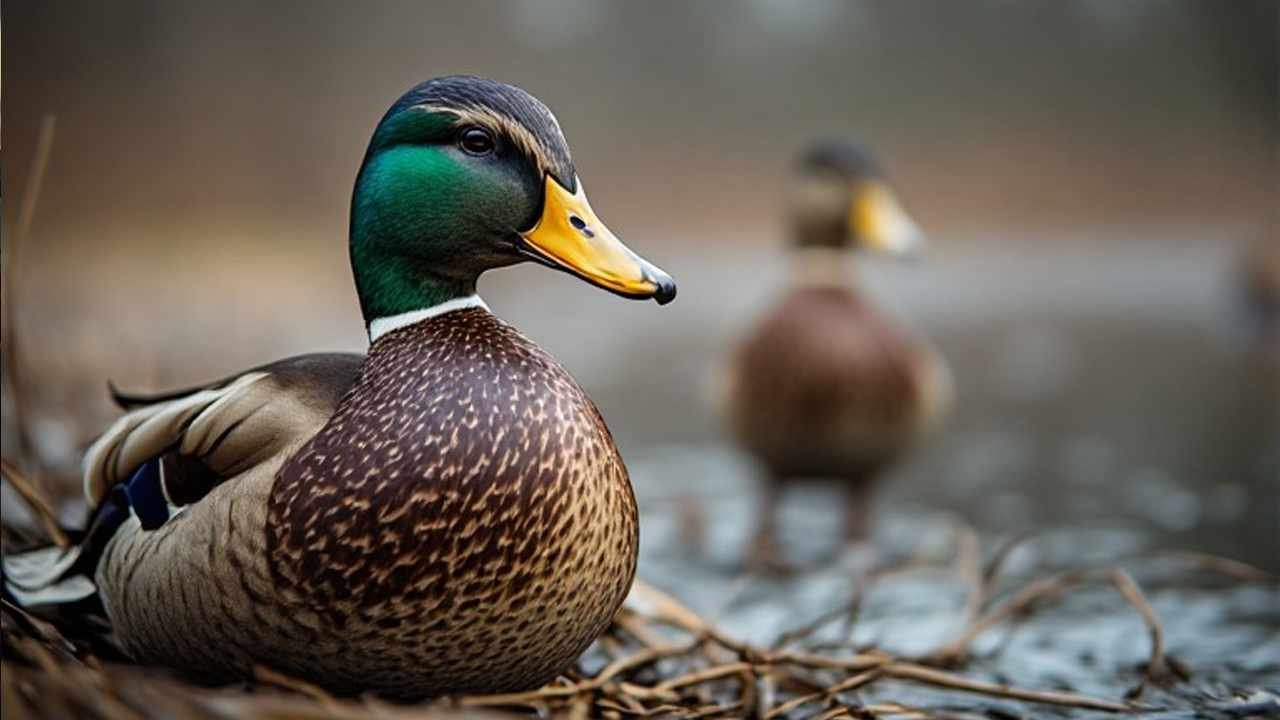
Connecticut Duck Season 2026-2027: Dates, Licenses & Limits
The Connecticut duck season 2026-2027 is officially published, and the state again uses two duck hunting zones split by Interstate 95: a North Zone and a South Zone. Connecticut also uses split segments in the regular duck season, including a short early segment in both zones and additional late-season splits designed to preserve weekend and holiday opportunity within the federal 60-day framework. Before heading afield, hunters should confirm their zone, carry the required state and federal stamps, and double-check area-specific access rules because public-land restrictions and waterfowl closures can vary by location.
If you also want broader state hunting information beyond waterfowl, see Connecticut hunting seasons for a statewide overview.
Connecticut Duck Season 2026-2027 at a Glance
| Information | 2026-2027 Details |
|---|---|
| Regular Duck Season | North Zone: Oct. 10-17, 2026; Nov. 7-11, 2026; Nov. 14, 2026-Jan. 9, 2027. South Zone: Oct. 10-12, 2026; Nov. 11, 2026; Nov. 14, 2026-Jan. 19, 2027 |
| Hunting Zones | North Zone and South Zone |
| Daily Bag Limit | 6 ducks total |
| Possession Limit | 18 ducks total |
| Shooting Hours | One-half hour before sunrise to sunset |
| Youth Waterfowl Days | Oct. 3, 2026 and Oct. 31, 2026 |
| Veteran/Military Days | No separate veteran/active-duty military waterfowl days listed in the official 2026-2027 Connecticut migratory bird guide as of Aug. 29, 2026 |
| Early Teal Season | No separate early teal season listed |
| Required License | Connecticut hunting license |
| Connecticut Waterfowl Stamp | Connecticut Migratory Bird Conservation Stamp |
| Federal Duck Stamp | Required for waterfowl hunters age 16 and older |
| HIP Registration | Included with state stamp; HIP survey must be completed properly for validity |
Connecticut Duck Season Dates for 2026-2027
For hunters searching specifically for Connecticut duck season 2026-2027 dates, these are the official DEEP dates for ducks, mergansers, and coots. Connecticut’s structure is simple to understand once you know your zone: each zone has an early segment in October, then one or two late-season segments in November through January.
| Duck Hunting Zone | Season Dates |
|---|---|
| North Zone | Early: Oct. 10-Oct. 17, 2026 |
| North Zone | Late Segment 1: Nov. 7-Nov. 11, 2026 |
| North Zone | Late Segment 2: Nov. 14, 2026-Jan. 9, 2027 |
| South Zone | Early: Oct. 10-Oct. 12, 2026 |
| South Zone | Late Segment 1: Nov. 11, 2026 |
| South Zone | Late Segment 2: Nov. 14, 2026-Jan. 19, 2027 |
Opening and Closing Days
- North Zone opening day: October 10, 2026
- North Zone closing day: January 9, 2027
- South Zone opening day: October 10, 2026
- South Zone closing day: January 19, 2027
One notable 2026-2027 change is Connecticut’s continued use of an extra split to create an added weekend or holiday hunting opportunity within the allowed 60-day duck season. That means hunters should pay close attention to the one-day and short split segments rather than assuming the season runs continuously.
Connecticut Duck Hunting Zones
Connecticut divides duck hunting into two official zones:
- North Zone: the portion of the state north of Interstate 95
- South Zone: the portion of the state south of Interstate 95
That boundary sounds straightforward, but it still matters because season timing differs between zones, especially in October and early November. If you hunt near the I-95 corridor, on tidal waters, or on a public property with specialized access rules, verify the zone and hunting status before you go.
Connecticut does not rely on a complicated multi-zone duck map the way some larger flyway states do. For practical purposes, hunters can use the official guide’s I-95 boundary rule together with the state’s interactive hunting area map to confirm both location and access restrictions. That is especially useful when checking areas open to waterfowl hunting, firearm-restricted properties, and locations with permit requirements. CT DEEP
Connecticut Duck Season Bag Limits
The Connecticut duck bag limit for 2026-2027 is 6 ducks daily, with species-specific sublimits. Possession is three times the daily limit, so the standard duck possession limit is 18. Mergansers and sea ducks count within the overall duck total rather than giving hunters an extra category. Harlequin duck season is closed.
| Duck Species | Daily Limit | Important Restrictions |
|---|---|---|
| Ducks overall | 6 | Total daily duck bag |
| Mallard | 4 | No more than 2 hens |
| Wood Duck | 3 | Counts toward total duck bag |
| Black Duck | 2 | Counts toward total duck bag |
| Redhead | 2 | Counts toward total duck bag |
| Northern Pintail | 3 | Counts toward total duck bag |
| Canvasback | 2 | Counts toward total duck bag |
| Scaup | See state table | State lists a separate scaup rule; check official season page before hunting |
| Mergansers | Included in 6 | No separate species-specific merganser limit |
| Sea Ducks | 4 | Included in total duck bag; no more than 3 scoters, 3 oldsquaw, 3 eiders, and only 1 hen eider |
| Harlequin Duck | 0 | Season closed |
Possession Limit
| Category | Possession Limit |
|---|---|
| Ducks overall | 18 |
| Coots | 45 |
| Sea Ducks | 12 |
Connecticut also specifically reminds hunters that black duck hybrids are classified as black ducks, which matters for species identification and bag compliance in the field.
What License Do You Need to Hunt Ducks in Connecticut?
To legally hunt ducks in Connecticut, most hunters need more than just a basic hunting license. In practical terms, the required stack is: a Connecticut hunting license, the Connecticut Migratory Bird Conservation Stamp, and—if you are 16 or older—a Federal Duck Stamp. Hunters also need valid HIP certification through the state process.
Connecticut Hunting License
Resident and nonresident duck hunters generally need a Connecticut firearms hunting license or another license category that authorizes bird hunting. Connecticut also offers a 3-day out-of-state bird hunting license for nonresidents who want short-term migratory and resident game bird access. To obtain a hunting license, DEEP says applicants must show proof they held a resident license in the discipline within the last five years or provide proof of completing a Connecticut Conservation Education/Firearms Safety course.
For private land, Connecticut requires landowner permission. For species other than deer and turkey, including waterfowl, verbal permission is sufficient under the statewide hunting laws page.
Connecticut Waterfowl Stamp or Validation
Connecticut requires the Connecticut Migratory Bird Conservation Stamp for all migratory bird hunters, including waterfowl hunters. DEEP says the stamp includes the HIP permit and must be carried. The standard fee is $17, with a lower resident junior rate published for ages 12-17.
Federal Duck Stamp
All Connecticut waterfowl hunters age 16 and older must have a current Federal Duck Stamp. The current federal price is $25. The physical stamp must be signed in ink to be valid, and the U.S. Fish and Wildlife Service also allows a legal E-Stamp or authorized proof of purchase for immediate use until the physical stamp arrives.
HIP Registration
HIP stands for Harvest Information Program. In Connecticut, HIP is built into the Connecticut Migratory Bird Conservation Stamp, but there is an important catch: if you buy your license through DEEP’s online system, you answer the HIP questions during checkout. If you buy from a retail or third-party vendor, the HIP certification is not valid until you personally complete the HIP survey by phone or through DEEP’s online hunter reporting portal.
License and Stamp Summary
| Requirement | Resident | Nonresident | Notes |
|---|---|---|---|
| Hunting License | Required | Required | Standard firearms license usually applies |
| HIP Registration | Required | Required | Included with CT Migratory Bird Conservation Stamp |
| Connecticut Migratory Bird Conservation Stamp | Required | Required | Required for migratory bird hunting |
| Federal Duck Stamp | Age 16+ required | Age 16+ required | Must be signed if physical stamp |
Connecticut Duck Hunting License Costs for 2026-2027
Use official fees only when budgeting a Connecticut duck hunting trip. The fees below come from Connecticut DEEP and the U.S. Fish and Wildlife Service.
| License or Permit | Resident Cost | Nonresident Cost |
|---|---|---|
| Firearms Hunting License | $19 | $91 |
| 3-Day Out-of-State Bird Hunting License | — | $35 |
| Junior Firearms Hunting License (ages 12-15) | $11 | $11 |
| Connecticut Migratory Bird Conservation Stamp | $17 | $17 |
| Connecticut Migratory Bird Conservation Stamp, resident junior (ages 12-17) | $9 | — |
| Federal Duck Stamp | $25 | $25 |
| HIP Registration | Included in CT stamp | Included in CT stamp |
| Age 65+ Annual Firearms Hunting License | Free | — |
If you are a nonresident youth hunter, confirm the exact license combination you need before purchase because Connecticut’s fee tables separate junior license categories from migratory stamp pricing. The safest route is to verify the current checkout requirements through the official Online Outdoor Licensing System.
Youth Waterfowl Hunting Days in Connecticut
Connecticut will hold two statewide junior waterfowl hunter training days in 2026: October 3, 2026 and October 31, 2026. Ducks, geese, mergansers, and coots may be hunted on these days. Bag limits and shooting hours are the same as the regular duck and goose seasons.
Licensed junior hunters ages 12-15 may participate when accompanied by a licensed adult hunter age 18 or older. For the waterfowl training days, the adult mentor must possess a valid hunting license but cannot hunt ducks on youth days. DEEP notes that adults can hunt other migratory game birds only if that season is otherwise open. Juniors receive their own bag limits. A supervisor may not oversee more than two junior hunters at one time.
License requirements on youth waterfowl days are slightly different by age. Hunters ages 12-15 need a valid small game junior hunting license plus the 2026 Connecticut Migratory Bird Conservation Stamp. Hunters ages 16-17 need a valid hunting license, the 2026 Connecticut Migratory Bird Conservation Stamp, and a 2026-2027 Federal Duck Stamp.
Veteran and Active-Duty Military Waterfowl Hunting Days
As of August 29, 2026, the official 2026-2027 Connecticut Migratory Bird Hunting Guide does not list separate veteran or active-duty military waterfowl hunting days. Because Connecticut has officially published its migratory bird guide, hunters should treat the absence of a listed special veteran/military duck day as meaning there is no separately published Connecticut opportunity of that kind in the guide currently available.
If DEEP later publishes a special veterans or active-duty waterfowl announcement outside the guide, hunters should follow that update. For now, rely on the official guide and current DEEP announcements rather than assumptions based on other states.
Early Teal Season in Connecticut
Connecticut does not list a separate early teal season for 2026-2027 in the official migratory bird guide. Instead, teal are hunted within the regular ducks, mergansers, and coots seasons beginning October 10, 2026, depending on zone.
That matters for hunters accustomed to states with a dedicated September teal opportunity. In Connecticut, do not assume an early teal-only opener exists unless DEEP publishes one separately.
Connecticut Duck Hunting Shooting Hours
For ducks in Connecticut, legal shooting hours are one-half hour before sunrise to sunset. DEEP publishes a seasonal sunrise-sunset-tide table for September 2026 through March 2027, which is worth checking if you hunt tidal marshes, coastal waters, or change launch sites frequently.
Connecticut does not list separate early teal shooting hours because it does not list a separate early teal season. Hunters should also remember that some properties and refuges have their own access windows, brochure requirements, or day-of-week limitations, so legal shooting hours do not automatically guarantee legal site access.
Where Can You Hunt Ducks in Connecticut?
Connecticut offers a surprisingly diverse mix of duck hunting opportunities for a small state, including inland marshes, rivers, reservoirs, flood-control areas, tidal creeks, and major coastal marsh systems. DEEP says its published waterfowl-area list is not exhaustive, but it highlights many of the state’s best-known and most accessible public opportunities.
Public Land
Notable public and publicly managed options include places such as Barn Island WMA, Quinebaug River WMA, Cromwell Meadows WMA, Durham Meadows WMA, Housatonic River WMA, Lords Cove WMA, Roger Tory Peterson WMA, Plum Bank Marsh WMA, Charles E. Wheeler WMA, and units of Stewart B. McKinney National Wildlife Refuge. Many of Connecticut’s best coastal options involve marshes, coves, or islands where boat access is part of the hunt.
Private Land
Private-land duck hunting is legal with landowner permission. Under Connecticut law, verbal permission is sufficient for waterfowl hunting, but written permission is always smarter from a practical standpoint, especially when multiple hunters are involved or access is through agricultural or shoreline property.
Public Hunting Draws, Permits, and Area Restrictions
Area-specific rules matter in Connecticut. Some waterfowl locations are marked as permit required, some are boat-access only, some include firearm-restricted areas, and some federal refuge units require hunters to print, sign, and carry a hunt brochure. Stewart B. McKinney NWR is a good example: waterfowl hunting is available on certain refuge units, and each hunter must carry a signed hunt brochure/map while hunting there.
Connecticut also warns hunters to use the interactive public hunting map to check waterfowl closures. One especially important update for 2026-2027 is the temporary closure of part of the Black Hall River in Old Lyme to waterfowl hunting.
Important Connecticut Duck Hunting Regulations
Here are some of the most practical Connecticut duck hunting regulations to keep in mind:
- Sunday hunting for migratory birds is prohibited on all land types, including private land.
- Nontoxic shot is required for waterfowl, coots, and rails; lead shot may not be possessed while waterfowl hunting.
- Shotguns must be plugged so they hold no more than three shells total.
- Shotguns larger than 10-gauge are prohibited for waterfowl hunting.
- Rifles and handguns may not be used to hunt waterfowl.
- Baiting is illegal, and an area remains baited for 10 days after bait removal if the hunter knew or reasonably should have known the area was baited.
- Recorded or electronically amplified bird calls are prohibited.
- Wanton waste rules apply; killed or crippled birds must be retrieved if possible and retained in the hunter’s custody.
- Transportation rules apply; one fully feathered wing or the head must remain attached while birds are transported from the field.
- Tagging is required if birds are left with another person or location.
- Permanent blinds may not be constructed or placed on state-controlled lands or waters.
- Hunter orange is not required for waterfowl hunters hunting from boats, duck blinds, or other stationary positions.
- Species identification matters; Connecticut specifically notes that black duck hybrids count as black ducks.
Best Ducks to Hunt in Connecticut
Connecticut duck hunting offers a mix of dabblers, divers, and coastal sea-duck opportunity. The species you are most likely to target depends heavily on whether you hunt inland marshes and rivers or the salt-marsh and estuary systems along Long Island Sound.
Mallards and Black Ducks
Mallards and black ducks are staple Connecticut birds, especially in marshes, river systems, tidal backwaters, and mixed wetland-agricultural habitats. Black duck identification is particularly important in Connecticut because the state enforces a specific black duck sublimit and counts black duck hybrids as black ducks.
Wood Ducks
Wood ducks are commonly associated with wooded swamps, beaver wetlands, inland ponds, and sheltered river edges. They can be especially relevant in inland portions of the North Zone where timbered and brushy wetland habitat is common.
Teal, Wigeon, and Gadwall
Teal, wigeon, and gadwall show up in Connecticut marshes, impoundments, and coastal feeding areas. Because Connecticut does not run a separate early teal season, teal hunters must watch the regular season opener closely and make clean ID decisions in mixed flocks.
Divers and Sea Ducks
Scaup, redheads, canvasbacks, scoters, eiders, and oldsquaw are most relevant to hunters focusing on bigger water, estuaries, coastal marshes, and Long Island Sound access points. Connecticut specifically regulates sea ducks within the overall duck bag, so coastal hunters should know those sublimits before launch.
Tips for Hunting During the Connecticut Duck Season
Connecticut rewards hunters who match their tactics to the state’s compact geography. The biggest advantage is that you can often scout inland marshes, tidal creeks, and coastal staging areas within a short driving radius—if you stay on top of access rules.
A few Connecticut-specific tips stand out. First, confirm whether your chosen area is boat-only, permit-required, or firearm-restricted before you leave home. Second, pay attention to tide and weather because coastal marsh hunts can change quickly with wind direction and water movement. Third, identify birds carefully in mixed flocks, especially where black ducks, mallards, and hybrids overlap. Finally, avoid relying on generic waterfowl assumptions from bigger flyway states; Connecticut’s split dates, Sunday prohibition for migratory birds, and site-specific public access rules make local knowledge especially valuable.
Frequently Asked Questions About Connecticut Duck Season
When does Connecticut duck season start in 2026?
In both duck zones, the first official opener is October 10, 2026. The North Zone early segment runs Oct. 10-17, while the South Zone early segment runs Oct. 10-12.
How many duck zones does Connecticut have?
Connecticut has two duck hunting zones: North Zone and South Zone. The dividing line is Interstate 95.
What is the daily duck bag limit in Connecticut?
The daily duck bag limit is 6, with species-specific sublimits for birds such as mallards, wood ducks, black ducks, pintails, canvasbacks, and redheads.
What is the duck possession limit in Connecticut?
The possession limit is 18 ducks, which is three times the daily bag limit.
Do you need a Federal Duck Stamp in Connecticut?
Yes. Waterfowl hunters age 16 and older must carry a current Federal Duck Stamp or valid E-Stamp. Physical stamps must be signed in ink.
Do you need HIP registration to hunt ducks in Connecticut?
Yes. HIP is required and is included with the Connecticut Migratory Bird Conservation Stamp. If you buy through a third-party vendor, you must complete the HIP survey yourself for the certification to become valid.
Can you hunt ducks on Sunday in Connecticut?
No. Connecticut prohibits migratory bird hunting on Sundays, even though some other hunting opportunities may exist on private land.
Does Connecticut have a separate youth duck hunt?
Yes. Connecticut has two statewide junior waterfowl hunter training days in 2026: October 3 and October 31.
Before You Hunt: Check the Latest Connecticut Regulations
Even with an official guide in hand, Connecticut duck season 2026-2027 rules can still be affected by public-land restrictions, temporary closures, refuge rules, emergency updates, and local access conditions. Before every hunt, verify your dates, your zone, your stamps, and the status of the property you plan to use through Connecticut DEEP and, where relevant, the U.S. Fish and Wildlife Service.