
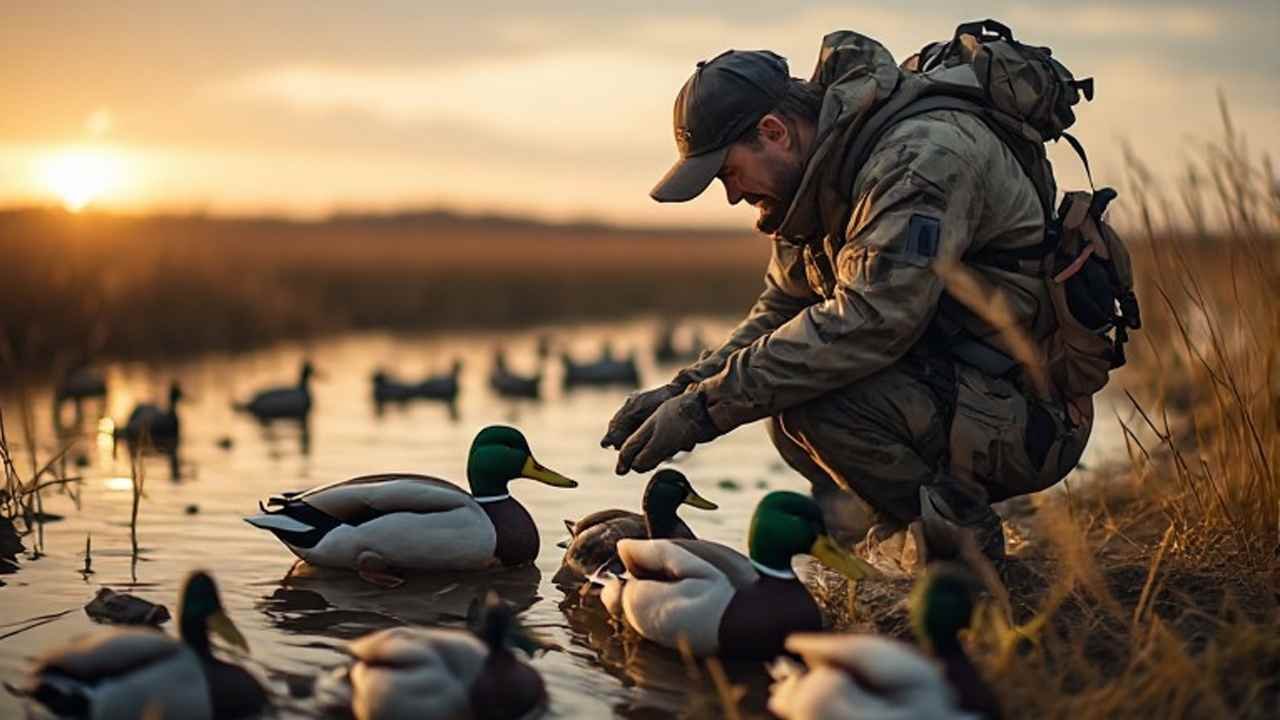
Iowa Duck Hunting Season 2026-2027: Dates, Rules & Limits
Iowa sits in the heart of the Mississippi Flyway, and the 2026-2027 Iowa duck season runs from early October into late December — with a bonus September teal season that opens Labor Day weekend. Iowa splits the state into three duck hunting zones (North, Central and South), each with a 60-day season split into two segments, so the opening and closing dates depend on where you hunt. Before you head afield, know your zone, your license requirements and your species limits — and remember that migratory bird regulations can be adjusted, so always confirm the current rules with the Iowa Department of Natural Resources (DNR) before you go.
Iowa Duck Season 2026-2027 at a Glance
| Information | 2026-2027 Details |
|---|---|
| Regular Duck Season | North Zone: Oct. 3–9 & Oct. 17–Dec. 8 · Central Zone: Oct. 10–16 & Oct. 24–Dec. 15 · South Zone: Oct. 17–23 & Oct. 31–Dec. 22 (two segments per zone, 60 days total) |
| Hunting Zones | 3 zones: North, Central, South |
| Daily Bag Limit | 6 ducks; species sub-limits apply (see bag limits table) |
| Possession Limit | 3 × daily bag limit (18 ducks; species sub-limits also tripled) |
| Shooting Hours | ½ hour before sunrise to sunset (regular season) |
| Youth Waterfowl Days | North: Sept. 26–27 · Central: Oct. 3–4 · South: Oct. 10–11 |
| Veteran/Military Days | None in Iowa |
| Early Teal Season | Special September Teal: Sept. 5–13, statewide (sunrise to sunset) |
| Required License | Resident or nonresident hunting license + habitat fee (ages 16–64) |
| Iowa Waterfowl Stamp | No state duck stamp — Iowa Migratory Game Bird Fee instead ($11.50) |
| Federal Duck Stamp | Required for hunters 16 and older ($25 physical / $29 E-Stamp) |
| HIP Registration | Required annually for all migratory game bird hunters (free) |
Iowa Duck Season Dates for 2026-2027
These dates are the official final regulations published by the Iowa DNR for the 2026-2027 season — not proposals. Each zone gets 60 duck hunting days split into two segments, with a one-week break between them.
| Duck Hunting Zone | Season Dates (Ducks, Mergansers & Coots) |
|---|---|
| North Zone | Segment 1: Oct. 3–9 · Segment 2: Oct. 17–Dec. 8 |
| Central Zone | Segment 1: Oct. 10–16 · Segment 2: Oct. 24–Dec. 15 |
| South Zone | Segment 1: Oct. 17–23 · Segment 2: Oct. 31–Dec. 22 |
Opening day is Oct. 3 in the North Zone, Oct. 10 in the Central Zone and Oct. 17 in the South Zone. The statewide closing stretch runs through early-to-late December, with the South Zone closing last on Dec. 22.
Iowa Duck Hunting Zones
Iowa divides the state into three waterfowl zones for the fall 2026 through spring 2030 seasons, according to the official regulations booklet. The boundaries follow highways, which makes them easy to navigate:
- North Zone: All of Iowa north of a line that begins on the South Dakota–Iowa border at Interstate 29, runs southeast along I-29 to State Highway 20, then follows Hwy. 20 to the Iowa–Illinois border.
- South Zone: The part of Iowa west of I-29 and south of State Highway 92, extending east along Hwy. 92 to the Iowa–Illinois border.
- Central Zone: The remainder of the state (everything not in the North or South zones).
Why does this matter? Zone determines your legal dates — hunt one week early in the wrong zone and you’re hunting out of season. The official map and the full boundary language are in the downloadable regulations booklet, and the Waterfowl Hunting Map Book, including zone maps and areas closed to waterfowl hunting, is available at www.iowadnr.gov/waterfowl. If you routinely hunt near a boundary line, pull the zone map and confirm exactly which side of the line your spot is on.
Iowa Duck Season Bag Limits
The daily duck bag limit in Iowa is 6 ducks, with several species-specific sub-limits you must track in the field. This is the official 2026-2027 limit structure:
| Duck Species | Daily Limit | Important Restrictions |
|---|---|---|
| Total Ducks | 6 | Combined daily limit for all duck species |
| Mallard | 4 | No more than 2 may be female (hens) |
| Wood Duck | 3 | — |
| Northern Pintail | 3 | — |
| Redhead | 2 | — |
| Black Duck | 2 | — |
| Canvasback | 2 | — |
| Scaup (Lesser/Greater) | 1–2 | 1 per day for the first 15 days; 2 for the remaining 45 days |
| All Other Ducks | Included in the 6 | Gadwall, wigeon, teal, shoveler, ring-necked, bufflehead, etc. |
| Mergansers (separate) | 5 | No more than 2 hooded mergansers |
| Coots (separate) | 15 | — |
The scaup split works like this: the 2-bird scaup limit begins Oct. 19 in the North Zone, Oct. 26 in the Central Zone and Nov. 2 in the South Zone. Note that mergansers and coots count against their own limits, not the 6-duck bag.
Possession limit: 3 times the daily bag limit — so up to 18 ducks (with every species sub-limit tripled too). Merganser possession is 15, and coot possession is 45.
What License Do You Need to Hunt Ducks in Iowa?
To legally hunt ducks in Iowa you need four things: a hunting license, the Iowa habitat fee (ages 16–64), the Iowa Migratory Game Bird Fee, HIP registration, and — for anyone 16 or older — a Federal Duck Stamp. Here’s how each one works.
Iowa Hunting License
- Residents: A resident hunting license is required; hunters ages 16–64 must also pay the wildlife habitat fee. Hunters born after January 1, 1972 must complete an approved hunter education course before buying a license.
- Nonresidents: Nonresidents buy a nonresident hunting license (annual or 5-day), which includes the habitat fee. The same hunter education rule applies.
- Age exemptions: Youths under 16 do not need a hunting license if accompanied by a licensed adult 18 or older — and during youth waterfowl days, Iowa goes further (see below).
Iowa Waterfowl Stamp or Validation
Iowa does not sell a separate state “duck stamp.” Instead, the state requires the Iowa Migratory Game Bird Fee ($11.50 for the current license year) for anyone hunting ducks, geese, gallinules, rails, snipe or woodcock. Think of it as Iowa’s waterfowl validation — you pay it annually alongside your license, and it’s what triggers your HIP registration.
Federal Duck Stamp
- Who needs it: Everyone 16 years of age or older hunting migratory waterfowl must carry a current Federal Migratory Bird Hunting and Conservation Stamp — valid July 1 through June 30 each year.
- Cost: $25 for a physical stamp; $29 purchased online as an E-Stamp (processing included).
- Electronic options: Iowa is one of 30 states that sell the E-Stamp, which gives you an instantly valid proof of purchase for the whole season, with the physical stamp mailed March 10–June 30. You can buy it at any Iowa license vendor or through Go Outdoors Iowa.
- Signing rule: Sign your physical stamp in ink the moment you get it — an unsigned stamp is not valid for hunting, and a store receipt is never a legal substitute.
HIP Registration
HIP (Harvest Information Program) is the national survey system the USFWS and state agencies use to estimate migratory bird harvest. Every migratory game bird hunter in Iowa must register annually before hunting. Registration is free (done when you pay the state Migratory Game Bird Fee) and takes about 30 seconds online through the Go Outdoors Iowa app or www.iowadnr.gov/waterfowl. After registering, keep proof: write your confirmation number on your license, print an updated license, or screenshot the confirmation on your phone.
| Requirement | Resident | Nonresident | Notes |
|---|---|---|---|
| Hunting License | Yes ($22 + $15 habitat fee, ages 16–64) | Yes ($144 annual combo / $90 for 5 days) | Under 16: exempt if with licensed adult 18+ |
| HIP Registration | Required | Required | Free; online or app |
| Iowa Migratory Game Bird Fee | $11.50 | $11.50 | Iowa’s waterfowl validation |
| Federal Duck Stamp | $25/$29 (16+) | $25/$29 (16+) | Sign physical stamp |
Iowa Duck Hunting License Costs for 2026-2027
The following fees come directly from the Iowa DNR license and fee pages. Note that the printed 2026-27 regulations booklet reflects a fee schedule beginning Dec. 15, 2026 (hunting $23.00, habitat fee $15.50, migratory bird fee $12.50); the table below uses the fees currently posted for the license year hunters buy between Dec. 15, 2025 and Jan. 10, 2027.
| License or Permit | Resident Cost | Nonresident Cost |
|---|---|---|
| Hunting License | $22.00 (Hunting/Habitat combo: $35.00) | $144.00 (Hunting/Habitat, 18+) |
| Habitat Fee (ages 16–64) | $15.00 | Included in nonresident license |
| Migratory Game Bird Fee | $11.50 | $11.50 |
| Federal Duck Stamp | $25.00 (physical) / $29.00 (E-Stamp) | $25.00 (physical) / $29.00 (E-Stamp) |
| HIP Registration | Free | Free |
| 5-Day Nonresident License | N/A | $90.00 |
| Youth Under 16 | No license required with licensed adult 18+ | No license required with licensed adult 18+ |
| Apprentice License (all ages) | $35.00 | $151.00 |
Resident season total: roughly $48.50 for a first-time resident duck hunter (license + habitat + migratory bird fee) plus $25–29 for the Federal Duck Stamp. Licenses expire Jan. 10 (2026 licenses expire Jan. 10, 2027), so a license bought for archery season still covers the entire duck season.
Youth Waterfowl Hunting Days in Iowa
Iowa hosts a dedicated youth waterfowl hunt in each zone — a two-day weekend run just before that zone’s regular opener:
| Zone | Youth Waterfowl Days 2026 |
|---|---|
| North Zone | Sept. 26–27 |
| Central Zone | Oct. 3–4 |
| South Zone | Oct. 10–11 |
- Eligibility: Resident hunters 15 years of age or younger.
- Fees waived: Youth don’t need a hunting license, Federal Duck Stamp, habitat fee or Iowa migratory game bird fee on these days.
- Supervision: Each youth must be accompanied by an adult 18 or older, who must hold a hunting license and have paid the habitat and migratory bird fees. Licenses are required for one adult per youth under 16.
- Who shoots: Only the youth may hunt ducks, geese, mergansers and coots. The accompanying adult may hunt other game that’s in season (including other migratory birds) provided they possess a Federal Duck Stamp.
- Bag limits and hours: Identical to the regular waterfowl season (6 ducks with all species sub-limits; ½ hour before sunrise to sunset).
This is an exceptional chance to introduce a young hunter — the first ducks of the year are usually still holding on local marshes, and the hunting is often excellent.
Veteran and Active-Duty Military Waterfowl Hunting Days
Iowa does not offer separate veterans or active-duty military waterfowl hunting days for 2026-2027 — there are no such dates in the official regulations. However, Iowa provides year-round license recognition for those who served:
- Qualifying Iowa residents can obtain a Veterans Hunting & Fishing Combo license for just $7.00, and eligible disabled veterans may receive a free annual or lifetime hunting license (disabled veteran lifetime license holders are also exempt from the habitat fee). Iowa also offers free annual hunting and fishing licenses and veteran lifetime licenses to qualifying residents — contact the DNR at 515-725-8200 for applications.
- Military personnel on leave have special license provisions spelled out on pages 13–14 of the regulations booklet — worth a read if you’re home on leave mid-season.
Bottom line: hunt the regular season like everyone else, but make sure you’re using the license discount you’ve earned.
Early Teal Season in Iowa
Yes — Iowa has a Special September Teal Season, statewide:
- Dates: Sept. 5–13, 2026
- Legal species: Blue-winged teal, green-winged teal and cinnamon teal only — no other ducks
- Daily bag limit: 6 teal · Possession limit: 18 (3 × daily)
- Shooting hours: Sunrise to sunset — this is different from the regular duck season (½ hour before sunrise to sunset), so don’t get caught shooting early
- Licenses: All general migratory game bird requirements apply — hunting license, habitat and migratory bird fees, HIP registration, and a Federal Duck Stamp for hunters 16+
Teal hunting is fast, warm-weather action on late-summer wetlands, and blue-winged teal are the first migrants through Iowa every fall. There’s no better way to shake the rust off before the main season.
Iowa Duck Hunting Shooting Hours
- Regular duck season: ½ hour before sunrise to sunset, every day, all zones.
- Special September Teal: Sunrise to sunset (cinnamon, blue-winged and green-winged teal only).
- Woodcock: Sunrise to sunset.
Check the forecast and sunrise tables before opening day — “half-hour before sunrise” arrives earlier than most hunters expect in October, and state conservation officers enforce these hours strictly. Also verify any local restrictions on individual public areas or WMAs you plan to hunt.
Where Can You Hunt Ducks in Iowa?
Public Land
Iowa is generous with public waterfowl access. The DNR’s interactive Hunting Atlas maps more than 763,810 acres of land open to public hunting, and the Wildlife Bureau manages 410,000+ acres of Wildlife Management Areas (WMAs) open daily for recreation. The Iowa Habitat & Access Program (IHAP) adds more than 30,000 acres across 57 counties of walk-in public hunting from Sept. 1–May 31 each year.
Key waterfowl destinations include the Upper Mississippi River islands and backwaters, the Missouri River corridor (including wetland complexes around Sioux City and Council Bluffs), prairie pothole country in north-central Iowa, and the managed marsh complexes along the Iowa River and Rathbun Lake. National Wildlife Refuges in Iowa (including Union Slough, DeSoto, and the Upper Mississippi River Refuge) offer hunting, but some refuge areas are closed to hunting or have species and method restrictions — always check refuge-specific regulations before you go.
Private Land
Iowa is roughly 90% privately owned, so much of the best duck hunting is on private ground. You must have landowner permission before entering or hunting private land, including flooded timber and crop fields. Iowa’s trespass laws require written or verbal permission; unposted private land is not automatically open. Because permission can be revoked at any time, treat every landowner relationship as a privilege — keep gates as you found them, pick up shells, and thank the landowner.
Public Hunting Draws and Reservations
Iowa does not operate a statewide waterfowl blind-draw or lottery system — public waterfowl hunting on DNR lands is generally first-come, first-served. No quota permits or reservations are required for general duck hunting. Individual WMAs and refuges may post local restrictions or limited-access zones, so check the Hunting Atlas and refuge pages for the specific area you plan to hunt.
Important Iowa Duck Hunting Regulations
These are the regulations that get hunters cited — commit them to memory:
- Non-toxic shot only: You may not possess any shot other than approved non-toxic shot (steel, bismuth, tungsten, etc.) while hunting ducks, geese, rails, snipe or coots — that includes loose shot for muzzleloaders.
- Plugged shotgun: Shotguns capable of holding more than three shells must be plugged with a one-piece filler that can’t be removed without disassembling the gun.
- No electronic calls: Recorded or electrically amplified bird calls are illegal for waterfowl — the sole exception is the Light Goose Conservation Order (Jan. 24–May 1, 2027), which also allows unplugged guns.
- No baiting: Hunting on or over a baited area is illegal. An area stays “baited” for 10 days after all bait is removed. If you “know or reasonably should know” an area is baited, you’re responsible.
- Retrieval duty: Federal rules require a reasonable effort to retrieve downed birds; leaving dead or crippled waterfowl to waste violates federal law.
- Identify before you shoot: Hunters are responsible for identifying every bird — hen mallards, canvasbacks, pintails and black ducks all have daily restrictions, so a fast swing on a wrong bird is an expensive mistake.
- Hunter orange: Not required for waterfowl hunting from a blind, but required when walking to and from your blind through areas where other hunting (deer, pheasant) is occurring.
- No motorized take: Shooting from a moving motorboat or vehicle is prohibited; shooting at birds from a stationary boat is fine.
- Banding: Report any banded duck you harvest to the USFWS at reportband.gov — the data improves the season for everyone.
Best Ducks to Hunt in Iowa
| Species | Where You’ll Find Them | Notes |
|---|---|---|
| Mallard | Everywhere — river backwaters, prairie marshes, flooded corn and soybean fields | Iowa’s bread-and-butter duck; 2-hen rule keeps you counting |
| Wood Duck | Timbered river bottoms and sloughs, Upper Mississippi backwaters | Early-season favorite; limit 3 |
| Blue-winged Teal | Shallow marshes and ponds statewide, especially Sept. | First migrants through Iowa; teal season targets them |
| Green-winged Teal | Shallow flooded fields and marsh edges late in the season | Numbers build as weather turns cold |
| Gadwall | Prairie wetlands and reservoirs | Renowned call-shy, decoy-cautious |
| Northern Pintail | Open water and big marsh complexes | Limit 3; often the first puddlers to arrive |
| Northern Shoveler | Mud-bottomed shallow water | Spoonies decoy readily |
| American Wigeon | Marshes and lakes, often mixed with mallards | Baldpate, the mid-season staple |
| Canvasback | Big rivers and reservoirs (Mississippi & Missouri) | Limit 2; divers run with harsh-weather fronts |
| Redhead | Open water with the divers | Limit 2 |
| Scaup (Bluebill) | Big open water — Mississippi River pools, Spirit Lake chain | Limit starts at 1, rises to 2 mid-season |
| Black Duck | Timbered rivers and marshes of eastern Iowa | Limit 2; often mixed with mallards |
| Ring-necked Duck / Bufflehead / Mergansers | Lake and river systems as ice pushes south | Merganser limit 5 (max 2 hooded) |
A quick timing rule of thumb from Iowa DNR’s own season-development analysis: teal and early puddle ducks dominate September–October, the mallard and pintail push peaks in November, and diver species plus late gadwall and greenwings carry December — which is exactly why the DNR weights each zone’s two segments around those dates.
Tips for Hunting During the Iowa Duck Season
- Scout where the water is: Iowa’s duck numbers track water. Late-summer rainfall dictates which marshes, river sloughs and flooded fields hold birds. Drive your zone in the two weeks before opening day and glass every pothole along the way.
- Watch the weather, not the calendar: The first strong cold front out of Canada in late October–November pushes the big mallard flights into Iowa. A hard freeze in South Dakota or Minnesota is your signal to hunt the next morning.
- Decoy spreads that match Iowa: Use bigger spreads of 18–36 mallard blocks early; switch to smaller, quieter spreads as December birds get educated. Mix in a few teal and gadwall decoys on farm-country marshes. Divers on the big rivers like long strings of diver blocks.
- Call less as the season ages: October mallards respond to hail calls; late-December mallards have heard it all. Iowa veterans shorten their calling by mid-November.
- Concealment beats calling: Iowa’s harvested crop fields leave ducks wary. Brush your blind with whatever grows on that marsh — cattails, willows, even standing corn — and keep movement to zero.
- Play the wind: Ducks land into the wind. Position your spread so birds swing into your face — a downwind hide is a dead giveaway.
- Master the hen count: With a 2-hen mallard limit, you need to read hens at 40 yards. Practice identifying hen mallards against gadwall and black ducks before you’re staring at a limit decision.
- Check water levels and access: River levels on the Mississippi and Missouri can drop or rise feet in a week, stranding boats and flooding ramps. Check river gauges before committing to backwater hunts.
Frequently Asked Questions About Iowa Duck Season
When does duck season open in Iowa in 2026?
The North Zone opens Oct. 3, the Central Zone on Oct. 10, and the South Zone on Oct. 17. Each zone’s season runs two segments — for example, the North Zone is open Oct. 3–9 and again Oct. 17–Dec. 8.
Is there an early teal season in Iowa?
Yes — the Special September Teal Season runs Sept. 5–13, 2026, statewide. Only blue-winged, green-winged and cinnamon teal are legal, with a 6-bird daily limit and sunrise-to-sunset shooting hours.
What is the duck bag limit in Iowa?
Six ducks per day, with sub-limits: 4 mallards (max 2 hens), 3 wood ducks, 3 pintails, 2 redheads, 2 black ducks, 2 canvasbacks, and 1 scaup for the first 15 days (2 after). Possession is 3x the daily limit.
Do I need a federal duck stamp in Iowa?
Yes, if you’re 16 or older. The 2026-2027 Federal Duck Stamp costs $25 (physical) or $29 as an E-Stamp, and Iowa sells E-Stamps through Go Outdoors Iowa. Physical stamps must be signed to be valid.
Does Iowa require a state duck stamp?
No state duck stamp — but Iowa does require the Migratory Game Bird Fee ($11.50) for all waterfowl hunting, along with your hunting license, habitat fee and free HIP registration.
Can kids hunt waterfowl in Iowa without a license?
Residents 15 and younger can hunt on youth waterfowl days (North: Sept. 26–27 · Central: Oct. 3–4 · South: Oct. 10–11) with no license, stamp or fees — as long as an adult 18+ accompanies them. Only the youth may take waterfowl on those days.
Are there duck hunting zones in Iowa?
Yes — three: North, Central and South (divided roughly along I-29/Hwy. 20 and I-29/Hwy. 92). Each zone has its own 60-day season split into two segments, so the dates that apply depend entirely on where you hunt.
Can nonresidents hunt ducks in Iowa?
Yes. Nonresidents need a nonresident hunting license ($144 annual / $90 for 5 days), the $11.50 migratory game bird fee, HIP registration, and a Federal Duck Stamp (16+). No draw or lottery is required for general waterfowl hunting.
Before You Hunt: Check the Latest Iowa Regulations
Migratory bird regulations, public land rules, emergency closures and special restrictions can change after publication — the Iowa DNR updates the digital version of the regulations booklet and the Go Outdoors Iowa app if anything shifts. Always verify the current rules with the Iowa DNR immediately before you hunt, and check for area-specific closures on any WMA or refuge you plan to visit.
Iowa Duck Hunting Resources
- Iowa DNR – Migratory Game Bird Hunting (waterfowl page)
- Iowa DNR – 2026-2027 Hunting Seasons
- Iowa DNR – 2026-27 Regulations Booklet (PDF)
- Iowa DNR – Hunting Licenses & Fees
- Go Outdoors Iowa – License Purchase & HIP Registration
- Iowa DNR – Interactive Public Hunting Atlas
- U.S. Fish & Wildlife Service – Federal Duck Stamp