
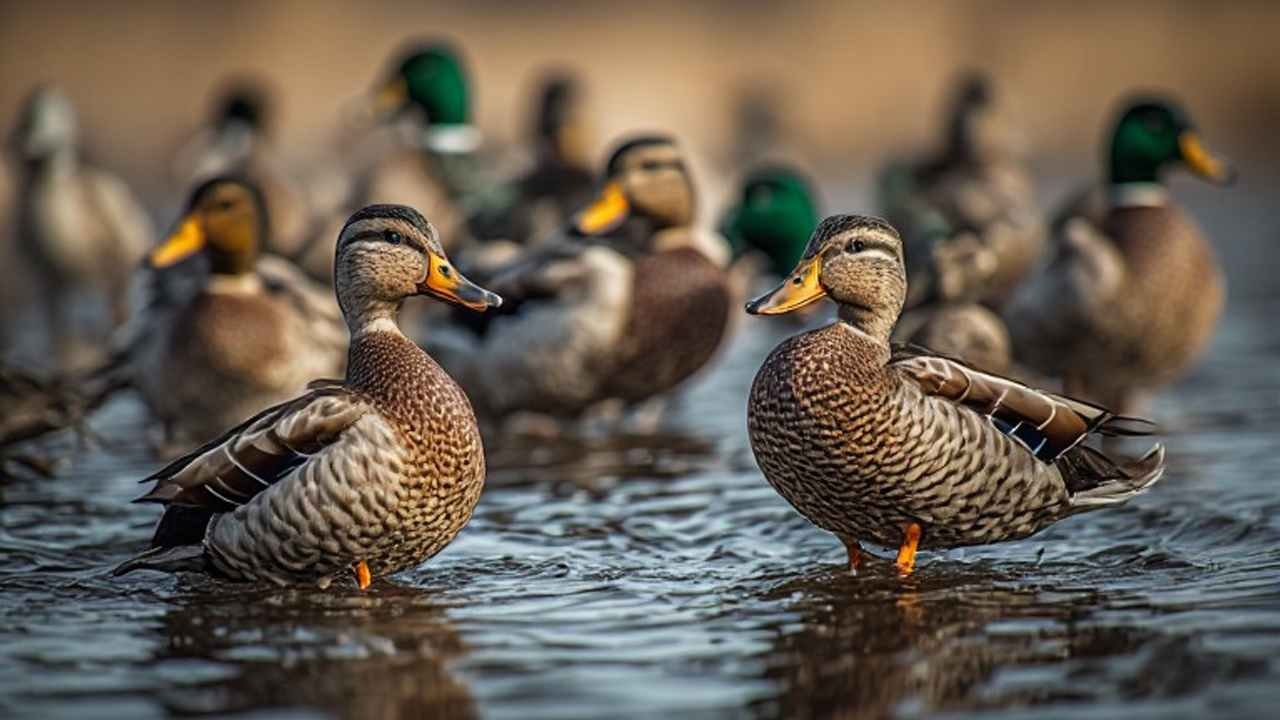
Washington Duck Hunting Season 2026-2027: Dates, Rules & Zones
The 2026-2027 Washington duck season runs October 17–25, 2026, and October 28, 2026 – January 31, 2027 — a statewide season split into two segments, with a handful of zone-specific rules between Western and Eastern Washington. Washington does not use multiple duck zones with different regular-season dates; instead, the state applies a single statewide duck framework and layers regional restrictions on top, including separate youth hunting days, West-side sea duck limits, and goose management areas.
Before you head afield, know that migratory bird regulations change every year, so you should verify the current rules on the Washington Department of Fish & Wildlife (WDFW) website before hunting. This guide reflects the official 2026-2027 regulations published for the season effective July 1, 2026 – June 30, 2027. This guide is part of our state-by-state Washington duck hunting seasons reference series — and if you plan a multi-state trip, the Oregon duck season guide covers our neighbor to the south.
Washington Duck Season 2026-2027 at a Glance
| Information | 2026-2027 Details |
|---|---|
| Regular Duck Season | Oct. 17–25, 2026, and Oct. 28, 2026 – Jan. 31, 2027 (statewide, two segments) |
| Hunting Zones | Statewide season; West and East zones apply to youth hunts, sea duck limits, and goose management areas |
| Daily Bag Limit | 7 ducks (incl. no more than 2 hen mallard, 3 pintail, 2 canvasback, 2 redhead, 2 scaup) |
| Possession Limit | 21 ducks (3 × daily bag); equals the daily bag limit on special youth/veteran/military days |
| Shooting Hours | One-half hour before sunrise to sunset (official weekly WDFW table) |
| Youth Waterfowl Days | Western WA: Sept. 26, 2026; Eastern WA: Oct. 3, 2026; statewide: Feb. 6, 2027 |
| Veteran/Military Days | Feb. 6, 2027 (statewide, with qualifying ID) |
| Early Teal Season | None offered for 2026-2027 |
| Required License | Small Game License + Migratory Bird Permit + Migratory Bird Authorization |
| Washington Waterfowl Stamp | No state duck stamp; the Migratory Bird Permit/Authorization fills this role |
| Federal Duck Stamp | Required for hunters 16 and older ($25) |
| HIP Registration | Included when you purchase the Migratory Bird Authorization |
Washington Duck Season Dates for 2026-2027
Washington sets one statewide duck season with two segments. There is no East/West split for the regular duck season itself — the entire state shares the same open and closing days:
| Segment | Season Dates | Notes |
|---|---|---|
| Segment 1 | Oct. 17–25, 2026 | All legal ducks; scaup closed (see below) |
| Segment 2 | Oct. 28, 2026 – Jan. 31, 2027 | Scaup opens Nov. 7, 2026 and stays legal through Jan. 31 |
Key season details:
- Opening day: Saturday, October 17, 2026
- Closing day: Sunday, January 31, 2027
- Scaup restriction: the scaup season is closed statewide October 17 – November 6, 2026, reopening November 7 within the second segment
These official dates were adopted by the Washington Fish and Wildlife Commission for the 2026-2027 regulatory year and are published in the 2026 Game Bird and Small Game Hunting Regulations pamphlet (effective July 1, 2026 – June 30, 2027) WDFW Publications. If you see older articles listing different dates, check the year — Washington’s duck framework shifts annually and sometimes the season split changes.
Washington Duck Hunting Zones
Washington divides the state into Western Washington and Eastern Washington for waterfowl management purposes. The Cascade Crest is the practical dividing line, and WDFW’s regulatory framework references a West Zone and an East Zone.
Where the zones matter for duck hunters:
- Youth-only September hunts fall on different dates in each zone: Sept. 26, 2026 in Western Washington and Oct. 3, 2026 in Eastern Washington.
- Sea duck sub-limits (scoter, long-tailed duck, goldeneye) apply only in Western Washington, where those birds are harvested along Puget Sound and the coast.
- Goose management areas (GMAs 1–5) and several special goose hunts operate exclusively on one side of the state or the other.
Most duck hunters simply need to know whether they are hunting West or East of the Cascades, because the state’s additional species restrictions, special hunt days, and harvest-record requirements differ by side. WDFW publishes zone boundaries and unit maps in the official regulations pamphlet and on its interactive licensing and wildlife-area pages. Always confirm which zone applies to your planned hunting location before opening day.
Washington Duck Season Bag Limits
Washington’s daily duck bag limit is 7 ducks, with several species-specific sub-limits inside that total. The possession limit during the regular season is 21 ducks — exactly three times the daily bag limit.
| Duck Species | Daily Limit | Important Restrictions |
|---|---|---|
| Mallard | 7 (within overall limit) | No more than 2 hen (female) mallards per day |
| Wood Duck | 7 (within overall limit) | No species-specific restriction for 2026-2027 |
| Northern Pintail | 3 | Sub-limit inside the 7-duck bag |
| Canvasback | 2 | Sub-limit inside the 7-duck bag |
| Redhead | 2 | Sub-limit inside the 7-duck bag |
| Scaup | 2 | Closed Oct. 17 – Nov. 6, 2026 |
| Scoter (Western WA only) | 3 | Harvest record card required |
| Long-tailed Duck (Western WA only) | 2 | Harvest record card required |
| Goldeneye (Western WA only) | 3 | Harvest record card required |
| Harlequin Duck | 1 (permit only) | Special drawing, Western WA coastal waters |
| Other ducks | Up to 7 total | Includes teal, gadwall, wigeon, shoveler, bufflehead, ring-necked, ruddy |
Possession limits (regular season): 21 ducks total, including no more than 6 hen mallards, 9 pintails, 6 scaup, 6 canvasbacks, and 6 redheads statewide; and no more than 9 scoters, 6 long-tailed ducks, and 9 goldeneyes in Western Washington.
Special-event possession limit: On youth, veterans, and active military hunting days, the possession limit equals the daily bag limit (7 ducks) rather than the usual 21.
Because several of these species — especially pintail, canvasback, redhead, and scaup — are managed under restrictive federal frameworks, WDFW emphasizes that hunters must identify birds before shooting. If you cannot confidently distinguish a canvasback from a redhead or a pintail from a mallard in flight, study the identification section of the regulations pamphlet before you go afield.
What License Do You Need to Hunt Ducks in Washington?
Every Washington duck hunter must carry several items. Do not let the stack of requirements discourage you — each one takes only a few minutes to buy or complete online.
Washington Hunting License
All hunters in Washington — regardless of age — must possess a valid hunting license while hunting. For ducks, the base license is the Small Game License. Anyone born after January 1, 1972 must show proof of completing a hunter education course before buying their first license (a one-time deferral option exists). There is no minimum age to hunt in Washington, but youth (under 16 at time of purchase) pay reduced fees. Nonresidents buy the same license types at higher prices, and no additional “nonresident waterfowl permit” beyond the standard requirements applies in Washington.
Washington Migratory Bird Permit and Authorization
Washington does not sell a traditional “state duck stamp.” Instead, duck hunters must buy two state items:
- Migratory Bird Permit ($23.27): the state’s waterfowl permit.
- Migratory Bird Authorization ($18.22): this is Washington’s Harvest Information Program (HIP) certification plus the document that unlocks harvest-record cards for restricted species such as sea ducks, brant, snow geese, and southwest Washington Canada geese.
Federal Duck Stamp
Waterfowl hunters 16 years of age or older must carry a current, signed Federal Migratory Bird Hunting and Conservation Stamp (Duck Stamp) — $25 for the 2026-2027 season (Bufflehead design, issued June 26, 2026). The stamp is valid July 1 through June 30 each year. Physical stamps must be signed on the front to be legal for hunting; a store receipt is not a valid substitute. Hunters who want the digital option can buy an E-Stamp through fws.gov’s licensed outlet, DuckStamp.com (Washington is not among the state licensing systems selling E-Stamps, so Washington hunters use the federal outlet or a physical retailer).
HIP Registration
HIP (Harvest Information Program) is a federally required certification that helps biologists estimate migratory bird harvest. In Washington, HIP registration happens when you buy the Migratory Bird Authorization — there is no separate free registration step. The authorization costs $18.22 for residents and nonresidents ($6.01 for seniors, $4.55 for youth).
| Requirement | Resident | Nonresident | Notes |
|---|---|---|---|
| Hunting License (Small Game) | $55.13 | $252.47 | Hunter ed required if born after Jan. 1, 1972 |
| HIP Registration | Included with Migratory Bird Authorization ($18.22) | Same | No separate registration fee |
| Washington Migratory Bird Permit | $23.27 | $23.27 | Required for all migratory bird hunting |
| Federal Duck Stamp | $25 | $25 | Required for age 16+; sign physical stamps |
Washington Duck Hunting License Costs for 2026-2027
All fees below are the official 2026-2027 prices published in the Washington Game Bird and Small Game Regulations.
| License or Permit | Resident Cost | Nonresident Cost |
|---|---|---|
| Small Game License | $55.13 | $252.47 |
| Migratory Bird Permit | $23.27 | $23.27 |
| Migratory Bird Authorization (incl. HIP) | $18.22 | $18.22 |
| Federal Duck Stamp | $25.00 | $25.00 |
| Youth (under 16) Small Game License | $24.77 | N/A |
| Resident Senior Small Game License | $20.06 | N/A |
Price notes: discounts apply when a small game license is purchased together with a big game license, and members of the Washington National or State Guard may qualify for a free annual licensing package that includes a small game license with a migratory bird permit. Always buy through WDFW’s official channels — online at fishhunt.dfw.wa.gov, by phone at 360-902-2464, or at one of more than 600 licensed dealers.
Youth Waterfowl Hunting Days in Washington
Washington offers three official youth waterfowl hunting days for the 2026-2027 season, two in September/October and one statewide in February:
- Western Washington: Saturday, September 26, 2026
- Eastern Washington: Saturday, October 3, 2026
- Statewide (Youth, Veterans & Active Military): Saturday, February 6, 2027
Who qualifies: Hunters 15 years of age or under. Each youth must be accompanied by an adult at least 18 years old who is not hunting.
Licenses and limits: Young hunters still need their (reduced-fee) small game license and Migratory Bird Authorization. Hunters under 16 are not required to buy the Migratory Bird Permit or the Federal Duck Stamp. The daily bag limit on youth days matches the regular-season 7-duck limit with the same species sub-limits — minus the scaup closure, since scaup is legal on these dates. The possession limit on these days equals the daily bag limit (7 ducks). Many WDFW regions also partner with organizations like Pheasants Forever and the Washington Waterfowl Association for structured youth mentor hunts — contact your local WDFW regional office to be matched with a mentor.
Veteran and Active-Duty Military Waterfowl Hunting Days
Washington sets aside Saturday, February 6, 2027 as a statewide hunting day open to youth, military veterans, and active-duty personnel alike — a combined special day that runs in both Western and Eastern Washington.
Who qualifies: Veterans who served in the active military, naval, or air service and were discharged or released under honorable conditions, plus active-duty members of the Armed Forces (including National Guard and Reserve members on active duty other than for training).
Documentation: You must carry one of the following, or a copy, during the hunt:
- DD214
- Veteran Benefit Card
- Retired Active Military I.D.
- Active Duty I.D. card
Regulations: Veterans and military hunters must hold all standard licenses (small game license, Migratory Bird Permit, Migratory Bird Authorization, and the Federal Duck Stamp if 16 or older). The daily bag limit during this special day is the standard 7-duck limit, but the possession limit equals the daily bag limit rather than 21. This special day is separate from, and does not extend, the regular season — it falls entirely after the regular season closes on January 31.
Early Teal Season in Washington
Washington does not offer a separate early teal season for 2026-2027. Blue-winged and green-winged teal are legal to harvest only during the regular duck season framework (October 17 – January 31), inside the 7-duck daily bag with the standard shooting hours. Hunters who target teal in September elsewhere in the country should not assume a similar early season exists in Washington — the first opportunity to hunt teal here is opening day of the regular season.
Washington Duck Hunting Shooting Hours
Washington’s legal shooting hours for ducks follow the official WDFW 2026-2027 hunting hours table for migratory game birds, which runs approximately one-half hour before sunrise to sunset and is published week by week for Western and Eastern Washington.
For example, in the opening week of the regular duck season (Oct. 17-25), legal hunting hours are roughly 7:05 a.m.–6:10 p.m. in Western Washington and 6:55 a.m.–6:00 p.m. in Eastern Washington (daylight saving time). By late January they compress to roughly 7:10 a.m.–5:05 p.m. (West) and 6:55 a.m.–4:50 p.m. (East).
Two exceptions worth knowing:
- Goose hunting in Clark, Cowlitz, Grays Harbor, Pacific, and Wahkiakum counties runs from 30 minutes after the start to 30 minutes before the end of official hunting hours during October–March.
- Some individual wildlife areas and refuges impose later opening times. Check local signs, refuge brochures, and WDFW unit pages before hunting.
Where Can You Hunt Ducks in Washington?
Public Land
Washington’s best public waterfowling is spread across WDFW wildlife areas, national wildlife refuges, and state/federal lands:
- Skagit Wildlife Area (Skagit, Island, Snohomish, and San Juan counties): the state’s premier waterfowl destination, with 18,000+ acres of tidal estuary, managed agricultural land, and marsh along Skagit, Padilla, and Port Susan bays. Skagit County hunters harvest roughly 50,000 ducks per year — more than any other county in the state.
- Other WDFW wildlife areas across Western Washington (e.g., Samish River Unit, Ridgefield, Willapa Hills units) and Eastern Washington (e.g., Potholes, Columbia Basin units near Moses Lake and the Crab Creek drainage).
- National wildlife refuges such as Ridgefield, Willapa, McNary, and Turnbull offer waterfowl hunting under refuge-specific rules.
- A Discover Pass is required to park on WDFW lands unless you hold another qualifying pass.
Each unit publishes its own regulations — check the WDFW “Where to go waterfowl hunting” pages before you go.
Private Land
Most of Washington’s best duck hunting, especially in the Skagit Valley and along the Columbia, is on private farmland. You must have the landowner’s permission before entering or hunting private property, and Washington’s trespass laws are strictly enforced. Waterfowling near occupied buildings and developed areas is also restricted under state and federal rules — know the setbacks before setting up.
Public Hunting Draws and Reservations
- Harlequin duck permit drawing: 52 harlequin duck permits were approved for the 2026-2027 season, awarded by drawing to applicants holding a small game license, Migratory Bird Permit, and Migratory Bird Authorization. The application window runs July 1 – August 14 annually, with the drawing held in August — for 2026-2027 that window has closed, so plan for the July 2027 application period if you want to chase harlequins next season.
- Hunt-by-Reservation and Register-to-Hunt areas: several WDFW waterfowl units, particularly in the Skagit Valley and other high-pressure areas, operate reservation, registration, or quota systems. Check the individual wildlife area page and the hunting guide for each unit.
Important Washington Duck Hunting Regulations
- Non-toxic shot only — lead shot is prohibited for waterfowl hunting under federal law.
- Plugged shotgun — your shotgun must be plugged to hold no more than three shells.
- No electronic calls — electronic or recorded calls and sounds are banned for waterfowl.
- No baiting — it is illegal to hunt ducks over baited areas.
- Retrieval / wanton waste — you must make a reasonable effort to retrieve every bird you knock down and keep it in your possession.
- Species identification — you are responsible for correctly identifying targets before shooting, because several species carry restrictive sub-limits or closed periods (scaup closure, harlequin permit).
- Harvest record cards — immediately record harvest of sea ducks (scoters, long-tailed duck, goldeneyes) in Western Washington, harlequin ducks, brant, and certain geese; report mandatory harvest data online or in the MyWDFW app by the stated deadlines (Feb. 15 for brant, sea duck, and harlequin) or pay an administrative fee next year.
- Goose identification test — hunters targeting southwest Washington Canada geese (GMA 2) plus certain new hunters must pass WDFW’s goose identification exam.
- Report bands — report any recovered leg band at ReportBand.gov; the band is yours to keep.
Best Ducks to Hunt in Washington
Washington hosts more than 35 species of waterfowl across habitats that range from Puget Sound estuaries to high-desert potholes.
- Mallard — Washington’s bread-and-butter duck, found in every region: tidal marshes and grain fields in Western Washington, and the Columbia Basin’s wetlands and rivers in the East. Numbers build through late fall and peak in December–January.
- Wood Duck — abundant along wooded sloughs, beaver ponds, and river backwaters west of the Cascades, with a strong early-season presence in September–October before most wood ducks push south.
- Northern Pintail — targeted in the open marshes and grain stubble of the Skagit Valley, Willapa area, and the Columbia Basin; typically most available early and late in the season (3-bird sub-limit).
- Green-winged Teal — widespread on small ponds and wetland margins statewide; a reliable component of most Western Washington bags all season.
- Blue-winged Teal — most common in Eastern Washington’s pothole country and rivers during October, before they depart for southern wintering grounds.
- Gadwall and American Wigeon — steady late-season staples on both sides of the state; wigeon flock to Puget Sound bays and coastal estuaries.
- Canvasback and Redhead — diving ducks found on the Columbia River, large lakes, and marine bays; each carries a 2-bird sub-limit and demands confident identification.
- Scaup — abundant on Puget Sound and major lakes, but closed until November 7 — plan your scaup hunting for the second segment.
- Sea ducks (scoters, long-tailed duck, goldeneye) — the Puget Sound and Strait of Juan de Fuca specialty, with Western Washington sub-limits and mandatory harvest record cards.
- Harlequin duck — the ultimate Washington trophy, hunted on rocky coastal waters of the Strait only under the special permit drawing.
Tips for Hunting During the Washington Duck Season
- Scout hard, especially the tide. In Western Washington, waterfowl action revolves around tide tables — birds feed at low tide on exposed mudflats and flooded agricultural fields, then raft up in bays at high tide. Learn how the units you hunt flood and drain.
- Watch the weather doors. Pacific storms push mallards, wigeon, and pintails into the Skagit Valley and coastal estuaries. In Eastern Washington, hard freezes on the Potholes and Moses Lake shift birds onto open Columbia River water.
- Match spreads to habitat. Big grain-field spreads with honker decoys work on Skagit farmland; small, tight puddle-duck spreads with motion (spinning-wing or jerk rigs where legal) excel on beaver ponds and sloughs.
- Call with moderation. Greenheads in Washington timber and potholes respond to honest mallard chatter — over-calling spooks educated birds, especially late in a season that runs into late January.
- Concealment and wind. Set up with the wind at your back or quartering, use natural vegetation, and keep movement minimal as birds work. East-side hunters should remember the high-desert sun makes shadows a giveaway.
- Know the species before you shoot. With hen mallard, pintail, canvasback, redhead, and scaup sub-limits — and a temporary scaup closure — Washington rewards hunters who can identify ducks on the wing.
- Check access and water levels. Unit access, parking (Discover Pass), and hunt-by-reservation rules change year to year; verify conditions on the WDFW wildlife area pages close to your hunt date.
Frequently Asked Questions About Washington Duck Season
When does duck season open in Washington in 2026?
The regular Washington duck season opens Saturday, October 17, 2026, runs through October 25, then reopens October 28, 2026, and closes Sunday, January 31, 2027.
Can I hunt scaup on opening day in Washington?
No. The scaup season is closed statewide from October 17 through November 6, 2026, and reopens November 7 within the second season segment. Scaup are legal during the February 6 special day.
Do I need a federal duck stamp to hunt ducks in Washington?
Yes, if you are 16 or older. The 2026-2027 Federal Duck Stamp costs $25 and must be carried and signed while hunting. Hunters under 16 are exempt, and E-Stamps are available through DuckStamp.com as an instant-valid option.
What is Washington’s Migratory Bird Authorization and does it cover HIP?
The Migratory Bird Authorization ($18.22) is Washington’s state waterfowl validation and its HIP certification — purchasing it registers you with the Harvest Information Program. It also unlocks harvest record cards for restricted species like sea ducks and brant.
Does Washington have a state duck stamp?
No. Washington does not sell a separate state duck stamp. Instead, hunters buy the Migratory Bird Permit ($23.27) and Migratory Bird Authorization ($18.22), plus the federal stamp.
Are there youth-only waterfowl hunting days in Washington?
Yes — September 26, 2026 in Western Washington, October 3, 2026 in Eastern Washington, and February 6, 2027 statewide. Youth hunters (15 and under) must be accompanied by a non-hunting adult 18 or older.
Do veterans and active-duty military get a special hunting day?
Yes. February 6, 2027 is a statewide youth, veterans, and active military waterfowl hunting day. Qualifying hunters must carry a DD214, Veteran Benefit Card, Retired Active Military I.D., or Active Duty I.D.
What is the duck bag limit in Washington for 2026-2027?
The daily bag limit is 7 ducks, including no more than 2 hen mallards, 3 pintails, 2 canvasbacks, 2 redheads, and 2 scaup statewide — with extra sea duck sub-limits in Western Washington. The regular possession limit is 21 ducks.
Can nonresidents hunt ducks in Washington?
Yes. Nonresidents buy a Small Game License ($252.47) plus the same Migratory Bird Permit ($23.27), Migratory Bird Authorization ($18.22), and Federal Duck Stamp ($25) required of residents. A 3-day nonresident small game license ($93.08) is available for short trips.
Before You Hunt: Check the Latest Washington Regulations
Migratory bird seasons, emergency closures, wildlife area rules, and special restrictions can change at any time during the season. Wildfires, flooding, agency actions, or new federal frameworks can alter hunting conditions after this guide was written. The official, binding source for everything in this article is the 2026-2027 Washington Game Bird and Small Game Regulations pamphlet — read it on wdfw.wa.gov — and check WDFW’s current alerts immediately before each hunt. This article was last researched and updated on September 15, 2026.