
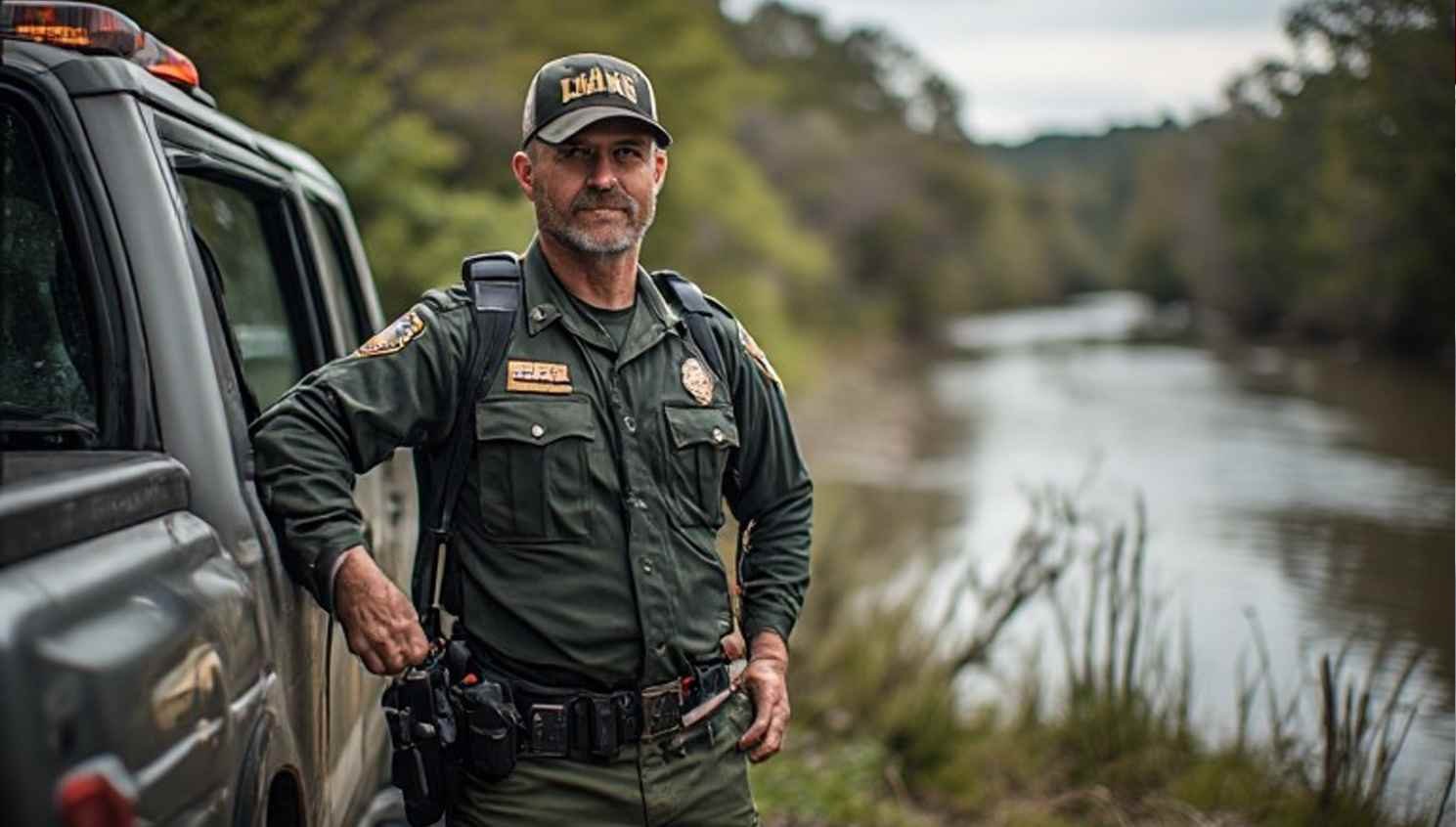
Arkansas Game Warden: Wildlife Officer Requirements, Salary & Jobs
If you’ve ever watched a Arkansas Game and Fish Commission (AGFC) wildlife officer pull a boat over on the Kings River or check a deer tag at a public hunting area, you’ve seen a job most outdoorsmen quietly envy — and one of the most competitive law enforcement gigs in the Natural State. Arkansas officially hires these officers under the public-facing title Game Warden, but on the AGFC’s own job postings they are formally classified as Wildlife Officers in the Enforcement Division.
To become one, you must be at least 21 years old, a U.S. citizen, hold a valid driver’s license, pass a 100-meter unaided swim, survive a physical fitness test, and graduate from 18 weeks of academy training plus 16 weeks of supervised field training at the H.C. “Red” Morris Enforcement Training Center in Mayflower. The most recent AGFC cadet posting listed a starting pay of $50,000 per year, with a structured promotion track that runs from Wildlife Officer through Wildlife Officer First Class, Corporal, and Sergeant, topping out above $80,000. Read on for the verified current AGFC requirements, salary schedule, academy details, application process, physical fitness standards, benefits, and how to report a wildlife violation.
What Is an Arkansas Game Warden Called?
Arkansas uses two related titles, and they appear interchangeably across the AGFC website. On the public recruitment page, AGFC calls the role “Game Warden” — a title that instantly maps to your mind. On official job postings, however, the Commission’s Human Resources team lists the position as “Wildlife Officer” or “Wildlife Officer-Cadet”, and the cadet class is run through the AGFC Enforcement Division.
So if you are finding “Arkansas game warden” or “Arkansas wildlife officer,” you’re looking for the same AGFC job.
What Does an Arkansas Wildlife Officer Do?
A day on patrol for an AGFC Wildlife Officer rarely looks like a typical shift. They are certified state law enforcement officers with statewide police authority, but their primary beat is the woods, the water, and the wildlife.
Core duties include:
- Enforcing hunting, fishing, trapping, and boating laws statewide.
- Checking hunting and fishing licenses, tags, permits, and stamps in the field.
- Investigating wildlife crimes, including poaching, illegal commercialization of game, and nuisance wildlife complaints.
- Conducting boating-under-the-influence enforcement and boating accident investigations on Arkansas’s 600,000+ acres of lakes and 9,700+ miles of rivers and streams.
- Performing search-and-rescue, swift-water rescue, and assisting other agencies during natural disasters and manhunts.
- Running the AGFC dive team, K-9 unit, and special response teams.
- Teaching hunter education and boater education classes.
- Presenting programs to schools, 4-H clubs, Boy Scouts, and civic organizations.
- Providing media interviews and public service announcements.
- Testifying in court as expert witnesses on wildlife law violations.
If you want to compare Arkansas’s season dates, our Arkansas hunting seasons guide breaks down what these officers enforce every fall.
Arkansas Game Warden Requirements
The AGFC publishes minimum standards on its recruitment page. Here’s the official breakdown.
Age
Must be at least 21 years of age to apply.
Education
A high school diploma or GED from a U.S. institution is the mandatory minimum. AGFC’s preferred qualification is a bachelor’s degree in criminal justice, criminology, natural science, wildlife management, or law enforcement — or four years of certified law enforcement or military police experience.
Citizenship
Must be a U.S. citizen.
Driver’s License
Must hold a valid driver’s license with a good driving record.
Residency
Arkansas does not require residency at the time of application, but hired officers must be willing to relocate anywhere in the state at the agency’s discretion. Duty stations are assigned based on agency need, not personal preference.
Work Experience
No prior law enforcement experience is required to apply. Cadet classes regularly include former state troopers, sheriffs, military police, firefighters, EMTs, and wildlife biologists.
Background Check
Must pass a comprehensive criminal background investigation — no felony convictions and no domestic abuse convictions.
Physical Requirements
Must pass an AGFC-administered physical fitness test plus an unaided swim of 100 meters, 5 minutes of treading water, and a brick dive/recovery in 12 feet of water.
Medical Requirements
Must pass a full medical physical examination and a psychological evaluation conducted by a licensed provider.
Vision and Hearing Requirements
Must pass separate vision and hearing examinations as part of the medical screening.
Firearm Requirements
Must demonstrate the ability to handle firearms and exercise self-defense, and pass semi-annual firearms qualification for the duration of career.
Arkansas Game Warden Salary
Salary figures below are pulled directly from AGFC job postings and the Commission’s published pay structure — not from third-party salary tables.
| Career Stage | Annual Pay | Source |
|---|---|---|
| Wildlife Officer-Cadet (academy) | $50,000 | AGFC posting #3417 (2024) |
| Wildlife Officer (after field training) | ~$40,535 starting | AGFC wildlife officer posting |
| Wildlife Officer (career maximum) | $71,432 | AGFC appropriations report |
| Wildlife Officer First Class (maximum) | $75,004 | AGFC appropriations report |
| Corporal (maximum) | $80,624 | AGFC appropriations report |
| Sergeant (maximum) | $83,571 | AGFC appropriations report |
Starting salary (cadet): $50,000 annually while training. Probationary pay: graduates are paid the entry Wildlife Officer rate (~$40,535) once commissioned. Experienced officer pay: Wildlife Officers can reach $71,432 with seniority; First Class officers top out at $75,004. Maximum salary: AGFC Sergeants in enforcement earn up to $83,571. Overtime and call-out pay are standard; officers are subject to 24-hour call on duty days. Uniform allowance: $150 per month.
How to Become an Arkansas Game Warden
The AGFC selection process follows a clear, documented pipeline:
- Verify eligibility — Confirm age (21+), citizenship, education, valid driver’s license, swimming ability, and clean record.
- Build your resume — Earn a bachelor’s degree in a relevant field or accumulate four years of law-enforcement/military police experience.
- Submit online application — Apply through the AGFC jobs portal when a cadet class is open. Paper applications are not accepted.
- Pass initial screening — HR confirms minimum qualifications and forwards qualified candidates.
- Take the physical fitness test — Includes an unaided swim and a fitness battery administered by AGFC training staff.
- Sit the interview — A panel interview with senior Enforcement Division leadership.
- Background investigation — Criminal, driving, financial, and personal-history checks.
- Medical, vision, hearing, and psychological exams — All four must be passed.
- Academy training — 18 weeks at the H.C. “Red” Morris Enforcement Training Center in Mayflower.
- Field training — 16 weeks riding with an AGFC Sergeant at your assigned duty station, then full commissioning.
Arkansas Game Warden Application Process
The AGFC does not accept applications continuously — it recruits one cadet class per year, typically with a late-summer/early-fall application window.
- Where to apply: jobs.agfc.com — all vacancies are posted on this portal.
- Application format: Online only; paper submissions are not accepted.
- Documents required: Completed application with work history, confirmation email acknowledgment, and any supporting credentials (transcripts, military DD-214, law-enforcement certifications).
- Recruitment cycles: Recent cadet classes opened around October 1 and closed by October 30 (or September 30 in earlier cycles).
- Testing and interview: Candidates who pass HR screening are scheduled for physical fitness testing, a panel interview, and the background investigation.
- Current status: As of mid-2026, applicants should check jobs.agfc.com directly for the next open Wildlife Officer-Cadet posting — vacancy timing varies year to year.
Arkansas Game Warden Physical Fitness Test
AGFC does not publish every cut score publicly, but the mandatory fitness events are listed on official job postings:
- Swim — 100 meters unaided (some older postings list 50 yards).
- Tread water — 5 minutes continuously.
- Brick dive/recovery — Retrieve a dive brick from a depth of 12 feet.
- Standard fitness battery — Push-ups, sit-ups, running, and agility components consistent with law enforcement fitness norms.
- Firearms handling — Demonstrate safe handling and pass a semi-annual firearms qualification after hire.
For full, event-by-event standards, contact AGFC Enforcement recruiting at 833-356-0847 before you apply.
Arkansas Game Warden Academy and Training
- Academy name: H.C. “Red” Morris Enforcement Training Center.
- Academy location: Mayflower, Arkansas (north-central Arkansas, just north of Little Rock).
- Cadet class duration: 18 weeks (some AGFC news releases describe a 33-week total pipeline when the post-academy field training is included).
- Field training: 16 weeks of supervised patrol with an AGFC Sergeant at the assigned duty station.
- Housing: Cadets are housed at the Mayflower Training Academy Sunday evening through Friday evening each week.
- Subjects taught (90+ topics across the curriculum):
- State and federal wildlife law
- Firearms training and tactical shooting
- Wildlife forensics and evidence collection
- Boating law enforcement and accident investigation
- Undercover and surveillance operations
- Self-defense and officer survival
- Swift-water rescue and search-and-rescue
- First aid and CPR
- Physical conditioning throughout
- Court testimony and report writing
Graduation requires passing all academic, firearms, and physical standards. New officers are then commissioned as AGFC Wildlife Officers and assigned to a county-level duty station.
Arkansas Game Warden Jobs
AGFC posts all state-level game warden and wildlife officer vacancies through one official channel:
- Official job portal: jobs.agfc.com
- Entry-level path: Wildlife Officer-Cadet (the annual cadet class).
- Lateral paths: Occasionally open postings include Wildlife Officer (commissioned, lateral entry) and Sergeants/Corporals for in-house promotions.
- Current openings: Vacancies are cyclical, not continuous — check the portal regularly for “Wildlife Officer,” “Wildlife Officer-Cadet,” or any county-specific enforcement listings. For 2026, applicants should monitor the portal starting late summer for the next annual recruitment cycle.
For hunting-club readers who want to plan around enforcement pressure, our Arkansas hunting seasons page maps the dates AGFC officers are busiest.
Arkansas Game Warden Benefits
AGFC’s compensation package is anchored to state of Arkansas employee benefits, plus enforcement-specific extras:
- Health insurance — State of Arkansas group health plan.
- Retirement — APERS (Arkansas Public Employees Retirement System) participation; state pension with law enforcement service credit.
- Paid leave — Sick leave and annual leave per state policy.
- Holidays — State holidays, with rotating scheduled days off on weekdays.
- Uniforms and equipment — $150/month uniform allowance, duty firearm, body armor, patrol vehicle, and radio issued.
- Take-home patrol vehicle — Common for field-deployed Wildlife Officers.
- Education benefits — State tuition reimbursement programs may apply.
- Specialty pay — K-9 handlers, dive team members, and special response team members often receive additional stipends.
- Overtime and call-out compensation — Standard for 24-hour call duty.
What Laws Do Arkansas Game Wardens Enforce?
AGFC Wildlife Officers enforce the Arkansas Code Title 1 (Game, Fish, and Wildlife) plus associated AGFC regulations. The most commonly enforced categories:
- Hunting violations — illegal taking of game, hunting out of season, exceeding bag limits, hunting without a license.
- Fishing violations — creel limits, license checks, illegal methods (e.g., gigging during closed hours).
- Trapping — illegal sets, untagged traps, closed-season trapping.
- License, tag, and permit violations.
- Boating laws — BUI (boating under the influence), PFD violations, registration, accident reporting.
- Wildlife possession — illegal commercialization, sale of wild game, captive wildlife permits.
- Protected species — Alligator gar paddlefish, bald eagle, migratory bird, and endangered species protections.
- Littering on AGFC-managed lands and waters.
How to Find an Arkansas Game Warden
AGFC publishes a public regional contact directory by county, which is the only official and current place to look up your local officer.
- Enforcement Division Headquarters: 2 Natural Resources Drive, Little Rock, AR 72205 — 833-318-0590.
- Official directory: agfc.com/enforcement/contact-your-local-game-warden — searchable by county and region.
Regional offices include Springdale, Fort Smith, Hot Springs, Perrytown, Calico Rock, Mayflower, Camden, Batesville, Jonesboro, Lonoke, Monticello, and Brinkley — covering every county in the state.
How to Report a Hunting or Wildlife Violation
If you witness a poaching incident, illegal sale of wildlife, or a fishing/boating violation in progress, do not engage the suspect. Capture license-plate and location details safely, then report it through the official channels below.
| Method | Contact | When to Use |
|---|---|---|
| AGFC Tip Line (24/7) | 833-356-0847 | Active or recent wildlife/fishing/boating violations |
| Enforcement Division Headquarters | 2 Natural Resources Drive, Little Rock, AR 72205 — 833-318-0590 | Non-emergency reports and follow-ups |
| In-person | Any of the 13 regional offices listed above | Documentation, photos, evidence handoff |
| Local county office | Use the county directory | Same-day officer contact |
Arkansas does not brand its tip line as “Operation Game Thief” the way some other states do — the AGFC central tip line at 833-356-0847 is the official reporting channel for hunting, fishing, and boating crimes.
Arkansas Game Warden vs. Police Officer
AGFC Wildlife Officers are state law enforcement officers with full police authority under Arkansas Code 12-9-106 — they can arrest, serve warrants, and carry firearms statewide. The difference is mission focus:
- Wildlife Officers spend the majority of their time in rural counties, on waterways, and on AGFC-managed lands, enforcing fish and wildlife law plus boating safety and assisting other agencies during disasters and manhunts.
- Municipal police and county sheriffs focus on general criminal enforcement in cities and unincorporated areas.
Wildlife Officers are not restricted to game law — they’re certified peace officers who can and do enforce general criminal statutes, conduct search-and-rescue, assist with fugitive apprehension, and back up other agencies in emergencies.
Frequently Asked Questions
What is a game warden called in Arkansas?
Arkansas uses the public-facing title Game Warden and the official HR title Wildlife Officer. Both refer to the AGFC Enforcement Division.
How much does an Arkansas game warden make?
Cadets start at $50,000 per year, with full-time Wildlife Officers starting around $40,535 and existing on a scale that reaches $71,432 as Wildlife Officer, $75,004 as Wildlife Officer First Class, $80,624 as Corporal, and $83,571 as Sergeant.
How do I become a game warden in Arkansas?
Apply through jobs.agfc.com during the annual recruitment window, pass the physical fitness, swim, medical, psychological, vision, hearing, and background checks, then complete 18 weeks of academy at Mayflower and 16 weeks of field training.
What are the Arkansas game warden age requirements?
You must be at least 21 years old at the time of application.
What degree do you need to become a game warden in Arkansas?
A high school diploma or GED is required. A bachelor’s degree in criminal justice, criminology, wildlife management, or natural science is strongly preferred, or you can substitute four years of law-enforcement or military police experience.
Is there a physical test?
Yes. AGFC administers a physical fitness test, a 100-meter unaided swim, 5 minutes of treading water, and a brick dive/recovery in 12 feet of water.
Where do Arkansas game wardens work?
AGFC Wildlife Officers are assigned to county-level duty stations across all 75 Arkansas counties, with regional offices in Springdale, Fort Smith, Hot Springs, Calico Rock, Mayflower, Camden, Batesville, Jonesboro, Lonoke, Monticello, Brinkley, Little Rock, Perrytown, and Pine Bluff.
How do I contact an Arkansas game warden?
Use the official AGFC county directory or call Enforcement Division Headquarters at 833-318-0590.
Can a game warden arrest someone?
Yes. AGFC game wardens are certified state law enforcement officers with statewide authority to enforce Arkansas Code, fish and wildlife regulations, and boating law.
What laws do game wardens enforce?
They enforce Arkansas hunting, fishing, trapping, wildlife, boating, and littering laws under Title 1 of the Arkansas Code, plus related AGFC regulations on licenses, tags, and permits.
How do I contact and report a game warden in Arkansas?
For non-emergencies, use the official AGFC county directory at agfc.com/enforcement/contact-your-local-game-warden or call 833-318-0590. For active wildlife, fishing, or boating violations, dial the AGFC tip line at 833-356-0847 and report the time, location, vehicle, and offense.