
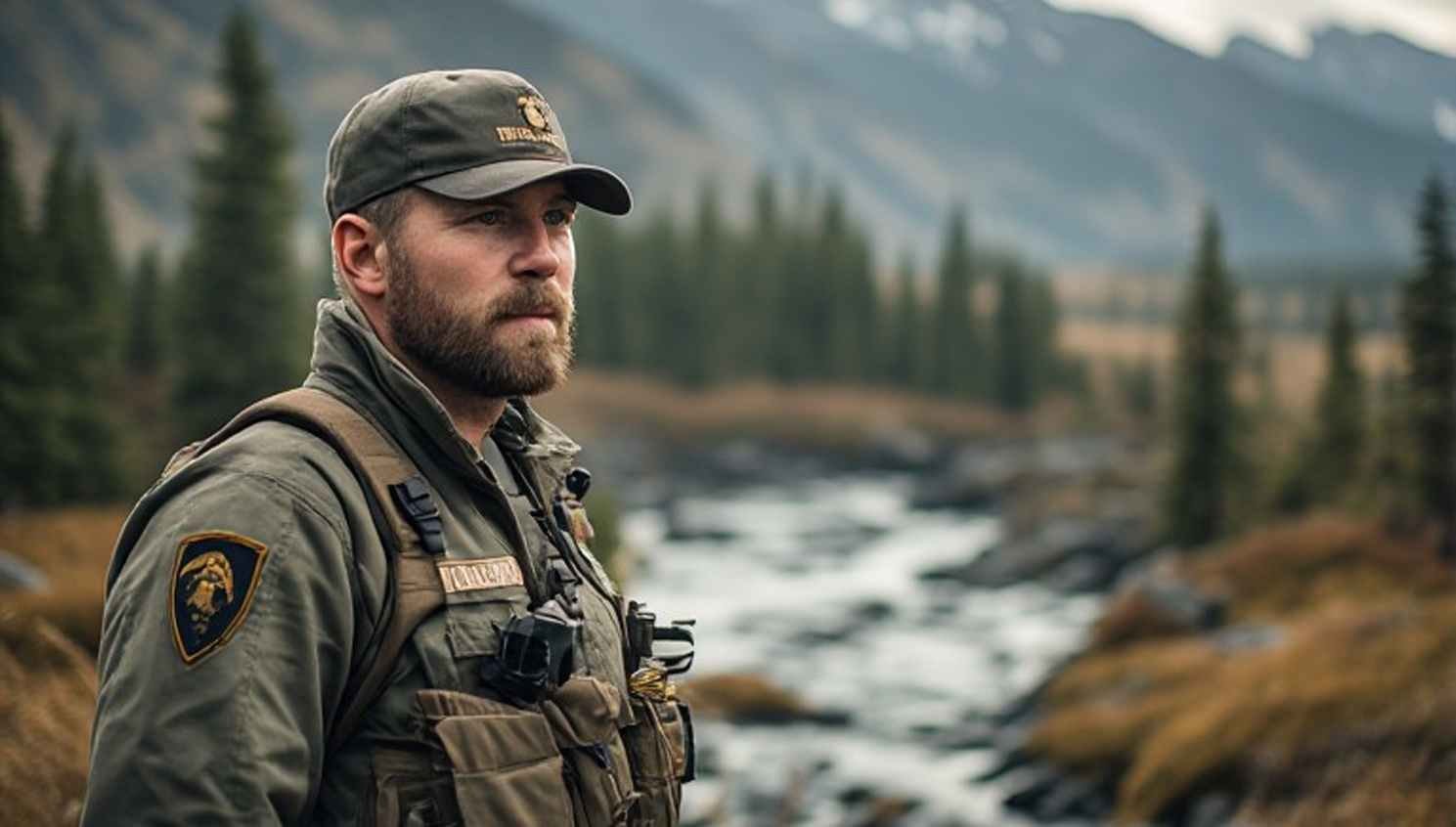
Alaska Game Warden: Wildlife Trooper Requirements, Salary & Jobs
If you want to become a game warden in Alaska, the first thing to know is that the state uses the title Alaska Wildlife Trooper. These officers enforce hunting, fishing, trapping, boating, and wildlife laws statewide, and they are part of the Alaska Department of Public Safety. For most applicants, the key takeaways are straightforward: minimum age 21 by academy start, high school diploma or GED, valid driver’s license, U.S. citizenship or U.S. national status, a paid academy in Sitka, and applications that stay open year-round. Alaska also promotes a high first-year earnings potential, with recruitment materials highlighting an average first-year salary around $126,000 depending on assignment and premium pay.
What Is a Alaska Game Warden Called?
In Alaska, a “game warden” is officially called an Alaska Wildlife Trooper. That distinction matters for readers because people look for “game warden,” but Alaska’s agency, recruiting pages, and public-safety materials use Wildlife Trooper as the formal title. If you want the Alaska-specific career path, you should optimize for both terms, but always explain that Wildlife Trooper is the official state title.
What Does a Wildlife Trooper Do?
Alaska Wildlife Troopers handle far more than just poaching complaints. Their mission includes enforcing hunting laws, fishing laws, trapping regulations, boating safety rules, habitat protections, guide and transporter rules, residency investigations, and commercial fisheries laws. They also conduct patrols, investigations, search-and-rescue operations, vessel enforcement, and court-related casework, especially in rural and coastal Alaska where public-safety responsibilities can overlap with resource enforcement. For readers already following Alaska hunting seasons or broader fishing articles, this is the enforcement side of the same regulations hunters and anglers have to follow in the field.
Alaska Game Warden Requirements
Alaska’s current recruiting materials are more useful than many third-party roundups because they separate minimum eligibility from lateral-hire advantages and make clear that you do not need prior law enforcement experience to apply as a recruit.
Minimum Age
You can apply at 20, but you must be 21 by the start of the academy. Alaska does not publish a maximum age cap in its FAQ.
Education Requirements
The minimum education requirement is a high school diploma or GED. A bachelor’s degree is not required, but Alaska currently offers a 3.75% education incentive pay increase for troopers with a bachelor’s degree.
Citizenship Requirements
Applicants must be U.S. citizens or U.S. nationals, and recent job bulletins also frame this as U.S. citizenship in the minimum qualifications.
Driver’s License Requirements
You must hold a valid driver’s license and meet Alaska’s background and driving-history standards.
Residency Requirements
You do not have to be an Alaska resident to apply.
Work Experience
No prior law enforcement experience is required for recruit applicants. For lateral entry, Alaska looks for an acceptable law-enforcement academy, active civilian police certification, and at least one year of full-time patrol experience.
Background Check
Expect a thorough background investigation. Public materials flag disqualifiers that can include felony history, domestic violence convictions, recent criminal conduct, serious professional misconduct, recent marijuana use, and recent disqualification from the same job class. Recent official bulletins say qualified applicants may be routed into the Guardian Alliance Technologies background portal after applying.
Physical Requirements
Alaska publishes a clear pre-employment physical fitness test: 25 push-ups, 27 sit-ups in one minute, and a 1.5-mile run in 15:12 or faster.
Medical Requirements
Alaska’s public hiring materials make clear that candidates should expect employment screening beyond the initial fitness test, and official bulletins reference the broader selection process under Alaska police-officer standards. The state does not publicly post detailed medical thresholds in the same way it posts the PFT standards, so applicants should expect formal medical review later in the process.
Vision and Hearing Requirements
Alaska’s public-facing Wildlife Trooper recruitment pages do not publish a standalone vision or hearing chart the way some agencies do. Those issues are generally handled in later medical screening rather than in the initial recruiting summary.
Firearm Requirements
There is no separate published pre-hire “firearm qualification” requirement for applicants on the main recruitment pages. Firearms proficiency is instead built into academy training.
Alaska Game Warden Salary
This is one of the most valuable parts of the topic, and it is also where older SERP pages fall behind. Alaska’s current recruitment site publishes much stronger and more current pay figures than the old 2019-era salary tables still floating around online.
Starting Salary
Current published recruit pay is $46.81 per hour ($97,364.80 annually).
Academy / Cadet Pay
The academy is paid, so recruits are earning while attending training rather than paying tuition out of pocket.
Recruit Pay With a Bachelor’s Degree
Applicants entering as recruits with a bachelor’s degree or higher are listed at $48.57 per hour ($101,025.60 annually).
Experienced / Lateral Officer Pay
For certified lateral hires with qualifying experience, Alaska publishes the following base rates:
| Experience | Hourly Pay | Annual Pay |
|---|---|---|
| 1 year | $50.39 | $104,811 |
| 2 years | $52.28 | $108,742 |
| 3 years | $54.24 | $112,819 |
| 4 years | $56.27 | $117,041 |
| 5 years | $58.38 | $124,430 |
| 6+ years | $60.57 | $125,985 |
Maximum Salary
The current published top lateral base rate is $125,985 annually, before any education incentive and before assignment-based earning factors.
Overtime, Premium Pay, and Differentials
Alaska’s recruitment materials specifically note that published figures factor in premium pay, shift differentials, and standby pay, and that compensation varies by geographic assignment. That is one reason Alaska can advertise an average first-year salary around $126,000 for Wildlife Troopers.
Bonuses and Moving Assistance
Alaska promotes up to $10,000 for moving expenses, and the FAQ says hired applicants may be reimbursed after graduation and relocation to Alaska.
Retirement
Recruitment materials promote a 22.5% retirement match, while the FAQ explains the department uses a defined-contribution structure with multiple accounts and state contributions in the Tier IV system.
How to Become a Alaska Game Warden
The Alaska path is more specific than the generic “become a game warden” advice you see on national sites. In practical terms, the process looks like this:
Step 1: Confirm you meet Alaska’s minimum requirements for age, education, citizenship, background, and driving history.
Step 2: Strengthen your profile with fitness preparation, clean employment references, and—if you want the pay bump—a bachelor’s degree.
Step 3: Apply through the official Alaska Wildlife Trooper recruiting page or the state’s active job bulletin when a recruit class is posted.
Step 4: Complete the initial application and respond quickly to follow-up instructions.
Step 5: Pass the physical fitness test.
Step 6: Complete background-investigation steps and document submission.
Step 7: Travel for Alaska-based testing when required.
Step 8: Finish all remaining employment screenings.
Step 9: Attend the paid residential academy in Sitka.
Step 10: Complete field training, then move into full assignment and probationary service.
Alaska Game Warden Application Process
Alaska says applications are open year-round, but actual academy hiring is still tied to recruitment cycles. The FAQ explains that DPS typically runs two academies per year, one in spring and one in fall, and that application periods may open 6 to 12 months before the academy start. Current and recent job bulletins instruct qualified applicants to watch for a background-portal email within five business days of submitting the application and to upload required documents within the stated deadline. Applicants should be ready for transcripts or GED proof, identification documents, employment history, military records if applicable, and any other materials requested during background review. One especially important Alaska-specific update: the current FAQ says DPS does not have a written test, which contradicts some older third-party pages still ranking for this keyword.
Alaska Game Warden Physical Fitness Test
Alaska publishes one of the clearer physical test standards on this topic. Applicants must complete 25 push-ups, 27 sit-ups in one minute, and a 1.5-mile run in 15:12 or less. The site also explains how each event is administered, including push-up form, sit-up mechanics, and treadmill rules for the run. Alaska does not publish a separate public swimming test, obstacle course, or age/gender adjustment chart on the Wildlife Trooper recruiting pages, so you should not invent one for this article.
Alaska Game Warden Academy and Training
Alaska trains Wildlife Troopers through the same law-enforcement academy used for Alaska State Troopers. The academy is located in Sitka, runs as a paid residential paramilitary program, and the recruitment site lists it as a 17-week course, while the Wildlife Trooper page describes it more broadly as about four months. Recruits live in dorm-style housing, receive meals, complete daily physical training, and train with handguns, shotguns, and patrol rifles. After graduation, Wildlife Troopers complete the AST Field Training and Evaluation Program in their assigned community and then move into additional wildlife- and fisheries-specific training tied to the actual AWT mission.
Alaska Game Warden Jobs
If you are targeting Alaska game warden jobs, do not rely on static third-party “jobs” pages. Alaska vacancies are tied to the state’s actual recruitment cycle and are best tracked through official DPS recruiting materials and active state job bulletins. Alaska says it is constantly hiring State Troopers and Wildlife Troopers, applications stay open year-round, and most job-specific details appear either on the recruitment site or in the live GovernmentJobs / Workplace Alaska posting for the next academy class. Entry-level applicants should look for recruit openings, while experienced officers may qualify for lateral pay and placement.
Alaska Game Warden Benefits
Alaska’s official materials highlight several benefits that matter to applicants comparing law-enforcement careers. The academy is paid, and the state emphasizes premium pay, shift differentials, standby pay, geographic pay variation, retirement contributions, and an education incentive for bachelor’s-degree holders. Alaska also advertises up to $10,000 in moving-expense reimbursement for hires relocating after academy graduation, and the state says it pays career-related moving costs for troopers and their families when duty assignments change. The most current public Wildlife Trooper materials place far more emphasis on retirement, relocation, and compensation structure than on a line-by-line public summary of health insurance or leave, so avoid adding benefit details the state has not clearly published on the recruiting pages.
What Laws Do Alaska Game Wardens Enforce?
Alaska Wildlife Troopers enforce the laws that govern hunting, fishing, trapping, boating, guide and transporter activity, commercial fisheries, habitat protection, protected species, illegal harvest, unlawful sale of wild stocks, waste of game, residency violations, and license-related offenses. In Alaska, that means they are not just checking tags in the field; they may also investigate illegal guiding, unlawful commercial activity, sport-fish guiding violations, watershed damage, and non-compliance with environmental permits. For readers researching regulations before a trip, this is exactly why season dates, bag limits, tagging rules, and method restrictions matter.
How to Find a Alaska Game Warden
Alaska does not organize public “game warden lookup” information the same way some county-based states do. Instead, the Department of Public Safety publishes contact information through its statewide contact page, where readers can find the Alaska Wildlife Troopers Director’s Office, Northern and Southern detachment information, and broader Alaska State Trooper office contacts. In practical terms, the best advice is to contact the nearest DPS or AST office rather than searching for an individual officer’s personal contact information on unofficial sites.
How to Report a Hunting or Wildlife Violation
Alaska gives the public a direct and state-specific reporting method through the Wildlife Safeguard reporting system. For violations in progress, the state says to call 1-800-478-3377. For past violations, the public can use the AK Tips app and related tip-submission tools. This applies to reports involving poaching, illegal fishing, illegal trapping, and other wildlife-law violations. Source
Alaska Game Warden vs. Police Officer
In many states, game wardens are conservation officers with narrower jurisdiction than a city police officer or sheriff’s deputy. Alaska is different. Alaska Wildlife Troopers are part of the broader Alaska trooper system, attend the same academy, and may perform broader law-enforcement and public-safety duties, especially in remote parts of the state. Their day-to-day specialty is still wildlife, fisheries, boating, and resource protection, but Alaska’s structure gives them a closer relationship to mainstream statewide policing than the typical “park ranger” stereotype suggests.
Frequently Asked Questions
What is a game warden called in Alaska?
In Alaska, the official title is Alaska Wildlife Trooper.
How much does an Alaska game warden make?
Current recruit pay starts at $97,364.80 per year, with higher entry pay for bachelor’s-degree holders and higher rates for lateral officers. Recruitment materials also promote an average first-year salary around $126,000 depending on assignment and premium pay.
How do I become a game warden in Alaska?
Apply through Alaska DPS recruitment, meet minimum eligibility standards, pass the physical fitness test, clear the background process, and complete the paid academy plus field training.
What are the Alaska game warden age requirements?
You must be 21 by the start of the academy.
Do you need a degree to become a Wildlife Trooper in Alaska?
No. A high school diploma or GED is the minimum. A bachelor’s degree can improve competitiveness and currently adds an education incentive pay increase.
Is there a physical fitness test?
Yes. Alaska currently publishes 25 push-ups, 27 sit-ups in one minute, and a 1.5-mile run in 15:12 or less.
Is there a written test?
According to Alaska’s current recruitment FAQ, no—which is one reason older pages on this topic are now outdated.
Where do Alaska Wildlife Troopers work?
Statewide. They may work in training posts such as Fairbanks, Palmer, or Soldotna, and later move into other rural, coastal, or specialized assignments.
How do I contact an Alaska game warden?
Use the official DPS contact page to reach the Wildlife Troopers Director’s Office, a detachment office, or the nearest Alaska State Trooper office.
Can Alaska Wildlife Troopers arrest someone?
Yes. They are sworn law-enforcement officers within Alaska’s statewide trooper structure, not just civilian wildlife inspectors.
Alaska Violation-Reporting
To report a suspected Alaska hunting, fishing, trapping, boating, guide, or other wildlife-law violation, contact the Alaska Wildlife Troopers (AWT) as soon as it is safe to do so. For a violation occurring now or requiring a prompt field response, call the statewide Fish and Wildlife Safeguard hotline at 1-800-478-3377; for a life-threatening emergency, call 911. For a past incident, submit a report through the AKTips app, which is intended for after-the-fact reports and anonymous tips.
Give officers the most useful facts you can safely obtain: the precise location, date and time, what happened, species and number involved, descriptions of people or vessels/vehicles, license or tail numbers, direction of travel, and any lawful photos, video, or witness information. Do not confront, follow, trespass on property, or otherwise endanger yourself to gather evidence. You can also contact the nearest Alaska Wildlife Trooper office directly; ADF&G notes that wildlife-law enforcement is primarily the responsibility of AWT rather than the Fish and Game department.