
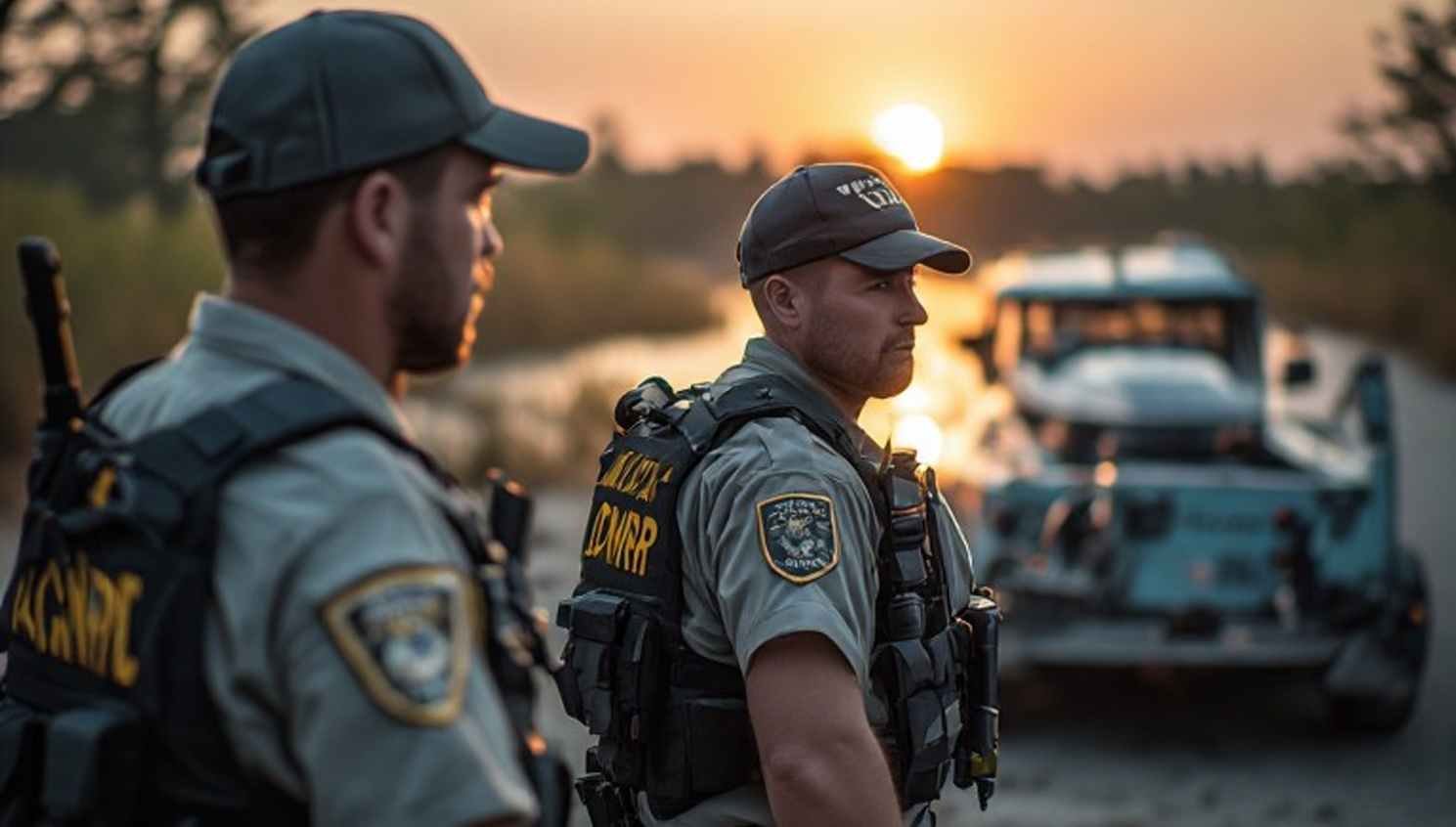
Alabama Game Warden: Conservation Enforcement Officer Requirements, Salary & Jobs
An Alabama game warden is officially called a Conservation Enforcement Officer (CEO) and works for the Alabama Department of Conservation and Natural Resources (ADCNR), Wildlife and Freshwater Fisheries Division. There are roughly 160 dedicated CEOs statewide, organized into five law enforcement districts that cover all 67 Alabama counties. To become one, you must be at least 21 years old, a U.S. citizen, hold a valid Alabama driver’s license, hold a high school diploma or GED, complete a 520-hour POST academy, pass a physical readiness test (including a swim component), and be cleared through medical, psychological, and background screening. Starting pay as a Conservation Enforcement Officer Trainee runs $36,657–$55,615, with senior district officers earning up to $86,803. Violations can be reported 24/7 through Operation Game Watch at 1-800-272-GAME (4263) or by texting GAMEWATCH to 847411.
What Is an Alabama Game Warden Called?
Alabamians commonly say “game warden,” but the official title used by ADCNR, the State Personnel Department, and the agency pay plan is Conservation Enforcement Officer. If you search the State of Alabama job board, the relevant job class is Conservation Enforcement Officer (Class Code 70798), with sub-classes for Trainee, Senior, and District levels. ADCNR’s own recruiting pages, district office signage, and officer identification use “Conservation Enforcement Officer” as the legal title — not “Wildlife Officer,” “Game Warden,” or “Conservation Officer.” Inside the agency, the position sits within the Enforcement Section of the Wildlife and Freshwater Fisheries (WFF) Division at ADCNR headquarters, 64 N. Union St., Montgomery, AL 36130, under Section Chief Matt Weathers. Below is the full hierarchy of titles used in Alabama:
- Conservation Enforcement Officer, Trainee (entry-level, post-swearing-in)
- Conservation Enforcement Officer (after POST certification and field training)
- Conservation Enforcement Officer, Senior
- District Conservation Enforcement Officer – Wildlife and Freshwater Fisheries
To connect your hunt planning with the officers enforcing the rules, see our Alabama hunting season dates and bag limits guide.
What Does an Alabama Conservation Enforcement Officer Do?
A Conservation Enforcement Officer in Alabama is a sworn state law enforcement officer who specializes in wildlife, fisheries, and boating law, but the role stretches well beyond writing tickets. Per ADCNR’s own Enforcement Section description, day-to-day duties include:
- Hunting-law enforcement — checking licenses, checking bag limits, enforcing season dates, inspecting wildlife
- Fishing-law enforcement — creel limits, license checks, gear restrictions on rivers, reservoirs, and the Gulf coast
- Boating and recreational-water enforcement — boating-under-the-influence (BUI), safety equipment, accident investigation
- Wildlife protection — including alligator, black bear, turkey, and other species of greatest conservation need
- Poaching investigations — both reactive (after a tip) and proactive (night patrols, surveillance)
- License and permit violations — including commercial licenses, lifetime licenses, and disabled-veteran privileges
- Specialty area patrols — public hunting lands, Wildlife Management Areas (WMAs), state parks lakes
- Search and rescue — ADCNR officers are routinely dispatched to assist local agencies on land-based searches
- Court testimony — case preparation, depositions, and trial appearance
- Conservation education and outreach — hunter education classes, youth events, casting clinics, Boat Smart programs
- Public safety — first response on remote rivers, lakes, and WMAs where local law enforcement is unavailable
The Enforcement Section frames the job as an “exciting and rewarding outdoor job that demands strength, character, and a high degree of self-motivation,” with the daily freedom of a 40-hour work week that few other law enforcement careers offer.
Alabama Game Warden Requirements
ADCNR requires every Conservation Enforcement Officer applicant to meet a strict set of minimum qualifications. Below is the full list, broken down by category.
Age
You must be at least 21 years old at the time of application. Federal counterparts with the U.S. Fish & Wildlife Service cap applicants at 36, but Alabama does not publish an upper age limit so long as the applicant can successfully complete the physical readiness test.
Education Requirements
A high school diploma or GED is the legal minimum, and you must also qualify to be certified as a peace officer by the Alabama Peace Officers Standards and Training Commission (APOSTC). In practice, ADCNR prefers candidates with a bachelor’s degree in criminal justice, wildlife management, law enforcement, land management, or crime scene investigation. Six months of experience in a conservation-related program (hunting, fishing, boating and water safety, parks, or seafood) is also listed as a preferred qualification.
Citizenship Requirements
You must present proof of U.S. citizenship or naturalization. New hires must also produce original documents that establish identity and employment eligibility under federal law (Form I-9).
Driver’s License Requirements
You must hold a valid Alabama driver’s license by the time of employment (out-of-state licenses must be converted to Alabama within 30 days of hire).
Residency Requirements
Alabama residency is not strictly required at the time of application, but you must be able to live and work anywhere in the state, and you will be assigned a residence in your district once hired.
Work Experience
Six months of experience in a conservation-related program is preferred but not mandatory for trainee-level applicants. Prior wildlife, fisheries, parks, boating-safety, military police, or other law enforcement experience gives candidates a competitive edge and can accelerate you up the starting salary range (Trainee: $36,657–$55,615).
Background Check
Every applicant must pass a comprehensive background investigation before promotion out of trainee status. ADCNR disqualifies candidates who have:
- A conviction for any felony or Class A misdemeanor at any time
- A conviction for any Class B misdemeanor within the past 10 years, including DUI/OUI, family violence, or “boating under the influence”
- A current probation, parole, or community supervision order
- Any current illegal drug use
Former military members must have a discharge “Under Honorable Conditions.”
Physical Requirements
Conservation Enforcement Officer candidates must successfully complete a physical readiness test that includes a swim component. ADCNR echoes this APOSTC standard on its recruiting page but does not publish the cutoff scores publicly; candidates should expect pat-down search simulations, obstacle courses, and water confidence checks in addition to the standard POST fitness battery.
Medical Requirements
You will be examined by a licensed physician who must sign an affidavit that you are physically able to perform the duties of a CEO. The exam covers cardiovascular health, respiratory function, and general fitness for duty in remote, sometimes high-heat, sometimes high-humidity field conditions.
Vision and Hearing Requirements
- Vision: Binocular vision (with or without corrective lenses), at least 140° of continuous peripheral vision, functional night vision, and no red-green colorblindness.
- Hearing: Must meet APOSTC minimum hearing standards with or without hearing aids, including long-distance, directional, and conversational hearing.
Firearm Requirements
You do not need to own a firearm to apply, but you must be willing and able to qualify with a duty sidearm, shotgun, and patrol rifle. Firearms safety and qualification is a major component of the 520-hour POST academy and is retested annually throughout your career.
Alabama Game Warden Salary
The State of Alabama Personnel Department publishes the official Conservation Enforcement Officer pay plan and the corresponding job posting. The four published pay grades for WFF Enforcement positions are shown below.
| Rank | Annual Salary Range |
|---|---|
| Conservation Enforcement Officer, Trainee | $36,657 – $55,615 |
| Conservation Enforcement Officer | $40,468 – $61,303 |
| Conservation Enforcement Officer, Senior | $42,496 – $64,406 |
| District Conservation Enforcement Officer | $51,621 – $86,803 |
Sources: ADCNR job announcement and State Personnel Department job class (Class Code 70798).
Starting Salary (Cadet / Trainee Pay)
Trainees are paid at the Low to High range of $36,657–$55,615, depending on prior experience and education. Top-of-range starting pay is typical for applicants who already hold a four-year degree or equivalent military/law enforcement experience.
Experienced Officer Pay
After POST certification (typically several months into the 2.5-year training pipeline) you promote to Conservation Enforcement Officer at the $40,468–$61,303 range. Reaching the Senior level adds $42,496–$64,406, and District officers — who supervise a multi-county region — can earn up to $86,803 annually.
Overtime, Specialty Pay, and Bump-ups
The pay plan is step-based, with 26+ published steps that grow with longevity. Alabama Conservation Enforcement Officers are also sworn peace officers, which means overtime, holiday pay, and detail assignments (boat-race patrol, BUI checkpoints, special hunts) are paid at standard law-enforcement rates.
Bonuses
ADCNR does not advertise a signing bonus, but officers can leverage the Operation GameWatch reward program internally (tips leading to arrests) and may be eligible for uniform allowances, specialty-team pay, and shift differentials. Federal game warden positions (U.S. Fish & Wildlife Service) are a separate track and pay on the federal GL scale.
How to Become an Alabama Game Warden
ADCNR’s hiring pipeline is unusually long because every officer needs to be POST-certified AND meet Conservation Enforcement Officer field standards before they go solo. Expect two and a half years total from swearing-in to full CEO status.
Step 1 — Confirm eligibility. Cross-check the Requirements section above. You must be 21+, a U.S. citizen, an Alabama-licensed driver, and clean on the background standards.
Step 2 — Prepare education and experience. A bachelor’s degree in wildlife management, criminal justice, fisheries, or a closely related field is preferred. Six months of conservation-related experience (paid or volunteer) strengthens your application.
Step 3 — Submit application on the State Personnel portal. Apply through the State of Alabama Personnel Department under the “Continuous Announcements” heading for Conservation Enforcement Officer. Submit the state questionnaire at the same time.
Step 4 — Pass written screening. Candidates complete a civil service multiple-choice exam covering reading comprehension, written communication, and problem-solving. The score is used to build a hiring pool.
Step 5 — Physical readiness testing. All applicants must pass the APOSTC physical fitness battery plus an agency swim component. Plan to train for push-ups, sit-ups, the agility course, and a timed water swim.
Step 6 — Panel interview. A recruiter will schedule an in-person panel interview with senior Conservation Enforcement Officers, frequently at district offices or ADCNR headquarters in Montgomery.
Step 7 — Background investigation. ADCNR runs a comprehensive background check covering criminal history, driving record, employment history, references, and moral character.
Step 8 — Medical and psychological evaluation. You must pass both a licensed-physician medical exam and a licensed-psychologist psychological evaluation before an APOSTC peace officer license is issued.
Step 9 — POST academy + field training. Cadets complete the 520-hour APOSTC basic training academy at an Alabama POST-certified training site, then transition to a structured field training program with an experienced CEO.
Step 10 — Appointment and probation. You are promoted to full Conservation Enforcement Officer after roughly two and a half years of combined academy, ride-along, and solo patrol phases.
Alabama Game Warden Application Process
ADCNR lists Conservation Enforcement Officer as a Continuous Announcement on the State Personnel Department site. That means there is no single fixed recruitment window — applications are accepted year-round, then tested, ranked, and placed into a hiring pool that district captains pull from as vacancies open.
To apply, create an account on the Alabama State Personnel Department portal and submit the Conservation Enforcement Officer job posting (Class Code 70798). You will also be asked to complete a state-supplied questionnaire that asks about your education, conservation experience, military service, and personal background. Qualified candidates are contacted by an ADCNR recruiter for the panel interview, background investigation, medical/psychological screening, and physical readiness battery, in that order.
Tip: even if the AJ posting currently shows “Jobs Mailing List” (the case as of this writing, meaning applications are temporarily paused), the Continuous Announcement resumes regularly, so subscribe for notifications and prepare your packet in advance rather than waiting for the next open posting.
Alabama Game Warden Physical Fitness Test
Alabama does not publish a separate “game warden physical fitness test” — it uses the APOSTC Entry-Level Physical Readiness Test plus an agency-specific swim component. According to the official Alabama Administrative Code (Chapter 650-X-4-.02) — see the full text at APOSTC Physical Agility Standards on Cornell Law — all Alabama peace officer cadets must pass:
- Push-ups: 22 push-ups in 60 seconds (APOSTC-approved form)
- Sit-ups: timed sit-up battery after a minimum 20-minute rest
- Agility/obstacle course: completed within 90 seconds
- Swim component: required for Conservation Enforcement Officer applicants, including water confidence and basic water rescue skills
Retesting on these standards is part of ongoing annual recertification for both new and veteran officers, not a one-time gate. Candidates should begin a structured workout program at least 8–12 weeks before testing, focusing on push-ups, sit-ups, running, and swimming endurance.
Alabama Game Warden Academy and Training
Every Alabama Conservation Enforcement Officer candidate must complete:
1. The APOSTC Basic Training Academy — 520 hours. This is the same entry-level academy completed by municipal, county, and state law enforcement officers. Coursework includes:
- Criminal, civil, and juvenile court procedures
- Traffic management and patrol best practices
- Firearms safety, qualification, and use-of-force
- Arrest, detention, and search-and-seizure
- Driving maneuvers and emergency-vehicle operation
- Self-defense and subject-control tactics
- Report writing and courtroom testimony
- Physical fitness conditioning throughout
2. Field Training Program — supervised ride-along. After POST certification, you are paired with an experienced Conservation Enforcement Officer in your assigned district. Field training covers actual patrol situations, case preparation, hunter contacts, BUI enforcement, and/or WMA management.
3. Probationary / Trainee phase — total 2.5 years. From swearing-in to full CEO status, new hires are formally titled Conservation Enforcement Officer, Trainee. Only when the field training officer signs off on your readiness do you promote to the full Conservation Enforcement Officer rank and gain independent patrol authority.
Alabama Game Warden Jobs
ADCNR workforce data shows roughly 160 Conservation Enforcement Officers protecting Alabama’s wildlife, fish, and boating public, with five district offices splitting the state’s 67 counties. Job opportunities are tracked on the State of Alabama Personnel Department job board under the Conservation Enforcement Officer (Class 70798) listing. Because it is a Continuous Announcement, applications are accepted whenever the posting is open; entry-level candidates should also consider applying for District-level and Senior openings when they appear, as those are occasionally filled by lateral transfers within ADCNR.
For hunters planning trips around hiring cycles, our Alabama hunting season calendar is the best way to align your schedule with when WMA patrols and Officer presence peak.
If you want to broaden your search, federal game warden positions with the U.S. Fish & Wildlife Service (Special Agents) are posted on USAJOBS.gov and follow a separate 21-36 age window plus nationwide-relocation requirement. Federal officers cover Alabama’s four national forests (Conecuh, Talladega, Tuskegee, William B. Bankhead) and assist state CEOs on migratory bird and federally protected species cases.
Alabama Game Warden Benefits
Conservation Enforcement Officers are full-time State of Alabama employees and receive the standard benefits package plus law-enforcement-specific enhancements:
- Health insurance through the Public Education Employees’ Health Insurance Plan (PEEHIP), administered by the Retirement Systems of Alabama. Single-coverage, family-coverage, and retiree-coverage options are available.
- Retirement through the Retirement Systems of Alabama (RSA) Employees’ Retirement System (ERS). With 25 years of creditable service, an officer can retire at any age and draw full benefits, using a retirement factor of approximately 2.0125% per year of service.
- Paid leave: sick leave, annual leave, and 12 paid state holidays per year.
- Uniforms and equipment: ADCNR-issued uniforms, body armor, duty firearm, patrol rifle, and patrol vehicle (typically a pickup or marked SUV, sometimes a boat or ATV for coastal / WMA districts).
- Take-home vehicle in many districts.
- Longevity bonus and step-based pay raises.
- State employee discounts and tuition assistance programs through the Alabama Community College System and selected four-year partners.
- Operation GameWatch awards: officers and tipsters can earn cash rewards of up to $2,500, funded by the Alabama Wildlife Foundation.
- Training ammunition and equipment allowance for personal skill development.
What Laws Do Alabama Game Wardens Enforce?
Alabama Conservation Enforcement Officers enforce the full body of wildlife, fisheries, boating, and recreational-water law under Titles 9 (Conservation and Natural Resources) and 33 (Navigation and Watercourses) of the Alabama Code. The official Outdoor Alabama wildlife-law portal lists the most commonly enforced categories as:
- Hunting violations: hunting out of season, exceeding bag limits, hunting at night, using spotlights, hunting from a public road, baiting, illegal use of game cameras, and trespassing on private lands
- Fishing violations: taking protected or out-of-season species, exceeding creel limits, illegal methods (snagging, gigging in closed waters, illegal netting), and license/permit fraud
- Trapping violations: unlawful trap types, closed-season trapping, failure to check traps, and protected furbearer take
- Wildlife violations: illegal possession of live wildlife, nongame-species take, possession of protected species (alligator, black bear, gopher tortoise, etc.), and unlawful sale of native wildlife
- Boating violations: BUI (boating under the influence), missing PFDs, reckless operation, no boating-safety certificate for under-40 operators, accident failure to render aid
- License / permit violations: hunting without a license, license fraud, falsifying harvest reports, antlerless-deer violations, lifetime-license misuse, fishing without the required freshwater or saltwater license
- Alligator and protected-species possession: one of the most heavily enforced categories in coastal Alabama
- Wildlife Management Area (WMA) violations: check-station noncompliance, quota-hunt fraud, and after-hours trespass
For hunters who want to confirm season dates, license requirements, and bag limits in one place, see our Alabama hunting seasons and regulations guide.
H2: How to Find an Alabama Game Warden
ADCNR publishes a complete Law Enforcement Contacts directory organized by district on its website (outdooralabama.com/contact-us/law-enforcement-contacts). The state is divided into five law enforcement districts, each run by a District Captain and covering roughly 13–14 counties:
| District | Counties | Captain | Office | Phone |
|---|---|---|---|---|
| I — Northwest | Blount, Colbert, Cullman, Fayette, Franklin, Lamar, Lauderdale, Lawrence, Limestone, Madison, Marion, Morgan, Walker, Winston | Wendell Fulks | 21453 Harris Station Rd, Tanner, AL 35671 | (256) 353-2634 |
| II — Northeast | Calhoun, Chambers, Cherokee, Clay, Cleburne, Coosa, DeKalb, Etowah, Jackson, Marshall, Randolph, St. Clair, Talladega, Tallapoosa | Kerry Bradford | 4101 Hwy 21 N, Jacksonville, AL 36265 | (256) 435-1642 |
| III — West Central | Autauga, Bibb, Chilton, Dallas, Greene, Hale, Jefferson, Lowndes, Perry, Pickens, Shelby, Sumter, Tuscaloosa | Joe Goddard | 8211 McFarland Blvd, Northport, AL 35476 | (205) 339-5716 |
| IV — Southeast | Barbour, Bullock, Coffee, Covington, Crenshaw, Dale, Elmore, Geneva, Henry, Houston, Lee, Macon, Montgomery, Pike, Russell | Grady Myers | 3520 Plaza Dr, Enterprise, AL 36330 | (334) 347-9467 |
| V — Southwest / Coastal | Baldwin, Butler, Choctaw, Clarke, Conecuh, Escambia, Marengo, Mobile, Monroe, Washington, Wilcox | Don Reaves | 30571 Five Rivers Blvd, Spanish Fort, AL 36527 | (251) 626-5474 |
To identify the officer assigned to your specific county, contact your District Captain’s office. For statewide issues, the Montgomery Headquarters is at 64 N. Union St., Suite 559, Montgomery, AL 36130, phone (334) 242-3467.
How to Report a Hunting or Wildlife Violation
Alabama runs Operation Game Watch, the state’s 24/7 anti-poaching hotline. Anyone with information on a fish, wildlife, or boating violation can report it confidentially in two ways:
- Call 1-800-272-GAME (4263) — 24 hours a day, 7 days a week
- Text “GAMEWATCH” to 847411 — short-code tip line for cell phones
Tips that lead to an arrest are eligible for cash rewards of $50 up to $2,500, funded by the Alabama Wildlife Foundation. When you call, try to provide as much of the following as possible:
- Suspect name and physical description
- Vehicle or boat description, including license-plate / boat-registration number
- Clothing description (camouflage, blaze orange, headlamp, etc.)
- Time and location of your observation
- The species targeted or method used (spotlighting at night, snagging, baiting, ATV on a WMA, etc.)
- Any pattern you’ve noticed — repeat offenders are high-priority targets
Poachers are considered armed and dangerous, and all information is treated as confidential. ADCNR explicitly notes that “the more information, the better” because tracking poachers is difficult, dangerous work.
Alabama Game Warden vs. Police Officer
Alabama Conservation Enforcement Officers are sworn state peace officers with full arrest authority, not wildlife-only “rangers,” so the comparison to municipal or county police is closer than you might expect.
What a CEO and a Police Officer share:
- Authority to enforce all state laws, make arrests, carry firearms, execute search warrants, and testify in court
- APOSTC certification through the same 520-hour basic academy
- Authority to detain for BUI/DUI on waterways and patrol public roadways
What a CEO does that a Police Officer typically does not:
- Primary jurisdiction over all hunting, fishing, trapping, and WMA violations across an assigned multi-county district — often the only officer actively patrolling remote forests and private-land perimeter at 2 a.m.
- Primary responsibility for boating safety enforcement, accident reporting, and waterway accident investigation (covering 3.2 million acres of inland water and 600+ miles of Gulf coastline)
- Lead role in poaching investigations that frequently cross county and even state lines
- Wildlife-human conflict response (nuisance alligators, injured eagles, bear calls, wildlife rehabilitation intake)
- Hunter education, Boater education, and youth outreach as a regular duty
What a Police Officer does that a CEO typically does not:
- Routine municipal calls for service (traffic, domestic disputes, burglaries)
- City-county patrol responsibility
- Full-time assignment to a single municipal jurisdiction
In practice, CEOs and local police deputize and cooperate regularly — particularly on BUI checkpoints, search-and-rescue, and after-hours wildlife calls.
Frequently Asked Questions
Are Alabama game wardens called Conservation Enforcement Officers?
Yes. “Game warden” is the popular term, but the legal, agency, and State Personnel Department title is Conservation Enforcement Officer (CEO). All ADCNR uniforms, badges, and correspondence use the CEO title.
How much does an Alabama game warden make?
ADCNR’s published pay scale runs $36,657 to $86,803, depending on rank. Conservation Enforcement Officer Trainees start between $36,657 and $55,615, full CEOs between $40,468 and $61,303, Senior CEOs between $42,496 and $64,406, and District CEOs up to $86,803.
How do you become a game warden in Alabama?
Meet the minimum requirements (age 21+, U.S. citizen, valid Alabama driver’s license, clean background), submit an application through the Alabama State Personnel portal (Class 70798), pass the written screening, physical fitness test (including swim), medical and psychological exams, and complete the 520-hour POST academy plus field training. Total time from swearing-in to full CEO: approximately 2.5 years.
What are the Alabama Conservation Enforcement Officer age requirements?
21 years old or older at the time of application. Alabama does not publish a maximum age.
What degree do you need to become a Conservation Enforcement Officer in Alabama?
A high school diploma or GED is the legal minimum. In practice, ADCNR strongly prefers a bachelor’s degree in wildlife management, fisheries, criminal justice, law enforcement, or land management.
Is there a physical fitness test to become an Alabama game warden?
Yes. Every applicant must complete the APOSTC entry-level physical agility test — including 22 push-ups in 60 seconds, a timed sit-up battery, and an obstacle course within 90 seconds — plus an agency-specific swim component.
Where do Alabama Conservation Enforcement Officers work?
CEOs are deployed across five WFF law enforcement districts that cover all 67 Alabama counties, with offices in Tanner, Jacksonville, Northport, Enterprise, and Spanish Fort. ADCNR headquarters is in Montgomery.
How do I contact an Alabama game warden?
For a specific county, call your district captain’s office. For anonymous poaching/wildlife-crime tips, dial 1-800-272-GAME (4263) or text GAMEWATCH to 847411, 24 hours a day, 7 days a week.
Can an Alabama conservation officer arrest you?
Yes. Conservation Enforcement Officers are sworn state peace officers with full arrest authority under Alabama law — including authority off-duty and across jurisdictional lines when in fresh pursuit.
What laws do Alabama game wardens enforce?
CEOs enforce Alabama’s hunting, fishing, trapping, wildlife, WMA, boating-under-the-influence, and recreational-water safety laws, primarily codified in Titles 9 and 33 of the Alabama Code and the Alabama Administrative Code chapters published on the ADCNR site.