
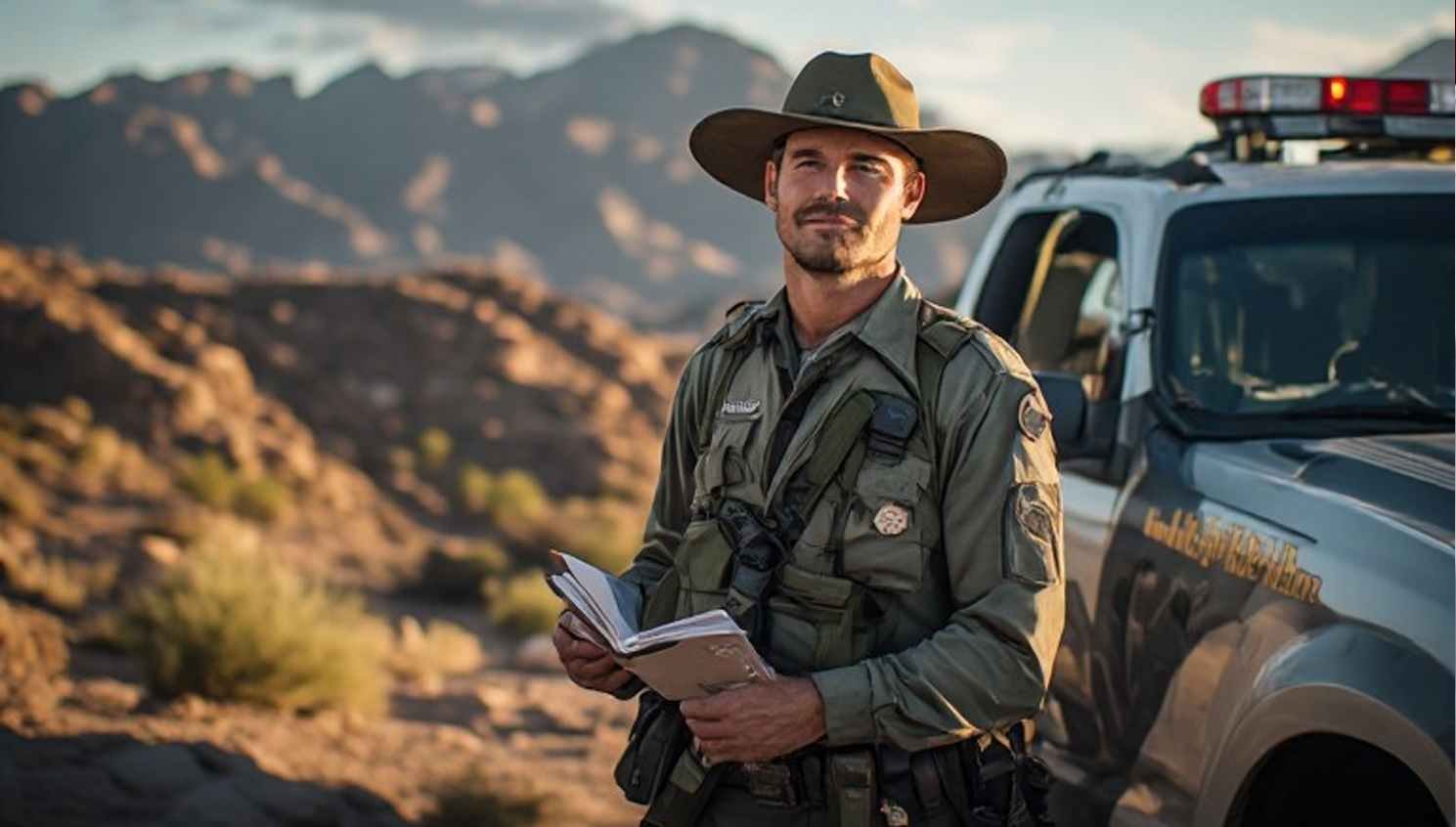
Arizona Game Warden: Wildlife Officer Requirements, Salary & Jobs
Arizona’s state-level game wardens are officially titled Wildlife Managers by the Arizona Game and Fish Department (AZGFD), they enforce hunting, fishing, boating and wildlife law across Arizona’s six regions, they must be at least 21 years old, hold a bachelor’s degree in wildlife science or a closely related field, and the official AZGFD starting salary listed for a Wildlife Manager I (Grade 21) is $56,701, with full state benefits and enrollment in the Public Safety Personnel Retirement System (PSPRS).
This guide walks you through exactly what an Arizona game warden (Wildlife Manager) does, how to qualify, how the hiring process works in real order, how the physical fitness test is scored, where applications are posted, and how Arizona hunters report violations through Operation Game Thief.
What Is an Arizona Game Warden Called?
Arizona’s agency is the Arizona Game and Fish Department (AZGFD) — not Texas Parks & Wildlife, and not a generic “TPWD” agency. Inside AZGFD, the sworn field officers most people call “Arizona game wardens” carry the official civil-service title Wildlife Manager. In popular usage and on AZGFD’s own recruiting pages, those officers are also referred to as game rangers or Arizona game wardens — the public-facing labels the public searches for.
Arizona game warden or Arizona Wildlife Manager, either leads to the same position. AZGFD’s commissioning branch and PSPRS retirement system treat Wildlife Managers as sworn peace officers, not civilian biologists, which is why they carry firearms, make arrests and testify in court. This terminology matters because job announcements, pay grades and POST certification all use the Wildlife Manager / Game Ranger title rather than the generic “game warden” label used by neighboring states.
What Does an Arizona Wildlife Manager Do?
Arizona Wildlife Managers are the Department’s main enforcement officers for wildlife, fisheries and habitat. AZGFD assigns its 74 Wildlife Managers to one of six regional offices — Pinetop, Flagstaff, Kingman, Yuma, Tucson and Mesa — and treats each officer as the on-the-ground point of contact and local wildlife expert for the assigned district. Their duties are far broader than “writing tickets to hunters,” and include:
- Wildlife law-enforcement patrol and investigations (hunting, fishing, trapping, boating)
- Conducting game surveys and making hunt recommendations
- Assisting with wildlife and fisheries surveys and habitat improvement projects
- Hunter Education instruction and public outreach / information and education programs
- Making arrests, serving warrants, preparing case reports and testifying in court
- Operating 4-wheel-drive vehicles and watercraft in desert, mountain and waterway environments
- Responding to poaching, illegal possession and wildlife trafficking violations
A Wildlife Manager’s post-of-duty is essentially the officer’s residence; AZGFD requires each officer to maintain an office in their home to conduct Department business. There is no guarantee of placement near a preferred city — assignments are made in the best interest of the Department.
Arizona Game Warden Requirements
Arizona is stricter than most states on the education side: a bachelor’s degree in wildlife science or a closely related field is the baseline, not high school plus experience. Below is what AZGFD currently publishes as the minimum qualifications to apply.
Age
21 years of age or older at the time of academy entrance is required in Arizona. This is higher than the 18-year-old applicant threshold you see in some other states, and it’s a hard cutoff at AZ POST academy registration.
Education
A bachelor’s degree in wildlife science, wildlife management, biology, zoology, ichthyology, range management or a closely related field from an accredited college or university is required. Coursework combined with significant field experience is not a substitute for the bachelor’s degree itself in Arizona — this is a notable difference from states that accept high school + experience combinations. Strong candidates usually pair the degree with computer skills (Excel, ArcGIS, Microsoft Office), prescribed-fire / wildland-firefighter training, and 4-wheel-drive vehicle experience.
Citizenship
U.S. citizenship is required, and applicants must present original documents establishing identity and eligibility for U.S. employment under federal law before the process can continue.
Driver’s License
A valid Arizona-issued driver’s license is required, and applicants must maintain a good driving record. Wildlife Managers operate 4WD vehicles on rugged Arizona terrain daily, so a clean DMV history is part of the background review.
Residency
Arizona residency is not strictly required to apply, but officers are typically required to live within their assigned district — and each officer maintains their home office for state business, so in practice most positions are filled by Arizona residents or officers willing to relocate into their assigned region.
Work Experience
Relevant wildlife, fisheries, law enforcement or natural-resource field experience is strongly recommended, and is the primary differentiator between competitive candidates who all meet the degree minimum. Federal hires (U.S. Fish & Wildlife Service Special Agents) may also apply through USAJOBS.
Background Check
An intensive background investigation is mandatory. Disqualifying factors include:
- Any felony conviction
- More than two misdemeanor convictions
- Conviction for a crime of dishonesty or moral turpitude
- Any history of illegal use, manufacture, distribution or sale of a controlled substance
- Court-ordered probation at time of application
- Dishonorable discharge from any military service, or discharge under threat of discharge from prior law enforcement employment
Physical Requirements
AZGFD recommends candidates train toward the Cooper Institute for Aerobics Research Physical Fitness Norms at the 50th percentile. The hiring process includes a physical readiness test with three scored events: 1-minute sit-ups, 1-minute push-ups, and a 1.5-mile run. A swim component is also part of hiring directives — do not skip water confidence prep, even if you’re a strong runner.
Medical Requirements
A full medical examination by a licensed physician is required, plus drug screening. The physician must attest that the candidate is in good physical health to perform the duties of a peace officer and field wildlife biologist.
Vision and Hearing Requirements
Applicants must have binocular vision (with or without corrective lenses), uninterrupted peripheral vision, adequate night vision, and no color blindness, and must meet Arizona’s minimum standard hearing test. These standards align with AZ POST peace-officer medical standards.
Firearm Requirements
Wildlife Managers are required to carry and use firearms as part of their regular duties, and must qualify with their duty weapon during the AZ POST academy and on an ongoing basis. Candidates should arrive at the academy already comfortable handling handguns and long guns.
Arizona Game Warden Salary
Arizona’s salaries for Wildlife Managers are set by the state Department of Administration’s pay grades, and AZGFD’s own recruitment page is the primary source — older third-party tables may show outdated ranges, so always cross-check the AZGFD duties and compensation page listed below.
Starting Salary (Wildlife Manager I)
The official starting salary listed by AZGFD for a Wildlife Manager I, Pay Grade 21, is $56,701. Beginning salary is keyed to the applicant’s education and experience, so a candidate with a master’s degree or substantial prior wildlife law-enforcement experience may start higher on the same grade.
Academy / Cadet Pay
Recruits are paid as state employees during the 585-hour AZ POST academy and the subsequent Wildlife Manager Training Academy, though they are still in probationary status. Pay during this period is at the Wildlife Manager I rate.
Probationary Pay
New hires remain on probation for at least one year after hire. After probation, Wildlife Managers may apply for any position within AZGFD for which they qualify, and lateral movement to Law Enforcement Specialist or Wildlife Manager II / III tracks is the typical next step.
Experienced Officer Pay
Published grades for Wildlife Managers and Law Enforcement Specialists (note: third-party tables show these ranges as cumulative historical data, and may not match the current Grade-21 starting figure of $56,701):
- Wildlife Manager I: roughly $42,504–$59,812
- Wildlife Manager II: roughly $46,096–$65,828
- Wildlife Manager III: roughly $50,000–$71,564
- Law Enforcement Specialist I: roughly $42,504–$59,812
- Law Enforcement Specialist II: roughly $46,096–$65,828
Maximum Salary
Wildlife Managers can reach the top of Wildlife Manager III (~ $71,564) depending on grade, education and years of service, and the top-10% statewide average for game-warden-classified positions has been reported near $62,340–$65,360. Phoenix-area postings historically trend slightly higher than the statewide median.
Overtime, Bonuses and Benefits
Overtime is paid for approved extra hours on patrol and during high-demand seasons (general rifle deer, elk, turkey, waterfowl). Operation Game Thief reward money is paid to informants, not to officers as a bonus, so do not expect a “bounty bonus” line item. Full benefits are listed below in the dedicated Benefits section.
How to Become an Arizona Game Warden
The order below reflects Arizona’s actual published hiring process — not the generic template used by neighboring states. Expect roughly a calendar-year-long process from application to first solo patrol.
- Check eligibility — confirm you meet the 21-year age minimum, U.S. citizenship, bachelor’s in wildlife science or closely related field, and Arizona driver’s license requirements.
- Prepare your application packet — combine (1) resume and unofficial college transcript as one attachment, plus (2) a cover letter, per AZGFD’s official hiring-process instructions.
- Submit the application through the State of Arizona job portal during an open recruitment window for “Wildlife Manager” (job ID historically 8299).
- Pass initial screening — AZGFD reviews transcripts and relevant experience before scheduling candidates for further testing.
- Pass the physical fitness test — sit-ups, push-ups, 1.5-mile run, and a swim component, scored against the Cooper Institute 50th-percentile norms.
- Panel interview — face-to-face with AZGFD panel at Department Headquarters.
- Background investigation — full criminal, driving, employment and personal-history check.
- Medical, drug, vision and hearing screening plus psychological evaluation.
- AZ POST academy + Wildlife Manager Training Academy + WMTO field program — about 43 weeks of combined classroom and field training.
- Probation — at least one year of probation after graduation before lateral move rights open.
Arizona Game Warden Application Process
Applications are posted on the official Employment & Volunteering page at AZGFD and the State of Arizona career portal. AZGFD recruits wildlife manager cohorts periodically, not continuously — there’s typically a defined application window each recruitment cycle. Before applying, confirm you have all required documents:
- Resume and unofficial transcript combined into one PDF attachment
- Cover letter
- Valid Arizona driver’s license
- Proof of U.S. citizenship or employment eligibility
- Any required AZ POST-related questionnaires and Statements of Personal History
Candidates who clear the selection questionnaire move on to background investigation, panel interview, medical/psychological screening, physical readiness testing, and finally the academy. Apply directly at the official Arizona Game and Fish Department recruitment page: Become an Arizona Game Warden – AZGFD Wildlife Manager (used as the official outbound authority link for the recruitment step).
Arizona Game Warden Physical Fitness Test
The physical fitness test is one of the easier sections to prepare for, but one of the easiest to underestimate. AZGFD recommends training toward the Cooper Institute for Aerobics Research norms at the 50th percentile for each event:
- One-minute sit-ups — sit-up count in 60 seconds
- One-minute push-ups — push-up count in 60 seconds
- 1.5-mile run — measured run time on a flat course
- Swim component — required as part of hiring directives (water survival / treading)
Every component must be passed to continue. Begin a 12-to-16-week conditioning block before applying: alternate aerobic runs with bodyweight strength circuits, and add at least two swim sessions per week in the eight weeks before the test date.
Arizona Game Warden Academy and Training
Arizona’s Wildlife Manager training totals roughly 43 weeks broken into four phases:
- One week of introductory onboarding at AZGFD Headquarters in Phoenix.
- 585-hour Arizona Peace Officer Standards and Training (AZ POST) basic academy — all peace officers in Arizona complete this. It covers criminal and civil procedure, arrest and control, crime-scene investigation, surveillance and interrogation, traffic and patrol, driving maneuvers, firearms training, watercraft patrol, ethics, integrity, and reporting.
- 14-week Wildlife Manager Training Academy — classroom plus extensive field component, including multi-day camping rotations across Arizona’s desert and mountain terrain.
- 14-week Wildlife Manager Training Officer (WMTO) program — entirely field-based, paired with an experienced training officer rotating among Arizona’s six regional offices.
Graduation from AZ POST is required before badge commissioning. Successful completion of AZ POST certification and AZGFD’s post-academy training is required for permanent appointment, which is documented in the gateway job announcement for the role on the AZ career portal.
Arizona Game Warden Jobs
If you came here to find a job posting, here’s the practical reality: AZGFD recruits Wildlife Managers on a cycle, not continuously. There are 74 Wildlife Manager positions statewide distributed across six regional offices, so turnover openings are limited compared to larger departments.
Vacancies are posted at:
- Arizona Game and Fish Department Employment page — current openings, internships and volunteer roles
- State of Arizona job portal — search the “Wildlife Manager” job family
To stand out, applicants are advised to demonstrate (a)enjoyment of the outdoors, (b)prior accomplished fish and wildlife experience, © advocacy and strong communication skills, and (d) 4-wheel-drive and watercraft experience. Many applicants remain in multiple agencies’ hiring pools for months, so applying to federal U.S. Fish & Wildlife Service Special Agent postings on USAJOBS in parallel is a smart backup. For an overview of when Arizona’s hunting seasons open and close — useful context for any officer applicant — the Arizona hunting seasons page on StateOutdoors is the natural reference (used as the primary internal link in this article).
Arizona Game Warden Benefits
The benefits listed on AZGFD’s official compensation page are genuine state-government benefits, and they are competitive with most surrounding states:
- Medical, dental, vision and pharmacy insurance
- Short- and long-term disability insurance
- Life insurance
- Ten paid state holidays annually
- Annual leave (vacation) and sick leave
- Uniform allowance
- Credit union access
- Deferred compensation plan
- Employee discount program
- Retirement under the Public Safety Personnel Retirement System (PSPRS) — Wildlife Managers are classified as public safety personnel, which gives them a higher pension tier than general state employees. Up to four years of prior military service can be purchased, even if it was used to qualify for military retirement.
What Laws Do Arizona Game Wardens Enforce?
Arizona Wildlife Managers enforce a combination of Arizona Revised Statutes (Title 17 — game and fish), Commission rules, and federal wildlife law where applicable:
- Hunting violations (out-of-season, over-limit, spotlighting, hunting from a vehicle, trespassing on locked lands)
- Fishing violations (license, bag limits, snag limits, prohibited methods)
- Trapping license and method violations
- Wildlife violations (illegal possession, sale of wildlife, trafficking in protected species)
- Boating law and recreational watercraft safety enforcement
- License and tag violations (hunting, fishing, trapping licenses — and off-highway vehicle decals in some cases)
- Poaching of deer, elk, pronghorn, bighorn sheep, turkey and other big game
- Protected species including Mexican wolf, California condor, desert tortoise and bald eagle take incidents
- Waste of game (leaving meat of taken big game to spoil — a common AZ charge)
- Aiding and abetting wildlife violations
A good working summary of the legal framework is the state’s Arizona Hunting Regulations and Official Arizona Game and Fish Department resources on hunting seasons for context on the seasons and bag limits officers are protecting.
How to Find an Arizona Game Warden
For non-emergency contact, AZGFD publishes a public Agency Directory and Contact Information page with:
- Department Headquarters: 5000 W. Carefree Highway, Phoenix, AZ 85086-5000 — (602) 942-3000
- Six regional offices, each with its own Wildlife Manager districts:
- Region 1 — Pinetop (covers the White Mountains)
- Region 2 — Flagstaff (northern Arizona, including the Mogollon Rim and Grand Canyon country)
- Region 3 — Kingman (Mohave County and northwestern desert)
- Region 4 — Yuma (southwestern desert and lower Colorado River)
- Region 5 — Tucson (southeastern desert, Sky Islands)
- Region 6 — Mesa (central Arizona and Phoenix metro fringe)
If you’re trying to reach the Wildlife Manager assigned to your county, call your regional office first. Avoid relying on unofficial “officer lookup” sites that scrape personal information — always direct users to AZGFD’s official directory for accurate, current contact information.
How to Report a Hunting or Wildlife Violation in Arizona
Arizona’s poaching hotline is called Operation Game Thief (OGT) and is the official, confidential, 24/7 reporting channel for hunting, fishing and boating violations:
- Toll-free hotline: 1-800-352-0700 — answered 24 hours a day, 365 days a year
- Online reporting form on AZGFD’s official program page
OGT rewards eligible callers whose tips lead to an arrest or citation, which is why successful poaching interdictions — like recent cases along the Little Colorado River (spotlighting, out-of-season take, waste of game) and at Canyon Lake (two bighorn sheep) — started with a public tip. Use the official Arizona Operation Game Thief page (used as the official outbound authority link for the reporting step) for both the hotline number and the online form. Only contact an officer’s personal number for active emergencies by dialing 911; OGT is a non-emergency line.
Arizona Game Warden vs. Police Officer
Wildlife Managers and municipal police officers in Arizona share two things — both are sworn peace officers under AZ POST certification — but their jurisdictions and day-to-day focus are very different:
- Authority: Wildlife Managers have full peace-officer authority in Arizona. They can make arrests, serve warrants, carry firearms, write criminal citations and testify in court for any violation they witness, not only game-law offenses.
- Geographic jurisdiction: Their primary enforcement territory is Title 17 (game and fish) violations, plus they have general peace-officer authority statewide, so they often collaborate with municipal, county and tribal law enforcement on rural incidents, search and rescue, and overlapping investigations.
- Mission focus: Most of the workday is wildlife-oriented — hunter checks, waterfowl decoy inspections at dawn, creel surveys on rivers, elk and deer surveys from horseback or fixed-wing aircraft, public outreach at sportsmen’s shows, and habitat improvement projects on leased or state lands. Police officers focus on calls-for-service in population centers.
- Working environment: Wildlife Managers spend most days outdoors in remote Arizona terrain (desert, forest, river, mountain), often alone, frequently at night, with their residence as their post-of-duty. Police officers usually work shifts inside cities and suburbs.
- Entry path: Wildlife Manager candidates must meet a bachelor’s degree in wildlife science or a closely related field, which is a meaningfully higher academic bar than most municipal police officer positions.
Arizona Wildlife Managers are also distinct from federal U.S. Fish & Wildlife Service Special Agents, who enforce federal wildlife law primarily on federal lands such as national wildlife refuges and national parks; both roles exist in Arizona but are hired through different agencies.
Frequently Asked Questions
What is a game warden called in Arizona?
They’re officially called Wildlife Managers by the Arizona Game and Fish Department, though they’re publicly referred to as game wardens and AZGFD game rangers. AZ POST commissions them as peace officers.
How much does an Arizona game warden make?
The official AZGFD starting salary for a Wildlife Manager I (Pay Grade 21) is $56,701, with full benefits. Promotion-track salaries can reach the top of Wildlife Manager III (~$71,564) depending on grade and tenure. Historical statewide median pay for game-warden-classified positions has hovered near $45,500, with top-10% averages around $62,000–$65,000 depending on metro.
How do I become a game warden in Arizona?
Earn a bachelor’s degree in wildlife science or closely related field, be a U.S. citizen at least 21 years old, hold a valid Arizona driver’s license, pass the physical fitness test (sit-ups, push-ups, 1.5-mile run, swim), pass background, medical, vision, hearing and psychological screening, complete the AZ POST academy and AZGFD post-academy training (~43 weeks), and serve a one-year probation.
What are the Arizona game warden age requirements?
21 years old at the time of academy entrance.
What degree do you need to become a game warden in Arizona?
A bachelor’s degree in wildlife science, wildlife management, biology, zoology, ichthyology or a closely related field from an accredited college or university. This is a notable difference from some states that accept high school plus experience.
Is there a physical test for Arizona game wardens?
Yes. AZGFD administers a physical readiness test with 1-minute sit-ups, 1-minute push-ups, a 1.5-mile run and a swim component, and recommends candidates train to the Cooper Institute 50th-percentile norms.
Where do Arizona game wardens work?
Across Arizona’s six regional offices (Pinetop, Flagstaff, Kingman, Yuma, Tucson, Mesa). Each Wildlife Manager’s post-of-duty is their residence, and assignments are made statewide in the best interest of the Department.
How do I contact an Arizona game warden?
Call AZGFD Headquarters at (602) 942-3000, your nearest regional office, or use the Operation Game Thief hotline at 1-800-352-0700 for 24/7 violation reporting. For emergencies, dial 911.
Can an Arizona game warden arrest someone?
Yes. Wildlife Managers are sworn AZ POST peace officers, with authority to make arrests, serve warrants and testify in court for any violation they witness — not only wildlife-law offenses.
What laws do Arizona game wardens enforce?
Arizona Revised Statutes Title 17 (game and fish) hunting, fishing, trapping, boating and wildlife violations, plus generally applicable criminal law within their peace-officer authority, including poaching, waste of game, illegal possession, trafficking of protected species, and license/tag violations.