
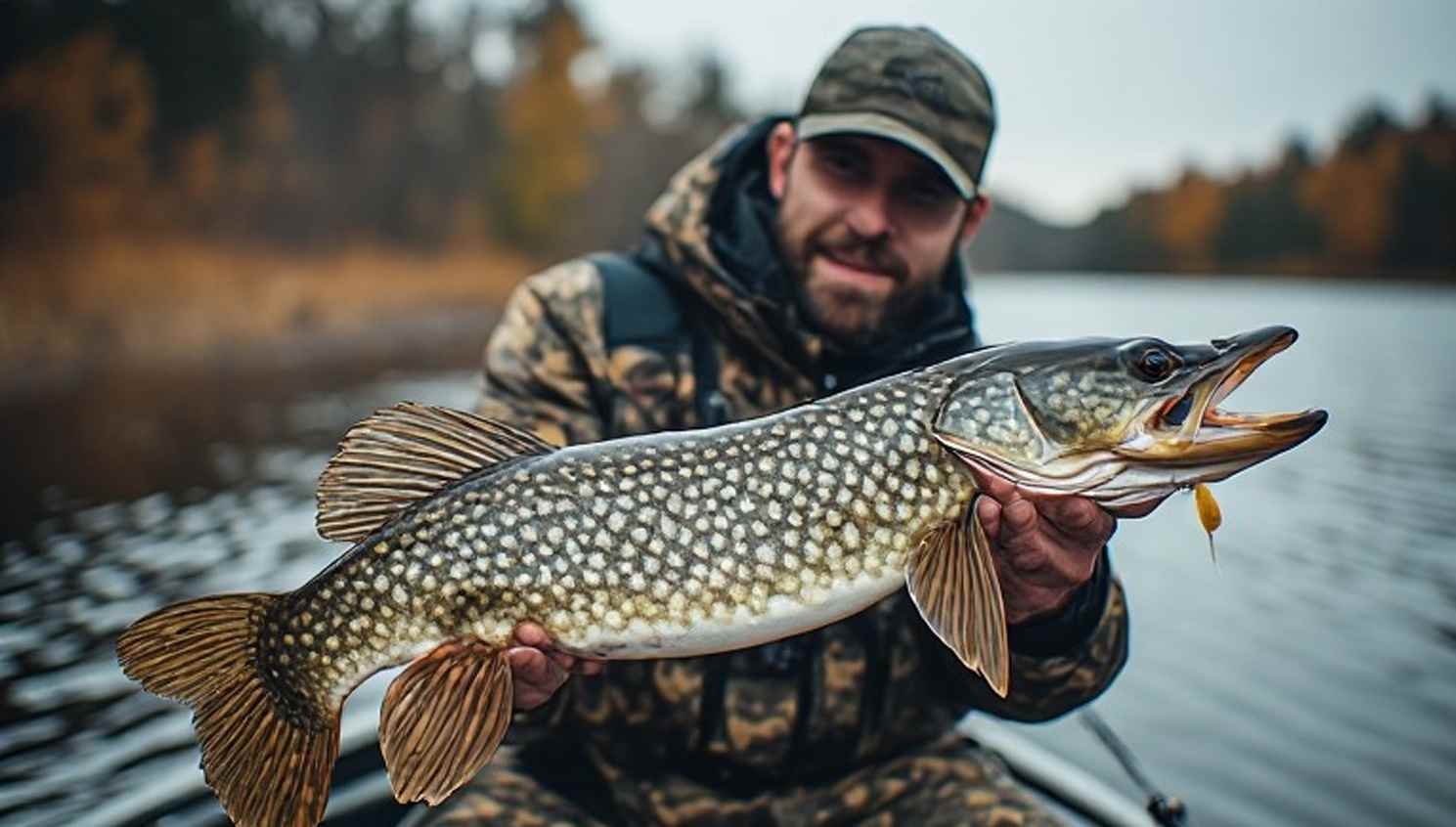
Pike Fishing in October & November: Proven Techniques for Fall Northern Pike
If you only get one stretch of the calendar to chase trophy northerns, make it October and November. Cooling water pushes baitfish onto shallow gravel bars and dying weed edges, and the biggest predators follow them into 5 to 15 feet, feeding hard before freeze-up locks the lake. October rewards fast, reaction-style casting — big crankbaits, spinnerbaits, and swimbaits burned over cabbage and rock shoals. November demands the opposite: slower, bigger offerings like spoons, jerkbaits, and 8- to 10-inch dead baits, worked along deep weed lines, backwater drop-offs, and the warm pockets where bait still gathers. Nail that two-phase shift and autumn can hand you the heaviest fish of the year — many anglers bank their personal bests in exactly these eight weeks.
I still remember the November morning that ruined summer pike fishing for me. Air temp in the low thirties, a skim of ice forming inside the rod guides, and a 38-inch northern that crushed a slow-rolled spoon three feet off a dying weed flat. It wasn’t luck — it was timing, location, and the right presentation at the right water temperature. That’s what this guide delivers: the exact fall plan, month by month, so you show up ready instead of guessing.
Why October and November Matter More Than Any Other Season
Esox lucius is built for cold water, but autumn is when the pieces line up in the angler’s favor. Here’s what changes:
- Baitfish migrations — cisco, tullibee, shiners, and perch move into predictable spawning areas in autumn, and the big fish follow them like clockwork.
- Shallower, more accessible quarry — summer northerns suspend over deep basins where they’re nearly impossible to pattern. Fall pulls them onto visible structure.
- A pre-winter feeding binge — these predators add serious weight before ice, so they’re willing to chase meals they’d ignore in July.
- Better light and temperature windows — cooler water means these toothy crusaders can roam shallow all day, not just at dawn and dusk.
- Less fishing pressure — the boats thin out after Labor Day, especially by November.
The single biggest edge in fall is that big fish no longer have to stay deep.
Fall Pike Locations: Month-by-Month Setup
| Location Type | October Setup | November Setup | Why It Holds Fish |
|---|---|---|---|
| Sand and gravel bars | Prime — baitfish spawn here early fall | Fish move off as water chills past the mid-40s | First stop for migrating forage; predators ambush from the edges |
| Cabbage weed edges | Top pick — long casts along outside weedlines | Weeds die back; northerns pull to the deepest surviving stems | Healthy weeds pump oxygen and hide panfish and perch |
| Deep weed flats | Good, especially mid-month | Best bet late fall — deep weeds stay green longer | Deep water holds slightly warmer temps and keeps forage |
| Rock piles and shoals | Strong on windy days | Less reliable, but big fish still patrol on warm afternoons | Rocks radiate heat and draw bait through the day |
| Backwater coves | Warming coves already bait-heavy | Golden — sun-warmed coves hold the last active bait | Warmer water sparks zooplankton, then baitfish, then predators |
| Drop-offs and breaklines | Bonus pattern once turnover hits | Reliable — fish hold along the 8- to 15-foot break | Deep access lets them feed shallow and retreat deep fast |
October vs. November: What Actually Changes
| Factor | October | November |
|---|---|---|
| Typical water temps | 50–65°F early, falling into the mid-40s by month’s end | 38–48°F, often colder up north |
| Pike mood | Aggressive, chase-oriented | Opportunistic; they move less and strike more deliberately |
| Primary depths | 2–10 feet, with weed flats and rock bars | 6–15 feet: deep weeds, coves, breaklines |
| Vegetation | Green and lush; shallow edges hold the most life | Mostly dead; only deep cabbage and coontail remain |
| Retrieve speed | Fast early, moderate by mid-month | Slow, with long pauses — dead-slow wins |
| Star lures | Big crankbaits, spinnerbaits, 3- to 4-inch swimbaits | Spoons, flat-sided jerkbaits, jointed swimbaits, dead bait |
| Live bait tactic | Quick-strike rigs on weed edges | Slip-bobbered suckers 2–4 feet off bottom in deep weeds |
| Best daily windows | Mid-morning through late afternoon | Last two hours of daylight, plus warm, overcast days |
| Trophy odds | Good | Excellent — the heaviest fish of the year often come now |
Water Temperature: The Fall Feeding Scale
Use this as a working scale — every lake runs a little different, but the pattern holds across the northern tier of the US.
| Water Temp | What the Fish Are Doing | Best Presentation |
|---|---|---|
| 60–68°F (early October) | Actively chasing; near summer metabolism | Reaction baits at moderate speed; cover water fast |
| 52–60°F (October prime) | Peak feeding — baitfish packing shallow | Big crankbaits, spinnerbaits, swimbaits along weed edges |
| 45–52°F (turnover window) | Feeding binge at its most predictable | Slow your retrieve about 25%; fish points and first breaklines |
| 42–45°F (late October–early November) | Slowing metabolism; still striking out of habit | Spoons and jerkbaits with long pauses; start bait fishing |
| Under 42°F (November) | Minimal movement; they hold tight to cover | Dead baits, slow-rolled spoons, big live baits under floats |
The Right Fall Rig
| Component | Recommended Spec | Why It Matters |
|---|---|---|
| Rod | 7’ to 7’6″ medium-heavy to heavy casting rod, or 6’6″–7’ heavy spinning | Long casts over weed flats; backbone for big-lure hooksets |
| Reel | 300-size baitcaster or 4000–5000 spinning reel, 6.4:1–7.1:1 ratio | Fast enough to cover water, strong drag for runs into cabbage |
| Main line | 30–50 lb braided line | Zero stretch for hooksets at distance; cuts through weeds |
| Leader | 12–18 inches of 40–80 lb fluorocarbon or titanium wire | Teeth-proof insurance: fluoro for clear water, wire for heavy cover |
| Lure weight range | 1/2 to 2 ounces | Matches the big-profile fall menu |
| Bait hooks | 2/0 to 5/0 circle hooks | Set-and-hold hooks for live or dead bait rigs |
The Fall Lure Library: Six Categories and How to Work Them
| Lure Type | Best Window | Target Depth | Winning Retrieve |
|---|---|---|---|
| Big crankbait (3–4 inch) | Early to mid-October | 4–8 feet | Steady, with occasional pause-and-snap |
| Deep-diving crankbait (5–6 inch) | Late October–November | 12–20 feet | Long casts, steady grind, pause-and-hop at the boat |
| Tandem spinnerbait | Windy October days | 3–8 feet | Burn it fast, then slow-roll on the swing |
| In-line spinner or bucktail | Early fall, stained water | 2–6 feet | Steady, medium speed; vary with the wind |
| Jig-and-swimbait (1/2–3/4 oz) | November deep weed lines | 12–20 feet | Crawl 5–10 feet, pause, crawl again |
| Big spoon (1–2 oz) | November slowdown | 5–15 feet | Slow roll, then kill the spoon — let it flutter |
| Weightless super fluke | Clear, calm days | Surface to 3 feet | Twitch, twitch, long pause; deadly for sight fishing |
| Jointed swimbait (7–10 inch) | Low light, trophy hunting | 2–8 feet | Slow, erratic glides with 5-second rests |
A smart way to open any October session is the two-lure test: one angler throws a spinnerbait while the other works a crankbait, and you let the fish pick the winner. This “testing the waters” approach is a proven read across the Midwest — sometimes the flash gets crushed, sometimes the wobble does. It’s the fastest way to learn what the fish want that day.
When Bait Beats Lures: Live and Dead Presentations
By late November, artificials still catch fish, but bait catches the giants. These predators scavenge as much as they hunt, so a big offering sitting still is often exactly what they want.
| Bait | Rig | When It Shines |
|---|---|---|
| 8–10 inch sucker (live) | Slip bobber, 2/0–5/0 circle hook | Golden November option in deep weeds or coves |
| Large dead sucker | Weighted quick-strike rig or bottom-set | Brutally cold days; northerns scavenge dead meals readily |
| Herring, cisco, shiners | Under a float, 2–4 feet off bottom | Matching the local baitfish out-fishes everything else |
| Big panfish (perch, bluegill) | Quick-strike rig on weed edges | Early October, when panfish school shallow |
When the bite locks up, a big dead sucker on the bottom has saved more November trips than any lure I own.
A Full-Day Fall Game Plan
- Check conditions the night before — moon phase, wind direction, and how far the temperature dropped in the last 24 hours.
- Launch into the wind — wind-blown shorelines concentrate bait and oxygen.
- Run the two-lure test — one rod with a spinnerbait, one with a crankbait; let the fish decide.
- Cover water early — hit points, bars, and rock shoals in the 4–12 foot zone during the first hours.
- Pause at every weed change — cabbage edges with adjacent deep-water access beat featureless flats every time.
- Shift to big, slow presentations by midday — the warmest hours in November still produce, but only on slow baits near cover.
- Fish the coves when the sun is out — sun-warmed backwaters pull the last active baitfish, and predators stack up behind them.
- Spend the last hour of daylight on trophy water — big fish make their mistakes as the light fades; this is the golden window.
- Rig one bait rod before you leave the dock — a live sucker under a float keeps you fishing through the slowest stretches.
- Log everything — water temp, depth, lure, retrieve. The same spot repeats every single fall.
Seven Fall Mistakes That Quiet the Bite
| Mistake | The Fix |
|---|---|
| Fishing October speed in November | Drop the retrieve pace at least 25%, often 50%, as water passes the high 40s |
| Downsizing baits to “match the hatch” | Go bigger, not smaller; cold-water fish strike large, lazy offerings |
| Ignoring dying weeds | Follow the green: the deepest surviving weed bed is where the fish live |
| Skimping on leader strength | 40 lb minimum fluoro or wire — one tooth-slash ends a trophy day |
| Burning through featureless flats | Hunt contour changes: dips, channels, and holes in flat coves |
| Quitting at midday | In October midday is prime; in November fish the warmest hours, not the brightest |
| Forgetting the regulations | Season dates and slot limits vary by state — always verify before launch |
Wind, Moon, and Daylight: Small Conditions, Big Results
- Wind: A light to moderate breeze pushes these fish shallower and adds flash to spinnerbaits. Heavy winds slide them a bit deeper — adjust your casting range accordingly.
- Moon: Northerns respond to new and full moon phases, and the days around them often produce the best bites, especially at dusk.
- Daylight: The last hour of light is the single most reliable window of the whole fall, on both cold and mild days.
- Cloud cover: Overcast, drizzly days keep these toothy predators roaming shallow all afternoon — some of the best autumn action happens in weather that keeps other anglers home.
Fall Pike Fishing by Region
| Region | Signature Setup | Tactic That Dominates |
|---|---|---|
| Midwest (MN, WI, MI) | Cabbage flats and deep weed lines | Big crankbaits in October; spoons and dead bait in November |
| Northeast (NY, VT, NH, ME) | Backwater coves and river mouths | Slow-rolled spoons and flukes in sun-warmed coves |
| Northern Plains (ND, SD, MT) | Great-lakes reservoirs with tullibee forage | Offshore bars at turnover; fast coverage early fall |
| Great Lakes bays | Shallow bays with current and weed transition zones | Tandem spinnerbaits on windy days; jerkbaits on calm ones |
Check the Rules Before You Launch
Fall seasons, length limits, and tackle restrictions aren’t uniform nationwide, and they change from year to year. Before you plan a trip, verify the current rules for your water. Start with the state-by-state fishing season guides to see open dates and limits at a glance, then dig into specifics like Michigan’s pike season details if you’re heading to one of the Midwest’s best destinations. For solid species biology and management background straight from an agency, the Missouri Department of Conservation’s northern pike profile is a trusted reference. And remember: a valid fishing license is required in every state before that first cast — sort it out before you’re on the water, not after. The big-bait mindset behind most of these tactics is well documented too, as MeatEater’s trophy-pike fall guide lays out for anglers chasing giants on heavy gear.
Fall Pike Fishing FAQs
What is the best time of day for pike in October and November?
Mid-morning through mid-afternoon in October; the final two hours of daylight in November.
Do pike bite in cold water?
Yes — they’re a cold-water species. Bites slow dramatically below the mid-40s, but big fish still feed, especially on slow, large presentations.
What is the best lure for November pike?
A 1- to 2-ounce spoon slow-rolled with frequent kills, or a big jointed swimbait on low-light days. Dead bait out-fishes both when the bite is truly tough.
Should I use a wire leader for pike?
Always. Pike teeth slice monofilament instantly. Run 40–80 lb fluorocarbon in clear water or titanium wire in heavy cover.
How deep should I fish for pike in the fall?
2–10 feet in October, 6–15 feet in November, always tied to weed edges, rock bars, and coves with deep-water access.
Is fall pike fishing better than spring?
For trophy size, yes. Fall fish sit at peak pre-winter weight, and their shallow, predictable positioning makes them far easier to pattern than summer fish.