
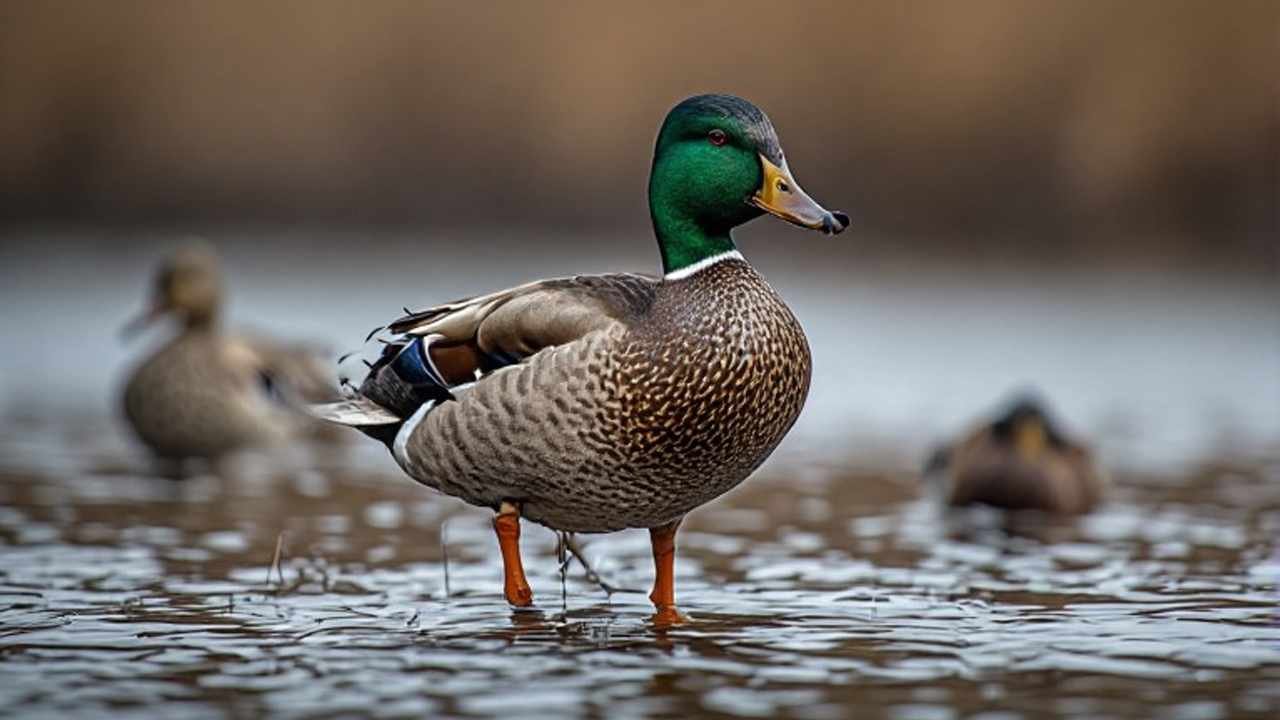
Arkansas Duck Season 2026-2027: Dates, License, Bag Limits & Complete Guide
When the temperature drops and the first cold fronts push mallards down the Mississippi Flyway, Arkansas becomes the center of the duck hunting world — Stuttgart alone has earned the title “Duck Capital of the World.” The Arkansas duck season 2026-2027 runs in three split segments spanning late November through the end of January, with an early teal season in September and special youth, veteran, and active-duty military waterfowl days in early February. Unlike deer hunting, Arkansas duck hunting uses one statewide season rather than multiple hunting zones, although individual wildlife management areas (WMAs) impose their own access and shooting-hour rules.
Before you head to the flooded timber or a Grand Prairie rice field, you’ll need a hunting license, the Arkansas Waterfowl Stamp, the Federal Duck Stamp, and free HIP registration. Regulations change every year, so this guide gives you the officially published 2026-2027 framework while reminding you to verify current rules with the Arkansas Game and Fish Commission (AGFC) before you go afield.
Arkansas Duck Season 2026-2027 at a Glance
| Information | 2026-2027 Details |
|---|---|
| Regular Duck Season (Duck, Coot, Merganser) | Nov. 21-29, 2026; Dec. 10-23, 2026; Dec. 26, 2026-Jan. 31, 2027 |
| Hunting Zones | One statewide season (no duck zones; WMA-specific rules apply) |
| Daily Bag Limit | 6 ducks (see species sub-limits below) |
| Possession Limit | 18 ducks (3x daily bag) |
| Shooting Hours | 30 minutes before sunrise to sunset; noon closure on most WMAs during regular season |
| Youth Waterfowl Days | Feb. 6-7, 2027 (ages 15 and younger) |
| Veteran/Military Days | Feb. 6-7, 2027 |
| Early Teal Season | Sept. 19-27, 2026 (shooting begins at sunrise) |
| Required License | Resident Wildlife Conservation License ($10.50) or Nonresident Annual All Game ($410) |
| Arkansas Waterfowl Stamp | Resident $7 / Nonresident $50 (youth under 16 exempt) |
| Federal Duck Stamp | $25 in person / $29 e-stamp; required for ages 16+ |
| HIP Registration | Free; required for all migratory bird hunters 16+ |
All dates above are the officially approved 2026-2027 seasons set by the Arkansas Game and Fish Commission AGFC Waterfowl Dates, Rules & Regulations.
Arkansas Duck Season Dates for 2026-2027
The regular duck, coot, and merganser season in Arkansas is a statewide season split into three segments, designed to track waterfowl migration and wintering patterns. The AGFC finalized these dates for the 2026-27 and 2027-28 seasons in a single regulatory package so hunters can plan ahead.
Duck, Coot and Merganser — Statewide
| Segment | Dates |
|---|---|
| Segment 1 | Nov. 21-29, 2026 |
| Segment 2 | Dec. 10-23, 2026 |
| Segment 3 | Dec. 26, 2026-Jan. 31, 2027 |
Opening day: Saturday, November 21, 2026
Closing day: Sunday, January 31, 2027
Other Waterfowl Seasons
| Season | 2026-2027 Dates |
|---|---|
| Early Teal | Sept. 19-27, 2026 |
| Canada Goose | Sept. 1-Oct. 15; Nov. 21-29; Dec. 10-23; Dec. 26, 2026-Jan. 31, 2027 |
| White-fronted Goose | Oct. 31-Nov. 8; Nov. 21-29; Dec. 10-23; Dec. 26, 2026-Jan. 31, 2027 |
| Snow, Blue and Ross’s Goose | Oct. 31-Nov. 8; Nov. 21-29; Dec. 10-23; Dec. 26, 2026-Jan. 31, 2027 |
| Light Goose Conservation Order | Feb. 1-5 and Feb. 8-April 25, 2027 (no bag limit) |
| Youth Waterfowl Hunt | Feb. 6-7, 2027 |
| Veteran & Active-Duty Military Hunt | Feb. 6-7, 2027 |
These are official, finalized dates — not proposals. The AGFC-approved schedule applies to all of Arkansas, so there is no separate zone-by-zone date table for ducks AGFC Waterfowl Dates, Rules & Regulations.
Duck Hunting Zones in Arkansas
One of the most common questions from out-of-state hunters is which zone they’re in. The short answer: Arkansas has no duck hunting zones. The duck, coot, and merganser season is a single statewide season with identical dates everywhere — from the Ozark foothills to the Mississippi River Delta.
That doesn’t mean all water is managed the same. Arkansas does divide the state for deer hunting into roughly 20 zones, and each WMA functions as its own regulatory unit. On public land, WMA-specific rules can change shooting hours, access times, boat restrictions, and permit requirements, so always check the specific WMA page for where you plan to hunt. The AGFC publishes a full waterfowl zone map and WMA directory through its online mapper and the annual Waterfowl Hunting Guidebook — check those before your trip AGFC Where to Hunt.
Arkansas Duck Bag Limits
The 2026-2027 Arkansas duck daily bag limit is 6 ducks per hunter per day, with strict species sub-limits. The AGFC’s official limit structure for 2026-27 is:
| Duck Species | Daily Limit | Important Restrictions |
|---|---|---|
| Total Ducks | 6 | Combined daily bag |
| Mallard | 4 | No more than 2 hen mallards |
| Wood Duck | 3 | — |
| Northern Pintail | 3 | Increased from 1 to 3 starting 2025-26 |
| Redhead | 2 | — |
| Canvasback | 2 | — |
| Black Duck | 2 | — |
| Scaup | 1 | — |
| Mottled Duck | 1 | Rare in Arkansas |
| Other Ducks (gadwall, wigeon, shoveler, teal, etc.) | Up to 6 | Up to 6 of any species not listed above |
Key points to remember:
- Possession limit is 18 ducks — exactly three times the daily bag limit, per federal framework requirements.
- Coot daily limit: 15 (possession 45).
- Merganser daily limit: 5, with no more than 2 hooded mergansers (possession 15).
- Species sub-limits apply within the 6-duck total — for example, you cannot take 3 wood ducks and 6 gadwall in one day; the combined total is always 6.
- Early teal season has its own separate limits (6 teal daily, 18 possession).
These limits match the federally approved Mississippi Flyway framework and the official AGFC structure AGFC Waterfowl Dates, Rules & Regulations.
What License Do You Need to Hunt Ducks in Arkansas?
To legally hunt ducks in Arkansas, you need to stack several items. Here’s the complete checklist.
Arkansas Hunting License
Every hunter 16 and older must hold a valid Arkansas hunting license. Residents born on or after January 1, 1969 must also complete an approved hunter education course and carry their card. Youth hunters under 16 are exempt from the license requirement (they still need a free Customer Identification Number, or CID, to check harvested game), and apprentice-style Hunter Education licenses are available for those who haven’t completed a course.
Arkansas Waterfowl Stamp
Arkansas requires a state waterfowl stamp in addition to your base license. Hunters under 16 and holders of the $1,000 Lifetime Resident Sportsman’s Permit are exempt. The stamp costs $7 for residents and $50 for nonresidents — and unlike the federal stamp, it does not need to be physically affixed to your license AGFC Waterfowl Licensing.
Federal Duck Stamp
The Federal Migratory Bird Hunting and Conservation Stamp (the “Duck Stamp”) is required for all waterfowl hunters 16 and older — residents and nonresidents alike. The 2026-2027 stamp, featuring James Hautman’s bufflehead art, costs $25 in person and $29 as an electronic stamp (E-Stamp), and is valid July 1, 2026 through June 30, 2027. A physical stamp must be signed across the face in ink to be legal while hunting; an E-Stamp must be carried in its temporary-certificate form until your physical stamp arrives. A sales receipt is not legal proof — you must have the signed stamp or valid E-Stamp in hand USFWS Federal Duck Stamp.
HIP Registration
The Harvest Information Program (HIP) is a free, mandatory registration for everyone 16 and older hunting migratory birds — including ducks, geese, doves, coots, and woodcock. It’s how agencies estimate harvest. In Arkansas, HIP registration is completed online through agfc.com or at any AGFC license vendor, and you must carry proof of registration while hunting.
Summary Table
| Requirement | Resident | Nonresident | Notes |
|---|---|---|---|
| Hunting License | Required (16+) | Required (16+) | Under 16 exempt |
| HIP Registration | Required (16+) | Required (16+) | Free, online |
| Arkansas Waterfowl Stamp | $7 | $50 | Under 16 exempt |
| Federal Duck Stamp | Required (16+) | Required (16+) | $25 / $29 e-stamp; sign in ink |
| WMA/Lake Conservation Permit | Free with license | Free with license | $10.50 only if no hunting license |
Note: The former free WMA General Use Permit was eliminated for 2026-27. Anyone 16+ using AGFC-owned WMAs or lakes without a valid Arkansas hunting or fishing license must buy the AGFC WMA/Lake Conservation Permit (WMC, $10.50); holding a hunting license includes WMA access AGFC New This Year.
Arkansas Duck Hunting License Costs for 2026-2027
All fees below are the current official AGFC prices. Never buy a license from an unofficial reseller — use the AGFC licensing portal.
| License or Permit | Resident Cost | Nonresident Cost |
|---|---|---|
| Hunting License (minimum, Wildlife Conservation) | $10.50 | — |
| Resident Sportsman’s License | $25.00 | — |
| Combination Sportsman’s License (hunting + fishing) | $35.50 | — |
| Nonresident Annual All Game License | — | $410.00 |
| Nonresident Annual Small Game License | — | $110.00 |
| Nonresident 5-Day Small Game License | — | $80.00 |
| Arkansas Waterfowl Stamp | $7.00 | $50.00 |
| Federal Duck Stamp | $25.00 (in person) / $29.00 (e-stamp) | Same |
| HIP Registration | Free | Free |
| AGFC WMA/Lake Conservation Permit (WMC) | $10.50 (only if no license) | $10.50 (only if no license) |
Residents 65 and older can buy the discounted 65+ Lifetime Hunting License, which carries Resident Sportsman’s License privileges. A full fee schedule is published on the AGFC license page.
Youth Waterfowl Hunting Days in Arkansas
Arkansas offers a dedicated two-day Special Youth Waterfowl Hunt on February 6-7, 2027 — after the regular season closes.
- Eligibility: Hunters 15 and younger may take ducks, geese, coots, and mergansers.
- Mentoring: Youths who have completed hunter education must be accompanied by a mentor 18 or older; youths who have not completed hunter education must be accompanied by a mentor 21 or older.
- Mentor restrictions: Mentors may not hunt waterfowl during the youth days, but they may call birds and assist.
- Licenses and stamps: Youth under 16 do not need a hunting license or state waterfowl stamp, and the Federal Duck Stamp requirement applies only to hunters 16+. HIP registration is required for ages 16+ only.
- Bag limits and hours: Same limits as the regular duck season (6 ducks), and on WMAs youth may hunt from 30 minutes before sunrise until sunset with no shot shell limit.
- Permit areas: Several WMAs host youth-exclusive permit hunts (Conway George Tract on Sheffield Nelson Dagmar WMA, Freddie Black Choctaw Island WMA, Frog Bayou WMA, and Steve N. Wilson Raft Creek Bottoms WMA), plus WRICE Program private-land permit fields AGFC Youth Hunts.
Veteran and Active-Duty Military Waterfowl Hunting Days
The Special Active-Duty Military and Veteran Waterfowl Hunt runs February 6-7, 2027, on the same dates as the youth hunt.
- Who qualifies: Current active-duty military members and military veterans.
- Documentation: You’ll need to be able to document your status; the AGFC may require a military ID, DD-214, or similar proof.
- Licenses and stamps: All standard waterfowl requirements apply — hunting license, Arkansas Waterfowl Stamp, Federal Duck Stamp (16+), and HIP.
- Bag limits: The normal 6-duck daily bag limit applies.
- Access: On WMAs and national wildlife refuges open to waterfowl hunting, veterans and military personnel may hunt from 30 minutes before sunrise until sunset, and nonresident permits are not required for this special hunt. There is no shot shell limit on WMAs during these days.
These special days are separate from the regular season — note the later February timing and the extended (sunset) shooting hours on public land.
Early Teal Season in Arkansas
Arkansas offers an early teal season from September 19-27, 2026 — a nine-day September hunt that many wingshooters use to kick off their waterfowl year.
- Legal species: Blue-winged teal, green-winged teal, and cinnamon teal (combined).
- Daily bag limit: 6 teal total.
- Possession limit: 18.
- Shooting hours: Unlike the regular season, shooting during early teal begins at sunrise (not 30 minutes before), per the AGFC’s asterisk note.
- Licenses and permits: Same full waterfowl package — hunting license, Arkansas Waterfowl Stamp, Federal Duck Stamp, and HIP for hunters 16+.
Early teal is a teal-only hunt: no mallards, wood ducks, or other species may be taken, and general duck limits don’t apply. Check WMA-specific rules, since some public areas open later or restrict September access.
Arkansas Duck Hunting Shooting Hours
Standard legal shooting hours for duck hunting in Arkansas are one-half hour before sunrise until sunset. Two important exceptions:
- On most WMAs during the regular season, shooting ends at noon — a pressure-management rule meant to give ducks resting time and reduce crowding. The last day of the regular season (Jan. 31) and the youth/veteran-military days (Feb. 6-7) extend to sunset on WMAs.
- Early teal season shooting hours start at sunrise rather than 30 minutes before.
Also note WMA access times: on waterfowl WMAs you generally must be off inundated areas by 1 p.m. (by noon on Dave Donaldson Black River WMA and Bayou Meto WMA) during the regular season. Always verify the specific WMA’s rules, as some refuges and special areas restrict scouting and access separately.
Where Can You Hunt Ducks in Arkansas?
Public Land
Arkansas is famous for flooded timber and greentree reservoirs — more than 50,000 acres of publicly accessible greentree reservoirs across the state. Top public waterfowl destinations include:
- George H. Dunklin Jr. Bayou Meto WMA — the crown jewel of Arkansas public duck hunting, with thousands of acres of bottomland hardwood timber near Stuttgart.
- Dave Donaldson Black River WMA — premier greentree reservoir in the northeast; nonresidents are prohibited from hunting here during the first segment (Nov. 21-29, 2026) under the new rule.
- Rex Hancock Black Swamp WMA, Shirey Bay Rainey Brake WMA, and Earl Buss Bayou DeView WMA — classic flooded-timber hunts in the Cache River bottoms.
- National wildlife refuges including Cache River NWR, Dale Bumpers White River NWR, and Felsenthal NWR offer public waterfowl hunting under refuge-specific rules.
- Frog Bayou, Sheffield Nelson Dagmar, and Steve N. Wilson Raft Creek Bottoms WMAs — all offer combination open hunting and drawn-permit opportunities.
Every WMA and refuge has its own regulations on access times, boat types, and permits — read the specific area’s page before hunting.
Private Land
Most Arkansas duck hunts — especially east of Little Rock on the Grand Prairie — take place on private rice fields and flooded agricultural land. You must have written or verbal permission from the landowner; Arkansas trespass law treats uninvited entry as criminal trespass, and ABC (Alcohol, Beverage, Control) tresspassing on posted land carries stiff penalties. The AGFC’s WRICE Program leases private fields for public hunting via a free draw — hunting is by drawn permit each weekend of the regular duck season, with applications taken Thursday 3 p.m. through midnight Sunday the week before each hunt, winners drawn the following Monday AGFC Special Waterfowl Permit Hunts.
Draws, Reservations, and Lottery Hunts
Arkansas uses a mix of online draws and daily permits on popular waterfowl WMAs:
- WRICE private-land fields — weekend drawn permits (max 4 hunters per party).
- Cypress Bayou WMA (Red Cut Slough Tract) — hunt on Tuesdays/Thursdays/Saturdays/Sundays; weekend permits by online drawing; a signed daily-use permit is required in hand.
- Raft Creek Bottoms, Frog Bayou, Conway George Tract (Dagmar), and Choctaw Island — a patchwork of self-serve daily permits and online draws, with youth-exclusive blind permits on several areas.
Application windows are short (Thursday 3 p.m. to Sunday midnight preceding each hunt weekend), so set reminders. Youth permit applications must be filed under the youth hunter’s own CID in the licensing system.
Important Arkansas Duck Hunting Regulations
- Non-toxic shot only: Lead shot is prohibited for waterfowl — use steel, bismuth, tungsten, or other approved non-toxic loads.
- Plugged shotgun: Shotguns used for waterfowl must be plugged to a three-shell capacity (magazine + chamber) unless otherwise noted; on youth/veteran WMA hunt days there is no shell limit cap on the gun itself.
- Shot size and gauge: Use non-toxic shot sized T or smaller (per federal rules, shot larger than T is prohibited for waterfowl).
- No electronic calls: Electronic or recorded waterfowl calls are prohibited; mouth calls only.
- Baiting prohibited: Hunting over baited areas is illegal under federal law — this includes any area where grain or other feed has been placed to attract birds.
- No permanent blinds on public land: Duck blinds must be removed daily on WMAs; no equipment (decoys, dog stands, boats) may be left overnight except at designated spots.
- Vegetation rules: Cutting vegetation with chainsaws, axes, or similar tools is prohibited on Commission-owned WMAs.
- Wanton waste: You must make a reasonable effort to retrieve all downed birds; leaving game to waste is illegal.
- Species ID responsibility: Hunters are responsible for correctly identifying game before shooting — hen mallards, mottled ducks, and black ducks have tight sub-limits.
- No guiding on public land: Paid guides are prohibited on WMAs, special use areas, and NWRs.
- Nonresident Black River restriction: Nonresidents cannot waterfowl hunt at Dave Donaldson Black River WMA during Segment 1 (Nov. 21-29, 2026).
- Light goose order: The Light Goose Conservation Order (Feb. 1-5 and Feb. 8-April 25, 2027) now requires a valid Arkansas hunting license and state duck stamp.
Best Ducks to Hunt in Arkansas
- Mallard — The bread-and-butter Arkansas duck. Mallards winter in massive numbers in flooded timber and rice fields across the Grand Prairie and Delta; peak numbers typically build through December and January as cold fronts push birds south. The 4-duck daily limit (2 hens) reflects their importance.
- Wood Duck — The state’s most abundant breeding duck and a staple of early-season timber hunts in September and October (within the regular season’s November open). Found in every swamp, slough, and bottomland hardwood stand.
- Northern Pintail — Elegant, fast, and increasingly common; the daily limit was raised from 1 to 3 in 2025-26 after population recovery. Pintails favor open water and flooded flats.
- Green-winged Teal — Small, quick, and plentiful in shallow flooded fields and greentree reservoirs; a favorite late-season target alongside the September teal hunt.
- Blue-winged Teal — The headline species of the early teal season in September, though most push through Arkansas by mid-October on their way south.
- Gadwall — “Grey ducks” winter heavily in Arkansas rice country and frequently round out limits late in the season; no sub-limit applies.
- American Wigeon — Commonly mixed into big spreads on reservoirs and WMA pools; known for their whistling calls.
- Northern Shoveler — Spoonbills stack up on shallow, muddy water across the Delta.
- Canvasback & Redhead — Deep-water divers found on larger lakes and river pools like the White River oxbows and Lake Chicot; strict 2-per-day sub-limits.
- Scaup — Late-season divers on Arkansas’s big waters, with a conservative 1-bird daily limit.
- American Black Duck — A prized northeast-Arkansas trophy in Cache and White River bottoms, limited to 2 per day; visually similar to hen mallards, so ID carefully.
- Mottled Duck — Rarely encountered in Arkansas; only 1 per day if you’re lucky enough to see one.
Migration timing varies with weather — hard freezes up north and December cold fronts drive the classic Arkansas “push.” Don’t rely on calendar dates alone; watch the forecast and water conditions.
Tips for Hunting During the Arkansas Duck Season
- Scout flooded timber early. Arkansas’s public greentree reservoirs flood naturally or by managed water; the best timber hunts happen when those units are at “duck water” depth — about ankle to knee deep. Check WMA water-level reports and the AGFC online mapper before committing.
- Hunt weather, not dates. Big Arkansas hunts happen when northern cold fronts collide with warm, wet fronts in the Delta. Plan around a hard freeze to the north followed by a south wind in Arkansas.
- Right decoy spreads for the situation. Timber hunts demand smaller, well-placed spreads (a dozen to two dozen mallard-heavy blocks) worked tight to the tree line; open-field and reservoir hunts justify 2-4 dozen decoys with motion spinners (where legal).
- Call softly in timber. Arkansas mallards in flooded oaks respond to subtle, realistic calling — the “Arkansas style” is short greeting and comeback sequences, not loud hail calls. When birds are committed, shut up.
- Concealment beats everything. In flooded timber use natural brush and a low profile; light-colored waders and shiny faces spook birds. Face paint or a mask helps in January’s hard, clear light.
- Mind the wind. Ducks land into the wind; set up with your back to the wind and your decoys downwind so birds cup into your spread. North winds push ducks out of flooded timber; south winds keep them in.
- Check access and water levels. WMA access times (usually off the water by 1 p.m.) and river gauges matter — the White River at Georgetown affects Raft Creek Bottoms access; rising water can close units.
- Confirm bird identification before shooting. With hen mallards capped at 2, black ducks at 2, and mottled ducks at 1, a misidentified bird can mean a ticket. Study your ducks in flight and on the water.
- Be realistic about pressure. Popular WMAs draw crowds; arrive early, respect the noon shooting cutoff, and have a backup plan — private-land WRICE draws are a smart alternative if public timber is packed.
Frequently Asked Questions About Arkansas Duck Season
When is duck season in Arkansas for 2026-2027?
The regular Arkansas duck season runs in three segments: November 21-29, 2026; December 10-23, 2026; and December 26, 2026-January 31, 2027. An early teal season runs September 19-27, 2026, and special youth/veteran waterfowl days run February 6-7, 2027.
How many ducks can you kill a day in Arkansas?
Six ducks per day, including no more than 4 mallards (2 hens), 3 wood ducks, 3 pintails, 2 redheads, 2 canvasbacks, 2 black ducks, 1 scaup, and 1 mottled duck. Other species (gadwall, wigeon, shoveler, teal) can fill the remaining slots.
Is Arkansas a split-season or zone-based duck state?
Arkansas uses a statewide season split into three segments — there are no duck hunting zones. Every county has the same season dates, though individual WMAs add their own restrictions.
Do I need a federal duck stamp to hunt ducks in Arkansas?
Yes, if you’re 16 or older. The 2026-2027 Federal Duck Stamp costs $25 in person or $29 as an E-Stamp and must be signed (physical) or carried as a valid E-Stamp certificate while hunting. It’s valid July 1, 2026-June 30, 2027.
How much does a nonresident Arkansas duck hunting license cost?
The Nonresident Annual All Game License is $410, plus the $50 nonresident Arkansas Waterfowl Stamp, the $25/$29 Federal Duck Stamp, and free HIP registration. Nonresidents also need the annual license to hunt WMAs.
Is there an early teal season in Arkansas?
Yes — September 19-27, 2026, for blue-winged, green-winged, and cinnamon teal combined at a 6-bird daily limit. Shooting hours begin at sunrise, not 30 minutes before.
What are youth waterfowl hunt dates in Arkansas?
February 6-7, 2027. Hunters 15 and younger can take ducks, geese, coots, and mergansers under the regular 6-duck bag limit. Mentors (18+, or 21+ without hunter ed) must accompany youth and may not hunt waterfowl.
Do I need to register for HIP in Arkansas?
Yes — HIP registration is free and mandatory for all migratory bird hunters 16 and older in Arkansas. Complete it online at agfc.com when you buy your license and carry proof while hunting.
Before You Hunt: Check the Latest Arkansas Regulations
Migratory bird regulations, WMA rules, emergency closures, water levels, and special restrictions can change at any time — including mid-season. The dates and limits in this guide are the officially published 2026-2027 framework, but always verify the current regulations with the Arkansas Game and Fish Commission immediately before you hunt, especially if you’re traveling. Check the WMA-specific pages for your chosen areas, confirm river and flooding conditions, and review the annual Waterfowl Hunting Guidebook.
For year-round planning, our Arkansas hunting seasons hub keeps statewide season summaries updated, and hunters traveling the region can compare neighboring Missouri’s duck seasons to plan multi-state trips.