
Fishing License and Permit Requirements Explained
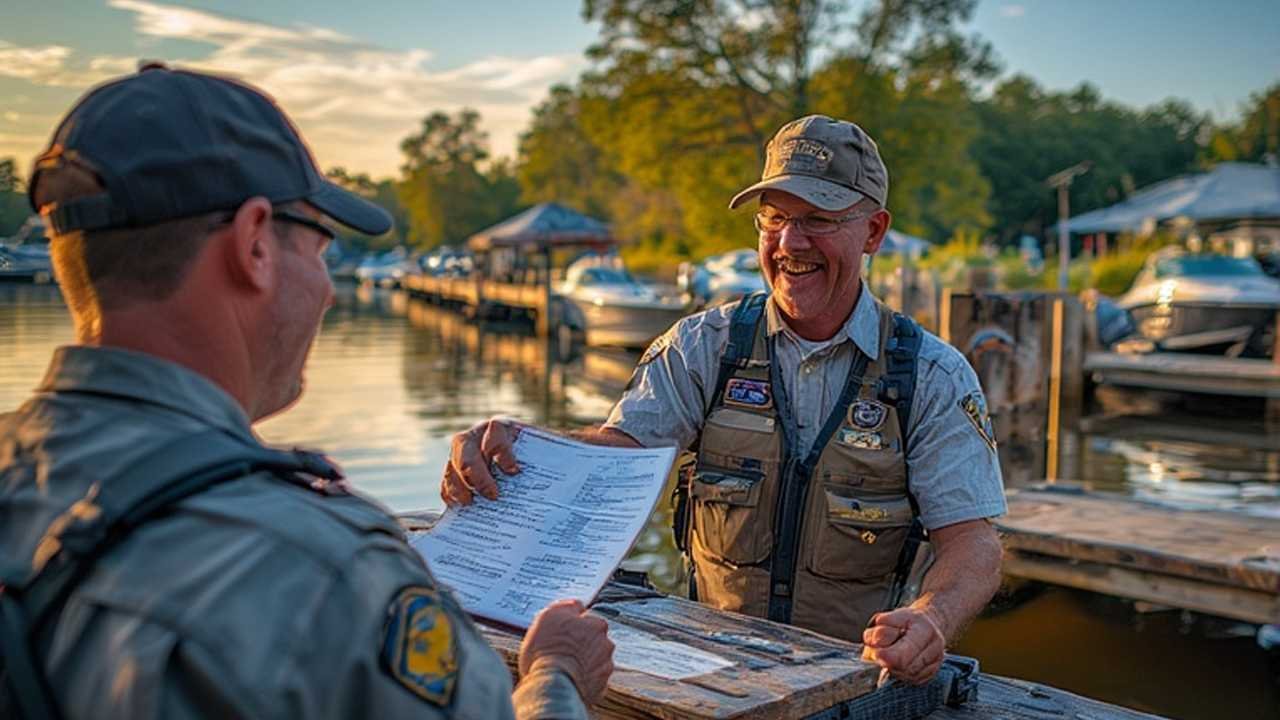
Whether you are a novice or an experienced angler, it is imperative that you comprehend the requirements for obtaining a fishing license and permit in the United States. Through its fish and wildlife department, each state oversees its own fishing laws, which specify who must have a license, what kinds of permits are needed for various fishing activities, and the related fees and expiration dates. Residents who are 16 years of age or older typically need a regular fishing license, although some species, such as trout, salmon, or saltwater game fish, as well as specialized activities, such spearfishing or commercial fishing, may require extra licenses. The majority of states have yearly, short-term, and lifetime licensing choices, with special prices for veterans, senior citizens, active military members, and those with disabilities.
Beyond only enforcing regulations, the licensing system fulfills many vital functions. Fish stocking operations, habitat restoration projects, conservation programs, and public access enhancements to rivers nationwide are all directly funded by the money collected from fishing permits. Significant fines ranging from $50 to more than $1,000, possible equipment seizure, court appearances, and even criminal charges for repeat offenders can all occur from fishing without the appropriate license. It’s also critical to comprehend exclusions, since several jurisdictions exclude people with qualifying impairments, landowners fishing on their own property, certified fishing guides accompanying customers, and children under specific ages. Everything you need to know about getting the proper fishing license, staying in compliance with local, state, and federal laws, and avoiding expensive errors that might spoil your fishing trip is broken down in this extensive book.
Types of Fishing Licenses Available Across the United States
The diversity of fishing opportunities in America requires a corresponding variety of license types to accommodate different situations and angler profiles.
Resident vs Non-Resident Licenses
Resident Licenses are issued to individuals who have established legal residency in a state for a specified period, typically ranging from 30 to 180 days depending on the state. These licenses cost significantly less than non-resident options, reflecting the contribution residents make through state taxes. Proof of residency usually requires a valid driver’s license, state-issued ID, voter registration card, or utility bills showing your address.
Non-Resident Licenses accommodate anglers visiting from other states or countries. While more expensive, these licenses provide full fishing privileges within the issuing state’s waters. Many popular fishing destinations like Florida and Colorado offer various non-resident options to attract fishing tourism while maintaining sustainable fish populations.
Duration-Based License Options
| License Type | Typical Duration | Best For | Average Cost Range |
|---|---|---|---|
| Annual License | 365 days or calendar year | Regular anglers | $20-$50 (resident), $50-$150 (non-resident) |
| Multi-Day License | 1-7 days | Vacation fishing | $10-$30 |
| Lifetime License | Permanent | Long-term residents | $300-$1,500 (varies by age at purchase) |
| One-Day License | 24 hours | Trying fishing or occasional trips | $5-$15 |
| Military/Senior License | Annual or lifetime | Qualifying individuals | Reduced or free |
Specialized Fishing Licenses
Beyond basic freshwater fishing licenses, many situations require specialized credentials:
Saltwater Fishing Licenses are mandatory in most coastal states and may be separate from or in addition to freshwater licenses. States like California, Texas, and the Carolinas require distinct saltwater licenses or endorsements for ocean fishing.
Combination Licenses bundle fishing and hunting privileges together, often at a discounted rate compared to purchasing separately. These prove economical for outdoor enthusiasts who participate in multiple activities.
Commercial Fishing Licenses involve extensive regulations, higher fees, and strict reporting requirements. These are designed for individuals who sell their catch and operate fishing as a business venture.
Permit Requirements for Specific Fish Species
Simply having a basic fishing license doesn’t automatically grant permission to target all species. Many states require additional permits or stamps for certain fish.
Trout Stamps and Permits
Trout fishing generates enormous recreational interest, and many states stock trout in public waters at considerable expense. Consequently, trout stamps or permits typically cost an additional $5-$15 beyond the base license and help fund these stocking programs.
States with extensive trout fisheries—including Montana, Pennsylvania, and North Carolina—often mandate these stamps. Some states differentiate between stocked trout areas and wild trout streams, with varying requirements.
Salmon and Steelhead Endorsements
Pacific Northwest states and Great Lakes regions require special endorsements for salmon and steelhead fishing. These anadromous fish species face unique conservation challenges, and dedicated permits help manage populations sustainably.
Washington, Oregon, and Alaska have particularly strict salmon permitting systems, including catch reporting requirements and species-specific stamps for king salmon, coho, and sockeye.
Special Permits by Species Category
| Species Category | Common States Requiring Permits | Additional Cost | Special Restrictions |
|---|---|---|---|
| Striped Bass | Maryland, Massachusetts, New York | $5-$20 | Size and bag limits, seasonal closures |
| Paddlefish | Missouri, Oklahoma, Montana | $10-$25 | Lottery or limited tag system |
| Sturgeon | California, Oregon, Idaho | $20-$50 | Highly restricted, often catch-and-release only |
| Red Drum/Redfish | Texas, Louisiana, Florida | Included in saltwater license | Slot limits, limited harvest |
| Snook | Florida | $10 | Seasonal closures, slot limits |
| Lobster/Spiny Lobster | Florida, California | $5-$15 | Measurement requirements, season dates |
Age-Based Requirements and Exemptions
Different age groups face varying fishing license requirements, reflecting both encouragement of youth participation and recognition of senior contributions.
Youth Fishing Privileges
Most states exempt children under a certain age from needing fishing licenses, though the cutoff age varies considerably:
- No license required under age 16: Common in states like California, Texas, New York, and Illinois
- No license required under age 15: States including Florida, Georgia, and Michigan
- No license required under age 12: Some states with earlier requirements
- No license ever required: Very few states maintain this policy
Even when licenses aren’t required, youth anglers must typically fish with a licensed adult and follow all regulations regarding seasons, bag limits, and size restrictions. Many states offer free or discounted youth licenses for teenagers who fall outside the exemption age to encourage continued participation.
Senior Citizen Discounts and Free Licenses
Recognizing senior contributions and encouraging continued outdoor recreation, most states provide significant benefits:
Free Lifetime Licenses: Several states issue complimentary lifetime fishing licenses to residents once they reach a qualifying age, typically 65 or 70 years old.
Heavily Discounted Annual Licenses: Seniors who don’t qualify for free licenses usually receive 50-75% discounts on regular license fees.
Combined Senior Benefits: Some states bundle fishing, hunting, and park access into comprehensive senior outdoor recreation packages.
Additional Exemption Categories
Beyond age-based exemptions, several other groups may fish without licenses under specific circumstances:
- Landowners fishing on their own property: Most states exempt property owners fishing in private ponds or stream sections on their land
- Disabled individuals: Many states offer free licenses to residents with qualifying disabilities
- Active military personnel: Some states provide free or discounted licenses to active duty service members
- Veterans: Disabled veterans often receive complimentary lifetime fishing privileges
- Fishing guides with clients: Licensed guides typically don’t need separate licenses when accompanying paying customers
- Free fishing days: Most states designate certain days annually when everyone can fish without a license
How to Purchase Your Fishing License
Technology has dramatically simplified the license purchasing process, though traditional methods remain available.
Online Purchase Options
Nearly every state now offers online fishing license sales through official fish and wildlife department websites. This method provides several advantages:
- Instant license availability—print immediately or receive electronic versions on mobile devices
- 24/7 purchase ability without traveling to vendors
- Easy renewal reminders via email
- Online account management for viewing purchase history
- Ability to buy licenses for multiple family members simultaneously
Online purchasing typically requires creating an account, providing proof of residency documentation, and paying with credit or debit cards. Transaction fees of $1-$3 commonly apply.
In-Person Vendors and Retailers
For those preferring traditional methods, thousands of authorized retail locations sell fishing licenses:
Common Vendor Types:
- Sporting goods stores (Bass Pro Shops, Cabela’s, Dick’s Sporting Goods)
- Outdoor specialty retailers
- Bait and tackle shops
- Major retailers (Walmart, some grocery chains)
- State fish and wildlife offices
- County clerk offices
- Marina operations
Retailers may charge small transaction fees ($1-$2) for processing license sales. Bring valid identification and proof of residency when purchasing in person.
Mobile Applications
Many state fish and wildlife agencies now offer dedicated mobile apps allowing license purchases, digital license storage, and regulation access all in one platform. Popular state apps include:
- California DFW
- Texas Parks & Wildlife
- Florida Fish and Wildlife (FWC)
- New York DEC
- Michigan DNR
These apps often include additional features like fishing reports, lake maps, species identification guides, and regulation summaries. Understanding essential fishing safety guidelines can also be accessed through many of these platforms.
State-by-State Variations in License Requirements
Each state maintains unique fishing regulations reflecting local fish populations, water resources, and conservation priorities.
Regional Licensing Differences
Southern States generally have year-round fishing opportunities with licenses valid on calendar or purchase-year bases. States like Louisiana and Georgia separate freshwater and saltwater licensing clearly.
Northeastern States often have more complex seasonal regulations with various stamp requirements for different species. Massachusetts and Maine require both base licenses and species-specific permits for popular game fish.
Western States frequently manage fishing through complex permit systems for premium waters, especially for trout and salmon. Idaho and Oregon maintain sophisticated permit structures.
Midwest States typically offer straightforward licensing but may require trout stamps or Great Lakes salmon stamps depending on target species. Wisconsin and Minnesota exemplify this approach.
Reciprocal Agreements Between States
Some neighboring states maintain reciprocal fishing agreements allowing anglers from one state to fish in another’s waters under certain conditions:
Border Water Agreements: Many states sharing major rivers or lakes allow residents from either state to fish these waters with their home state license. Examples include portions of the Mississippi River, Ohio River, and various border lakes.
Special Multi-State Licenses: The Great Lakes region offers special licenses valid across multiple state waters for species like salmon and lake trout.
These agreements reduce confusion and encourage interstate fishing tourism while maintaining conservation standards.
Required Documentation and Proof of Purchase
Proper documentation is critical to avoid citations and fines during fishing activities.
What You Must Carry While Fishing
Anglers must have immediate access to specific documents whenever fishing in public waters:
- Valid fishing license: Physical card or electronic version on smartphone
- Any required stamps or permits: Trout stamps, salmon endorsements, special area permits
- Government-issued photo ID: To verify license holder identity
- Harvest tags: For limited-quota species, if applicable
- Boat registration: When fishing from watercraft
Electronic Licenses: Most states now accept digital licenses displayed on smartphones. However, ensure your device has sufficient battery life and screenshot licenses in case of connectivity issues. Some wardens may have difficulty verifying certain electronic formats.
Physical Licenses: Traditional plastic or paper licenses remain foolproof options. Many anglers laminate paper licenses for waterproofing. Some states mail plastic cards automatically, while others charge extra for physical versions.
License Display Requirements
Certain states require licenses to be visibly displayed while fishing:
- Some mandate licenses be attached to outer clothing
- Others require display on fishing vests or hats
- Ice fishing shelters may need licenses prominently posted
- Tournament fishing often has special display rules
Check specific state regulations, as improper display can result in citations even when you possess valid licenses.
Federal Fishing Requirements and Regulations
Beyond state licensing, federal regulations govern certain fishing activities, particularly in federal waters and for specific protected species.
Federal Waters and Licensing
Offshore Federal Waters: In the Atlantic and Gulf of Mexico, federal waters begin three miles from shore (nine miles for Texas and Florida’s Gulf coast). Pacific federal waters begin three miles from shore.
While state licenses generally aren’t required in federal waters, anglers must still comply with federal regulations administered by the National Marine Fisheries Service (NOAA Fisheries). Many highly regulated species like bluefin tuna, billfish, and sharks require federal permits regardless of location.
Highly Migratory Species Permits
Certain species that travel vast ocean distances require special federal permits:
HMS (Highly Migratory Species) Permit: Required for recreational fishing targeting:
- Tunas (bluefin, yellowfin, bigeye)
- Sharks (many species)
- Swordfish
- Billfish (marlin, sailfish)
These permits are typically free but require annual registration and adherence to strict reporting requirements.
National Park and Federal Land Requirements
Fishing in waters within National Parks, National Forests, and other federal lands generally requires:
- Valid state fishing license for that jurisdiction
- Any additional permits specific to that federal property
- Compliance with both federal and state regulations (typically the more restrictive applies)
Some National Parks like Yellowstone have unique regulations requiring special permits beyond state licenses.
Penalties for Fishing Without Proper Licenses
Enforcement of fishing regulations protects aquatic resources and ensures fair access to public waters. Violations carry significant consequences.
Common Violations and Fines
| Violation Type | Typical Fine Range | Additional Consequences |
|---|---|---|
| Fishing without a license | $50-$500 | Court appearance, possible equipment confiscation |
| Fishing without required permit/stamp | $100-$300 | Points on hunting/fishing record |
| Fraudulent license use | $200-$1,000 | Criminal charges, license suspension |
| Exceeding bag limits | $100-$500 per fish over limit | Equipment forfeiture |
| Keeping undersized fish | $50-$300 per fish | Mandatory court appearance |
| Fishing closed waters | $250-$1,000 | Possible misdemeanor charges |
| Fishing during closed season | $200-$500 | Hunting/fishing privilege suspension |
Long-Term Consequences
Beyond immediate fines, fishing violations can result in:
License Suspension or Revocation: Serious or repeated violations may result in losing fishing privileges for months or years, sometimes permanently.
Criminal Record: Major violations constitute misdemeanor or even felony charges in some states, creating permanent criminal records affecting employment and other life areas.
Interstate Compact Violations: Many states participate in compacts that share violation information. A suspension in one state may prevent you from obtaining licenses in participating states.
Equipment Forfeiture: Boats, vehicles, fishing equipment, and even caught fish can be seized and sold at auction for serious violations.
Enforcement and Checking Stations
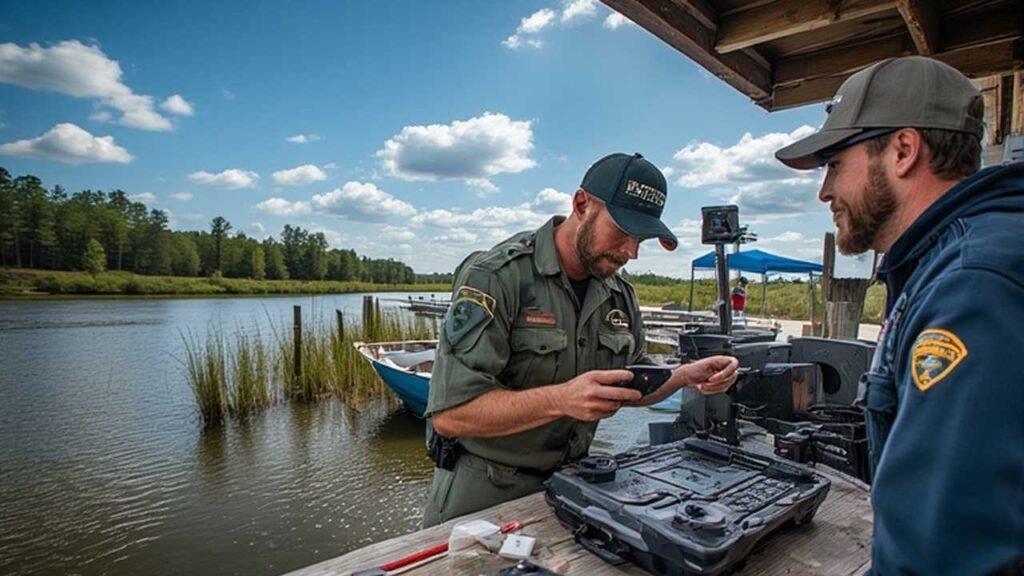
Conservation Officers, also called game wardens or fish and wildlife officers, enforce fishing regulations. They possess broad authority including:
- Checking licenses and permits at any time
- Inspecting caught fish for size and species compliance
- Examining fishing equipment and methods
- Accessing private property in many situations
- Issuing citations and making arrests
Compliance Checkpoints: Some states operate fishing checkpoints during peak seasons, particularly for high-value species like salmon or striped bass. Expect license checks, bag inspections, and harvest reporting requirements.
Special Permits for Tournament and Commercial Fishing
Organized fishing events and commercial operations require additional licensing beyond recreational permits.
Tournament Fishing Permits
Most states require special permits for organized fishing tournaments to ensure proper management and reporting:
Requirements Typically Include:
- Advanced application (often 30-90 days before event)
- Permit fees ranging from $25 to several hundred dollars
- Detailed tournament rules submission
- Proof of liability insurance
- Weigh-in station approval
- Fish handling and release plans
- Reporting of tournament results and fish mortality
Some states differentiate between small casual events and major professional tournaments with varying permit complexity.
Charter Boat and Fishing Guide Licenses
Professional fishing guides and charter operators need extensive licensing:
Captain Credentials:
- U.S. Coast Guard Captain’s License (for vessels carrying passengers for hire)
- State fishing guide license or registration
- Business licenses and permits
- Liability insurance documentation
Client Coverage: Many states allow clients fishing with licensed guides to fish under the guide’s license or provide special short-term options. However, some states still require clients to hold individual licenses even when accompanied by guides.
Commercial Fishing Credentials
Commercial fishing operations face comprehensive regulatory oversight:
- Federal commercial fishing permits for many species
- State commercial fishing licenses
- Species-specific endorsements or stamps
- Vessel registrations and permits
- Catch reporting systems and quotas
- Area-specific access permits
- Gear restrictions and licenses
Commercial licensing costs range from hundreds to thousands of dollars annually depending on species, methods, and locations.
Disabled Angler Accommodations and Special Permits
Recognizing that fishing provides therapeutic and recreational benefits for individuals with disabilities, most states offer specialized programs.
Eligibility Requirements for Disabled Licenses
Qualifying disabilities typically include:
- Permanent mobility impairments
- Visual impairments meeting certain criteria
- Mental or developmental disabilities
- Combat-related disabilities for veterans
- Other medically documented conditions preventing normal fishing activities
Documentation usually requires physician verification or proof of disability benefits (Social Security Disability, Veterans Affairs disability rating).
Disabled Fishing Privileges
Many states provide enhanced opportunities:
Free or Reduced-Cost Licenses: Most states waive or substantially reduce license fees for qualifying disabled individuals.
Accessible Fishing Areas: Designated accessible piers, platforms, and shoreline areas with amenities like wheelchair-accessible surfaces, handrails, and covered shelters.
Extended Privileges: Some states allow disabled anglers to:
- Fish from vehicles in certain areas
- Have assistants help with fishing activities
- Access special permit-only areas
- Enjoy extended seasons or increased bag limits
Companion and Caregiver Provisions
Several states recognize that disabled anglers may need assistance:
- Companions may help cast, retrieve, and handle fish
- The disabled angler’s license covers fish caught with assistance
- Some states issue special companion permits
- Caregivers must follow all regulations even when assisting
Understanding License Revenue and Conservation Funding
The money collected through fishing license sales directly impacts aquatic conservation and recreational fishing opportunities.
Where Your License Fees Go
Federal Distribution: Under the Dingell-Johnson Sport Fish Restoration Act, an excise tax on fishing equipment and boat fuel generates federal funding distributed to states based on license sales and land/water area. States must use these funds for:
- Fish habitat restoration and improvement
- Aquatic research and surveys
- Fish hatcheries and stocking programs
- Boating access development
- Aquatic education programs
State Programs Funded by License Sales:
- Conservation officer salaries and enforcement programs
- Public fishing access acquisition and maintenance
- Fish population monitoring and management
- Invasive species control and prevention
- Water quality testing and protection
- Angler education and outreach
- Fishing regulation development and publication
The Economic Impact of Fishing License Systems
Recreational fishing generates substantial economic activity:
- Over 50 million Americans fish annually
- More than $125 billion in annual economic output
- Supporting over 800,000 jobs nationwide
- $15 billion in state and federal tax revenue
Robust license systems ensure sustainable fish populations supporting these economic benefits while funding conservation for future generations.
How to Renew and Manage Your Fishing License
Maintaining current licenses ensures uninterrupted fishing privileges and compliance with regulations.
Annual License Renewal Process
Most annual licenses expire either on a specific calendar date (December 31, March 31) or exactly 365 days from purchase. States typically begin sending renewal reminders 30-60 days before expiration through:
- Email notifications
- Text message alerts
- Physical mail postcards
- Mobile app notifications
Renewal Methods:
- Online through state wildlife agency websites (fastest)
- Mobile apps with saved account information
- Phone renewal with automated systems
- In-person at licensed vendors
- Mail-in renewal forms
Many states offer multi-year license options or automatic renewal programs for convenience.
Lost License Replacement
If you lose your physical fishing license:
Immediate Solutions:
- Log into your online account and reprint or display electronic version
- Access license information through mobile apps
- Call the state agency for verification (officers can confirm valid licenses)
Replacement Cards:
- Most states charge small replacement fees ($2-$5)
- Process online or at vendors
- New card mailed or available for pickup
Temporary Printouts: Some states issue free temporary printable licenses valid until replacement cards arrive.
Account Management and Update Requirements
Maintaining accurate information in your license account is important:
Update Immediately When:
- You change your address
- Your name changes (marriage, legal name change)
- Your residency status changes
- Contact information updates
Accurate information ensures you receive regulatory updates, renewal reminders, and important conservation news.
Interstate Fishing Considerations
Many anglers fish across state lines, requiring understanding of varying requirements.
Border Waters and Shared Lakes
Major waterways forming state boundaries often have special provisions:
Missouri River: Multiple states border this river, each with specific reciprocal agreements or special licensing for boundary waters.
Mississippi River: Border state residents often enjoy special reciprocal fishing rights in the main channel and certain tributaries.
Great Lakes: Complex regulations involve multiple states and some federal oversight, particularly for salmon and lake trout fishing.
Reservoirs Spanning State Lines: Lakes like Kentucky Lake, Lake of the Ozarks portions, and others may require understanding which state waters you’re fishing.
Multi-State Fishing Trips
When planning fishing trips across multiple states:
- Research each state’s license requirements before departure
- Purchase all necessary licenses in advance online
- Keep printed or electronic copies of all licenses accessible
- Note different regulation dates—seasons and bag limits vary by state
- Understand transportation rules—legally caught fish from one state may violate limits when transported to another
Traveling With Your Catch
Transporting fish across state lines requires attention to:
- State of Origin Regulations: Follow bag limits and size restrictions where fish were caught
- Possession Limits: Some states count all fish you possess, regardless of where caught
- Required Documentation: Keep licenses and potentially tags or receipts proving legal harvest
- Processing Rules: Some states restrict transporting whole fish; fillets must meet specific requirements
- Endangered Species: Transporting protected species across state lines may violate federal law
Special Situations and Unique Permit Requirements
Certain fishing methods and locations require additional permissions beyond standard licenses.
Private Property and Pond Fishing
Fishing in private waters generally requires:
Property Owner Permission: Always obtain explicit permission before fishing on private property, even if publicly accessible roads or trails pass nearby.
License Requirements on Private Land:
- Many states still require fishing licenses even on private property (unless you’re the owner)
- Some states exempt license requirements for completely private, enclosed waters stocked solely by the landowner
- Commercial fishing operations (pay-to-fish ponds) typically require patrons to hold valid licenses
Spearfishing and Alternative Methods
Non-traditional fishing methods often need special permits:
Spearfishing/Bowfishing:
- Separate endorsements or permits required in most states
- Species restrictions (often limited to rough fish or invasive species)
- Equipment specifications and safety requirements
- May be prohibited in certain water bodies
Netting and Trapping:
- Generally requires commercial fishing licenses
- Specific net size, mesh, and type regulations
- Often limited to rough fish or baitfish collection
- Some states allow limited recreational netting for certain species
Trotlines, Limb Lines, and Jug Fishing:
- Special permits or endorsements may be required
- Quantity limits on devices deployed
- Marking and identification requirements
- Species and size restrictions apply
Fishing from Watercraft
Boat fishing may require additional credentials:
- Boat Registration: All motorized vessels and many non-motorized boats must be registered
- Safety Equipment: Life jackets, fire extinguishers, navigation lights, and other required safety gear
- Fishing License: Every angler on the boat needs appropriate fishing licenses (unless exempt)
- Access Permits: Some boat ramps and access points charge daily or annual fees
- Special Area Permits: Certain restricted waters may require boat permits or reservations
Frequently Asked Questions
Do I need a fishing license to fish in the ocean from shore?
Fishing permits are necessary for saltwater shore fishing in the majority of coastal states. States have different regulations, though; some exclude pier fishing while requiring licenses for beach or jetty fishing. Recreational fishing licenses are completely unnecessary in certain places, such as Hawaii. Before you go to the seaside, find out what the saltwater fishing laws are in your state.
Can I fish while my license is in the mail after purchasing online?
In the majority of states, yes. You get instant permission to fish when you buy a fishing license online. You may either store the electronic license to your smartphone or print the confirmation receipt. Even if you haven’t gotten the actual card, conservation officers can use their enforcement tools to confirm the authenticity of your license.
What happens if I’m caught fishing without a license for the first time?
Depending on the state, first-time offenders usually receive tickets with penalties between $50 and $500. Officers have the authority to issue warnings for minor first violations, particularly if you can demonstrate that your license has recently expired or that you typically keep valid licenses. However, more serious consequences, including possible criminal charges, follow repeated infractions or deliberate avoidance.
Are fishing licenses required on Native American reservation waters?
Natural resources are within the exclusive sovereignty of tribal territories. State licenses might not be valid, and many tribes grant their own fishing permits and licenses for tribal waterways. While some tribes mandate the purchase of tribal permits, others have agreements that allows the honoring of state licenses. Before fishing in tribal waterways, always get in touch with the natural resources department of the particular tribe.
Can I use someone else’s fishing license if they’re not using it?
Not at all. Only the individual to whom a fishing license has been granted may use it; they are not transferable. It is fraud to use someone else’s license, and doing so can lead to severe consequences like criminal prosecution, hefty fines, and permanent loss of fishing rights. Officers are able to confirm identities and will issue citations to anyone who uses false credentials.
Do I need separate licenses for freshwater and saltwater fishing?
Your state is the only factor that affects this. Freshwater and saltwater permits must be obtained separately in certain places, such as Florida. California, for example, only has one license that covers both. Combination licenses, which include both categories at a reduced cost, are available in a number of states. Examine the particular regulations in your state, since these differ greatly throughout the nation.
How long does it take to get a fishing license?
Instant access is offered by online purchases; as the transaction is over, you may start fishing. Although you can use your electronic confirmation in the interim, physical license cards usually come by mail in 7–10 business days. Purchases made in person at retail establishments result in instantaneous physical licenses or short-term paper licenses that are good until permanent cards are processed.
Can I get a refund on my fishing license if I don’t use it?
In general, no. Since the money is immediately used for conservation initiatives, fishing licenses are usually non-refundable once they are purchased. However, if you haven’t fished yet, certain states could grant refunds within a relatively short timeframe (24–48 hours). If you have exceptional circumstances, get in touch with your state’s fish and wildlife department; nevertheless, refunds are not usually given.