
Georgia Fishing Season and Limits for 2026–2027 by Month – Species, Licenses & Hotspots
If you’ve ever stood on a Georgia boat ramp at sunrise with a coffee in one hand and a tackle box in the other, you already know the mood here is different. One weekend you’re chasing trout in cold mountain water, and the next you’re pitching for bass on a big reservoir or watching a cork drift for red drum on the coast. That variety is exactly why the 2026-2027 cycle matters so much: rules can change by species, waterbody, and even time of year.
For beginners, the big takeaways are pretty simple. Most freshwater opportunities stay open all year, but size restrictions, special trout rules, and striped bass closures on certain systems can absolutely affect your trip. Residents and visitors age 16 and older usually need a license, trout anglers need an extra trout privilege, and saltwater anglers also need the free SIP permit. Before heading out, it’s smart to skim the official Georgia fishing regulations guide and then plan around the waters you actually want to fish.
And yes—whether you live here or you’re visiting for a long weekend, this state gives you plenty to work with: bass lakes, stocked trout waters, public lakes, family-friendly PFAs, and coastal options too. 🐟
📅 Quick Reference Table by Month
| Month | Major Species to Target | Open/Close Dates | Daily Bag Limit | Special Regulations |
|---|---|---|---|---|
| January | Trout, bass, crappie, catfish | Freshwater generally open year-round | Trout 8; black bass 10; crappie 30; catfish no limit | Delayed harvest trout streams are catch-and-release only with artificial lures/single hooks through May 14 |
| February | Trout, bass, crappie, walleye | Same as January | Walleye 8 | Great month for mountain trout and reservoir crappie |
| March | Trout, bass, striped bass, panfish | Freshwater open; saltwater cobia opens Mar. 1 | Striped/white/hybrid bass 15, only 2 may be 22″+ | Trout stocking season begins in spring; special river rules still apply |
| April | Bass, crappie, trout, stripers | Open | Standard statewide limits apply | One of the best all-around angling months |
| May | Bass, catfish, bream, saltwater species | Open, but striped bass fishing closes May 1-Oct. 31 on parts of Flint, Chattahoochee, and Spring Creek systems | Sunfish/bream 50 | Delayed harvest streams switch to regular trout rules starting May 15 |
| June | Bass, catfish, bluegill, crappie | Open | Standard statewide limits apply | Warmwater bite picks up; watch local lake-specific size rules |
| July | Catfish, bass, bream, coastal redfish | Open | Red drum 5 in saltwater | Hot weather means early starts help a lot |
| August | Catfish, panfish, bass, inshore saltwater | Open | Standard statewide limits apply | Double-check waterbody-specific restrictions and heat safety |
| September | Bass, crappie, trout, red drum | Open | Trout 8 | Fall transition begins; stocked and wild trout waters start improving |
| October | Trout, bass, crappie, striped bass | Open | Standard statewide limits apply | Great crossover month for mountain and reservoir trips |
| November | Trout, crappie, bass | Open | Trout 8 | Delayed harvest rules restart Nov. 1 on named streams |
| December | Trout, crappie, bass, catfish | Open | Standard statewide limits apply | Cool-water bite improves; less crowd pressure in many public spots |
🐟 Popular Sport Fish
Bass
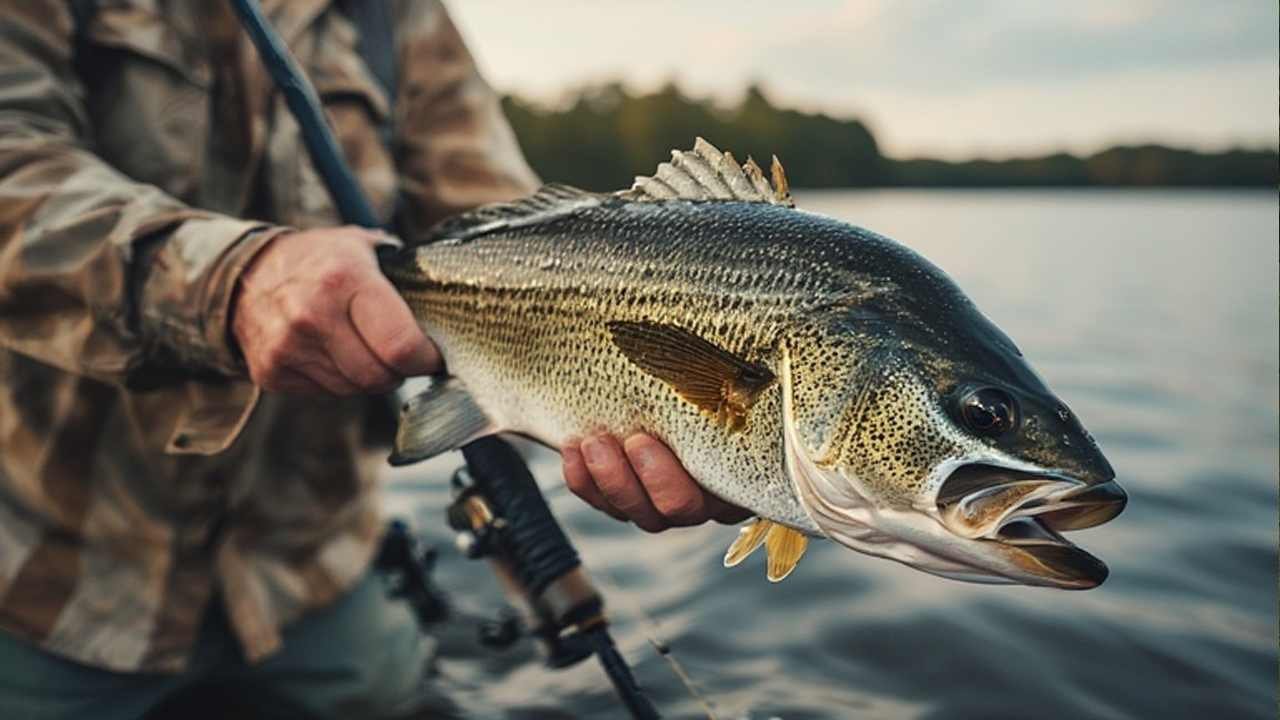
Bass are the headliners here, no question. Freshwater has no general closed season, so you can target largemouth, spotted, and shoal bass all year. The statewide daily limit for all black bass species combined is 10. Largemouth has a 12-inch minimum statewide, but some lakes are stricter—Lake Lanier, Lake Oconee, Lake Blackshear, West Point, Walter F. George, and many Public Fishing Area lakes use a 14-inch minimum. Shoal bass carry a 15-inch statewide minimum.
If you’re brand new, reservoirs like Lanier, Hartwell, and Richard B. Russell are good places to start because they also give you crappie and striper options in the same trip.
Trout
Georgia’s designated trout waters are open year-round, which is great news if you prefer crisp mountain mornings and lighter tackle. The statewide daily creel limit is 8 trout. Trout anglers are limited to one hand-held pole and line on trout streams, and live fish bait is not allowed there.
The biggest “gotcha” for beginners is delayed harvest. On Amicalola Creek, parts of the Chattahoochee, Chattooga, Smith Creek, and the Toccoa, all trout must be released immediately from Nov. 1 through May 14, and only artificial lures with one single hook per lure may be used. After May 15, those stretches return to regular rules.
Crappie
Crappie are one of the easiest ways to get somebody hooked on fishing—pun fully intended. The daily limit is 30, and they’re common in reservoirs such as Lanier, Hartwell, Richard B. Russell, Seminole, and Walter F. George. Spring is famous, but fall can be sneaky good too.
Catfish
If you want simple fun with less fuss, catfish are hard to beat. Channel and flathead catfish have no daily limit under the statewide game-species table. Plenty of lakes and PFAs offer dependable catfish action, and this is one of the easiest family options because you don’t need fancy gear or perfect timing.
Walleye
Walleye is more of a north-Georgia niche than a statewide obsession, but it’s absolutely part of the picture. The daily limit is 8. Georgia’s walleye program focuses on North Georgia, where the species occurs naturally in parts of the Tennessee Valley and is also stocked in mountain-region lakes and reservoirs. If you like the idea of cooler water and a quieter crowd, this one’s worth exploring.
What about muskie and pike?
Unlike some northern states, Georgia’s everyday conversation leans more toward bass, trout, crappie, catfish, stripers, and coastal species. Pickerel do show up in the rules, but muskie and northern pike are not the stars of this guide.
🦞 Specialty Species
Striped bass is the big specialty name on the freshwater side. The general daily limit for striped bass, white bass, and hybrid white-striped bass combined is 15, but only two fish may be 22 inches or longer. On some river systems, the limit is much tighter. Also, parts of the Flint, Chattahoochee, and Spring Creek drainages are closed to striped bass fishing from May 1 through Oct. 31.
On the coast, things get even more species-specific. Red drum is open year-round with a daily limit of 5 and a slot of 14 to 23 inches. Cobia runs March 1 through Oct. 31 with a one-fish per angler limit. Spotted seatrout, flounder, sheepshead, and Spanish mackerel all stay popular with visiting anglers too. Saltwater trips require a valid fishing license plus the free SIP permit. 🐠
One important no-go item: sturgeon may not be harvested in fresh or saltwater in the state. If you catch one, release it.
🐠 Panfish & Everyday Catches
Here’s the kind of table beginners actually use on the drive to the lake:
| Species | Statewide Daily Limit | Notes |
|---|---|---|
| Crappie (black/white) | 30 | Excellent in reservoirs and larger public lakes |
| Sunfish/Bream (bluegill, redear, redbreast, warmouth, etc.) | 50 | Great for kids and bank anglers |
| Pickerel | 15 | More regional, but listed in statewide rules |
| Catfish (channel/flathead) | No limit | Easy, affordable, and fun for casual trips |
If you’re introducing a child, panfish is usually the right answer. Fast bites beat complicated strategy every time. I’ve watched plenty of first-time anglers forget all about “trophy fishing” the moment a bluegill starts tugging.
🦆 Stocked & Managed Waters
Georgia’s trout program is a major deal. The state manages roughly 4,000 miles of trout streams, with natural reproduction in about 2,800 miles and native brook trout in around 150 miles. Stocking begins in spring and continues through much of the warmer season, with weekly reports and frequency updates posted online.
For trip planning, the handiest tool is the Georgia trout stream interactive map. It’s especially useful if you want to sort out trout waters, access points, and where to start without guessing.
Beyond trout, managed waters also include PFAs and state-park lakes where access is straightforward and beginner success rates are usually better than on random, unscouted water.
🌍 Public vs Private Waters
Here’s the simple version: public water is the easiest route for most anglers, but you still need to know where legal access begins and ends.
Public options include reservoirs, rivers, Wildlife Management Areas, Public Fishing Areas, and state parks. In those places, you can fish as long as you follow state rules and any posted site-specific restrictions. Private ponds and privately bordered streams are different—you need landowner permission. Georgia specifically warns anglers not to fish on someone else’s property without permission, and that matters a lot in trout country where streams often cross private land.
A good habit is to check site postings before you unload the cooler. PFAs can carry special limits that differ from statewide rules.
🎟️ Fishing License Guide
For most people, the rule is straightforward: if you’re 16 or older, you need a valid license to fish in fresh or saltwater.
- Residents: Annual fishing licenses are available, and Georgia notes that a resident annual fishing or hunting license is good for 365 days from purchase.
- Non-residents: Also need a valid nonresident fishing license if age 16 or older. A one-day nonresident fishing license is available.
- Youth/Junior anglers: Resident and nonresident anglers under 16 do not need a fishing or trout license.
- Seniors: Residents born on or before June 30, 1952 may qualify for a free lifetime sportsman’s license; others 65+ may qualify for reduced-cost options.
- Short-term/day passes: Georgia offers short-term licenses from 1 to 10 days.
- Combo licenses: Sportsman’s and combo hunting/fishing packages are available.
- Specialty add-ons: Trout fishing requires a trout license for anglers 16+ fishing designated trout waters or possessing trout. Saltwater fishing requires the free SIP permit, renewed annually.
If you like comparing trip timing across the Southeast, the Florida fishing season guide can be handy for planning a back-to-back coastal road trip.
❓ FAQ Section
Do you need a fishing license in Georgia if you’re over 16?
Yes. Residents and non-residents age 16 and older generally need a valid license for fresh or salt water.
Is trout fishing open year-round?
Yes. All designated trout waters are open year-round.
Do you need a separate trout license?
Yes, if you are 16 or older and fishing designated trout waters or possessing trout.
What is the trout daily creel limit?
The statewide daily creel limit for trout is 8, though special waters can have added restrictions.
Is there a closed season for bass?
No general freshwater closed season applies to bass, but size limits vary by lake.
Are there special striped bass closures?
Yes. Some portions of the Flint, Chattahoochee, and Spring Creek systems close to striped bass fishing from May 1 through Oct. 31.
Do saltwater anglers need anything besides a license?
Yes. They also need the free Saltwater Information Program (SIP) permit.
🗺️ Map & Hotspots
If I had to narrow it down to a short “don’t-overthink-it” list for 2026-2027, these would be my first picks:
- Lake Lanier – strong mix of spotted bass, striped bass, largemouth, crappie, and even walleye
- Lake Hartwell – reliable multi-species action, especially bass, crappie, and stripers
- Toccoa River below Blue Ridge Dam – a classic trout destination with strong appeal for both beginners and regulars
- Rocky Mountain PFA (Antioch Lake) – year-round access with bass, bluegill, catfish, crappie, redear, and walleye
- Lake Walter F. George – famous bass water with solid crappie and catfish options too 🎣
✅ Wrap-Up
The nicest thing about fishing in this state is that you really don’t need to wait for one magical opener. There’s almost always something biting somewhere—trout in the hills, bass and crappie on reservoirs, catfish after dark, and coastal species when the saltwater itch kicks in. Grab your license, check water levels, pack extra sunscreen, and take a friend or family member along. That’s half the fun anyway.
Just make sure you review the current bag limits, special trout rules, striped bass closures, and local access notes before leaving the driveway. A little homework saves a lot of frustration once you’re standing at the water’s edge with a line in. 🐟