
Delaware Fishing Season and Limits for 2025–2026 by Month – Species, Licenses & Hotspots
There’s something special about fishing in the First State, as anybody who has ever stood on a Delaware beach at dawn with a line in hand and watched the waves wash in while seabirds dive for breakfast knows. Delaware provides a surprisingly wide range of freshwater and saltwater options that will keep your tackle box occupied all year long, whether you’re a longtime resident or just visiting for a summer road trip.
Delaware’s limited terrain packs a powerful punch, from the serene, trout-stocked White Clay Creek running through northern New Castle County to the rugged Indian River Inlet, where striped bass gather. In addition to the Atlantic Ocean to the east and Delaware Bay to the west, there are ponds, rivers, and tributaries all throughout the place. What’s the best part? To begin, a PhD in marine biology is not required. Everything you need to know is broken down in this guide, including licensing requirements, bag restrictions, ideal waters, and the species you’re most likely to catch in 2025 and 2026.
So grab a cup of coffee, take a seat, and let’s plan your journey around Delaware. You’ll have a lot better idea of where to look for fish and when to cast your line by the end of this, I promise.
📅 Quick Reference Table by Month
Delaware’s location means you’ve got overlapping seasons and multiple species available throughout the year. Here’s a snapshot of what you can expect each month:
| Month | Top Species | Notes |
|---|---|---|
| January | Tautog, White Perch, Winter Flounder (Feb 11+) | Cold-water species active; bundle up! |
| February | Winter Flounder (Feb 11-Apr 10), Tautog | Short flounder window opens mid-month |
| March | Trout (ponds open Mar 2), White Perch | Downstate pond trout season kicks off |
| April | Trout (streams open Apr 6), Striped Bass (catch & release only spawning areas Apr 1-May 31) | Spring action heats up |
| May | Bass (open May 1), Black Sea Bass (May 15+), Trout | Prime time for multiple species |
| June | Striped Bass (full season resumes Jun 1), Summer Flounder, Bluefish | Free fishing days Jun 7-8, 2025 |
| July | Tautog (season resumes Jul 1), Summer Flounder, Bluefish, Spanish Mackerel | Peak summer angling |
| August | Striped Bass (20-24″ slot in DE Bay/River Jul 1-Aug 31), Red Drum, Cobia | Hot weather, hot fishing |
| September | Red Drum, Flounder, Bluefish, Black Sea Bass (through Sep 30) | Fall migration begins |
| October | Trout (fall stocking in White Clay Creek), Black Sea Bass (Oct 10+), Tautog | Cooler temps bring fish closer |
| November | Striped Bass, Tautog, Bluefish | Excellent late-season action |
| December | Tautog, Striped Bass, Weakfish | Year-end opportunities |
Keep in mind that catch-and-release seasons exist for certain species during spawning periods (like striped bass in April-May in designated spawning grounds). Always check the latest regs before you head out—nature doesn’t follow a calendar perfectly, and neither do fish.
🐟 Popular Sport Fish
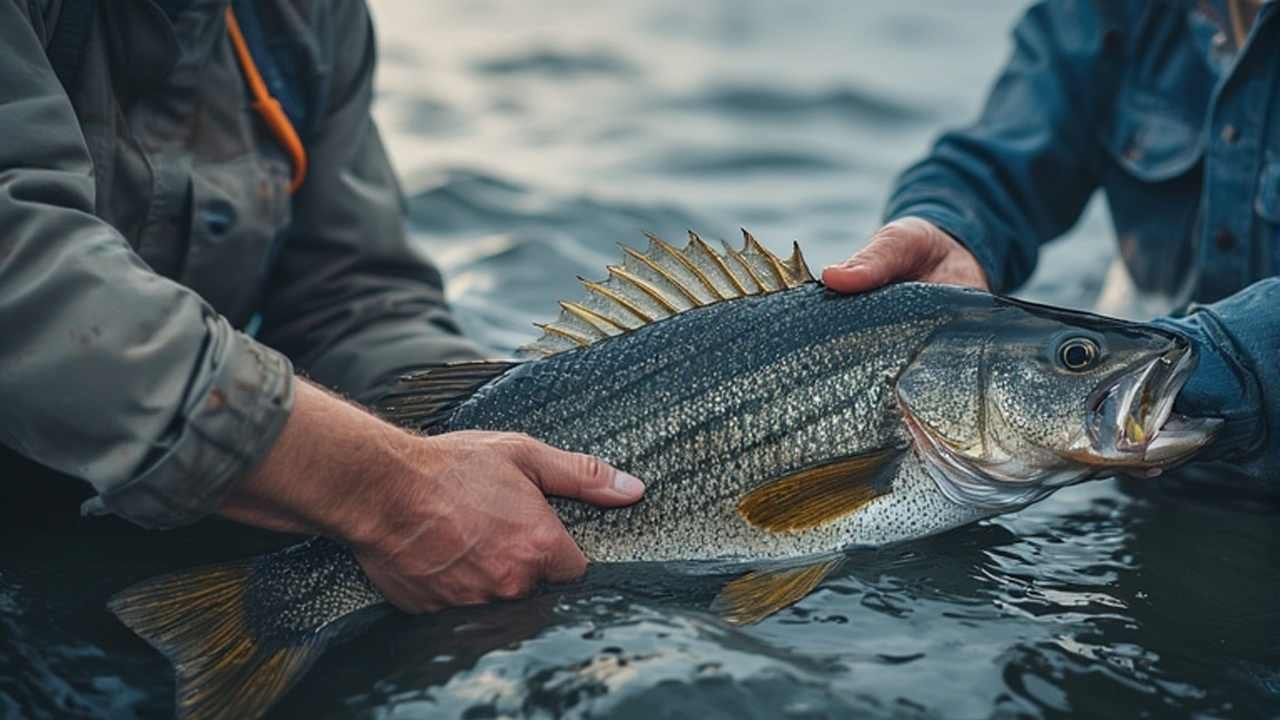
Striped Bass (Rockfish) 🦈
The rockfish is Delaware’s marquee species. These silver-sided bruisers can be found in both the Delaware Bay and along the Atlantic coast.
- Season: Open year-round, except catch-and-release only on spawning grounds April 1 – May 31
- Size Limits:
- 28-31 inches (most areas, year-round)
- 20-24 inches slot (Delaware Bay, Delaware River, and tributaries July 1 – August 31 only)
- Daily Bag Limit: 1 fish per person
- Best Spots: Cape Henlopen State Park fishing pier, Indian River Marina, Delaware River near Woodland Beach, The Eights (just beyond Delaware Bay’s edge)
- Pro Tip: Use inline circle hooks when fishing with natural baits (clams, squid, mackerel, menhaden). It’s the law, and it improves survival rates for released fish.
Stripers run hard in the fall and spring. If you’re targeting trophy fish, late October through November can be downright epic as they follow baitfish migrations along the coast.
Largemouth & Smallmouth Bass 🐠
Delaware’s freshwater ponds and rivers serve up excellent bass opportunities. You’ll find largemouth in warm, weedy ponds, while smallmouth prefer cooler, flowing water.
- Season: Open year-round
- Size Limits:
- Largemouth: 12 inches minimum (15 inches at Beck’s Pond)
- Smallmouth: Protected slot—none between 12-17 inches
- Daily Bag Limit: 6 largemouth OR 6 smallmouth (combined or separate)
- Best Spots: Lums Pond, Red Clay Creek, parts of the Christiana River, Rittenhouse Park
- Technique: Topwater lures at dawn and dusk during summer months; switch to soft plastics and crankbaits as water cools.
There’s something incredibly satisfying about a largemouth exploding on a topwater lure in a quiet pond at first light. If you haven’t experienced it yet, put it on your bucket list.
Trout (Rainbow, Brown, Brook) 🎣
Trout fishing in Delaware is largely a put-and-take fishery, meaning the Delaware Division of Fish & Wildlife stocks rainbow, brown, and brook trout in select streams and ponds. Don’t expect wild, self-sustaining populations like you’d find in Pennsylvania or New York, but the stocked fish provide excellent family-friendly action.
- 2025 Season Dates:
- Downstate Ponds: Youth (under 16) open March 1, all anglers March 2
- Upstate Streams: Youth open April 5, all anglers April 6 at sunrise
- Close Date: Most waters close October 15 (though some may extend)
- Daily Bag Limit: 5 trout (combined species)
- Size Limit: Typically 9 inches minimum, but check specific waters
- Best Spots: White Clay Creek (New Castle County), Brandywine Creek, various stocked ponds in Kent and Sussex Counties
- Stocking Schedule: Check the Delaware DNREC official stocking schedule for dates and locations—they update it regularly.
Fall Bonus: White Clay Creek receives a supplemental fall stocking each year (usually in October), extending your trout opportunities into the cooler months. In 2025, about 1,000 pounds of 12-13 inch rainbows were stocked in late October, providing anglers with excellent fall and winter fishing.
🦞 Specialty Species (Saltwater Stars)
Tautog (Blackfish) 🐟
Tautog are the bulldogs of the reef. They’ve got crusher plates in their throats that can crack open barnacles and crabs like potato chips. Catching one requires patience, heavy tackle, and green crabs.
- Season: Jan 1 – May 15 and July 1 – Dec 31
- Minimum Size: 16 inches
- Daily Bag Limit: 4 fish per person
- Best Spots: Rocky structure around Cape Henlopen, Indian River Inlet, offshore wrecks
- Bait: Green crabs, white leggers (sand crabs), or fiddler crabs
Summer Flounder (Fluke) 🐠
Flatfish aficionados, this one’s for you. Summer flounder are ambush predators that bury themselves in sandy bottoms, waiting for unsuspecting baitfish to swim by.
- Season: Year-round
- Size Limits:
- Jan 1 – May 31: 16 inches
- Jun 1 – Dec 31: 17.5 inches
- Daily Bag Limit: 4 fish
- Technique: Bucktail jigs tipped with squid or live minnows; drift over sandy bottoms and channel edges
Black Sea Bass 🦈
These stocky, territorial fish hang out around structure—wrecks, reefs, pilings—and will bite just about anything that moves.
- Season: May 15 – September 30 and October 10 – December 31
- Minimum Size: 13 inches
- Daily Bag Limit: 15 per person
- Best Spots: Offshore wrecks, Indian River Inlet area, ocean structure
Weakfish 🐟
Once abundant, weakfish populations have declined significantly. Delaware now has strict regulations to help rebuild the stock.
- Season: Year-round
- Minimum Size: 13 inches
- Daily Bag Limit: 1 fish only—treat these with care
Red Drum (Redfish) 🦞
A southern favorite that’s found its way into Delaware’s coastal waters. Redfish are known for their copper-bronze bodies and the iconic black spot near their tail.
- Season: Year-round
- Slot Limit: 20-27 inches (must fall within this range)
- Daily Bag Limit: 5 per person
- Technique: Cut mullet or crab on Carolina rigs; fish around inlet jetties and surf zones
🐠 Panfish & Everyday Catches
Sometimes you just want to wet a line without worrying about regulations or trophy fish. That’s where panfish shine. Bluegill, crappie, white perch, and yellow perch are abundant, cooperative, and downright delicious pan-fried.
| Species | Season | Size Limit | Creel Limit |
|---|---|---|---|
| Bluegill | Year-round | None | 50 panfish aggregate (max 25 of any single species) |
| Pumpkinseed | Year-round | None | Included in 50 panfish aggregate |
| Black Crappie | Year-round | None | Included in 50 panfish aggregate |
| White Crappie | Year-round | None | Included in 50 panfish aggregate |
| White Perch (tidal) | Year-round | 8 inches | No limit |
| Yellow Perch | Year-round | None | Included in 50 panfish aggregate |
| Catfish (any species) | Year-round | None | No limit |
Note: In non-tidal state-owned waters, you’re allowed 50 panfish total (bluegill, pumpkinseed, redear sunfish, black crappie, white crappie, white perch, yellow perch), but no more than 25 of any single species. This keeps things sustainable and fair.
Panfish are perfect for introducing kids to angling. A small bobber, a hook baited with a worm, and a sunny afternoon by a pond—that’s the stuff lifelong memories are made of.
🦆 Stocked & Managed Waters
Delaware’s Division of Fish & Wildlife doesn’t have the sprawling wild trout streams you’d find in neighboring Pennsylvania—check out the Pennsylvania fishing season guide if that’s your speed—but what Delaware lacks in wild populations, it makes up for in accessibility and consistent stocking programs.
Stocked Trout Waters Include:
- White Clay Creek (New Castle County)—both spring and fall stockings
- Brandywine Creek (select sections)
- Various downstate ponds in Kent and Sussex Counties (family-friendly, easy access)
The state releases the tentative trout stocking schedule each year, typically in late winter. Mark those dates on your calendar, because freshly stocked fish are aggressive and easy to catch. Within a week or two, the remaining trout get educated and much trickier.
Pro Tip: If you’re interested in exploring nearby states with robust trout programs, consider a trip to New York’s fishing waters or the clear, cold streams of the Mid-Atlantic region.
🌍 Public vs Private Waters
Public Waters: Delaware has a solid network of public fishing access points—state parks, wildlife management areas, boat ramps, and fishing piers. Some highlights include:
- Cape Henlopen State Park: Fishing pier, surf zones, and bay access
- Lums Pond State Park: Largemouth bass, catfish, panfish
- Killens Pond State Park: Family-friendly pond fishing
- Delaware Seashore State Park: Surf fishing, inlet access
- Indian River Marina: Boat launch, pier fishing
Most state parks charge a modest entrance fee (waived for Delaware residents with an annual pass). Non-residents pay a bit more, but it’s well worth the access.
Private Waters: Some farm ponds and private lakes exist, but you’ll need landowner permission to fish them. Don’t trespass—Delaware takes property rights seriously, and it’s just plain rude. Stick to public waters unless you’ve got explicit permission.
Tidal vs Non-Tidal: Be aware that regulations can differ between tidal (saltwater-influenced) and non-tidal (freshwater) zones. The Delaware Bay, Delaware River, and tidal tributaries follow tidal regs, while inland ponds and streams follow freshwater rules. When in doubt, consult the Delaware Fishing Guide (eRegulations), which breaks it down clearly.
🎟️ Fishing License Guide
Alright, let’s talk licenses. Nobody likes paperwork, but it takes five minutes and helps fund conservation, hatchery programs, and public access improvements. Think of it as an investment in future fish.
Do You Need a License?
YES, if you’re:
- A resident aged 16-64
- A non-resident aged 16 and older
NO, if you’re:
- A Delaware resident 65 or older (must show proof of age and residency)
- Under 16 years old (kids fish free!)
- Fishing during Free Fishing Days (June 7-8, 2025—but you still need a free FIN number)
- Holding a valid surf fishing vehicle permit (covers operator and passengers)
License Types & Costs (2025 Rates)
| License Type | Resident | Non-Resident |
|---|---|---|
| Annual Fishing License | $8.50 | $20 |
| 7-Day Tourist License | N/A | $12.50 |
| Trout Stamp (if fishing trout waters) | Additional fee | Additional fee |
| Boat Fishing License (vessel 20 ft or less) | $20 | $40 |
| Boat Fishing License (vessel over 20 ft) | $25 | $50 |
Important Notes:
- Boat licenses cover everyone aboard the vessel while fishing from that boat.
- Non-residents with a boat license must purchase a separate general fishing license if they want to fish from shore or other vessels.
- All anglers must have a FIN (Fisherman Identification Number), even if you’re exempt from the license requirement.
Where to Buy
- Online: Visit Digital DNREC ePermitting (the new system replaced the old “egov” platform)
- In Person: DNREC headquarters (89 Kings Highway, Dover) or at over 40 authorized license agents (tackle shops, sporting goods stores) statewide
- Mobile: Download licenses and keep them on your phone—make sure your phone is charged before you hit the water!
Pro Tip: If you’re planning trips to multiple states, consider grabbing a license for Florida (excellent saltwater action) or Wisconsin (legendary muskie and walleye waters). Each state has its own quirks, and it’s fun to compare notes.
❓ FAQ Section
Q: Do kids need a license to fish in Delaware?
A: Nope! Anyone under 16 years old can fish without a license. However, they still need a FIN number (free) to comply with reporting requirements. Get one through Digital DNREC.
Q: How do I report a trophy catch?
A: Delaware maintains a state records program. If you land a potential record fish, keep it on ice, take photos with a measuring tape, and contact DNREC Fish & Wildlife at (302) 739-9910. They’ll guide you through the verification process. Check out the Delaware Fishing Records page to see current records.
Q: Can I use live bait?
A: Yes, live bait is legal in most Delaware waters. Popular choices include shiners, minnows, nightcrawlers, and eels. However, circle hooks are required when fishing for striped bass with cut or whole natural baits.
Q: Are night fishing or bowfishing allowed?
A: Night fishing is generally permitted, though some state parks have specific hours. Check park regulations before you go. Bowfishing is allowed for certain species (like carp), but regulations apply—consult the Delaware Fishing Guide for details.
Q: What waters are catch-and-release only?
A: Striped bass spawning grounds are catch-and-release only from April 1 to May 31. Also, river herring (alewife and blueback) are closed—no harvest permitted statewide.
Q: Do I need a trout stamp?
A: If you’re fishing in designated trout waters during trout season, yes, you’ll need a trout stamp in addition to your general fishing license. Check the regulations to confirm which waters require it.
Q: What about invasive species?
A: Blue catfish and northern snakehead are invasive species in Delaware. If you catch one, do not release it. Keep it, eat it, or dispose of it properly—but don’t throw it back alive. These fish can wreak havoc on native ecosystems.
🗺️ Map & Hotspots
Top 5 Must-Visit Spots for 2025-2026
- Cape Henlopen State Park Fishing Pier
- Species: Spot, croaker, flounder, striped bass, bluefish
- Why Go: Accessible, scenic, family-friendly
- Bonus: Beautiful beaches and hiking trails nearby
- Indian River Marina & Inlet
- Species: Striped bass, black sea bass, tautog, flounder
- Why Go: Excellent structure fishing; boat ramps available
- Best Time: Spring and fall migrations
- White Clay Creek (Northern New Castle County)
- Species: Stocked trout, smallmouth bass
- Why Go: Peaceful, wooded setting; great for wade fishing
- Access: Multiple public access points near Newark and the PA state line
- Lums Pond State Park
- Species: Largemouth bass, catfish, bluegill, crappie
- Why Go: Delaware’s largest freshwater pond; boat rentals available
- Family-Friendly: Playgrounds, picnic areas, camping
- Delaware Bay (The Eights)
- Species: Striped bass, weakfish
- Why Go: Offshore action just beyond the bay’s edge
- Note: Requires a boat; check weather and tides
Interactive Map: For a comprehensive, zoomable map of Delaware’s fishing waters, visit the NOAA Fisheries Recreational Fishing Regulations page or the Delaware State Parks Fishing Guide.
✅ Wrap-Up
Delaware might be small, but it punches way above its weight class when it comes to angling opportunities. You’ve got year-round saltwater action along the coast and in the Delaware Bay, spring and fall trout seasons in scenic streams, and panfish galore in ponds and lakes scattered across all three counties. Whether you’re chasing trophy stripers, introducing your kids to their first bluegill, or simply enjoying a quiet morning on the water, the First State has something for you.
Before you head out, double-check the current regulations, grab your license through Digital DNREC, and consider downloading the Delaware Fishing Guide app or PDF for offline reference. Water levels, weather, and fish behavior can be unpredictable—that’s part of the adventure—but a little preparation goes a long way.
Pack sunscreen, bring plenty of water, respect creel limits, and practice catch-and-release when appropriate. The fish you let go today might be someone’s trophy tomorrow. Tight lines, stay safe, and enjoy every moment on Delaware’s beautiful waters.
Now get out there and make some memories! 🎣