
Illinois Fishing Season and Limits for 2026–2027 by Month – Species, Licenses & Hotspots
If you’ve ever stood on the bank of the Mississippi at dawn with a thermos of bad coffee, watching a bobber do absolutely nothing for forty-five minutes, then you already know something important about angling in this state — patience is a regulated activity, and so is everything else. Illinois is a quietly spectacular freshwater fishing state: rolling rivers, hidden strip-mine pits, swamp-bordered backwaters, and one giant lakefront that pretends it’s the ocean. The 2026-2027 seasons are largely a continuation of the framework IDNR has run for years, which is good news if you’re the type who keeps last year’s license clipped to the visor — most public lakes and rivers stay open year-round, with carved-out seasons for trout, salmon, paddlefish snagging, and a handful of slot-limit lakes where the smart fish break all the rules.
This guide is for both longtime residents and out-of-state visitors planning a stringer run. I’ll cover what stays the same, where the dates actually matter, which stamp you need before you touch a trout stream, and a few lakes that punch well above their weight. Before you cast a single jig, double-check with the official Illinois Department of Natural Resources (IDNR) fishing portal because water-specific regs in this state are a puzzle box — lakes like Carlyle, Shelbyville, and the Chain each have their own quirks. If you want a broader cross-state look at how Illinois compares to its neighbors, the state-by-state fishing season hub is a good place to browse.
📅 Quick Reference Table by Month
Most angling in Illinois isn’t locked to a calendar — it’s locked to a stamp, a slot, or a specific body of water. Use the table below as a starting point; the footnotes matter.
| Species | Typical Open Dates (2026-2027) | Daily Bag Limit | Special Regs to Watch |
|---|---|---|---|
| Largemouth & Smallmouth Bass 🐟 | Open year-round | 6 combined | 14″–18″ slot limit on some lakes (Lake Shelbyville, Crab Orchard, Carlyle) |
| White Bass 🐠 | Open year-round | 25 | None statewide |
| Walleye & Sauger 🎣 | Open year-round | 6 combined | Slot limits on Carlyle, Chain O’Lakes |
| Channel Catfish 🐟 | Open year-round | 6 | No minimum |
| Flathead Catfish | Open year-round | 1 | Some rivers require foul-hook rig rules |
| Crappie (Black & White) 🐠 | Open year-round | 25 | 10″ minimum on select reservoirs |
| Bluegill / Redear Sunfish | Open year-round | 25 | None statewide |
| Muskellunge 🦈 | Open year-round | 1 | 48″ minimum length, statewide (since 2022 update) |
| Northern Pike | Open year-round | 3 | None statewide |
| Hybrid Striped Bass 🐟 | Open year-round | 3 | 15″ minimum |
| Inland Trout 🐟 | Spring opener: first Saturday in April; Fall catch-and-release: third Saturday in October | 5 (spring put-and-take) | Inland Trout Stamp required |
| Lake Michigan Salmon & Trout 🐟 | Open year-round in Lake Michigan | 3 per species limit | Lake Michigan Salmon Stamp required |
| Paddlefish (snagging) 🐠 | Limited windows on Mississippi & Ohio rivers | 2 / season | Permit + monthly reporting |
Always verify water-specific exceptions with IDNR before you go.
🐟 Popular Sport Fish
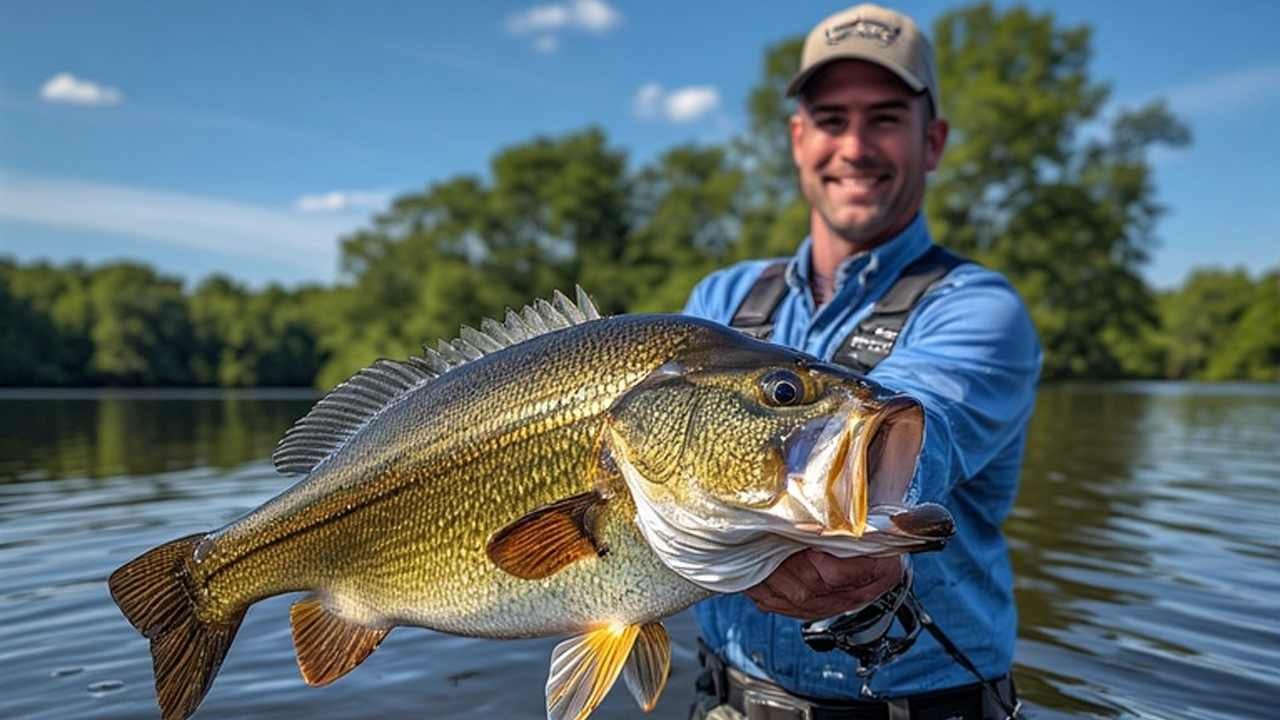
Largemouth and Smallmouth Bass — The bread and butter. Six fish a day, no statewide closed season, but lakes like Crab Orchard and Lake Shelbyville run a 14-inch minimum, and Carlyle has a 14–18″ protected slot where anything in that range goes back. If you hear somebody talking about “the slot” at the bait shop, they’re not talking about the boat ramp.
Walleye — Six combined with sauger per day statewide, but the Chain O’Lakes and Carlyle have length protections you cannot ignore. Walleye chew hardest around March–April on the rivers before they move shallow in May.
Catfish — Channel cats to six a day with no minimum length, which means kids and beginners can catch dinner on a hot summer afternoon. Flathead catfish are a one-per-day proposition, and the Mississippi and Illinois rivers hold trophies if you’ve got fresh cut shad.
Crappie — Twenty-five a day keeps the freezer full. Spring is the feeding window that matters; once the leaves come out, they drop deeper than your favorite jig can argue with them. White crappie dominate reservoirs; black crappie are more common in the rivers.
Muskie — One fish a day, 48-inch minimum statewide. That’s a hard rule. You will get spooled. You will lose tackle. When you land a mid-forties fish, you put it back.
Northern Pike — Three a day, no minimum. Mostly a bonus fish while you’re catfishing or bass fishing.
🦞 Specialty Species
Lake Michigan Salmon & Trout 🐟 — Coho, chinook, steelhead (rainbow), and lake trout all run through Illinois waters off Chicago and the lakefront harbors. You need a Lake Michigan Salmon Stamp in addition to your regular license, and the daily limit is 3 per species category. Fall and early winter are the magic windows when the browns and cohos pile up near shore.
Paddlefish 🐠 — Snagging-only on the Mississippi and lower Ohio. Short windows, two fish per season, permits issued via IDNR monthly drawings in some years and free online registration in others. Always confirm with iFishIllinois program pages before showing up with a heavy-duty rod.
Lake Sturgeon 🐟 — State-listed as threatened. No harvest. Catch-and-release only. If you hook one, treat it like a museum piece.
Striped Bass & Hybrids 🐟 — Mostly hybrids (wiper) stocked in Carlyle, Shelbyville, and a handful of cooling lakes. Three a day, fifteen inches minimum.
🐠 Panfish & Everyday Catches
| Species | Daily Limit | Min Size | Notes |
|---|---|---|---|
| Bluegill 🐠 | 25 | None | Stocky spring spawners near the bank |
| Redear Sunfish | 25 | None | Often called “shellcrackers” |
| Green Sunfish | 25 | None | First fish for most kids 🎣 |
| White/Black Crappie | 25 | None (some reservoirs: 10″) | Often in school boat roads |
These are the species that make an afternoon at a city park lake actually fun for a six-year-old. A small hook, a piece of worm, and a bobber is the whole strategy.
🦆 Stocked & Managed Waters
IDNR stocks rainbow trout each spring into more than 50 put-and-take lakes and streams across the state — including spots inside city parks. You’ll find a full schedule and interactive map on the IDNR site. Spring trout opener is always the first Saturday in April, and that’s a statewide event — show up early, because the parking lot fills up at places like Banana Lake in the suburbs or Crystal Lake in northern Illinois.
For fall, the catch-and-release trout opener lands on the third Saturday in October. Same stamp required, same waters, but everything goes back.
🌍 Public vs Private Waters
Public Waters — IDNR-owned lakes, Mississippi/Illinois/Ohio rivers, Lake Michigan shoreline, and most reservoirs open to bank and boat fishing with a license.
Private Waters — Ponds and strip pits often require landowner permission. Some pay-to-fish operations exist; treat those like a private club and respect posted rules. Statewide creel and length limits still apply on private waters.
A quick rule of thumb: if the ramp, the parking lot, or the green space is open to the public, you can almost certainly fish it. If you walk past a No Trespassing sign to get there, you’ve got a problem.
🎟️ Fishing License Guide
| License Type | Who It’s For | Notes |
|---|---|---|
| Resident Annual License | Illinois residents | Pricing changes year to year — check IDNR |
| Non-Resident Annual | Out-of-state anglers | Higher fee tier |
| 24-Hour / Short-Term Pass | Travelers, weekend trips | Available online and at retail |
| Senior Resident License | Residents 65+ (with qualifying years) | Often reduced or free |
| Youth Angler | Under 16 | Free with a resident adult license holder |
| Sportsman’s Combination License | Residents | Hunting + fishing, often a smart combo |
| Inland Trout Stamp 🐟 | Anyone fishing put-and-take trout waters | Required in addition to license |
| Lake Michigan Salmon Stamp 🐟 | Anyone fishing Lake Michigan for salmon/steelhead | Required in addition to license |
| Paddlefish Permit 🐠 | Snaggers on MS/Ohio rivers | Required during open window |
Buy online at the IDNR portal or from any licensed retailer (bait shops, Walmart sporting goods counters, hardware stores).
❓ FAQ Section
Do I need a license to fish in my friend’s private pond?
Yes, generally. A few narrow exceptions exist for fully private, non-stocked waters with no public access, but as a rule, get the license. It’s cheap insurance against a $200 fine and the awkward conversation with a conservation officer.
When exactly is the spring trout opener?
The first Saturday in April every year. For 2026 that lands on April 4; for 2027 it lands on April 3. Plan around it — it’s the busiest fishing morning of the year.
Is there a saltwater fishing license in Illinois?
No. Illinois is an inland freshwater state with no ocean coastline. The “saltwater” terminology doesn’t apply here; that language belongs to coastal states like Louisiana or Florida.
Can I keep a muskie under 48 inches?
No. The statewide minimum is 48 inches, and the daily bag limit is one. Measure carefully. A muskie tape is your friend.
Where do I find water level and ramp condition updates for the Mississippi?
Check the U.S. Army Corps of Engineers river gages before you drive two hours to a muddy high-water ramp.
Are night-time bank fishing hours different for catfish?
Same license, same limits, same regs — just bring a light and watch the local ordinances. Some city banks close at dusk.
What’s the fine for fishing without a license?
Fines vary by county and circumstance but commonly run $150 and up, plus court costs. Buy online, save the receipt on your phone.
🗺️ Map & Hotspots
The official interactive IDNR Public Waters Map is searchable by county, by species, and by access type — launch ramps, bank fishing, ADA-accessible piers, etc. Use that as your primary planning tool.
A short list of must-visit picks for the 2026-2027 cycle:
- Lake Carlyle (Clinton County) — wiper, crappie, walleye, and a slot-limit bass fishery worth every mile of the drive.
- Lake Shelbyville (Shelby/Moultrie Counties) — trophy smallmouth, striped bass, and an early-summer crappie bite that’s hard to beat.
- Chain O’Lakes (Lake County) — muskie, walleye, and bass within an hour of Chicago.
- Mississippi River Pool 19 — catfishing, crappie scaffolding, and the best paddlefish snagging in the Midwest.
- Busse Lake / Busse Woods (Cook County) — closest trout-opener experience for Chicago-area families who don’t want to drive four hours.
✅ Wrap-Up
Grab a license the night before. Check the water level and the weather. Pack a rain jacket because the sky in this state can change looks in twenty minutes. Bring a kid or a friend — somebody who hasn’t done this before — because the fish aren’t really the point on those first few trips. The point is the quiet.
Before you head out, review your bag limits, make sure your stamps are current, and respect the slot lengths on the lakes that have them. IDNR updates regulations every year, sometimes mid-year, so a five-minute check at the official portal before a long drive is never wasted time.
See you on the water. 🎣