
Indiana Fishing Season and Limits for 2026–2027 by Month – Species, Licenses & Hotspots
If you’ve ever watched daylight creep over an Indiana reservoir while the first cast lands with that soft little ploop, you already know this state has a sneaky-good angling calendar. The nice part is that many freshwater opportunities run year-round, so you’re not boxed into one short window. Instead, the rhythm changes with the seasons: spring trout openers, summer catfish evenings, fall crappie action, and winter steelhead fever near Lake Michigan. Most of the big talking points for 2026-2027 come down to species-specific catch dates, local bag limits, trout waters, and making sure your license and trout/salmon stamp are squared away before you hit the ramp.
Whether you’re a Hoosier planning weekend trips or a visitor tossing a tackle bag in the trunk, the big rule of thumb is simple: Indiana is mostly a public-lakes-and-rivers game, but local exceptions matter. Some waters have slot limits, some are catch-and-release only for part of the year, and Lake Michigan tributaries bring their own extra rules. That sounds complicated at first, but once you break it down by month and species, it gets a whole lot friendlier.
📅 Quick Reference Table by Month
| Month | Best Bets | Open/Close Dates | Daily Bag Limit | Special Regulations |
|---|---|---|---|---|
| January | Steelhead, inland-lake trout, panfish | Trout streams are catch-and-release Jan. 1–Apr. 14 | Trout: 5 on legal harvest waters | Some trout streams are artificial-lure-only year-round |
| February | Steelhead, bluegill, crappie, pike | Most warmwater species open year-round | Varies by species/water | Ice anglers: holes may not exceed 12 inches |
| March | Urban trout, crappie staging, catfish in warm spells | Trout streams still catch-and-release | Trout: 5 where harvest allowed | Spring stocking begins on many waters |
| April | Inland stream trout opener, prespawn bass, crappie | Selected trout streams closed Apr. 15 to opener; opener is 6 a.m. last Saturday in April | Trout: 5 | No more than one brown trout in daily trout limit |
| May | Crappie, bluegill, bass, walleye, wipers | Strong statewide action on most public lakes | Crappie: 25; Muskie: 1; Pike: 3 | Bass rules often vary by lake; read posted exceptions |
| June | Bass, catfish, bluegill beds, reservoir wipers | Open on most waters | Varies | Up to 3 poles/hand lines per angler |
| July | Catfish, deep bass, muskie, striped hybrids | Open on most waters | Muskie: 1; Pike: 3 | Heat pushes fish deeper; check depth maps |
| August | Catfish, muskie, night bite on reservoirs | Open on most waters | Varies | Lake-specific creel limits matter most now |
| September | Walleye, crappie, salmon staging, wipers | Open on most waters | Yellow perch in Lake Michigan: 15 | Tributary hook restrictions apply on some salmon waters |
| October | Fall trout stockings, crappie, salmon/steelhead | Urban trout stockings typically return mid-October | Trout: 5 | Great month for stocked family-friendly lakes |
| November | Trout, steelhead, muskie, perch | Inland streams still open through Dec. 31 | Trout: 5 | Lake Michigan tributaries have special gear rules |
| December | Inland trout, steelhead, panfish | Inland stream trout season runs through Dec. 31 | Trout: 5 | Good time for quiet public access spots |
🐟 Popular Sport Fish
Bass
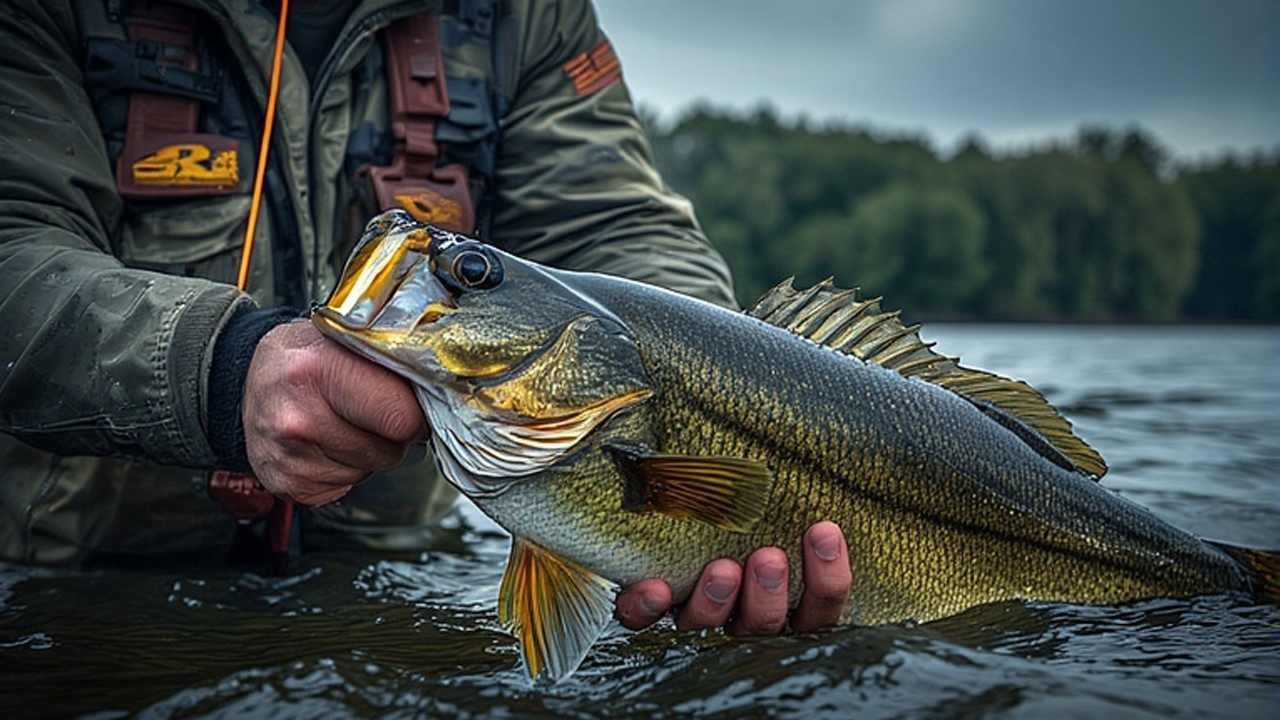
Bass are available on many Indiana lakes and rivers through the year, but spring into early summer is when most people really fall in love with them. The tricky part is that largemouth rules aren’t one-size-fits-all. Some waters use 15-inch or 16-inch minimums, others jump to 18 inches with a two-fish creel, and Turtle Creek Reservoir even uses a 20-inch minimum with a one-fish daily bag. Patoka Lake is a well-known bass destination, while Cecil M. Harden, Webster-area waters, and several small public lakes have their own special rules. In short: bass are common, but they’re probably the species most likely to surprise you with a local exception.
Trout
Trout are where the calendar gets most defined. Inland lakes have no closed season, but inland streams switch to catch-and-release from Jan. 1 through Apr. 14. Then selected streams close from Apr. 15 until the last Saturday in April, when trout season opens at 6 a.m. and runs through Dec. 31. The stream bag limit is five trout, minimum 7 inches, and no more than one may be a brown trout. A few trout waters in Elkhart County are year-round catch-and-release only and artificial lures or flies only, which is honestly pretty cool if you like technical fishing.
Walleye
Walleye don’t get as much national hype here as they do farther north, but Indiana anglers know better. They’re a real draw, especially around northern natural lakes and selected reservoirs. The basic size rule is split by geography: south of State Road 26, walleye must be at least 14 inches; north of it, 16 inches is the usual minimum, with a handful of named-lake exceptions. Fall is a particularly nice time to chase them, when cooler water pulls fish back into more reachable zones.
Catfish
For easygoing summer fun, catfish might be the most beginner-friendly option in the state. Urban waters get catchable-size channel cats, many city-park spots have good bank access, and you don’t need a glittery boat deck to catch them. The best bite usually settles in from late spring through warm fall evenings. If you’re taking kids, a tub of stink bait and a pair of lawn chairs can still create a pretty memorable night. Indiana’s urban program specifically highlights catfish as accessible, affordable, and ideal for newer anglers.
Crappie
Crappie are one of those fish that make casual anglers feel like heroes in spring. Indiana manages black and white crappie together with a 25-fish daily bag limit, and the prime windows are spring and fall when schools move shallower around timber, docks, brush, and submerged cover. They show up in ponds, streams, and larger public lakes, so you don’t need a legendary destination to catch a mess of them.
Muskie
Muskie are the big-drama fish. You might cast all day for one follow, then suddenly your heart is doing gymnastics beside the boat. Indiana’s daily bag limit is 1, with a 36-inch minimum size on standard waters. Backwater, Kiser, and Webster lakes use a 44-inch minimum. Webster Lake is probably the headline name, but Brookville, Bruce, Skinner, the Tippecanoe Chain, and Barbee Lakes also get plenty of muskie attention.
Northern Pike
Northern pike are more of a northern Indiana story, especially in glacial lakes and connected rivers. Statewide, pike are managed under a 3-fish bag limit and a 24-inch minimum size. Hamilton Lake is the standout exception, with a 6-fish daily limit and no minimum size, though only one fish over 30 inches may be kept. If you like aggressive strikes and toothy fish without full muskie-level obsession, pike are a very fun middle ground.
🦞 Specialty Species
Indiana doesn’t have saltwater fishing, so there’s no saltwater stamp to worry about here. The specialty action instead lives in Lake Michigan and selected stocked waters. Salmon, steelhead, lake trout, brown trout, and yellow perch all matter in the northwest corner, and trout/salmon anglers need both a valid fishing license and a trout/salmon stamp unless exempt. On Lake Michigan tributaries, trout and salmon must be hooked in the mouth, and some waters limit hook styles or prohibit certain gear altogether.
Another niche-but-worth-knowing fishery is hybrid striped bass, often called wipers. Indiana says they’re stocked in inland lakes, reservoirs, and larger rivers, with good opportunities on the Ohio, Wabash, White, and Tippecanoe systems plus tailwaters below Lakes Freeman, Shafer, and Monroe. If you like hard pulls and fast open-water chases, they’re a blast.
🐠 Panfish & Everyday Catches
| Species | Statewide / Common Creel Limits | Notes |
|---|---|---|
| Crappie | 25 daily | No general statewide size limit; some lakes may add local rules |
| Bluegill | No general statewide daily bag on most waters | Watch special managed lakes for reduced aggregate panfish limits |
| Redear Sunfish | Often managed with sunfish rules on special waters | Common in ponds, lakes, and slower freshwater areas |
| Sunfish Mix | Varies on special waters | Some managed lakes cap combined bluegill/redear/crappie harvest |
| Yellow Perch | 15 daily in Indiana waters of Lake Michigan | Popular near the lakefront and harbors |
For everyday action, panfish are where Indiana really shines. Bluegill are everywhere, they’re beginner-friendly, and they keep kids interested because something usually pecks pretty quickly. And if you’re doing a casual family trip, that matters more than people admit.
🦆 Stocked & Managed Waters
Indiana DNR stocks 16 different species statewide and keeps an online database that lets anglers search by county, species, year, and waterbody. Trout stockings are especially important in spring and fall, while urban waters also get channel catfish and family-friendly access improvements. If you want the official schedule/map, the best place to start is Indiana fish stocking dashboard.
If you like comparing nearby states before a road trip, take a look at the Illinois fishing season guide for a useful neighbor-to-neighbor contrast.
🌍 Public vs Private Waters
Public lakes, rivers, reservoirs, and access sites fall under state rules, and that includes fish moving between connected public and private-looking waters. Private ponds that are fully cut off from public water are different; if fish can’t enter or leave, a state fishing license usually isn’t required, though you still need the owner’s permission. For everybody else, public access rules, posted local exceptions, and waterbody-specific regulations should be checked before you launch or cast from shore.
🎟️ Fishing License Guide
Indiana keeps licensing pretty straightforward. Residents can buy an annual fishing license for $23, a one-day license for $10, and senior options at reduced cost. Nonresidents can buy an annual license for $60, a one-day license for $15, or a seven-day license for $35. A trout/salmon stamp costs $11 for both residents and nonresidents, unless your one-day license already includes trout/salmon privileges. There’s also a resident hunt-and-fish combo license for $32. Anglers under 18 don’t need a license, and several exemptions apply for certain seniors, blind residents, some military members, and people fishing fully private ponds. Online purchases carry extra tech/processing fees.
❓ FAQ Section
Do I need a fishing license in Indiana if I’m under 18?
No. Residents and nonresidents under 18 are exempt.
When does trout season open on Indiana streams?
The inland stream opener is 6 a.m. local time on the last Saturday in April.
Can you fish year-round in Indiana?
Yes, for many species and many waters. Trout streams are the main seasonal exception.
Do I need a trout stamp in Indiana?
Yes, if you’re legally fishing for trout or salmon in public waters and you’re not exempt.
Can I fish a private pond without a license?
Usually yes, if the pond is completely private and not connected to public waters.
How many fishing poles can you use?
Up to three poles or hand lines at a time.
Where can I find public lakes and access sites?
Use the official map tools and local access listings before you head out.
🗺️ Map & Hotspots
For scouting, depth changes, bank access, low-head dam warnings, and public launches, the smartest first click is the Indiana Where to Fish interactive map. It’s especially handy for visiting anglers who don’t want to burn half a day guessing where a legal access point is.
If we were narrowing it down to a few must-visit hotspots for 2026-2027, we’d start with Webster Lake for trophy muskie dreams, Patoka Lake for versatile bass and wiper action, Brookville Lake and its tailwater for trout/muskie crossover potential, Lake Monroe for hybrid stripers and warm-season variety, and the Lake Michigan–St. Joseph River corridor for salmon, steelhead, perch, and that whole big-water atmosphere that feels a little different from the rest of the state.
✅ Wrap-Up
Indiana rewards anglers who stay flexible. One month you’re drifting live bait for wipers, the next you’re chasing stocked trout with the kids, and before long you’re sneaking out for crappie on a chilly fall morning. Grab your license, check water levels, read the local bag limits, and don’t skip the safety basics around dams, cold water, or busy boat ramps. Bring family, bring a friend, and bring a little patience too; sometimes the best part of the trip is the story you get on the way home.