
Iowa Fishing Season and Limits for 2026–2027 by Month – Species, Licenses & Hotspots
There’s something downright calming about an Iowa morning on the water. Maybe it’s the mist lifting off a lake at daybreak, or maybe it’s that first tap on the line before your coffee’s even gone cold. Either way, Iowa is one of those states where beginners can ease in without feeling overwhelmed, while longtime anglers still have plenty to chase—walleye in the Great Lakes, trout in the northeast driftless country, catfish in rivers, and panfish almost everywhere you can park and cast. This guide reflects Iowa’s currently published 2026 rules and in-season updates for the 2026-2027 cycle, so it’s a practical starting point for residents and visitors alike. Saltwater, of course, is not part of the equation here—this is all freshwater action.
🌊 Quick Reference Table by Month
Here’s the part most people want first: the “what can I catch right now?” cheat sheet.
| Month | Good Targets | Open/Close Dates | Daily Bag Limit | Special Regulations |
|---|---|---|---|---|
| January | Trout, panfish, northern pike | Mostly continuous | Trout 5; bluegill 25 in public waters | Community trout stockings happen in winter; trout fee required |
| February | Trout, panfish, catfish | Mostly continuous | Catfish 8 in lakes / 15 in streams | Iowa Great Lakes walleye closes Feb. 15 |
| March | Community trout, crappie, catfish | Continuous | Crappie 25 in public waters | Paddlefish snagging begins March 1 on the Mississippi |
| April | Stocked trout, bass, catfish | Continuous | Bass 3 aggregate; trout 5 | Great Lakes walleye remains closed until first Saturday in May |
| May | Walleye, bass, trout, crappie | Continuous statewide; Great Lakes walleye opener first Saturday | Walleye 5 statewide, but 3 on certain lakes | Great Lakes walleye slot 19–25 inches protected |
| June | Bass, catfish, bluegill, walleye | Continuous | Bluegill 25 in public waters | Muskie on Iowa Great Lakes is seasonal |
| July | Catfish, bass, bluegill, walleye | Continuous | Catfish 8 lakes / 15 streams | Check local slot limits on managed lakes |
| August | Catfish, bass, panfish | Continuous | Crappie 25 in public waters | Some lakes have stricter bass or walleye size rules |
| September | Walleye, perch, crappie, trout | Continuous | Yellow perch 25 | Great late-summer/early-fall bite on big lakes and rivers |
| October | Trout, walleye, muskellunge | Continuous | Muskie 1 | Northeast trout stockings still running through October |
| November | Walleye, pike, crappie | Continuous | Northern pike 3 | Rivers and tailraces pick up again in cool weather |
| December | Trout, panfish, catfish | Continuous | Trout 5 | Great starter month for stocked waters and simple shore access |
For most anglers, the big takeaway is this: Iowa keeps things pretty straightforward. Many major species are open continuously, but creel limits, slot restrictions, and a few famous exceptions—especially on the Iowa Great Lakes and boundary rivers—matter a lot more than people expect.
🐟 Popular Sport Fish
Bass
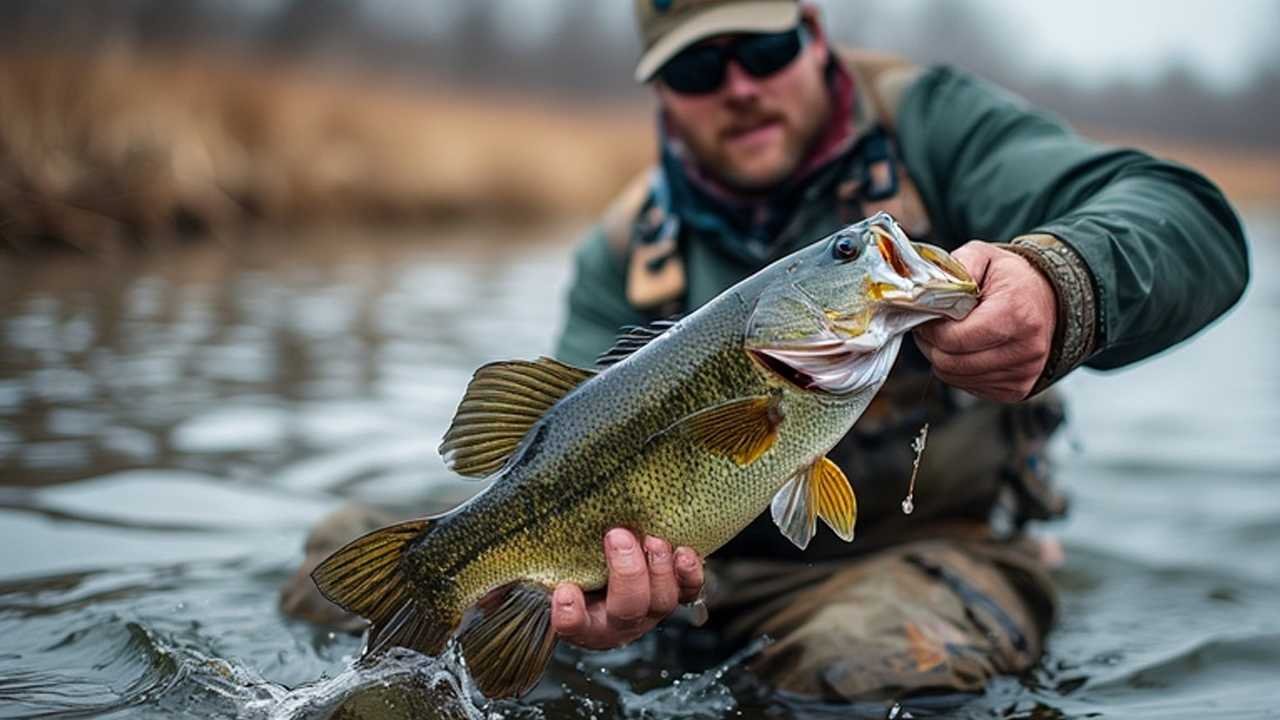
Largemouth, smallmouth, and spotted bass are open continuously in Iowa. The general statewide daily bag limit is 3 in aggregate, with a possession limit of 6. On many public lakes, a 15-inch minimum applies, though some interior streams and border waters use different length rules. If you’re new to angling, bass are a fun confidence-builder because they’re aggressive, common, and found in everything from big reservoirs to smaller public lakes.
Trout
Trout are one of Iowa’s best surprises. The state stocks more than 300,000 catchable rainbow trout in northeast streams each year from April through October, and there are also wild brown and brook trout opportunities in the driftless corner of the state. Daily bag limit is 5, possession limit is 10, and you’ll need a trout fee on top of your regular license if you’re required to be licensed.
Walleye
Walleye are open continuously in most inland waters, with a general daily bag limit of 5 and possession limit of 10. But the famous exception is the Iowa Great Lakes—Spirit, East Okoboji, and West Okoboji—where the walleye season closes from February 15 until the first Saturday in May. On those lakes and connected waters with the same rule set, the daily limit is 3, possession limit is 6, and the protected slot is 19 to 25 inches, with only one fish over 25 inches allowed per day. That’s the kind of detail you really don’t want to learn after a conservation officer walks up to the boat.
Catfish
Catfish are open continuously and they’re as Iowa as gravel roads and gas-station coffee. In lakes, the daily bag limit is 8; in streams, it’s 15; possession limit is 30. On the Mississippi River, rules differ, so always double-check before assuming the inland standard applies. Summer evenings on rivers and spillways are classic catfish time, and for beginners, that slower, bait-and-wait style can be a lot less intimidating than casting artificials all day.
Crappie, Muskie, and Northern Pike
Crappie are continuous, with a daily bag limit of 25 in public waters. Muskellunge are continuous in many waters too, with a 1-fish limit and a 40-inch minimum, though the Iowa Great Lakes have a seasonal muskie window. Northern pike run continuous statewide in many waters with a daily bag limit of 3 and possession limit of 6. In plain English: crappie are your reliable “let’s catch dinner” fish, while muskie and pike are more of a “bring patience and maybe a bigger net” mission.
🦞 Specialty Species
Iowa’s specialty action revolves around paddlefish and sturgeon. Paddlefish are open continuously under the broader rules, but actual harvest gets technical fast: snagging seasons are limited on boundary waters, including March 1 to April 15 on the Mississippi River and February 1 to April 30 on the Missouri and Big Sioux. Daily bag limit is 2, possession limit is 4, and the Missouri/Big Sioux system includes a 35- to 45-inch protected slot. Rock sturgeon are closed to harvest. Shovelnose sturgeon are continuous under some rulesets, but boundary-water exceptions apply, including no harvest in the Big Sioux. This is definitely the corner of the rulebook where you read twice before leaving home.
🐠 Panfish & Everyday Catches
If you’re fishing with kids, teaching a friend, or just want steady action, panfish are the everyday heroes.
| Species | Season | Daily Creel Limit | Possession | Notes |
|---|---|---|---|---|
| Crappie (black/white combined) | Continuous | 25 in public waters | Not generally listed statewide inland | Mississippi has separate possession rules |
| Bluegill | Continuous | 25 in public waters | Local rules may vary | Often best at family-friendly lakes |
| Yellow Perch | Continuous | 25 | 50 | Strong option on natural lakes |
| Sunfish/Pumpkinseed | Continuous | Check local/public-water panfish rules | Varies | Confirm on specific waterbody if unsure |
The nice thing about panfish is that the learning curve is gentle. A bobber, a worm, and decent timing can turn a slow afternoon into a really fun one.
🦆 Stocked & Managed Waters
Iowa does a surprisingly good job with stocked and managed waters. The DNR notes 48 catchable-stocked rainbow trout fisheries on publicly accessible streams and ponds, 10 special trout fisheries with restrictive regulations, 18 community trout fisheries, and more than 50 wild self-sustaining trout fisheries in the northeast. For family trips, the community trout program is especially handy—each location gets stocked twice, with about 1,500 trout per stocking. It’s one of the easiest ways to introduce someone to trout without driving deep into driftless country.
🌍 Public vs Private Waters
Public lakes, rivers, reservoirs, and access sites are the easiest entry point because the rules are clearly posted and the mapping tools are strong. Iowa’s public-water network includes lake contours, trout streams, community ponds, river accesses, fish structures, and Mississippi lock-and-dam access points. Private ponds can be excellent, but permission is everything, and waterbody-specific quirks can still matter. A good rule of thumb: if you didn’t grow up fishing that pond with the landowner’s blessing, ask first and ask clearly.
If you also hop state lines now and then, it helps to compare nearby rules before a road-trip weekend; this companion Minnesota fishing season guide is a useful example of how neighboring regulations can differ.
🎟️ Fishing License Guide
Iowa keeps license choices pretty reasonable. A resident annual license is $22, while a nonresident annual license is $48. Residents can also buy a 1-day license for $10.50, a 7-day license for $15.50, or a 3-year “Angler’s Special” for $62. Nonresidents get 1-day, 3-day, and 7-day options at $12, $20.50, and $37.50. There’s also an Outdoor Combo (hunting/fishing/habitat) for residents at $55. Kids under 16—resident or nonresident—can fish without a license, though they may still need a trout fee. Trout fees are $14.50 for residents and $17.50 for nonresidents. Seniors 65+ have lifetime options, and active-duty Iowa residents on leave may fish without a license if they carry the right documentation.
🗺️ Map & Hotspots
For planning, the single best tool is the Iowa Fishing Atlas. It lets you browse public lakes, river access points, trout waters, community ponds, fish structures, and lock-and-dam locations without playing detective on five different webpages.
If I were pointing a friend toward 3–5 must-visit places this year, I’d start with:
- Spirit Lake / Okoboji chain for walleye, bass, pike, and muskie.
- Northeast Iowa trout streams around Decorah, Manchester, and the driftless region.
- Mississippi River pools and tailraces for walleye, sauger, paddlefish, and catfish.
- Clear Lake for a classic north-Iowa mixed bag.
- Big Creek Lake for a metro-friendly trip with multiple species.
And if you want to avoid guessing, pair the atlas with Iowa’s weekly bite updates before you leave the driveway.
❓ FAQ
Do I need a license to fish in Iowa?
Yes, unless you fall under an exemption such as being under 16 or qualifying under a special state exemption.
Do kids need a trout fee in Iowa?
Sometimes, yes. Kids under 16 may fish without a license, but they may still need a trout fee when targeting trout.
When does walleye season open on Iowa’s Great Lakes?
It opens on the first Saturday in May and closes February 14 each year on Spirit, East Okoboji, and West Okoboji.
What is the trout limit in Iowa?
The daily bag limit is 5 trout, with a possession limit of 10.
Can I fish private ponds in Iowa?
Only with permission from the landowner or legal controller of the water.
Where can I find public lakes and trout waters?
Use the Iowa Fishing Atlas and the weekly fishing report for the most practical, up-to-date planning.
✅ Wrap-Up
Iowa is one of those rare places where a beginner can catch bluegill from shore in the afternoon, a serious walleye angler can chase a specific opener, and a trout fan can still find cold, beautiful water in a state many people underestimate. So grab a license, check water levels and weather, toss a spare rain jacket in the truck, and bring somebody along if you can. Just make sure you review the current bag limits, creel limits, and safety rules before you head out—because the best trips are the ones where the only surprise is what bites next. 🐟🎣🐠