
Delaware Fishing Season and Limits for 2026–2027 by Month – Species, Licenses & Hotspots
There’s something about standing on a chilly bank with a thermos in one hand and a rod in the other that makes the whole year feel full of possibility. In the First State, that feeling starts with early trout stockings, rolls into spring stripers, and keeps going through summer flounder, panfish, bass, catfish, and fall action in the bay and ponds. For 2026, the big things to know are pretty simple: trout have specific opening dates and stamp rules, striped bass come with seasonal slot and catch-and-release restrictions, and many freshwater favorites are open all year with straightforward creel limits. Residents and visitors can both get in on the action, but it pays to sort out your license, FIN number, and access points before you leave the driveway.
One quick note before we jump in: the 2026 Delaware Fishing Guide is the currently published official guide. If you’re planning trips deep into 2027, use this as your working roadmap, then double-check the next annual guide before opening day or any specialty trip.
📅 Quick Reference Table by Month
| Month | What’s Hot | Open/Close Snapshot | Daily Bag Limit | Special Regulations |
|---|---|---|---|---|
| January | Tautog, largemouth bass, panfish, catfish | Tautog open through May 15; most freshwater species open year-round | Tautog 4; largemouth bass 6; panfish 50 total | Tautog 16-inch minimum |
| February | Pond bass, crappie, perch, catfish | Year-round freshwater action | Varies by species | Good time for public lakes and canals |
| March | Trout ponds, panfish, bass | Tidbury and Newton pond trout opener begins in early March | Trout 6 in general waters | Trout stamp rules apply |
| April | Trout streams, striped bass run, bass, catfish | Trout streams open in early April; striped bass spawning grounds are catch-and-release only Apr. 1–May 31 | Trout 6, or 4 in fly-fishing-only streams; striped bass 1 elsewhere | No trout fishing in designated streams within 2 weeks before spring opener |
| May | Stripers, black sea bass, trout, flounder | Black sea bass opens May 15; tautog closes after May 15 until July 1 | Black sea bass 15; flounder 4 | Striped bass spawning restrictions continue through May 31 |
| June | Flounder, bluefish, bass, catfish | Summer flounder stays open all year | Flounder 4 | Flounder minimum size increases to 17.5 inches on June 1 |
| July | Stripers, flounder, sea bass, bluefish | Special striped bass summer slot starts July 1 in bay/river waters | Striped bass 1 | Bay/river slot shifts to 20–24 inches Jul. 1–Aug. 31 |
| August | Flounder, bluefish, stripers, panfish | Same summer pattern | Varies | Warmwater freshwater bite peaks early and late in day |
| September | Sea bass, perch, bass, catfish | Black sea bass open through Sept. 30 | Sea bass 15 | Transition month for ponds and tidal water |
| October | Fall trout stocking period, black sea bass returns Oct. 10 | Trout stamp season resumes in October; sea bass reopens Oct. 10 | Trout 6 or 4 in restricted streams | Great mixed-bag month |
| November | Trout, tautog, striped bass, perch | Tautog open; fall trout period active | Varies | Cooler water sharpens both pond and saltwater action |
| December | Tautog, striped bass, panfish, bass | Sea bass open through Dec. 31; tautog still open | Varies | Dress for wind and fish slower |
Source for statewide seasons, bag limits, and timing: 2026 Delaware Fishing Guide.
🐟 Popular Sport Fish
Bass
Largemouth bass are the everyday crowd-pleaser here, and for good reason. They’re open all year, carry a 12-inch minimum in most waters, and allow a six-fish daily limit. Becks Pond is tighter at a 15-inch minimum and only two fish per day, so it’s worth checking before you launch. Smallmouth bass are also open year-round, but their rule is more nuanced: no harvest from 12 to 17 inches, and you can keep only one fish over 17 inches in your six-fish limit. That’s the kind of rule that rewards anglers who actually measure their catch instead of just eyeballing it.
Trout
Trout are the spring and fall headline act for plenty of local families. In 2026, Tidbury Pond and Newton Pond open first in March, while the New Castle County trout streams open in early April. Most designated trout waters have a six-fish possession limit, but restricted fly-fishing-only sections on White Clay Creek and Red Clay Creek drop to four fish. No minimum size applies, and Delaware makes it clear this is a put-and-take fishery, so don’t expect holdovers everywhere once the water warms.
Catfish, Crappie, and Everyday Warmwater Action
If you’re new to angling, catfish and crappie are honestly hard to beat. They’re forgiving, fun, and widely available in public lakes, ponds, and slower freshwater stretches. Crappie fall under the statewide panfish rule in many waters, and they’re especially popular around submerged structure, brush, and drop-offs in spring and fall. Catfish aren’t the glamorous option, sure, but they save a lot of slow afternoons.
🦞 Specialty Species
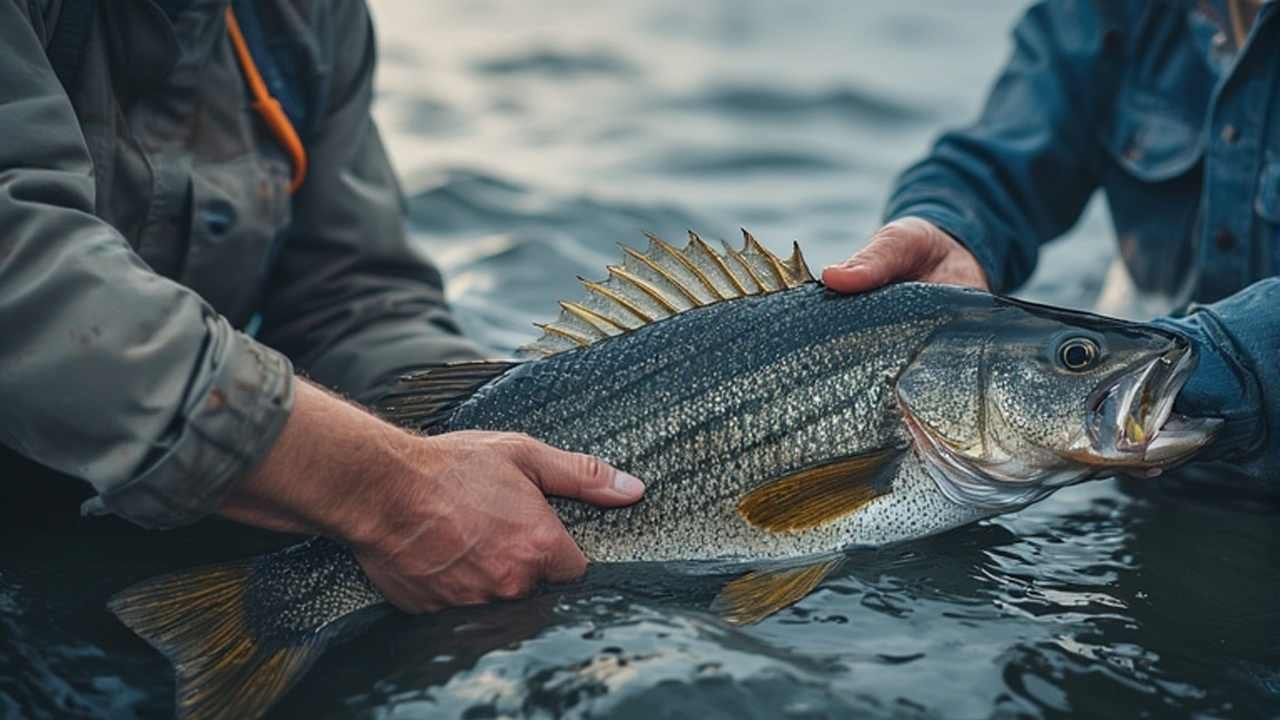
The star of the regulated side is striped bass 🐟. In state waters, the season is open year-round, but from April 1 through May 31 the spawning grounds switch to catch-and-release only. Outside that spawning restriction, anglers may keep one fish per day. The regular slot is 28 to 31 inches, except from July 1 through August 31 in the Delaware River, Delaware Bay, and their tributaries, where the slot changes to 20 to 24 inches. If you fish bait for stripers, inline circle hooks are required with cut or whole natural baits. That rule isn’t red tape for the sake of red tape—it’s there to reduce release mortality.
For saltwater regulars, summer flounder 🐠, black sea bass, tautog, bluefish, and weakfish all matter. Flounder stay open all year, with a 16-inch minimum through May 31 and 17.5 inches from June 1 through the rest of the year; the bag limit is four. Black sea bass runs May 15 to September 30, then again October 10 to December 31, with a 13-inch minimum and a generous 15-fish limit. Tautog closes in the second half of May and all of June, then reopens July 1 with a 16-inch minimum and a four-fish bag.
🐠 Panfish & Everyday Catches
| Species Group | Open Season | Size Rule | Daily Creel Limit | Notes |
|---|---|---|---|---|
| Crappie | All year | No statewide minimum listed in general panfish rule | Part of 50 total | No more than 25 of one species |
| Bluegill | All year | No size limit | Part of 50 total | Great for kids and shore anglers |
| Yellow Perch | All year | No size limit | Part of 50 total | Popular in cooler months |
| White Perch | All year | No size limit | Part of 50 total | Common in tidal and brackish edges |
| Pumpkinseed/Sunfish | All year | No size limit | Part of 50 total | Easy action in small ponds |
Statewide panfish rule: 50 fish total per day, with no more than 25 of one species.
🦆 Stocked & Managed Waters
For stocked trout, the names to remember are White Clay Creek, Mill Creek, Pike Creek, Christina Creek, Beaver Run, Wilson Run, Red Clay Creek, Tidbury Pond, and Newton Pond. The stream program is concentrated in New Castle County, while the pond stockings give central and southern anglers an easier family option. Delaware also publishes a specific stocking update and schedule, which is extremely handy because trout timing can shift a bit based on supply or logistics.
If you want a broader look at family-friendly freshwater options, the state’s Delaware Ponds Map is one of the most useful planning tools around. It includes bathymetry, vegetation notes, shoreline access, and fish-community information for more than 30 public lakes and ponds.
🌍 Public vs Private Waters
Public water is usually the easiest starting point: state-managed ponds, municipal access sites, and marked fishing/boating access areas. These waters are built for everyday anglers, and the rules are easier to verify because they’re tied to official maps and the annual guide. Delaware also notes that boats on freshwater public ponds must operate at no-wake speed.
Private water gets trickier. Some trout streams run through or alongside private land, and access is a privilege, not a guarantee. White Clay and neighboring stream sections are famous, but you still need to respect posted property and stick to lawful access. If you also bounce across regional waters, it helps to compare nearby rules too—especially if you’re planning border trips with the Pennsylvania fishing season guide in the mix.
🎟️ Delaware Fishing License Guide
Here’s the beginner-friendly version:
- Resident annual fishing license (ages 16–64): $8.50
- Nonresident annual license (16+): $20.00
- 7-day nonresident license: $12.50
- Boat fishing license: $40 for boats 20 feet or less, $50 for boats over 20 feet
- Trout stamp: $4.20 resident ages 16–64, $2.10 resident ages 12–15, $6.20 nonresident ages 12+
- FIN number: required annually for anglers 16+; automatically issued with most license purchases
- Kids under 16: no license or FIN required
- Resident seniors 65+: license-exempt with proof of age and residency
- Surf anglers: the operator of a vehicle with a valid Delaware surf fishing vehicle permit is exempt while fishing from designated state park surf areas; other occupants still need their own license if they fish
There isn’t a standard hunt-fish combo license promoted the way some other states do it, so most anglers just buy the fishing license they need, then add specialty items like the trout stamp or boat license if their style of fishing calls for it. If you want the official all-in-one reference, the Delaware Fishing Guide is the best page to bookmark.
🗺️ Map & Hotspots
If I had to send a visiting angler to just a handful of places this year, I’d start with these:
- White Clay Creek – classic trout water, especially for spring and fall stocking windows.
- Tidbury Pond – easy-access stocked trout and family-friendly bank opportunities.
- Lums Pond – one of the better warmwater options for bass, panfish, and casual boat outings.
- Indian River Inlet – a must for saltwater variety, from stripers to bluefish depending on timing.
- Delaware Bay and tributaries – prime territory for striped bass during the right windows and slot periods.
For trip planning, use official access maps, pond layers, and the weekly fishing report rather than guessing off old forum threads. That one habit alone can save you a wasted morning.
❓ FAQ
Can you fish in Delaware without a license?
Yes, if you’re under 16, a resident age 65+, or otherwise exempt under state rules. Some boat-license and surf-permit situations also create limited exemptions.
Do I need a trout stamp in Delaware?
Yes, if you’re fishing for trout in designated waters and fall into the required age group. Resident seniors 65+ are exempt from the trout stamp.
What is the striped bass limit in Delaware?
In state waters, it’s generally one fish per day with a slot limit, but spawning grounds are catch-and-release only from April 1 through May 31.
Are Delaware trout waters catch and release only?
Not generally, but some restricted trout stream sections are fly-fishing only and have a four-fish possession limit.
Where can beginners fish from shore?
Public ponds like Tidbury, Newton, and larger managed lakes are great starting points, especially where shoreline access is mapped by the state.
Is saltwater fishing included in a Delaware fishing license?
Yes. The standard recreational license covers fishing, crabbing, and clamming in all state waters.
✅ Wrap-Up
If you’re planning a trip this season, the smart play is simple: grab the right license, check the latest catch dates and bag limits, and pick a spot that matches your style—quiet freshwater pond, stocked trout water, or full-on saltwater tide game. Delaware is small enough to feel manageable, but varied enough that you can chase bass at sunrise and still be thinking about stripers by lunch. Bring a friend, bring the kids, keep an eye on water levels and weather, and always give the rules one last look before you head out. That little five-minute check is cheaper than a ticket and a lot less embarrassing than explaining an undersized fish at the ramp.