
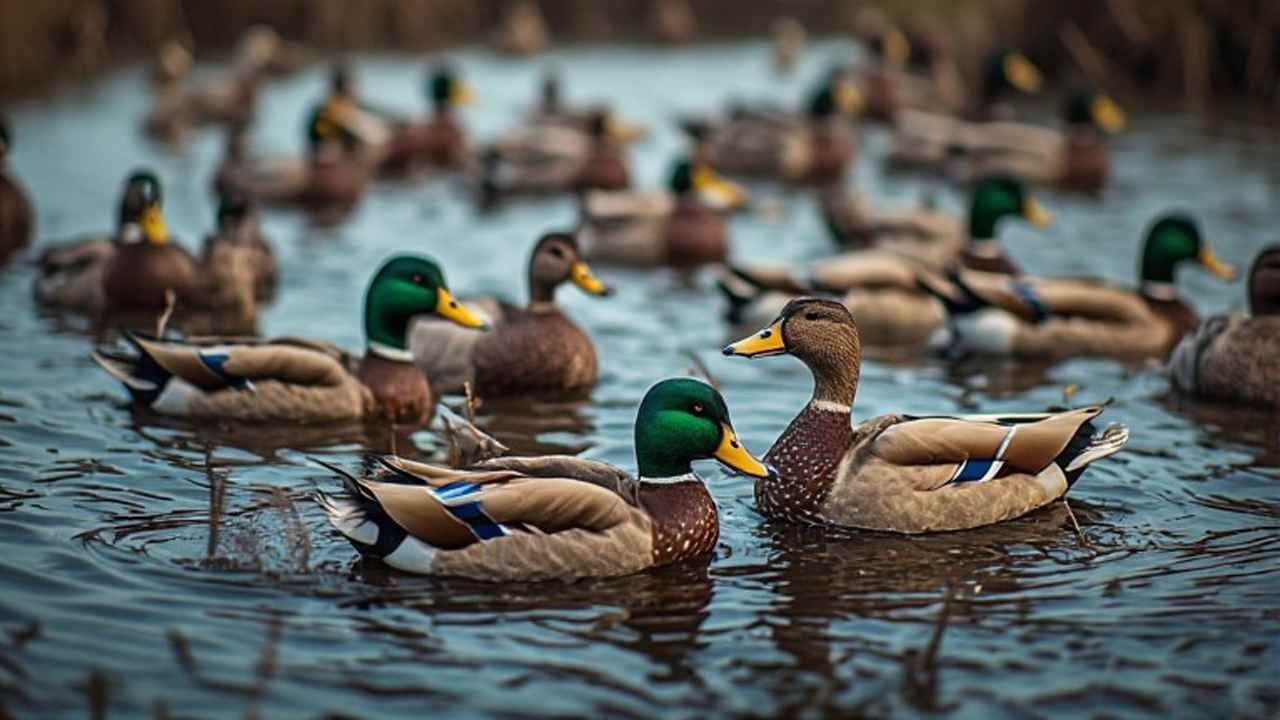
Georgia Duck Season Dates, 2026-2027 Rules & Waterfowl Guide
Georgia’s 2026-2027 duck season runs in two segments from November 21-29, 2026 and December 12, 2026 through January 31, 2027, with an early teal season September 12-20, 2026 and special youth, veteran, and active-duty military waterfowl days on November 14-15, 2026. Georgia uses a single statewide duck season — there are no separate duck zones — so the same dates apply no matter where in the Peach State you hunt.
Before you load your boat, know that waterfowl regulations can change from year to year, and public areas often impose their own extra rules. This Georgia duck season guide was researched and updated on August 31, 2026, using the latest official 2026-2027 regulations published by the Georgia Department of Natural Resources (DNR) Wildlife Resources Division. Always verify the current rules with the agency before you head afield.
Georgia Duck Season 2026-2027 at a Glance
| Information | 2026-2027 Details |
|---|---|
| Regular Duck Season | Nov. 21-29, 2026 & Dec. 12, 2026 – Jan. 31, 2027 |
| Hunting Zones | One statewide season (no zones) |
| Daily Bag Limit | 6 ducks (with species-specific sub-limits) |
| Possession Limit | 3× the daily bag limit (18 ducks) |
| Shooting Hours | ½ hour before sunrise to sunset |
| Youth Waterfowl Days | Nov. 14-15, 2026 |
| Veteran/Military Days | Nov. 14-15, 2026 |
| Early Teal Season | Sept. 12-20, 2026 (6 teal/day) |
| Required License | GA Hunting License + GA Waterfowl & Migratory Bird License (16+) |
| Georgia Waterfowl Stamp | $5 Migratory Bird Stamp (included in some license bundles) |
| Federal Duck Stamp | Required for duck and goose hunters 16+ ($25 in person / $29 electronic) |
| HIP Registration | Free; completed with Georgia’s migratory bird hunter questionnaire |
The 2026-2027 season dates above come from Georgia’s official migratory bird regulations and DNR announcements, which are summarized in the state’s 2026-2027 hunting regulations now online Georgia Wildlife Resources Division.
Georgia Duck Season Dates for 2026-2027
The full 60-day regular duck season is split into two segments:
| Season Segment | Dates |
|---|---|
| Segment 1 (Thanksgiving split) | Saturday, Nov. 21 – Sunday, Nov. 29, 2026 |
| Segment 2 (Late season) | Saturday, Dec. 12, 2026 – Sunday, Jan. 31, 2027 |
Georgia’s structure is unusual in a good way: the federal framework allows a maximum of 60 hunting days and only one split. Georgia puts a 9-day segment around Thanksgiving (opening the Saturday before Thanksgiving, closing the Sunday after) and runs the second segment to the very last possible day of the federal framework — January 31. Because Nov. 21-29 is fixed around the Thanksgiving holiday, the opening day of the second segment shifts each year; in 2026-2027 it lands on December 12 Georgia Wildlife Migratory Bird Info.
Opening day: November 21, 2026. Closing day: January 31, 2027.
Georgia Duck Hunting Zones
Unlike some Atlantic Flyway states that carve waterfowl into multiple zones, Georgia has one statewide duck season — the same dates apply equally from the mountains to the coast. That simplicity is a big advantage for planning: you don’t need to check a zone map before choosing a hunting spot.
The tradeoff is that the statewide season is the only one available; if you miss opening weekend in late November, your next window is the December 12 opener of the second split. It also means hunters who want early-arriving birds rely on the September teal season (see Section 10). While there are no duck zones, WMA and refuge-specific regulations do vary — always confirm the local rules for the exact property you plan to hunt.
Georgia Duck Season Bag Limits
The statewide daily bag limit is 6 ducks, with these species-specific caps:
| Duck Species | Daily Limit | Important Restrictions |
|---|---|---|
| Mallard | 2 | No more than 1 may be a hen |
| Wood Duck | 3 | — |
| Northern Pintail | 1 | — |
| Canvasback | 2 | — |
| Redhead | 2 | — |
| Scaup | 1 | — |
| Black Duck | 1 | Combined limit with mottled duck |
| Mottled Duck | 1 | Combined limit with black duck |
| Fulvous Whistling Duck | 1 | — |
| Sea Ducks | Sub-limits apply | No more than 4 sea ducks (eiders, long-tailed ducks, scoters); check per-species hen restrictions |
| Other Legal Ducks | Within 6-bird total | Mergansers and other species count toward the total |
Possession limit: Georgia’s possession limit is three times the daily bag limit — 18 ducks at home or in camp. Federal rules add one more restriction: you may not possess more than one daily bag limit in the field while hunting or returning from the field. These limits mirror the federal framework Georgia adopts each year Summary of Federal Regulations for Migratory Game Birds.
What License Do You Need to Hunt Ducks in Georgia?
Legend has it every duck hunter’s wallet weighs a pound. Here is exactly what Georgia requires for the 2026-2027 season.
Georgia Hunting License
Anyone 16 or older needs a basic hunting license. Georgia residents pay $15 for the annual license; nonresidents pay $100. Youth under 16 are exempt from license and stamp requirements (the age thresholds for both are 16), though they still must follow all season, bag, and method rules. A resident must have lived in Georgia for 12 consecutive months to qualify for resident pricing.
Georgia Waterfowl Stamp or Validation
Every migratory bird hunter 16 and older must carry the Georgia Waterfowl & Migratory Bird License, often called the Georgia migratory bird stamp — it costs $5 on its own and covers doves, ducks, geese, woodcock, snipe, coots, rails, and gallinules. It is included at no extra charge with Sportsman’s, Youth Sportsman’s, Disability, Honorary, and Lifetime Sportsman’s licenses, and Georgia resident landowners hunting their own land get it free. When you purchase it, you’ll be asked to complete the migratory bird hunter questionnaire — that’s Georgia’s HIP registration (see below).
Federal Duck Stamp
Duck and goose hunters 16 and older — including resident landowners — must carry a valid Federal Migratory Bird Hunting and Conservation Stamp. The 2026-2027 stamp costs $25 purchased in person (USPS, many license agents) or $29 purchased as an electronic stamp (e-stamp) through GoOutdoorsGeorgia. Thanks to the Duck Stamp Modernization Act, your electronic stamp is valid immediately upon purchase through June 30, 2027, and a physical stamp is mailed to you after March 10. If you carry a physical stamp instead, sign it in ink across the face. Georgia’s licensing page lists the $29 e-stamp price, while the official U.S. Fish & Wildlife Service e-stamp page explains program details USFWS Duck Stamp Purchase.
HIP Registration
HIP (Harvest Information Program) is a free federal-state survey system used to measure migratory bird harvest. In Georgia, you register when you buy the migratory bird license: the online system walks you through the migratory bird hunter questionnaire and issues your HIP qualification. Registration is free, and you must complete it every year.
| Requirement | Resident | Nonresident | Notes |
|---|---|---|---|
| Hunting License | ✔ Required (16+) | ✔ Required | $15 resident / $100 nonresident |
| HIP Registration | ✔ Required (free) | ✔ Required (free) | Completed with migratory bird questionnaire |
| GA Waterfowl & Migratory Bird License | ✔ Required (16+) | ✔ Required (16+) | $5; included in many license bundles |
| Federal Duck Stamp | ✔ Required (16+) | ✔ Required (16+) | $25 paper / $29 e-stamp |
Georgia Duck Hunting License Costs for 2026-2027
| License or Permit | Resident Cost | Nonresident Cost |
|---|---|---|
| Annual Hunting License | $15 | $100 |
| One-Day Hunting License | $5 ( +$1/additional day) | $20 ( +$6/additional day) |
| Waterfowl & Migratory Bird License (stamp) | $5 | $5 |
| Federal Duck Stamp | $25 paper / $29 e-stamp | $25 paper / $29 e-stamp |
| HIP Registration | Free | Free |
| Sportsman’s License | $65 | $400 |
| Youth Sportsman’s License (optional, 15 or younger) | $15 | $50 |
Pricing varies with age and package choices — for example, the Sportsman’s License bundles hunting and fishing privileges and already includes the migratory bird stamp. The best way to see your exact total is to build your license bundle through the official online portal cited in Section 18. All fees listed above are the official 2026 prices published by the Georgia Wildlife Resources Division GA License Fee Information.
Youth Waterfowl Hunting Days in Georgia
Georgia’s designated youth waterfowl days are November 14-15, 2026 (the federal youth, active-duty military, and veterans waterfowl days).
- Eligible ages: Hunters under 16 years old.
- Supervision: A qualifying adult at least 18 years old must accompany the youth in the field — but the adult may not hunt.
- Licenses & stamps: Youth under 16 are exempt from the Georgia hunting license, the state migratory bird license, and the Federal Duck Stamp (all of which kick in at 16). The supervising adult must have their own valid licenses and stamps.
- Bag limits: The regular daily bag limits apply — 6 ducks with the usual species sub-limits.
In addition, several WMA waterfowl quota hunts set aside dates for youth (for example, a Youth or Veteran hunt on the Altamaha WMA Champney Tract on Nov. 21-22). More details are in Section 12.
Veteran and Active-Duty Military Waterfowl Hunting Days
Georgia offers veterans and active-duty military their own waterfowl hunting days: November 14-15, 2026, on the same weekend as the youth days.
- Who qualifies: Veterans (honorably discharged) and active-duty members of the U.S. military.
- Licenses & stamps: Military/veteran hunters must meet all normal license, stamp, and HIP requirements — the special days do not waive them (though Georgia does offer a one-time honorary veteran’s hunting license application for qualifying veterans).
- Bag limits: Regular bag limits apply during these days.
- Documentation: Be prepared to verify your status if asked; qualifying veterans may also check eligibility for Georgia’s honorary license programs.
These days are entirely separate from the regular season — hunting waterfowl before November 21 or outside the December 12-January 31 window is otherwise illegal.
Early Teal Season in Georgia
Yes — Georgia has an early teal season, and it’s one of the state’s best-kept September secrets.
- Season dates: September 12-20, 2026 (9 days).
- Legal species: Blue-winged teal and green-winged teal only — no wood ducks in the 2026 early season.
- Daily bag limit: 6 teal in any combination of the two species.
- Possession limit: 18 teal (three times the daily limit).
- Shooting hours: ½ hour before sunrise to sunset (same as the regular season).
- Licenses & permits: You need the full waterfowl package — Georgia hunting license, Georgia Waterfowl & Migratory Bird License, and the Federal Duck Stamp, plus HIP registration.
Georgia’s DNR announced the 2026 early season in late August, noting that the early Canada goose season (September 5-27, 5 geese/day) runs alongside it, and highlighted lakes and WMAs such as Juliette, Clarks Hill, West Point, and Seminole as prime early-season spots GADNR Early Teal and Goose Announcement.
Georgia Duck Hunting Shooting Hours
Georgia’s legal shooting hours for all migratory birds are one-half hour before sunrise to sunset — the same rule applies during the early teal season, the regular duck season, and the youth/veteran days.
Two practical reminders: First, sunrise/sunset times shift as the season progresses, so check your location’s times for each hunt day. Second, specific lakes and public areas can add restrictions — for example, no hunting within 600 feet of docks, houses, bridges, roads, marinas, or open recreation areas on Lakes Allatoona, Lanier, and Walter F. George, and a 300-foot buffer on Georgia Power lakes and Lakes Blackshear, Oconee, Seminole, Sinclair, and Oliver. Always confirm local property rules before setting up.
Where Can You Hunt Ducks in Georgia?
Public Land
Georgia offers excellent public waterfowl hunting on Wildlife Management Areas (WMAs) and federal lands across the state. Top destinations include:
- Altamaha WMA – Waterfowl Management Area (Butler and Champney tracts) — the state’s flagship impoundment complex, with quota hunts on nearly every open Saturday.
- Oconee WMA – Dan Denton Waterfowl Area — flooded green-tree impoundments near Greensboro.
- West Point WMA – Glovers Creek Area — Chattahoochee River impoundments near the Alabama line.
- B.F. Grant WMA, Conasauga River WMA, and Flat Creek PFA — additional quota hunt venues.
- Lakes and reservoirs: Juliette, Clarks Hill, West Point, Seminole, and Walter F. George draw mid- and late-season divers and puddle ducks. A Corps of Engineers permit is required to hunt waterfowl on Walter F. George (except the Eufaula National Wildlife Refuge).
- Eufaula National Wildlife Refuge — classic flooded-timber and impoundment hunting under refuge-specific rules.
Every public area has its own regulations — some require quota permits, some close zones during certain periods, and most restrict hunting near docks and recreation areas. Check the area’s rules before you go.
Private Land
Most of Georgia’s best duck hunting is on private swamps, beaver ponds, and agricultural fields. You need explicit written or verbal permission from the landowner, and Georgia’s trespass laws are strictly enforced — hunting without permission is a criminal offense, and additional charges can apply for damage. When you’re granted access, confirm boundaries, parking, and any specific conditions in advance.
Public Hunting Draws and Reservations
Georgia uses a quota hunt (lottery) system for its best public waterfowl areas. Waterfowl quota hunts are applied for June 1 – October 15 through the official GoHuntGeorgia portal, using a priority-point system that rewards hunters who apply year after year. For 2026-2027, quota waterfowl hunts are offered at Altamaha (Butler: Nov. 21, 28; Dec. 12, 19, 26; Jan. 2, 9, 16, 23, 30 — plus Champney weekend hunts), B.F. Grant (Dec. 12; Jan. 16), Conasauga River (Dec. 12, 19, 26), Flat Creek PFA (Nov. 21, 28), Oconee Dan Denton (Dec. 12-Jan. 30), and West Point Glovers Creek (Nov. 21-Jan. 2) Georgia Quota Hunt Regulations.
Important Georgia Duck Hunting Regulations
- Non-toxic shot only: Shotguns 10-gauge or smaller loaded with federally approved non-toxic shot size F or smaller. Possessing lead shot while hunting waterfowl is illegal.
- Plugged shotgun: Shotguns must be plugged to a 3-shell capacity for migratory bird hunting.
- Legal methods: Shotguns only for ducks; rifles, pistols, and electronic calls are prohibited for waterfowl.
- Electronic calls: Not allowed for ducks or geese (they are permitted only for crows).
- No baiting: Hunting over baited areas is a federal violation — bait must be removed and the area rested before hunting.
- Retrieval & wanton waste: You must make a reasonable effort to retrieve and possess all birds you kill; leaving ducks in the field is illegal waste.
- Species identification: You are responsible for positively identifying every bird before shooting — hen mallard versus black duck, for example, changes your legal take.
- Field possession: No more than one daily bag limit in the field or while traveling from the field.
- Transferring birds: Birds given to another hunter must be accompanied in writing by the shooter’s signature, address, species, and harvest dates.
- Banded birds: Report recovered bands at reportband.gov.
- Waterbody buffers: Respect 300-600 foot no-hunting buffers around docks, houses, ramps, and marinas on listed Georgia lakes.
Best Ducks to Hunt in Georgia
- Wood Duck — Georgia’s signature duck. Resident year-round, so they’re available all season and dominate early-season bags in flooded timber, cypress swamps, beaver ponds, and river bottoms statewide.
- Mallard — Winter visitors arrive from late November through January, using reservoirs, oxbows, and agricultural fields; the statewide limit is 2 (1 hen).
- Gadwall & American Wigeon — Widespread mid-season puddle ducks on lakes and impoundments, especially December-January.
- Northern Shoveler — Common on shallow impoundments and lake edges, often mixed into gadwall/wigeon spreads.
- Northern Pintail — Limited to 1/day; most common on big-water reservoirs and coastal impoundments early in the second split.
- Green-winged Teal — Peak late-season numbers on shallow wetlands; also legal during the September early teal season.
- Blue-winged Teal — The star of September; first migrants may appear in August and are most reliable during the early teal season.
- Canvasback, Redhead & Scaup — The big-water divers. Lake Seminole, Walter F. George, Clarks Hill, and West Point hold these birds from mid-December through January; scaup are limited to 1/day.
- Black Duck — A sought-after southern winter resident in coastal marshes and river swamps; limited to 1/day combined with mottled duck.
- Mottled Duck — Coastal Georgia’s resident puddle duck, most common in salt and brackish marsh; same 1-day combined cap.
- Fulvous Whistling Duck — Coastal rice fields and marshes of southeast Georgia, limited to 1/day.
Migration timing varies with weather — hard freezes to the north push fresh birds into Georgia, and the best diver shooting often follows cold fronts in January.
Tips for Hunting During the Georgia Duck Season
- Scout water levels early. Corps lakes and impoundments often draw down in winter; check current levels and boat ramp access before opening day — a ramp you used in October may be unusable in December.
- Watch the fronts. Georgia’s best shooting follows cold fronts that push northern birds south; after a hard freeze up north, expect fresh mallards and divers within days.
- Match the habitat with the spread. Flooded timber calls for a small, tight wood-duck spread with motion; lake flats need larger puddle-duck spreads; open water on Seminole or Clarks Hill is diver country (long lines, big blocks).
- Call with restraint. Wood ducks chatter, mallards need a soft greeting call — and on pressured public water, silent shooting often beats loud calling.
- Concealment beats everything. Ducks working Georgia pines and cypress are spooky; brush your boat or blind completely and keep movement to zero until birds commit.
- Mind the wind. Set up so mallards and teal come in against the wind — position your blind downwind of where you expect birds to approach.
- Farm country is a player. Winter wheat and flooded cornfields hold mallards, pintails, and geese across south and middle Georgia — permission land is worth pursuing.
- Know your birds before you shoot. In dim December light, hen mallards, black ducks, and mottled ducks can look similar — and the limits (and fines) differ.
- Check closures and apps. Bookmark the closure list and use the official Go Outdoors Georgia app for license display and quick rule lookups in the field.
Frequently Asked Questions About Georgia Duck Season
When does duck season open in Georgia for 2026-2027?
Duck season opens November 21, 2026 for the first split (Nov. 21-29) and reopens December 12, 2026 for the second split, which runs through January 31, 2027.
How many ducks can I harvest per day in Georgia?
The daily bag limit is 6 ducks, with sub-limits including 2 mallards (1 hen), 3 wood ducks, 1 pintail, 2 canvasback, 2 redheads, 1 scaup, and 1 black or mottled duck.
What is the possession limit for ducks in Georgia?
Three times the daily bag limit — 18 ducks. While in the field or returning, you may possess no more than one daily bag limit.
Do I need a Federal Duck Stamp in Georgia?
Yes, if you’re 16 or older and hunting ducks or geese — including during the September early teal season. The 2026-2027 stamp is $25 in person or $29 as an electronic stamp.
Can my child hunt ducks in Georgia without a license?
Youth under 16 are exempt from the license, state stamp, and Federal Duck Stamp requirements. On the youth waterfowl days (Nov. 14-15, 2026), an adult 18+ must accompany them but cannot hunt.
Is there an early teal season in Georgia?
Yes — September 12-20, 2026, for blue-winged and green-winged teal only, with a 6-bird daily limit and 18-bird possession limit.
Can veterans hunt on special days in Georgia?
Yes. Veterans and active-duty military can hunt waterfowl on November 14-15, 2026, with all normal license, stamp, and HIP requirements and regular bag limits.
What shotgun loads are legal for ducks in Georgia?
Any 10-gauge or smaller shotgun using federally approved non-toxic shot size F or smaller (steel, bismuth, etc.). Having lead shot in your possession while waterfowl hunting is illegal.
Is a quota or lottery required to hunt ducks on Georgia public land?
Not everywhere, but the state’s premier waterfowl quota hunts (Altamaha, Oconee Dan Denton, West Point Glovers Creek, and others) require a draw application filed June 1 – October 15 through GoHuntGeorgia.com.
Before You Hunt: Check the Latest Georgia Regulations
Migratory bird regulations, WMA rules, emergency closures, and lake-specific restrictions can change at any time. What you read here reflects the official 2026-2027 season as published as of August 31, 2026 — but the only definitive source is the agency itself. Before every hunt, check the Georgia Wildlife Resources Division’s official migratory bird page for season confirmations, then verify your specific WMA, refuge, or lake for local rules (and the current closure list) Georgia Duck Season Verification Source. And if you’re planning a southeastern waterfowl road trip, compare notes with neighboring states’ seasons — many Georgia hunters stack an early December hunt in neighboring Alabama’s duck season before the Peach State’s second split opens.
Georgia Duck Hunting Resources
- Georgia Wildlife Resources Division – Migratory Bird Info
- Official Georgia Hunting Regulations
- Georgia Hunting Permits & Licenses Guide
- License & Stamp Purchase – Go Outdoors Georgia
- Georgia Waterfowl Quota Hunts
- Federal Duck Stamp Program (USFWS)
- Report a Banded Bird
- More Georgia Hunting Season Guides