
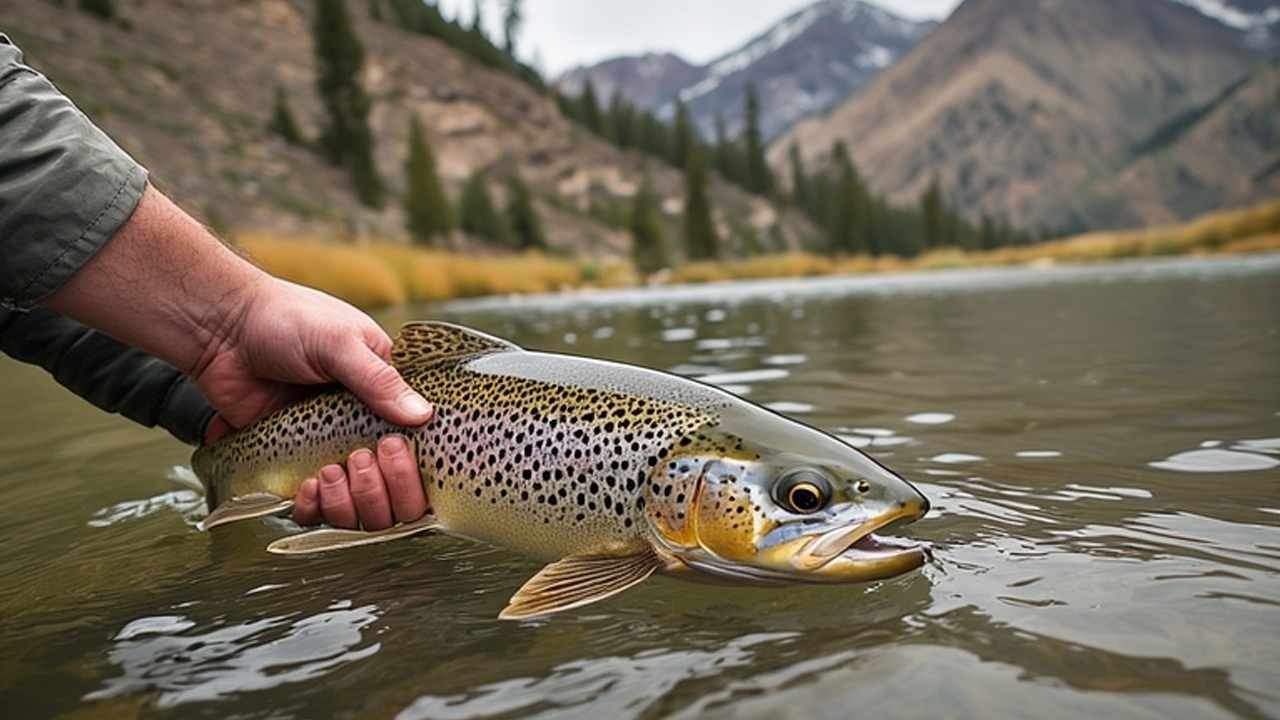
Utah Fishing Season and Limits for 2025–2026 by Month – Species, Licenses & Hotspots
If you’ve ever fished in Utah’s beautiful mountain streams or caught a big bass in one of its huge lakes, you know that fishing in the Beehive State is exceptional. Utah has some of the most varied freshwater fisheries in the West, from the Uintas with their snow-capped peaks to the red rock terrain in the south. If you want to catch wild cutthroat trout or your first bluegill with your family, you need to know the state’s fishing schedule, creel restrictions, and license regulations.
This guide has all the information you need for Utah’s angling season in 2025–2026. We’ll go over the open and closure dates for popular species, explain bag limitations, point out must-visit waterways, and show you how to get a permit. So get your tackle box ready, check those hooks again, and let’s talk about why Utah is one of the finest areas in the US to fish.
📅 Quick Reference Table by Month
Here’s a snapshot of Utah’s major sport fish, their open seasons, daily bag limits, and any special regulations you should know about before heading out:
| Species | Season Dates | Daily Bag Limit | Special Regulations |
|---|---|---|---|
| Rainbow Trout | Year-round | 4 fish | Some waters catch-and-release only |
| Cutthroat Trout | Year-round | 4 fish (combined trout) | Wild cutthroat: slot limits apply |
| Brown Trout | Year-round | 4 fish (combined trout) | Check individual water body rules |
| Brook Trout | Year-round | 8 fish | Often found in high-elevation streams |
| Tiger Trout | Year-round | 4 fish (combined trout) | Hybrid species; stocked in select waters |
| Smallmouth Bass | Year-round | 6 fish | 12-inch minimum on some reservoirs |
| Largemouth Bass | Year-round | 6 fish | Special slot limits at certain lakes |
| Striped Bass | Year-round | 2 fish | 24-inch minimum; check Lake Powell rules |
| Walleye | Year-round | 10 fish | Some waters allow unlimited harvest |
| Yellow Perch | Year-round | 50 fish | No size limit |
| Crappie | Year-round | 50 fish | No size limit |
| Channel Catfish | Year-round | 8 fish | Some waters have no limit |
| Bluegill/Sunfish | Year-round | 50 fish | No size limit |
| Kokanee Salmon | Varies by water | 8 fish | Check specific reservoir regulations |
| Tiger Muskie | Year-round | 1 fish | 40-inch minimum; catch-and-release encouraged |
| Northern Pike | Year-round | 6 fish | Varies by water; some waters unlimited |
Note: Always verify current regulations on the Utah Division of Wildlife Resources website before your trip, as rules can change based on conservation needs.
🐟 Popular Sport Fish in Utah
Rainbow, Cutthroat, and Brown Trout 🎣
Utah is trout country through and through. The state’s cold-water streams and alpine lakes are home to rainbows, browns, cutthroats, and even the occasional tiger trout hybrid. Most trout waters are open year-round, but wintertime ice angling can be phenomenal on reservoirs like Strawberry, Scofield, and Fish Lake.
Season Timing: Year-round statewide, though some high-elevation streams may be inaccessible due to snow.
Size & Bag Limits: Four trout per day (combined), with special slot limits protecting trophy fish in certain waters. For example, Strawberry Reservoir has regulations designed to maintain its world-class cutthroat fishery.
Top Waters: Strawberry Reservoir (cutthroat), Provo River (browns and rainbows), Logan River (wild cutthroat), and countless small streams in the Wasatch and Uinta ranges.
Smallmouth and Largemouth Bass 🐠
Bass angling has exploded in popularity across Utah, particularly at lakes like Utah Lake, Deer Creek Reservoir, and Willard Bay. Springtime spawning periods offer some of the best action, but bass can be caught throughout the year if you adjust your tactics.
Season Timing: Open year-round.
Size Restrictions: Most waters have a 12-inch minimum for smallmouth bass. Largemouth regulations vary, with some lakes implementing slot limits to protect mid-sized fish.
Best Bets: Utah Lake for both species, Sand Hollow Reservoir (southern Utah’s bass paradise), and Jordanelle Reservoir for consistent smallmouth action.
Walleye and Yellow Perch
If you’re after a fish fry, walleye and perch are your friends. These species thrive in Utah’s larger reservoirs and offer excellent table fare. Ice anglers especially love targeting perch during the winter months.
Season Timing: Year-round, with peak perch action in winter and walleye biting best at dawn and dusk during warmer months.
Creel Limits: 10 walleye per day; 50 yellow perch per day.
Where to Go: Starvation Reservoir and Yuba Reservoir are top walleye destinations. For perch, try Fish Lake, Panguitch Lake, or Bear Lake.
🦞 Specialty Species Worth Targeting
Tiger Muskie
These apex predators are stocked in select waters to control rough fish populations. Landing a tiger muskie is a bucket-list achievement for many anglers—they’re aggressive, powerful, and require heavy tackle.
Season & Limits: Year-round; 1 fish per day with a 40-inch minimum.
Prime Locations: Pineview Reservoir, Newton Reservoir, and Mantua Reservoir.
Kokanee Salmon
Kokanee are landlocked sockeye salmon that turn a brilliant red during their spawning run. They’re delicious and offer exciting action when you find the right depth.
Season: Check specific reservoir rules; typically best from late spring through fall.
Bag Limit: 8 fish per day.
Hot Spots: Flaming Gorge Reservoir, Fish Lake, and Strawberry Reservoir.
Striped Bass
Found primarily in Lake Powell, striped bass (or “stripers”) are hard-fighting fish that can exceed 30 pounds. They’re a favorite among trolling enthusiasts.
Season & Limits: Year-round; 2 fish per day with a 24-inch minimum.
Where: Lake Powell is your destination—no other water in Utah consistently produces stripers like this world-famous reservoir.
🐠 Panfish & Everyday Catches
Panfish are perfect for introducing kids to angling or simply enjoying a relaxing afternoon on the water. Utah’s sunfish, crappie, bluegill, and perch populations are healthy and accessible.
| Species | Daily Bag Limit | Size Limit | Best Waters |
|---|---|---|---|
| Bluegill | 50 | None | Gunlock Reservoir, Panguitch Lake |
| Black Crappie | 50 | None | Yuba, Starvation, East Canyon |
| White Crappie | 50 | None | Utah Lake, Willard Bay |
| Yellow Perch | 50 | None | Fish Lake, Bear Lake |
These species are great for beginners and can often be caught using simple bobber rigs with worms or small jigs.
🦆 Stocked & Managed Waters
Utah’s Division of Wildlife Resources operates an impressive stocking program, releasing millions of trout, bass, and other species into public waters each year. Community fishing ponds are stocked regularly and are ideal for families.
Family-Friendly Spots:
- Murray Park Pond
- Oquirrh Lake (South Jordan)
- Salem Pond
- Provo River Parkway ponds
Stocking Schedule: Check the official DWR stocking report for real-time updates on which waters were recently stocked and with what species.
Pro tip: Hit a reservoir within a few days of a trout plant, and you’ll likely have a field day. Freshly stocked fish are often eager to bite and haven’t yet learned to be wary of lures.
🌍 Public vs Private Waters
Most of Utah’s premier angling destinations are public waters managed by the state or federal government. Reservoirs like Strawberry, Flaming Gorge, and Jordanelle are open to everyone with a valid license. However, some private ponds and small lakes require special permission or paid access.
Public Access Tips:
- Always check for parking fees or day-use permits at state parks.
- Respect “No Trespassing” signs near private property.
- Use walk-in access points where available to reach less-pressured waters.
Private Waters:
- Fee-based private ponds often guarantee stocked fish and less competition.
- Always confirm rules with the landowner before fishing.
If you’re exploring a new water body, the Utah DWR’s interactive fishing planner is an invaluable tool for finding public access points and current regulations.
🎟️ Fishing License Guide
Before you cast a line anywhere in Utah, you’ll need a valid angling permit. Here’s the breakdown for 2025–2026:
Resident Licenses
- Annual Fishing License: $38
- Youth (ages 12–17): $8
- Senior (65+): $24
- Combo Hunting & Fishing: $67
- One-Day License: $14
- Seven-Day License: $28
Non-Resident Licenses
- Annual Fishing License: $84
- Youth (ages 12–17): $17
- One-Day License: $21
- Seven-Day License: $51
Special Permits & Stamps
- Second Pole Permit: $20 (allows the use of two rods simultaneously)
- Bear Lake Bonneville Cisco Permit: $5 (required for cisco netting)
Kids Under 12: Free! No license required, but they must follow all bag and possession limits.
Where to Buy: Licenses are available online at the Utah DWR website, at sporting goods stores, and at license agents statewide. If you’re heading out to neighboring states, you might also want to check out the Colorado fishing season or Wyoming regulations for cross-border angling opportunities.
❓ Frequently Asked Questions
Do kids need a license to fish in Utah?
Children under 12 can fish without a license, but they must still follow bag limits and size restrictions. Youth ages 12–17 need a reduced-cost youth license.
How do I report a trophy catch?
Utah has a trophy fish program! Submit photos, measurements, and location details to the DWR. You may qualify for a certificate or recognition.
Can I use live bait in Utah waters?
Yes, live bait is allowed in most waters, but there are restrictions. You cannot transport live fish between bodies of water, and some high-elevation streams are artificial-lure-only to protect native trout populations. Always check specific water regulations.
Are night fishing or bowfishing allowed?
Night angling is permitted on most waters, though some reservoirs may have curfews. Bowfishing is legal for carp and other non-game fish year-round.
What waters are catch-and-release only?
Several blue-ribbon trout streams, including sections of the Provo River and Logan River, have catch-and-release or artificial-fly-only regulations. These rules help preserve world-class wild trout fisheries.
Can I fish in Utah with an out-of-state license?
No. You must have a valid Utah fishing license to fish in the state’s waters, even if you hold a license from another state.
Is ice fishing popular in Utah?
Absolutely! Ice angling is huge here, especially on reservoirs like Strawberry, Fish Lake, and Panguitch Lake. Just make sure the ice is thick enough (at least 4 inches for walking) before venturing out.
🔗 Related Guides
Looking to expand your angling adventures beyond Utah? Check out these helpful resources:
- California Fishing Season Guide – Explore the Golden State’s diverse waters
- Montana Fishing Season Guide – Discover Big Sky Country’s legendary trout streams
- Trout Fishing by Species Hub – Dive deeper into targeting rainbows, browns, cutthroats, and more
🗺️ Map & Top Hotspots for 2025–2026
Planning your next trip? Here are five can’t-miss destinations for Utah anglers this year:
- Strawberry Reservoir – World-class cutthroat trout and kokanee salmon. Ice angling is legendary here.
- Flaming Gorge Reservoir – Trophy lake trout, smallmouth bass, and kokanee. Scenic beauty is unmatched.
- Provo River – Blue-ribbon trout water with browns and rainbows. Great for fly anglers.
- Lake Powell – Striped bass, largemouth bass, and incredible red rock scenery. A bucket-list destination.
- Fish Lake – Splake, lake trout, and yellow perch. Perfect for families and beginners.
For interactive maps and detailed water body information, visit the Utah DWR Fishing Planner.
✅ Final Cast
The 2025–2026 fishing season in Utah is going to be one for the books. There has never been a better moment to grab your rod and explore the waterways of the Beehive State. There are lots of stocking programs, robust natural fisheries, and rules that preserve trophy fish while yet giving you plenty of chances to catch fish.
Before you go, make sure to verify the most recent creel limitations and any other rules that apply to the water body you want to fish. Bring a lot of water, sunscreen, and a valid license. Don’t forget to bring a friend or family member to enjoy the experience with. Utah has something for every fisherman, whether you’re trying to catch big trout in a high-mountain stream or teaching your kids how to catch bluegill in a nearby pond.